
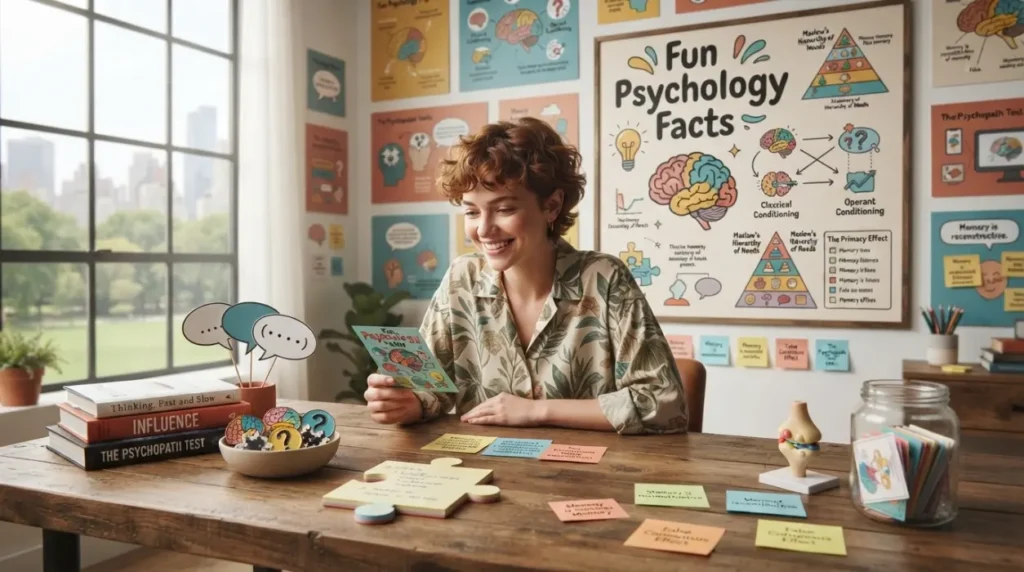
Fun psychology facts reveal the hidden mechanisms behind human thoughts, emotional reactions, and social behaviors. By exploring how our brains process memories, form habits, and make subconscious choices, these insights explain everyday quirks while helping us understand ourselves and others far better.
Have you ever wondered why hearing your favorite song instantly puts you in a good mood, or why you forget what you were looking for the second you walk into another room? Exploring fun psychology facts gives us a fascinating peek into the hidden tricks our brains play on us every single day.
Human behavior can seem completely random, but beneath the surface, our minds operate on surprising patterns that science is constantly decoding. Learning about fun psychology facts helps make sense of those quirky habits, awkward social moments, and emotional reactions that we all experience.
Understanding these mental shortcuts isn’t just entertaining; it gives you a practical roadmap for making better choices, improving relationships, and boosting daily focus. Once you realize how your mind processes information, navigating work, social life, and stress becomes a whole lot easier.
Ready to uncover the strange science behind why you think, feel, and act the way you do? Let’s take a look at these mind-bending, fun psychology facts and discover how your brain shapes your everyday world.
The Weird Ways Your Brain Handles Memory
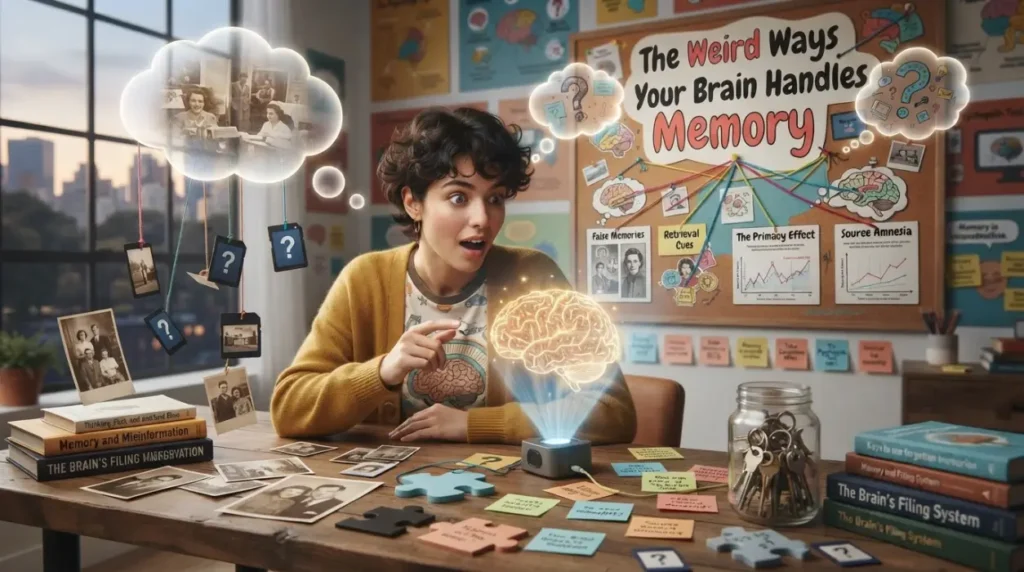
Memory feels like a digital video recorder, storing every detail of your life with crystal clarity. However, psychological research reveals that human memory is much closer to a Wikipedia page where anyone can log in and edit the text.
Every time you recall an event, your brain reconstructs the scene rather than simply playing back a static file. During this process, current feelings, new information, and subconscious biases mix into the original memory, subtly altering the story over time.
This constant rewriting explains why two friends who experienced the same concert or trip often remember key details in completely different ways.
The Doorway Effect and Sudden Forgetfulness
You stand up from your couch to get something from the kitchen, walk through the doorway, and completely forget why you walked in. Scientists call this phenomenon the doorway effect, and it affects almost everyone.
Passing through a physical boundary signals to your brain that one mental scene has ended and another has begun. The mind clears temporary storage to prepare for the new room, causing your previous thought to slip away instantly.
To retrieve that lost thought, stepping back into the original room often triggers your memory storage to reload the context.
The Peak-End Rule in Experience Design
Our brains do not average out the feelings of an entire experience when forming long-term memories. Instead, we evaluate past events based on two very specific moments: the emotional peak and the absolute end.
- A terrible vacation with a magnificent final sunset leaves an overall warm impression in your memory.
- An amazing party that ends with an uncomfortable argument gets remembered as a disappointing night.
- Theme parks design long, boring queues, knowing that thrilling ride drops at the end guarantee visitors leave happy.
Mind Hacks: How Colors and Music Shift Your Mood
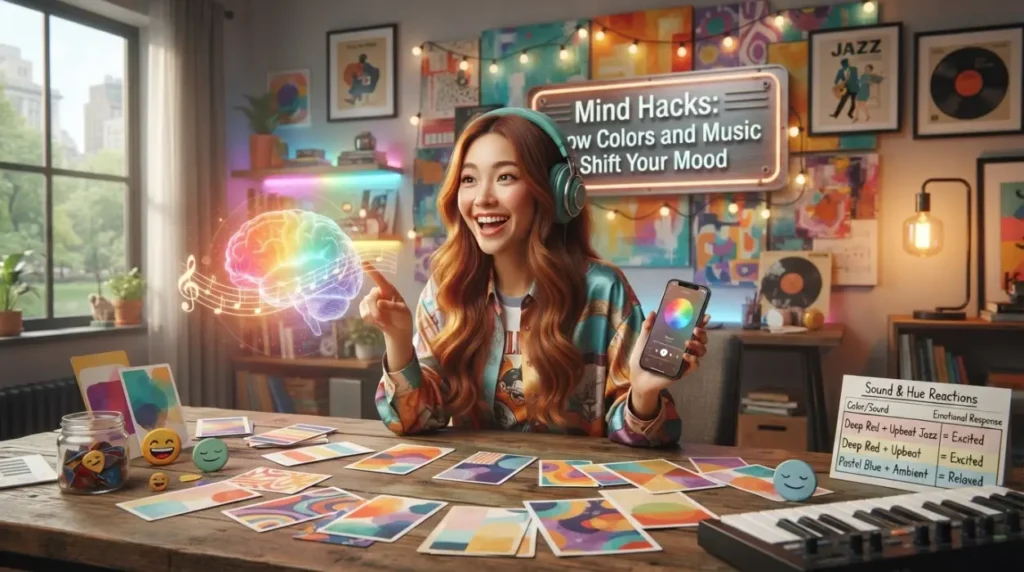
Your brain is constantly absorbing signals from your environment and translating them into physical sensations, mood shifts, and energy changes. Colors, ambient sounds, and musical rhythms directly influence your central nervous system without your conscious permission.
Understanding these environmental triggers lets you design living and working spaces that naturally boost focus, reduce anxiety, and encourage restful sleep.
Color Psychology in Everyday Life
Fast-food restaurants frequently paint their dining areas with bright reds and yellows because those colors trigger appetite while subtly creating a sense of urgency. The goal is to make you eat happily and clear the table quickly for the next customer.
Conversely, soft shades of green and blue trigger the release of calming neurotransmitters that lower blood pressure. Hospitals and waiting rooms use cool tones to keep nervous visitors feeling grounded and relaxed.
The Mozart Effect versus Upbeat Rhythms
For years, people believed that listening to classical music made babies smarter, a concept known as the Mozart Effect. Modern psychology shows that classical music doesn’t raise raw intelligence, but listening to music you enjoy triggers a surge of dopamine.
This chemical boost improves mood and temporal-spatial reasoning, making complex tasks feel significantly easier. Whether you prefer heavy rock, lo-fi beats, or classical piano, listening to your favorite tunes enhances mental output through mood elevation.
Social Psychology Tricks You Use Without Knowing
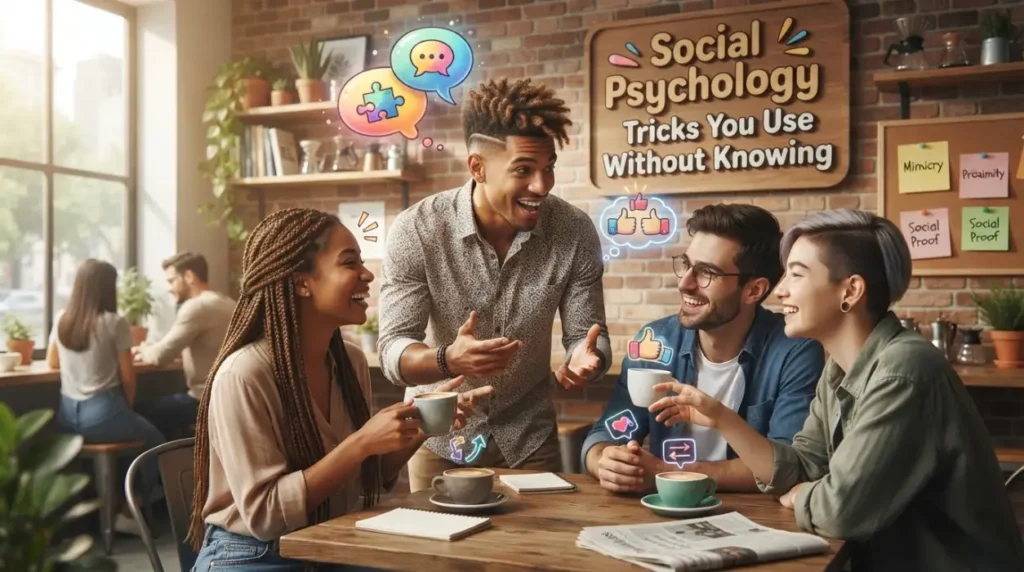
Humans are deeply social creatures, hardwired by evolution to seek connection, protect group safety, and copy surrounding behaviors. Many of our everyday choices are guided by subconscious social rules that keep communities functioning smoothly.
Recognizing these social dynamics helps you communicate more effectively, avoid manipulation, and build deeper connections with friends and coworkers.
The Mirroring Technique for Quick Rapport
When two people connect deeply, they naturally mimic each other’s body language, speech patterns, and facial expressions without realizing it. Psychologists refer to this behavior as mirroring, and it serves as a subtle signal of safety and trust.
- Crossing your legs right after a conversational partner does signals non-verbal agreement.
- Matching the tone and pace of someone’s voice instantly lowers their defensive guard.
- Smiling gently when listening encourages the speaker to open up and share more details.
The Pratfall Effect and Perceived Perfection
People who seem flawless often intimidate others, making it difficult to form genuine emotional bonds. The Pratfall Effect demonstrates that high-performing individuals actually become much more likable when they make a minor, harmless mistake.
Spilling a drop of coffee or stumbling over a word during a presentation humanizes a capable person. That small flaw breaks down social barriers, making the person appear approachable, relatable, and authentic.
The Fascinating Psychology of Decisions and Choice
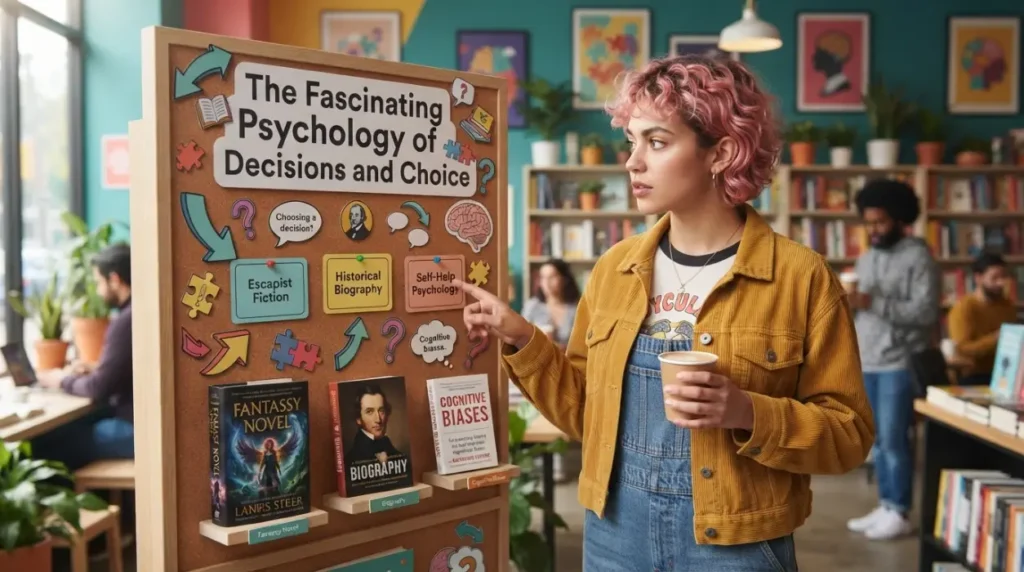
You make thousands of decisions every day, ranging from what to wear in the morning to big career moves. To prevent your brain from burning out due to decision fatigue, your mind relies on mental shortcuts called heuristics.
While these shortcuts save energy, they can also lead to predictable errors in judgment known as cognitive biases.
The Choice Overload Paradox
Having options feels empowering, but offering too many choices often paralyzes decision-making entirely. When presented with dozens of jam flavors at a grocery store display, shoppers stop to look, but rarely make a purchase.
When the display is reduced to just six options, sales jump dramatically because the brain can compare choices without feeling overwhelmed. Streamlining options in daily life reduces mental fatigue and leads to greater satisfaction with final choices.
The Anchor Effect in Pricing Strategies
The first piece of information you receive during a negotiation acts as an anchor that influences all subsequent thoughts. Retail stores use this bias when displaying a crossed-out original price right next to a sale price.
- Seeing a jacket originally priced at $200 makes the current $80 price tag feel like an undeniable steal.
- Car salespeople set high initial asking prices so that smaller discounts feel generous to buyers.
- Setting clear expectations early in conversations anchors the direction of the entire discussion.
Sleep, Dreams, and Nighttime Brain Cleanup
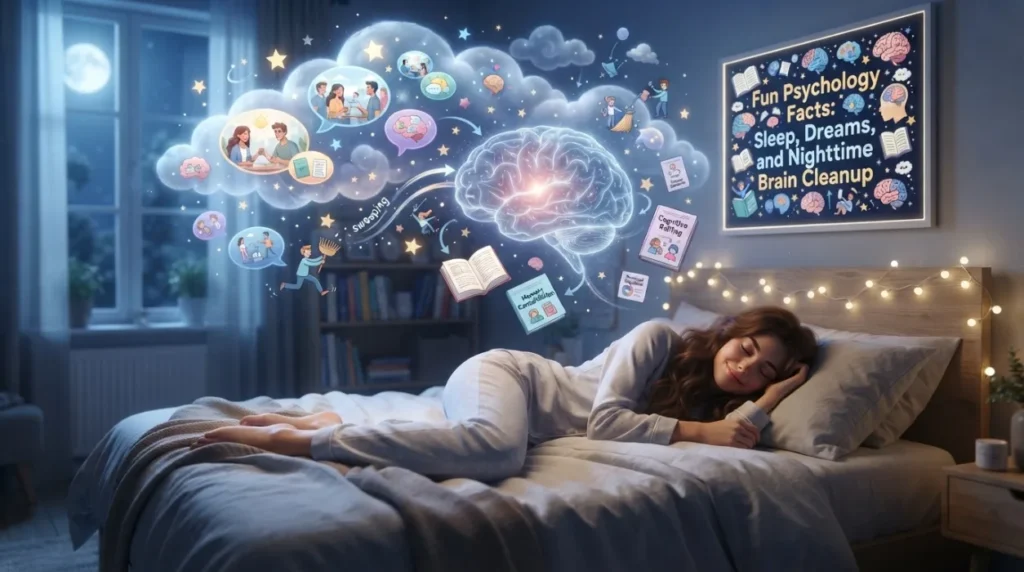
While your body rests during sleep, your brain initiates an intense night shift dedicated to maintenance, memory consolidation, and emotional processing. Sleep is far from a passive state; it is an active neurological reset essential for survival.
During deep sleep stages, the brain’s glymphatic system opens up, flushing out metabolic waste products that accumulate during waking hours.
Why Vivid Dreams Feel So Real
Rapid Eye Movement (REM) sleep is the stage where your most vivid, narrative dreams occur. During REM, the prefrontal cortex—the region responsible for logic, planning, and self-awareness—powers down significantly.
At the same time, emotional centers like the amygdala run at high gear. This unique brain state allows bizarre, illogical dream scenarios to feel completely normal while you are experiencing them.
Dreams as Emotional Simulation Software
Psychologists suggest that dreaming acts as a safe virtual reality simulator for human emotions. Dreams allow your subconscious mind to process difficult feelings, practice threat responses, and file away complex daily events without real-world consequences.
Waking up after a full night of sleep often provides fresh clarity on frustrating problems because your brain worked through emotional tensions while you slept.
Practice Exercise
Test your understanding of fundamental human behavior principles, memory quirks, and decision-making concepts by choosing the correct answer for each multiple-choice question below.
- Which psychological term describes forgetting why you entered a room immediately after walking through a doorway?
A. The Pratfall Effect
B. The Doorway Effect
C. The Anchor Effect
D. The Peak-End Rule - How does the human brain construct long-term memories of past events?
A. It plays back static, unchangeable video recordings stored in cells.
B. It reconstructs and edits details every time a memory is recalled.
C. It deletes all negative details after exactly twenty-four hours.
D. It relies entirely on logical prefrontal cortex processing. - What happens to decision-making when a person is presented with an overwhelming number of choices?
A. Decision speed increases dramatically.
B. Satisfaction with the final choice improves significantly.
C. Mental overload occurs, often leading to choice paralysis.
D. People instantly memorize every option available. - Why do high-performing individuals often appear more likable after making a minor, harmless mistake?
A. The mistake proves they require immediate professional help.
B. Flaws humanize capable people, making them feel approachable under the Pratfall Effect.
C. Making mistakes lowers their overall intelligence score permanently.
D. Mistakes force other people to take over their daily work duties. - What primary neurological process occurs during deep sleep stages to maintain brain health?
A. The prefrontal cortex generates logical mathematical proofs.
B. The brain completely shuts down all electrical signals until morning.
C. The glymphatic system clears out toxic metabolic waste products accumulated during the day.
D. The mind deletes every memory formed during the preceding afternoon.
Answer Key:
- B
- B
- C
- B
- C
FAQs
What are fun psychology facts good for in daily life?
Learning psychology facts helps you understand human behavior, manage stress, and make better decisions. Recognizing mental shortcuts allows you to communicate more clearly, avoid cognitive biases, and build stronger relationships with people around you.
Why do we mirror other people’s body language during conversation?
Mirroring is an unconscious social behavior that signals empathy, safety, and mutual understanding. When you copy someone’s posture or speech pattern naturally, it builds trust and rapport between both speakers without needing words.
Is memory loss after walking into a room a sign of a bad memory?
No, forgetting what you needed upon entering a room is a normal mental occurrence called the doorway effect. Your brain treats physical doors as scene boundaries, clearing temporary working memory to focus on the new environment.
How does music affect brain chemistry and daily productivity?
Listening to music you enjoy triggers dopamine release, improving mood and focus naturally. Enhanced mood reduces stress levels, making complex or repetitive tasks feel significantly easier to complete throughout your workday.
Why do store prices end in 99 cents instead of round numbers?
Prices ending in 99 cents exploit the left-digit bias, where our brains process the left number first. A price tag of $9.99 feels significantly closer to $9 than $10, making items seem like better deals.
Conclusion
Exploring the human mind shows that our daily habits, emotional reactions, and choices are shaped by incredible neurological mechanisms. From the way doorways reset our thoughts to how music lifts our mood, these insights help us navigate life with greater empathy and self-awareness.
Understanding these patterns allows you to make smarter choices, communicate with confidence, and appreciate the unique quirks that make us human. Applying these simple mental strategies turns everyday challenges into opportunities for personal growth.
Start exploring your favorite mind concepts today and dive deeper into fun psychology facts to discover even more about how your brain works!

Jack Olive is the creative mind behind buzzgiggles.com, a fun-focused website built to bring smiles, laughter, and lighthearted entertainment to everyday life. With a passion for humor and enjoyable content, Jack Olive creates and shares playful ideas, amusing stories, entertaining discoveries, and cheerful moments designed for readers of all kinds.
Through buzzgiggles.com, Jack Olive combines creativity, curiosity, and a positive sense of humor to explore the lighter side of life. Whether visitors are looking for a quick laugh, something interesting to share, or a cheerful break from their routine, the website offers content created with fun in mind. Jack Olive believes great entertainment should be easy to enjoy, memorable, and capable of brightening someone’s day.