
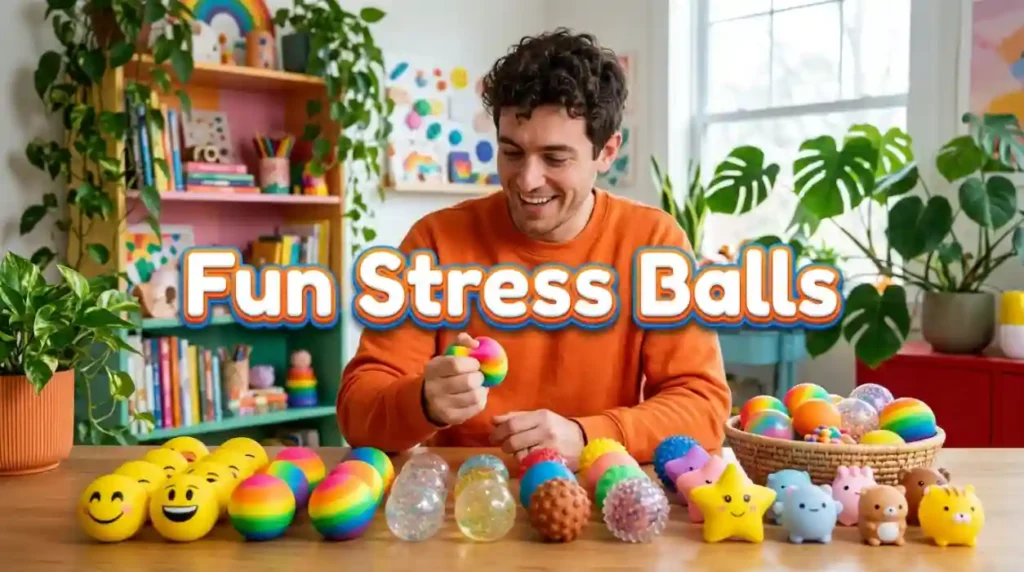
Fun stress balls are squeezable sensory toys made from polyurethane foam, gel beads, or silicone, designed to relieve muscular tension, lower anxiety, and improve mental focus. Beyond physical stress relief, these colorful office and classroom accessories provide satisfying tactile feedback that helps keep hands busy and minds relaxed.
Have you ever found yourself fidgeting with a pen or tapping your foot nervously during a long afternoon meeting? Reaching for vibrant fun stress balls offers a simple, satisfying way to release pent-up energy and quiet a racing mind.
These playful sensory tools turn physical tension into moments of pure tactile joy.
Squeezing colorful fun stress balls does far more than just keep your hands busy at your desk.
Ready to see how fun stress balls can transform your daily work routine, classroom focus, and mental calm? Let’s explore sensory materials, DIY crafts, hand exercises, and cleaning secrets together!
The Neuroscience of Sensory Squeezing and Tension Relief

It is easy to view squishy handheld toys as simple novelties, but occupational therapists treat tactile squeezing as genuine sensory science. When you squeeze a malleable object, your nervous system responds across multiple physical and psychological pathways simultaneously.
Understanding how sensory input affects brain chemistry helps explain why squeezing a small foam ball brings immediate comfort.
It turns a simple desk accessory into a legitimate tool for emotional regulation and daily stress management.
Somatosensory Stimulation and Brain Distraction
When your mind experiences stress, your nervous system gets flooded with excess mental energy that demands a physical outlet. Squeezing a firm or gel-filled ball sends powerful tactile signals up your sensory nerves directly into your brain’s somatosensory cortex.
This surge of safe physical feedback acts as a gentle distraction, pulling your focus away from mental worries and grounding you in the present moment.
Occupational therapists call this tactile grounding, a technique used widely to help people manage situational anxiety and sensory overload.
Muscle Relaxation through Progressive Muscle Tension
Physical tension naturally accumulates in your forearms, wrists, and shoulders when you type at a computer for hours without taking breaks. Squeezing a sensory ball forces your hand muscles to contract tightly, followed by an immediate wave of physical relaxation when you release your grip.
This rhythmic contraction and release mirrors progressive muscle relaxation, a proven therapeutic technique for lowering physical stress.
Regular squeezing breaks up static muscle posture, encouraging blood flow through tired hand tendons and fingers.
Popular Categories and Material Fillings Explained

Not all squeezable toys feel the same in your hand, and choosing the right texture makes a massive difference in your sensory experience. Manufacturers use several distinct outer shells and interior fillings to create unique tactile sensations, ranging from slow-rise foam to crunchy bead bags.
Knowing how different materials behave helps you select the perfect tactile companion for your home or office desk.
Here is a helpful summary comparing popular squishy categories, internal fillings, and ideal use cases.
High-Density Polyurethane Foam
Closed-cell polyurethane foam is the classic material used in traditional promotional squeezable objects. When you press your fingers into dense foam, it resists your force firmly and springs back to its original shape instantly upon release.
Foam models are exceptionally durable, tear-resistant, and lightweight, making them ideal for high-stress work environments where durability is key.
They provide excellent physical resistance for strengthening grip muscles after wrist injuries or long typing sessions.
Water Bead Mesh Balls and Slow-Rise Dough
Water bead models feature colorful polymer spheres encased in a flexible clear rubber skin wrapped inside a net mesh. Squeezing the ball forces tiny glowing beads to bulge out through the mesh openings like colorful bunches of grapes.
Dough-filled models use a dense, putty-like paste that holds your finger indentations momentarily before slowly expanding back.
These soft, slow-rise textures deliver high visual entertainment alongside satisfying tactile feedback.
Hand Health Benefits: Ergonomics and Grip Strengthening

In an era dominated by touchscreens, keyboards, and computer mice, human hands perform repetitive micro-movements all day long. Using squeezable sensory tools introduces healthy movement variety that strengthens hand muscles and relieves tendon stiffness.
Integrating simple hand exercises into your workday protects your joints from repetitive strain fatigue.
Let’s look at three easy hand exercises you can perform right at your desk.
1. The Power-Grip Squeeze
Hold your squeezable ball in the palm of your hand, wrapping all four fingers and your thumb firmly around its surface. Squeeze as hard as is comfortable for five seconds, then open your hand completely, spreading your fingers wide apart.
Repeat this squeeze-and-release cycle ten times per hand to boost blood circulation through your palm and forearm.
This exercise wakes up tired hand muscles during mid-afternoon energy slumps.
2. The Finger-Pinch Precision Exercise
Place your sensory ball between the tip of your thumb and the tip of your index finger. Press your thumb and finger together tightly, flattening the ball surface for three seconds before releasing.
Move down your hand, pinching the ball between your thumb and middle finger, ring finger, and pinky finger sequentially.
This precision pinch movement strengthens small intrinsic hand muscles used for handwriting and fine crafting.
3. The Wrist Extension Roll
Place your sensory ball on a flat wooden desk surface, resting the palm of your hand flat on top of the ball. Roll the ball forward and backward across the desk by flexing and extending your wrist joint gently.
Perform smooth rolling motions for sixty seconds to stretch tight wrist tendons after typing long reports.
It offers a quick, soothing stretch that prevents wrist stiffness.
How to Make DIY Squishy Sensory Balls at Home

You do not need to buy expensive commercial toys to enjoy custom tactile squeezies at home or in the classroom. With a few inexpensive household items, you can craft your own personalized sensory tools in under fifteen minutes.
Crafting your own squishies allows you to customize colors, textures, and firm resistance levels to match your exact preferences.
Here is a simple step-by-step guide to making two popular DIY sensory balls.
1. The Classic Flour and Balloon Squishy
This classic craft creates a dense, moldable tool that feels like smooth modeling clay inside a soft outer skin.
- Prepare the Funnel: Stretch the neck of a heavy-duty latex balloon over the narrow end of a plastic kitchen funnel.
- Fill with Flour: Pour half a cup of all-purpose baking flour or cornstarch into the funnel, tapping the side so it settles into the balloon.
- Tie and Double-Layer: Pinch out trapped air, tie the balloon neck securely, and stretch a second snippet-capped balloon over the first for extra durability.
2. The Transparent Gel and Glitter Balloon
This craft creates a squishy tool that offers glowing visual flair alongside soft tactile compression.
- Fill a clear latex balloon with two tablespoons of clear hair gel or liquid craft glue using a plastic syringe or funnel.
- Add a teaspoon of colorful craft glitter, mini sequins, or small plastic beads into the gel inside the balloon.
- Tie the balloon tightly, massage the outer skin to distribute the glitter evenly, and enjoy your sparkling sensory creation!
Proper Cleaning, Care, and Longevity Secrets

Squishy sensory items spend hours in human hands, collecting natural skin oils, desktop dust, and lint over time. If left uncleaned, sticky rubber skins become grimy and dull, losing their smooth tactile appeal.
Following simple maintenance habits keeps your sensory tools clean, hygienic, and working like new.
Let’s review essential care rules every squishy owner should know.
Washing Sticky Rubber and Gel Skins
Rubber, silicone, and TPR (thermoplastic rubber) skins naturally develop a tacky surface texture as skin oils accumulate on them. Wash grimy rubber toys in a bowl of warm water mixed with a few drops of mild liquid dish soap.
Gently scrub the outer surface with your fingers, rinse thoroughly under clean tap water, and pat dry with a lint-free towel.
Avoid using harsh chemical solvents, rubbing alcohol, or boiling water, which break down rubber polymers rapidly.
The Cornstarch Refresh Trick
After washing rubber or silicone squishies, the outer skin often feels slightly sticky to the touch as it dries. Lightly dusting the dry surface with a pinch of cornstarch or baby powder restores a silky smooth finish instantly.
Rub the powder over the outer skin and brush off any excess using a soft tissue.
This simple maintenance trick prevents dust from sticking to your sensory tools while restoring an effortless glide in your hand.
Practice Exercise
Test your understanding of neuroscience concepts, materials, hand ergonomics, and DIY crafting with this quick five-question multiple-choice quiz.
- What physical process occurs when you squeeze and release a firm sensory tool to relieve forearm muscle tension?
A. High-voltage static electric shock
B. Progressive muscle contraction and relaxation
C. Instant bone growth in fingers
D. Chemical evaporation of blood - Which material filling provides a firm, durable resistance that springs back to its original shape instantly?
A. Super-absorbent water beads
B. Closed-cell polyurethane foam
C. Liquid hair gel
D. Fine natural quartz sand - What simple household ingredient can be dusted onto freshly washed rubber squishies to eliminate sticky surface textures?
A. Heavy white sugar
B. Cornstarch or baby powder
C. Coarse sea salt
D. Black pepper - How does sending tactile signals to the brain’s somatosensory cortex help reduce mental stress?
A. It forces the brain to forget how to read text
B. It provides a safe sensory distraction that grounds your focus in the present moment
C. It stops your heart from beating
D. It turns off sensory nerves permanently - What simple precaution prevents homemade flour balloons from bursting during heavy squeezing?
A. Coating the balloon in motor oil
B. Stretching a second snippet-capped balloon over the first to create a double protective layer
C. Baking the balloon in a hot oven for two hours
D. Filling the balloon with sharp metal nails
Answer Key:
- B
- B
- B
- B
- B
FAQs
Are fun stress balls safe for young children to use in classrooms?
Yes, most commercially manufactured squishies are made from non-toxic materials suitable for children. However, always inspect gel-filled or water-bead models regularly for tears to prevent choking hazards among toddlers who might bite them.
How long does a typical foam or gel stress ball last before wearing out?
High-density foam models can last for several years of daily squeezing without losing structural integrity. Gel-filled and water-bead models typically last between three and six months, depending on how aggressively they are squeezed.
Can squeezing a sensory ball help manage symptoms of Carpal Tunnel Syndrome?
Gentle squeezing exercises improve blood flow and flexor tendon mobility, which can soothe mild hand fatigue. However, individuals with acute Carpal Tunnel Syndrome should consult a physical therapist before performing repetitive grip exercises.
Why do some squishy toys develop a strong chemical smell when brand new?
New polyurethane foam and synthetic rubber products release harmless manufacturing gases when first unwrapped, a process called off-gassing. Leave your new squishy in a well-ventilated room for twenty-four hours to let the smell dissipate naturally.
How can I make a DIY squishy extra firm for heavy hand workouts?
Fill your DIY balloon setup with dense cornstarch, packed tightly using a wooden dowel instead of standard flour. Cornstarch creates a non-Newtonian fluid texture that hardens instantly under heavy squeeze pressure, offering intense physical resistance.
Conclusion
Incorporating vibrant fun stress balls into your daily routine is a simple, effective way to melt away physical tension, sharpen mental focus, and add joy to your desk setup. From firm polyurethane foam models to soothing DIY flour balloons, sensory tools offer accessible comfort for people of all ages.
Remember that taking small moments to pause, breathe, and squeeze throughout your busy workday is an essential form of self-care.
Find your favorite squishy texture today, keep it within arm’s reach on your desk, and enjoy a calmer, more focused mindset!

Jack Olive is the creative mind behind buzzgiggles.com, a fun-focused website built to bring smiles, laughter, and lighthearted entertainment to everyday life. With a passion for humor and enjoyable content, Jack Olive creates and shares playful ideas, amusing stories, entertaining discoveries, and cheerful moments designed for readers of all kinds.
Through buzzgiggles.com, Jack Olive combines creativity, curiosity, and a positive sense of humor to explore the lighter side of life. Whether visitors are looking for a quick laugh, something interesting to share, or a cheerful break from their routine, the website offers content created with fun in mind. Jack Olive believes great entertainment should be easy to enjoy, memorable, and capable of brightening someone’s day.