
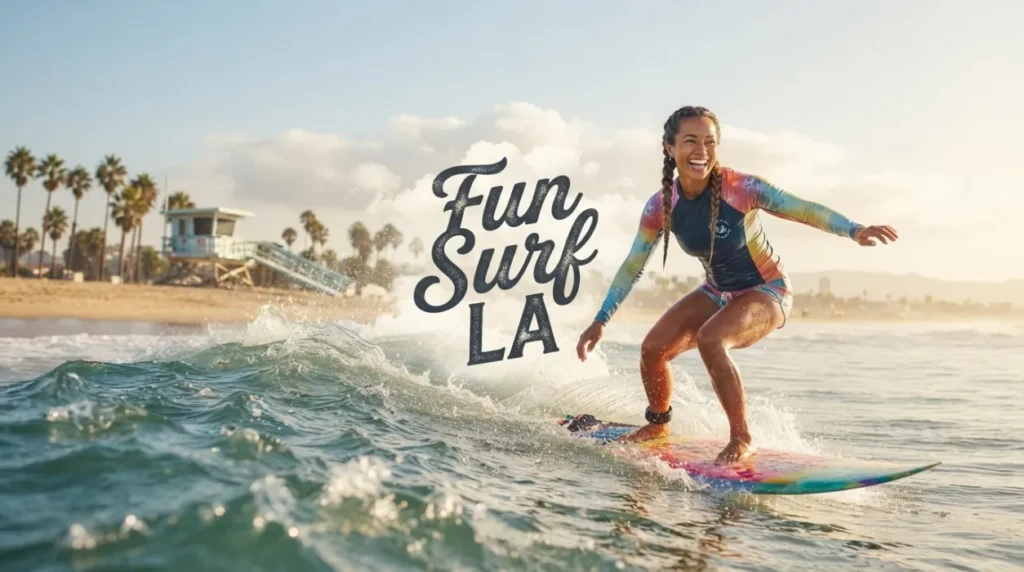
Experiencing a fun surf LA outing means choosing beginner-friendly beaches like Santa Monica or Sunset Beach, grabbing a high-volume foam longboard, wearing a comfortable 3/2mm wetsuit, and timing your session with clean morning swells. Respecting local lineup etiquette and taking lessons guarantees a safe, high-energy day riding Pacific waves.
Have you ever stood on the Pacific shoreline watching surfers glide across rolling ocean waves and wondered what it feels like? Catching a fun surf LA session is the ultimate way to experience Southern California’s iconic coastal lifestyle firsthand.
Whether you are stepping onto a board for the first time or returning after years away, Los Angeles offers beach breaks for every skill level.
Planning a fun surf LA day out requires knowing which beaches offer gentle waves, how to choose forgiving equipment, and when tides align best.
Ready to see how a fun surf LA adventure can transform your weekend routine into pure outdoor excitement? Let’s walk through the top breaks, gear essentials, safety rules, and local secrets every surfer should know!
Why Los Angeles Is a Premier Surfing Destination

Southern California holds a legendary spot in global ocean culture, attracting travelers and water sports lovers from around the world. With over seventy miles of coastline running along Los Angeles County alone, you can find a huge variety of wave setups.
From sandy beach breaks with gentle rolling foam to rocky point breaks that peel for hundreds of yards, the region offers ideal water conditions throughout the entire year.
Let’s examine what makes the Los Angeles coastline so special for surfers of all experience levels.
The Geography and Swell Mechanics of the Santa Monica Bay
Santa Monica Bay forms a broad, sheltered curve that catches ocean swells coming from multiple directions across the Pacific. Winter storms in the North Pacific send long-period northwest swells, while summer brings warm southern swells originating near Mexico and South America.
This unique geographical layout means Los Angeles beaches almost always have rideable waves, regardless of the time of year.
Headlands like Malibu and Palos Verdes help filter out rough chop, creating clean, glassy wave faces when morning winds blow offshore.
The Birthplace of Modern American Surf Culture
Surfing arrived in California in the early twentieth century, quickly turning coastal communities into vibrant centers of youth culture, music, and art. Iconic spots like Malibu served as the testing ground for revolutionary lightweight board designs that made riding waves accessible to everyone.
Today, that rich heritage lives on at every public beach, where local clubs and welcoming instructors help newcomers join the ocean community.
Experiencing this living history adds extra magic to every morning you spend paddling out into the blue Pacific waters.
Top Beginner-Friendly Beaches across Los Angeles
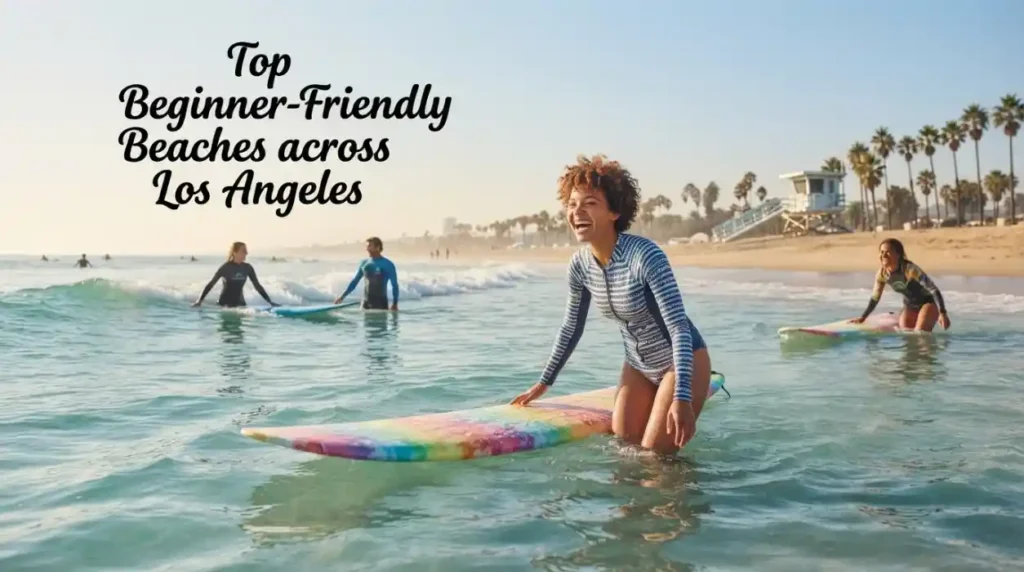
Choosing the right beach is the single most important decision for ensuring your early surf sessions stay safe, encouraging, and enjoyable. Trying to learn at advanced reef breaks with heavy currents leads to quick frustration, while sandy, shallow beaches offer forgiving foam to practice popping up.
Different coastal stretches cater to different stages of your progression as you build confidence balancing on your board.
Here is a breakdown of the best Los Angeles breaks grouped by skill suitability, wave style, and local amenities.
Santa Monica Beach: Soft Waves and Spacious Sand
Located right next to the famous pier, Santa Monica offers miles of open sandy seabed that breaks incoming ocean swells into gentle white foam. The wide beach provides plenty of room to spread out, allowing beginners to practice paddling without worrying about crowded lineups.
Because the seabed is pure soft sand, falling off your board is completely safe and painless as you refine your stance.
Convenient parking lots, board rental shops, and public restrooms right along the sand make this spot exceptionally convenient for day trips.
Sunset Point: Long, Gliding Rides in Pacific Palisades
Tucked away where Sunset Boulevard meets the Pacific Coast Highway, Sunset Point is famous for offering some of the softest waves in North America. The rocky point bends incoming waves so smoothly that longboarders can ride a single wave for over one hundred yards without losing momentum.
This slow, predictable wave speed gives beginners extra time to find their balance and practice making smooth turns across the wave face.
It is an ideal location for longboarders, family outings, and anyone looking for a relaxed, non-competitive water atmosphere.
Essential Gear You Need for a Successful Session
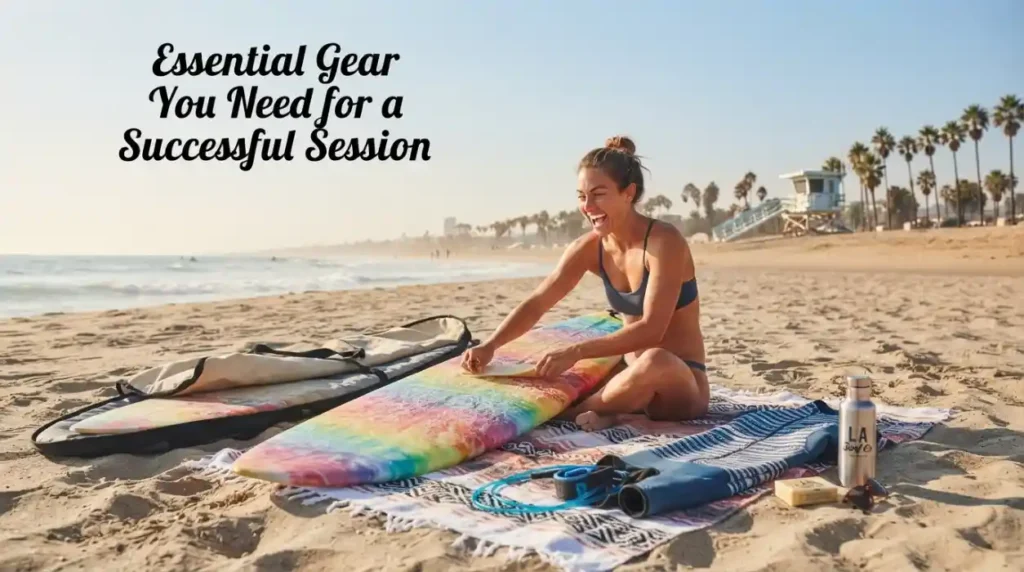
You do not need an expensive garage full of equipment to start catching waves along the Southern California coast. Focusing on a few high-quality basics ensures you stay warm, comfortable, and stable while spending hours in the ocean water.
Investing in forgiving gear designed specifically for learning speeds up your progress and prevents unnecessary bumps or bruises.
Let’s review the core gear setup every beginner should bring down to the beach.
Soft-Top Foam Longboards versus Fiberglass Boards
When learning, board volume and stability are far more important than sleek looks or sharp performance edges. Large foam longboards (often eight to ten feet long) pack massive floatation that makes catching small waves effortless compared to short, thin fiberglass boards.
- High Volume: Provides buoyancy that allows you to catch slow-rolling waves early before they break.
- Soft Foam Deck: Cushions impacts if the board bumps against your body during a wipeout.
- Textured Grip: Eliminates the need to apply messy sticky wax before every single surf session.
- Flexible Safety Fins: Soft rubber fins reduce the risk of cuts or scrapes in shallow water.
Choosing the Right Wetsuit Thickness for Pacific Waters
Despite California’s sunny weather reputation, the Pacific Ocean water temperature off Los Angeles remains cool throughout most of the calendar year. Water temperatures range from the mid-fifties in winter up to the high sixties during peak summer months.
A 3/2mm neoprene wetsuit (three millimeters thick on the torso, two millimeters on arms and legs) keeps you warm without restricting your paddling movement.
Staying warm extends your ocean stamina, keeping you comfortable for two-hour sessions even on chilly morning outings.
Understanding Ocean Safety and Lineup Etiquette
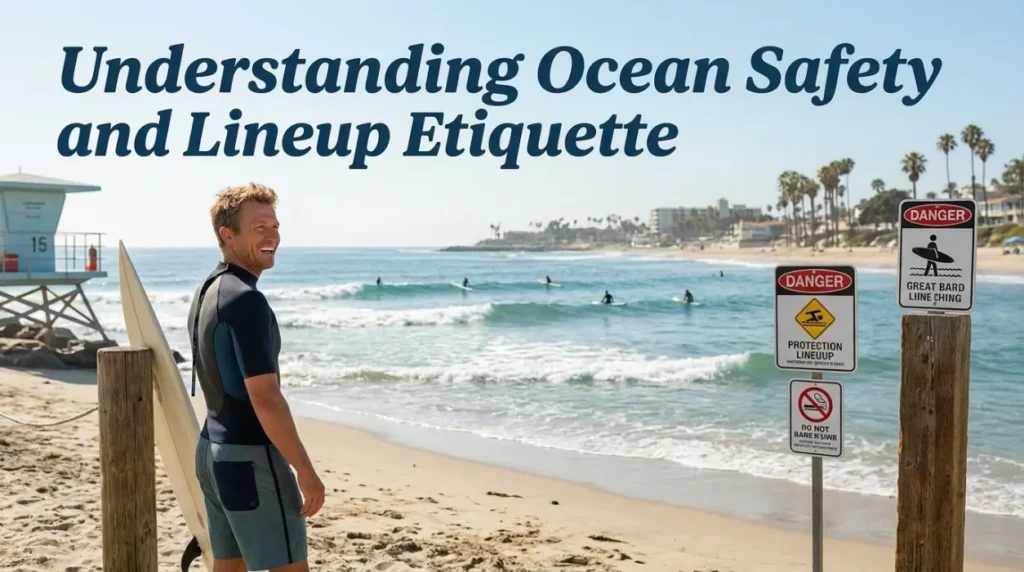
The ocean is a dynamic natural environment that demands respect, constant awareness, and basic safety knowledge at all times. Learning how to read tides, identify dangerous rip currents, and follow unwritten lineup etiquette prevents accidents and keeps everyone happy.
Respecting local surfers and knowing water rules creates a welcoming atmosphere for every surfer sharing the lineup.
Here are the critical safety guidelines to memorize before paddling past the shorebreak.
Spotting and Escaping Rip Currents
Rip currents are strong, narrow rivers of water moving away from the shore through deep channels in the sandbar. They often form near piers, jetties, or gaps between breaking waves where water rushes back out to sea.
- Stay Calm: Never panic or try to paddle straight back to shore directly against a powerful current.
- Paddle Parallel: Turn ninety degrees and paddle sideways along the beach line to slip out of the narrow current channel.
- Use Wave Power: Once out of the main current, let incoming breaking waves push you naturally back toward the shallow beach.
The Fundamental Rule of Wave Priority
Wave priority is simple: the surfer paddling closest to the peak where the wave first breaks has the right of way. “Dropping in” means catching a wave in front of someone who is already riding further inside near the breaking curl.
Always look toward the breaking peak before taking off on a wave to make sure no one else is already riding it.
If someone is already on the wave, pull back on your board and wait patiently for the next set to roll through.
Step-by-Step Guide to Taking Your First Lesson
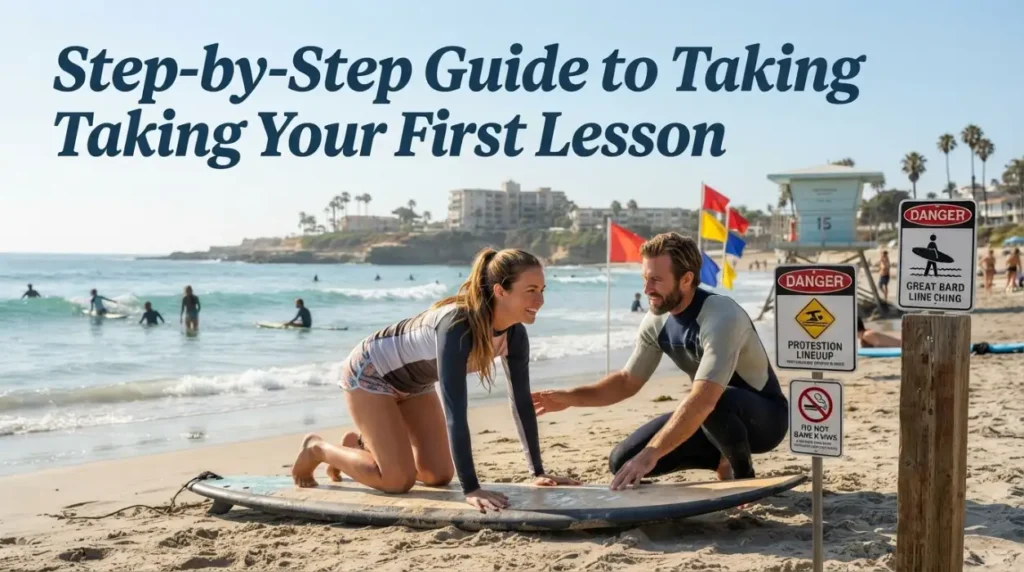
While you can try learning on your own, taking an accredited lesson from a qualified local instructor shortens your learning curve dramatically. A good instructor teaches proper paddling technique, timing, and popup mechanics on dry land before taking you into shallow water.
Professional guidance builds correct muscle memory early, preventing bad habits that take months to unlearn later on.
Here is what you can expect during a structured two-hour introductory lesson.
Land Training and Pop-Up Mechanics
Every solid surf lesson begins with fifteen to twenty minutes of land preparation directly on the dry beach sand. Your instructor will show you where to place your chest on the board centerline to maintain proper buoyancy balance.
Practicing the Pop-Up Motion
You will practice transitioning smoothly from a prone paddling position up to your standing stance in one fluid, explosive motion.
Eye Focus and Foot Placement
Instructors teach you to keep your head up and look forward toward the beach rather than staring down at your feet during takeoff.
In-Water Coaching and Wave Timing
Once you master basic pop-up movements on land, your instructor guides you into waist-deep water to target gentle white foam waves. The instructor holds your board steady, watches incoming wave sets, and gives you a helpful push at the exact right moment.
This extra push gives your board speed, making it much easier to stand up smoothly and ride all the way to shore.
Having an expert nearby boosts your confidence while providing instant feedback after every single ride attempt.
Practice Exercise
Test your knowledge of Southern California beach breaks, gear choices, and water safety rules by taking this quick five-question multiple-choice quiz.
- Which beach feature makes Santa Monica Beach particularly safe and forgiving for complete beginners?
A. Steep rocky cliffs that block all incoming wind
B. Deep underwater coral reefs with sharp edges
C. Wide, flat sandy bottom that creates gentle white foam waves
D. Strong industrial ocean currents that pull boards fast - What type of board is recommended for beginners due to its flotation, stability, and safety?
A. Thin, narrow five-foot fiberglass shortboard
B. Large soft-top foam longboard
C. Wooden hollow vintage bellyboard
D. Inflatable river paddleboard without fins - What thickness of wetsuit is generally ideal for year-round surfing comfort in Los Angeles waters?
A. 1mm shorty springsuit
B. 3/2mm full neoprene wetsuit
C. 7mm heavy cold-water diving suit
D. No wetsuit, as water remains 85 degrees year-round - What should you do if you get caught in an ocean rip current moving away from shore?
A. Paddle directly against the current toward the beach as hard as possible
B. Panic and abandon your flotation board immediately
C. Paddle parallel to the shoreline to exit the narrow current channel
D. Drown your gear and swim straight down to the sea floor - What does the term “dropping in” mean in surfing etiquette?
A. Dropping your surfboard on the sand before stepping in
B. Catching a wave in front of a surfer who already has priority closer to the peak
C. Diving under a large wave with your board held behind you
D. Leaving your wetsuit at home on a chilly winter morning
Answer Key:
- C
- B
- B
- C
- B
Frequently Asked Questions
What is the best time of day to go surfing in Los Angeles?
Early morning is usually the best time to surf in Los Angeles because winds are calm and offshore. Calm morning winds keep wave faces smooth, glassy, and easy to ride before afternoon sea breezes create choppy water.
Do I need to know how to swim well before trying to surf?
Yes, basic swimming ability and comfort in ocean water are essential safety requirements for learning to surf. Even in shallow water, wave action can separate you from your board, requiring you to tread water or swim back easily.
How long does it take for a beginner to stand up on a surfboard?
Most beginners manage to stand up on a large foam longboard during their very first two-hour lesson with an instructor. Consistency takes practice, but catching white foam waves is achievable for almost everyone on day one.
Can I rent surfing equipment directly at Los Angeles beaches?
Yes, major surf beaches like Santa Monica, Venice, and Manhattan Beach have local shops right near the sand. You can easily rent foam longboards, wetsuits, and roof racks by the hour or for full-day trips.
What should I do with my car keys while I am out in the ocean?
Use a waterproof key pouch worn under your wetsuit or secure a mechanical key lockbox to your vehicle’s tow hitch. Never hide electronic key fobs on tires or under towels left unattended on public beach sand.
Conclusion
Experiencing a fun surf LA outing is an unforgettable adventure that combines physical fitness, outdoor beauty, and pure ocean excitement. By selecting beginner-friendly spots like Santa Monica, using stable foam longboards, and respecting ocean safety rules, you set yourself up for total success.
Southern California’s welcoming wave culture offers an incredible playground for anyone willing to grab a board and dive in.
The feeling of gliding across your very first ocean wave stays with you long after the saltwater dries off.
Are you ready to trade the city noise for the soothing sound of rolling Pacific waves? Pick out a sunny morning, book a lesson or rent a board, and jump into your own coastal adventure today!

Jack Olive is the creative mind behind buzzgiggles.com, a fun-focused website built to bring smiles, laughter, and lighthearted entertainment to everyday life. With a passion for humor and enjoyable content, Jack Olive creates and shares playful ideas, amusing stories, entertaining discoveries, and cheerful moments designed for readers of all kinds.
Through buzzgiggles.com, Jack Olive combines creativity, curiosity, and a positive sense of humor to explore the lighter side of life. Whether visitors are looking for a quick laugh, something interesting to share, or a cheerful break from their routine, the website offers content created with fun in mind. Jack Olive believes great entertainment should be easy to enjoy, memorable, and capable of brightening someone’s day.