

Experiencing fun track days allows drivers to push their personal street cars or rental sports cars safely on closed racing circuits. Guided by professional instructors, these non-competitive events emphasize driving skill, vehicle handling, track safety, high-speed control, and pure automotive enjoyment without the pressure of official competition.
Have you ever wondered what it feels like to unleash your car’s true performance without worrying about speed limits, traffic jams, or red lights? Participating in fun track days gives everyday drivers a safe, legal, and thrilling environment to test their driving skills on real racing circuits.
Whether you drive a modest hatchback or a high-powered sports coupe, high-performance driving events welcome motor enthusiasts of every experience level.
Planning your first fun track day adventure opens the door to expert coaching, supportive car communities, and high-speed cornering techniques.
Ready to trade boring highway commutes for heart-pounding laps around a legendary circuit? Let’s walk step-by-step through vehicle preparation, safety rules, driving lines, and insider tricks so you can hit the pavement with total confidence!
What Are Track Days and How Do They Work?

At its core, a track day is an organized event where drivers bring their personal street vehicles or specialized track cars to a closed road course. Unlike formal racing competitions, there are no trophies, podium finishes, or official timing clocks dictating your speed.
The primary goal is personal skill development, vehicle control, and having a blast alongside fellow car lovers.
Understanding the structured nature of these events removes any anxiety beginners might feel about driving on a real racetrack.
The Difference Between High-Performance Driving and Racing
It is easy to confuse open circuit events with actual wheel-to-wheel racing, but the operational rules are completely different. In competitive racing, drivers battle aggressively for track position, late-brake past competitors, and risk damaging their cars to cross the finish line first.
Non-competitive recreational driving events strictly prohibit aggressive wheel-to-wheel battling and unexpected overtaking manoeuvres.
Passing is strictly controlled using safe designated passing zones, ensuring everyone takes their pride and joy home without a scratch.
Understanding Experience Groups and Run Sessions
To maintain safety and keep traffic moving smoothly, organizers divide drivers into distinct experience tiers. Each group takes turns heading out onto the track for twenty-minute driving stints throughout the entire day.
Novice groups receive dedicated instructors who ride in the passenger seat to offer real-time advice on braking points and steering inputs.
As your skills build over time, you gradually advance into intermediate and advanced groups where point-by-point passing rules become more flexible.
Essential Preparation for Your First Track Day
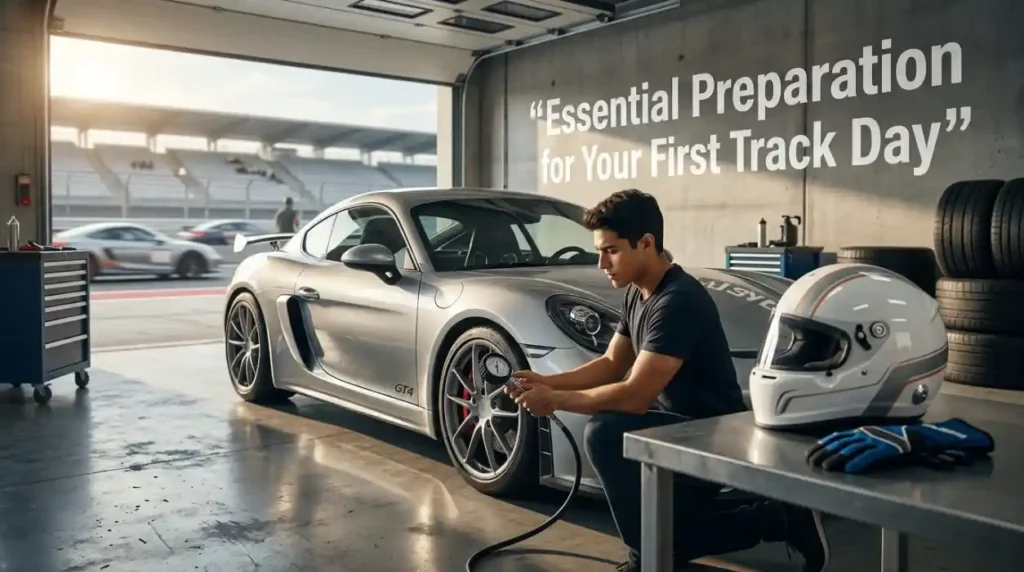
Showing up at a race circuit unprepared can turn a dream afternoon into an exhausting nightmare. Proper preparation starts at home days before you load up your helmet and drive through the paddock gates.
Taking a systematic approach to your car, gear, and mindset ensures your vehicle handles high stress effortlessly.
Here is a quick summary comparing key preparation stages to keep your day running smoothly.
Pre-Event Vehicle Inspection Essentials
Your car will experience far more heat, stress, and cornering force on a circuit than it ever encounters on public highways. Start by inspecting your braking system, ensuring you have at least fifty percent pad thickness remaining before heading out.
Fresh high-temp brake fluid is critical because old fluid absorbs moisture, which boils easily under heavy braking and causes a spongy pedal.
Inspect your tires for cracks or uneven wear, and ensure your engine oil and coolant levels are completely topped off.
Safety Gear You Absolutely Need
Safety equipment rules are straightforward, but meeting the exact requirements is non-negotiable for passing tech inspection. Every sanctioning body requires a certified Snell-approved helmet, typically carrying an SA2020 or newer rating.
Motorcycle helmets are sometimes permitted in beginner classes, but dedicated auto racing helmets offer superior fire protection and impact resistance.
Wear long pants made from natural fibers like cotton, along with closed-toe athletic shoes that allow clean pedal feel.
Learning the Driving Line and Vehicle Dynamics
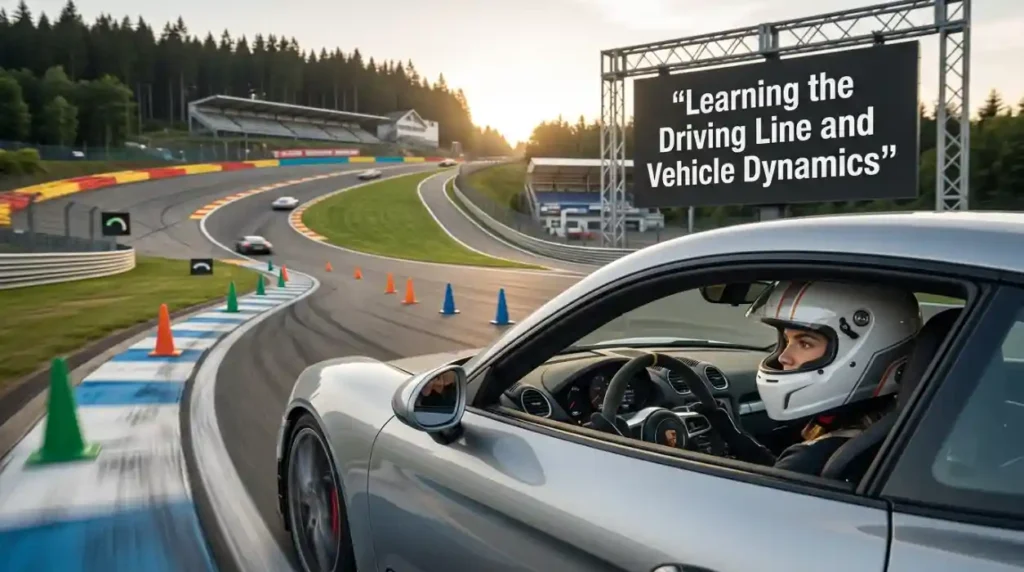
Driving fast around a circuit is not about stomping the gas pedal on straightaways; it is about smooth, deliberate control through corners. The fastest and safest way around any corner is called the “driving line,” which maximizes the radius of the turn.
Understanding basic physics concepts helps you manage weight transfer and maintain tire traction through tight turns.
Let’s break down the fundamental steps for conquering every corner like a seasoned pro.
The Anatomy of a Perfect Corner
Every turn on a road course consists of three primary reference points that guide your steering and speed control. Approaching these points correctly prevents mid-corner drama and sets you up for maximum acceleration down the next straightaway.
- Braking Zone & Turn-In Point: Slow your vehicle down in a straight line before initiating steering input toward the inner edge of the track.
- The Apex: This is the innermost point of the corner curve where your car gets closest to the inside curb or track edge.
- Tracking Out: Smoothly unwind your steering wheel as you exit the corner, allowing centrifugal force to carry the car toward the outer edge of the pavement.
Managing Weight Transfer for Maximum Grip
Your car’s tires only have a limited amount of grip to share between braking, steering, and accelerating. When you step on the brakes, weight shifts to the front tires, giving them more steering grip while lightening the rear end.
Conversely, aggressive acceleration shifts weight to the rear wheels, reducing front-wheel turn-in response.
Smooth inputs on the pedals and steering wheel prevent sudden weight shifts that break tire traction unexpectedly.
Crucial Track Safety Rules and Flags
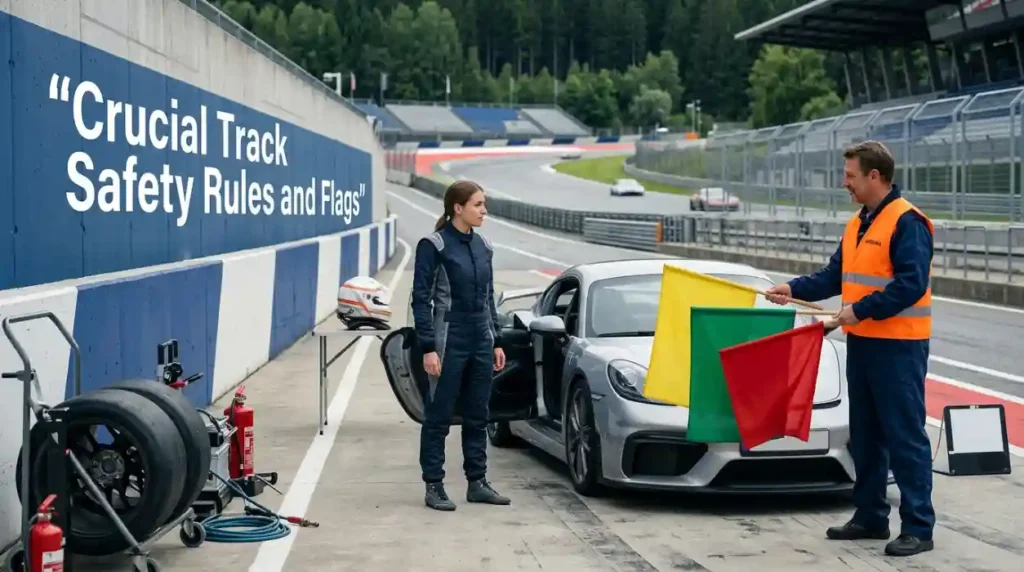
Racetracks rely on a colorful system of flags waved by corner marshals stationed around the circuit. These flags act as your high-speed communication network, warning you of hazards long before you see them around blind corners.
Memorizing flag meanings is essential for keeping yourself, your passenger, and fellow drivers safe.
Pay close attention to these primary flags throughout every single driving session.
Decoding the Flags You Will See
- Green Flag: The track is clear, and normal driving conditions apply across the entire circuit.
- Yellow Flag (Stationary or Waved): Hazard ahead on or near the track; slow down immediately and do not pass other cars.
- Blue Flag: A faster car is behind you looking to pass; prepare to give a point-by signal in the next passing zone.
- Red Flag: Major incident on track; safely bring your vehicle to a controlled stop near a corner station and await instructions.
- Black Flag: An issue has been identified with your car or your driving behavior; pull into the pit lane immediately to speak with officials.
- Checkered Flag: The session is complete; complete a slow, gentle cool-down lap and return directly to the paddock.
The Art of the Point-By Passing Signal
In beginner and intermediate groups, passing is strictly limited to designated straightaways using explicit hand signals. If a faster car fills your rearview mirror, maintain your driving line and stick your arm out the driver-side window.
Point clearly over the roof or out the side to indicate which side you want the trailing driver to pass on.
Ease off the throttle slightly on the straightaway to help the passing car complete the maneuver quickly and safely.
Popular Track Day Format Options and Cars
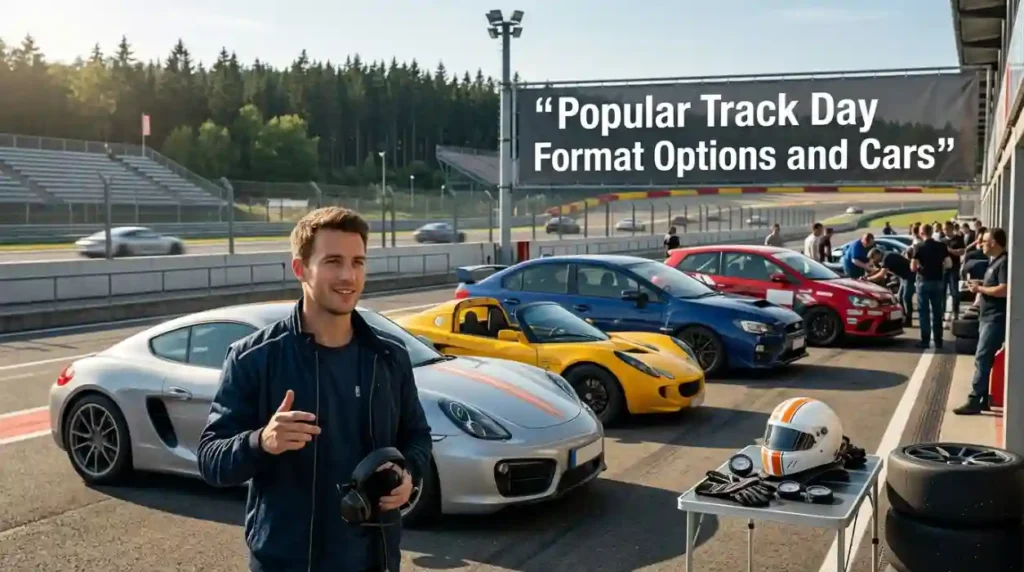
You do not need an expensive foreign supercar to enjoy high-performance circuit driving. In fact, driving a lightweight, lower-horsepower car often teaches better vehicle control than wrestling a heavy, six-hundred-horsepower monster.
Different organizations offer varying event formats to suit diverse budgets and driving preferences.
Let’s look at the most accessible cars and event types available today.
Choosing the Right Car for High-Speed Fun
- Mazda MX-5 Miata: World-famous for brilliant handling, cheap replacement parts, and outstanding driver feedback that rewards momentum.
- Toyota GR86 / Subaru BRZ: Well-balanced rear-wheel-drive coupes that offer modern safety, great steering feel, and affordable consumable costs.
- Volkswagen Golf GTI / Honda Civic Si: Practical front-wheel-drive hot hatchbacks that perform exceptionally on track while driving you home in comfort.
- BMW 3 Series (E46/E90): Classic European sports sedans featuring near fifty-fifty weight distribution and smooth inline-six engines.
Exploring Track Day Organizations
Numerous independent clubs and national organizations host events at road courses across the globe. National organizations like the Sports Car Club of America (SCCA) and the National Auto Sport Association (NASA) run highly structured events with certified coaching.
Private track clubs and marque-specific groups (like Porsche or BMW clubs) welcome all vehicle makes while offering relaxed, community-focused atmospheres.
Researching local club schedules helps you find beginner-friendly dates at tracks near your hometown.
Managing Physical Fatigue and Post-Event Care
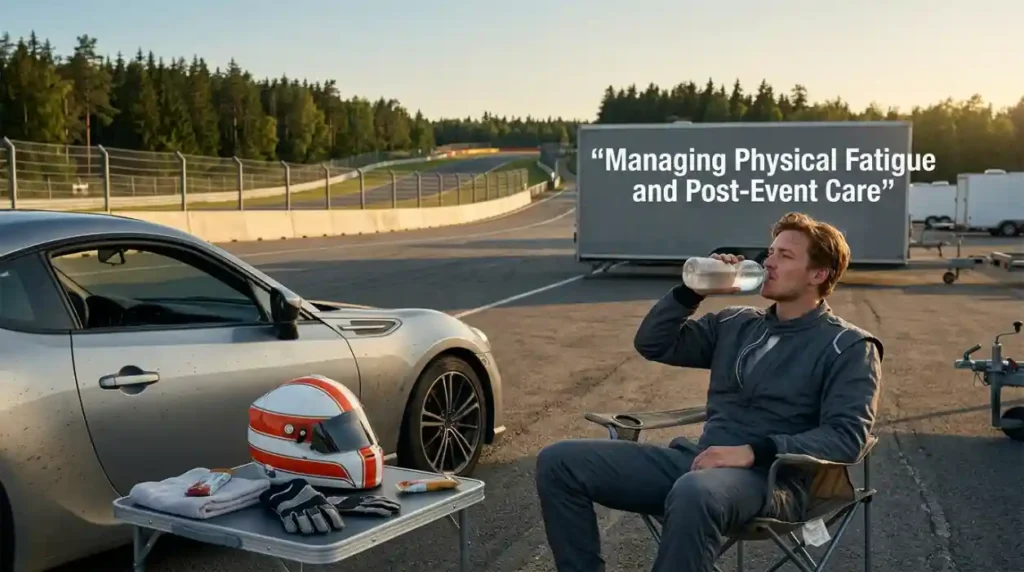
Driving a car at high speeds for hours demands intense physical concentration and mental energy. It is surprisingly easy to become dehydrated and exhausted after three or four high-energy sessions on a warm afternoon.
Taking care of your body in the paddock ensures you stay sharp, reactive, and energized all day long.
Here are practical maintenance steps for both you and your car after off-track cool-downs.
Staying Healthy in the Paddock
Drink plenty of water and electrolyte fluids throughout the day, even if you do not feel actively thirsty between sessions. High ambient temperatures combined with wearing helmets and heavy cotton clothing accelerate fluid loss quickly.
Eat light, protein-rich meals to keep your blood sugar steady without feeling sluggish during afternoon sessions.
Take time between driving stints to relax in a shaded folding chair, review track notes, and talk through sessions with your instructor.
Post-Drive Vehicle Cool-Down Rituals
Never set your mechanical parking brake immediately after pulling into the paddock following a hot track session. Glowing hot brake pads pressed against scorching brake rotors can warp the metal discs or fuse pad material onto the surface.
Allow your car to idle for a few minutes or roll gently back and forth in your parking spot to let air cool the brakes evenly.
Pop your hood to let engine bay heat escape, check tire pressures once the rubber cools down, and inspect tires for debris pickup.
Practice Exercise
Test your knowledge of high-performance driving rules, safety flags, and cornering techniques with this quick five-question multiple-choice quiz.
- What does a waved yellow flag indicate to a driver on the racetrack?
A. The track is clear and high-speed driving is allowed
B. A hazard is ahead; slow down immediately and do not pass
C. The session is finished, and you must return to the paddock
D. Your vehicle has mechanical issues and must pit - Which safety equipment certification is universally required for helmets at track events?
A. DOT standard rating
B. ANSI eye protection rating
C. Snell SA rating (such as SA2020)
D. OSHA workplace safety rating - What is the primary purpose of executing a “point-by” signal during a session?
A. To wave hello to spectators sitting in the grandstands
B. To indicate to a faster trailing car which side to pass on safely
C. To signal to corner marshals that you need fuel
D. To announce that you are exiting the pit lane - Why should you avoid setting your mechanical parking brake immediately after a hot session?
A. It causes your car’s battery to drain quickly
B. Hot brake pads pressed against hot rotors can warp metal discs or stick
C. It locks the transmission in reverse permanently
D. It prevents tire pressures from returning to normal levels - Which part of a corner curve represents the innermost point where your vehicle passes closest to the inside edge?
A. The Braking Zone
B. The Turn-In Point
C. The Apex
D. The Track-Out Zone
Answer Key:
- B
- C
- B
- B
- C
Frequently Asked Questions
Do I need a sports car or supercar to participate in track days?
No, you do not need an exotic car! Most track events welcome ordinary street cars, hatchbacks, and sedans as long as they pass basic mechanical safety inspections.
Will my standard auto insurance policy cover damage during a track event?
Standard auto insurance policies almost universally exclude coverage for events taking place on a racing surface. Fortunately, specialized track day insurance policies can be purchased online for specific single-day events.
Do I need prior performance driving experience to join a beginner group?
Not at all. Beginner groups are designed specifically for first-time drivers and include classroom instruction alongside dedicated passenger-seat coaching.
How fast will my car wear through tires and brake pads?
Track driving subjects consumables to extreme heat, meaning tires and brake pads wear several times faster than during highway driving. Expect to replace pads and tires significantly sooner if you attend events regularly.
Are convertible cars allowed to participate in open track events?
Convertible rules vary by organization, but most require factory-installed rollover protection pop-up bars or an approved aftermarket roll bar. Check your specific event’s safety guidelines before registering a soft-top vehicle.
Conclusion
Stepping into the world of fun track days offers an unforgettable mix of high-speed excitement, skill building, and automotive camaraderie. By preparing your car thoroughly, mastering basic cornering physics, and respecting track safety flags, you can enjoy the ultimate driving rush in a controlled setting.
The skills, confidence, and car control you develop on the circuit will make you a safer, more observant driver on public streets as well.
Grab your Snell-certified helmet, check your brake fluid, and prepare for an incredible high-performance driving journey.
Register for a beginner-friendly event at your local road course today and experience the incredible thrill of open-circuit driving firsthand!

Jack Olive is the creative mind behind buzzgiggles.com, a fun-focused website built to bring smiles, laughter, and lighthearted entertainment to everyday life. With a passion for humor and enjoyable content, Jack Olive creates and shares playful ideas, amusing stories, entertaining discoveries, and cheerful moments designed for readers of all kinds.
Through buzzgiggles.com, Jack Olive combines creativity, curiosity, and a positive sense of humor to explore the lighter side of life. Whether visitors are looking for a quick laugh, something interesting to share, or a cheerful break from their routine, the website offers content created with fun in mind. Jack Olive believes great entertainment should be easy to enjoy, memorable, and capable of brightening someone’s day.