
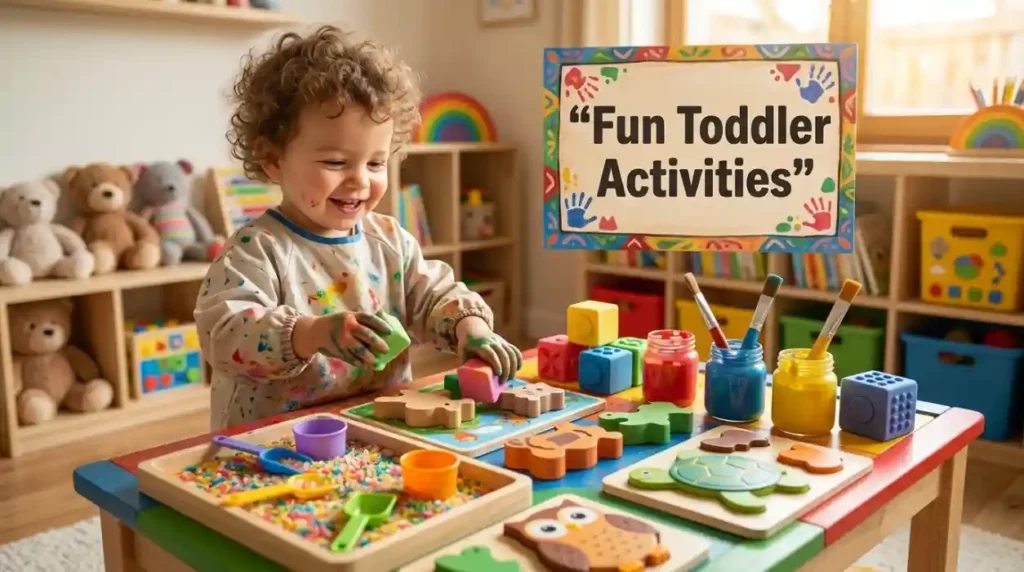
Planning fun toddler activities involves combining sensory play, physical movement, creative arts, and simple household games. These engaging experiences boost early brain development, strengthen motor skills, and foster emotional independence while keeping energetic toddlers happily entertained throughout the day using affordable, everyday items.
Have you ever watched a toddler turn a plain cardboard box into a magical spaceship while ignoring their actual fancy toys? Finding high-energy fun toddler activities is the ultimate secret to keeping young minds entertained and turning daily home routines into joyful learning moments.
When you offer simple hands-on games, toddlers channel their natural curiosity into independent exploration and active problem-solving skills.
Setting up these fun toddler activities helps build essential physical milestones, prevents rainy-day meltdowns, and gives you a well-deserved moment to sip hot coffee.
Ready to see how simple household items can turn your living room into an exciting indoor adventure zone? Let’s explore everything from sensory bins and gross motor games to quiet learning stations and outdoor nature walks!
The Hidden Science Behind Toddler Play and Brain Growth
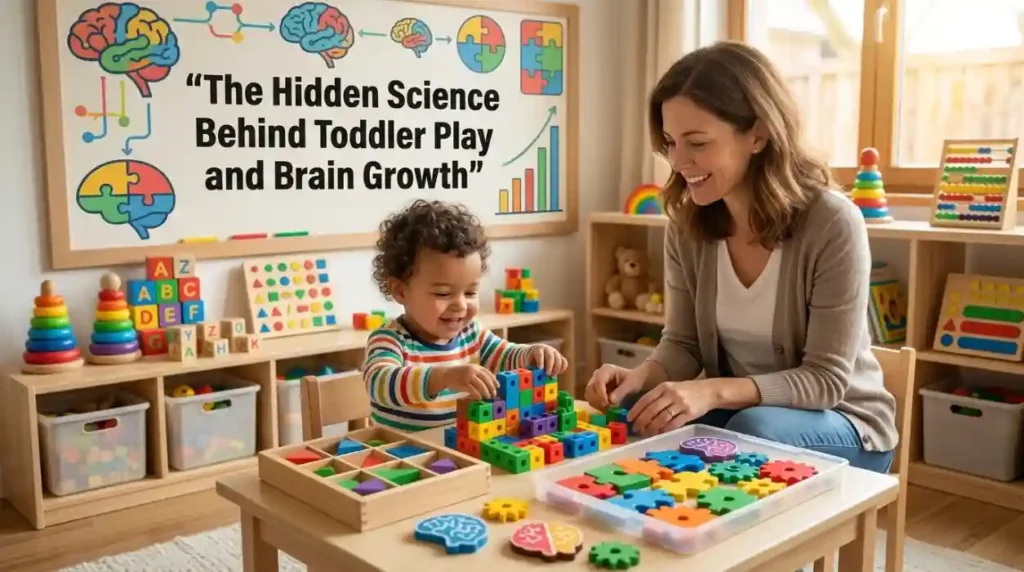
To an adult, watching a young child dump a bin of plastic blocks onto the rug looks like pure chaotic messiness. However, developmental scientists view this behavior as a series of brilliant micro-experiments happening in a rapidly growing mind.
During the toddler years, a child’s brain forms over one million new neural connections every single second through active physical discovery.
Understanding how play impacts cognitive growth helps you choose play ideas that nurture your child’s natural learning pace.
How Movement Builds Neural Pathways
Gross motor movements like running, jumping, balancing, and climbing do far more than burn off endless afternoon energy. These heavy work movements stimulate the vestibular system inside the inner ear, which regulates balance, body awareness, and spatial orientation.
When a toddler carefully steps along a line of pillows on the living room rug, their brain calculates distance, weight distribution, and gravity.
These early physical calculations lay the groundwork for spatial reasoning skills used later in geometry and physical sciences.
The Power of Unstructured Free Play
While guided games have their place, allowing toddlers unstructured time to explore open-ended materials builds executive function skills. When kids decide how to stack wooden blocks or arrange plastic cups, they practice planning, decision-making, and emotional self-regulation.
- Problem Solving: Figuring out why a tall tower falls over teaches cause-and-effect relationships firsthand.
- Emotional Resilience: Coping with a collapsed structure encourages persistence and frustration tolerance without adult intervention.
- Creative Thinking: Imagining a simple plastic spoon is a magic wand, or drumstick, expands symbolic representation skills.
- Self-Directed Attention: Choosing their own play focus keeps toddlers engaged for longer stretches than passive screen viewing.
Core Categories of Toddler Activities Explained
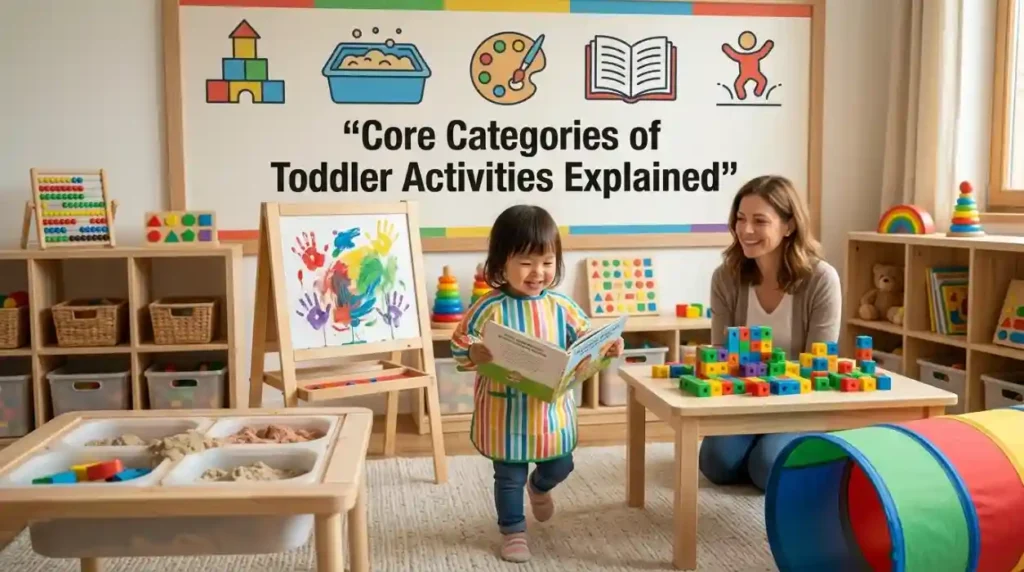
Organizing play routines into distinct functional categories keeps daily schedules balanced and prevents boredom. Rotating through physical, sensory, creative, and quiet activities ensures all areas of early child development receive regular stimulation.
Varying the energy levels of games helps transition little ones smoothly from high-energy morning play to calm afternoon naptime.
Here is a quick breakdown summarizing the primary play categories, key benefits, and essential home materials.
Sensory Bins for Deep Tactile Exploration
Sensory bins are simple plastic tubs filled with base materials like dry uncooked rice, rolled oats, water, or shredded paper. Adding scoopers, funnel tubes, and small plastic animals creates an immersive play station that holds a child’s attention for surprising lengths of time.
Sifting grains through small fingers calms an overstimulated nervous system, making sensory play ideal for cranky late afternoons.
Describing textures using words like coarse, squishy, slick, or bumpy enriches your toddler’s spoken vocabulary naturally.
Fine Motor Stations for Tiny Hands
Fine motor play focuses on strengthening the delicate muscles inside hands, wrists, and fingers. Developing these tiny muscles is crucial for future everyday self-care tasks like buttoning shirts, zipping jackets, and holding pencils correctly.
Pinching clothespins onto the edge of a sturdy cardboard box gives fingers a fantastic workout while building hand-eye coordination.
Peeling painter’s tape off a flat tabletop requires precision pinching that keeps little hands busy while developing dexterity.
Indoor Obstacle Courses for Rainy Days
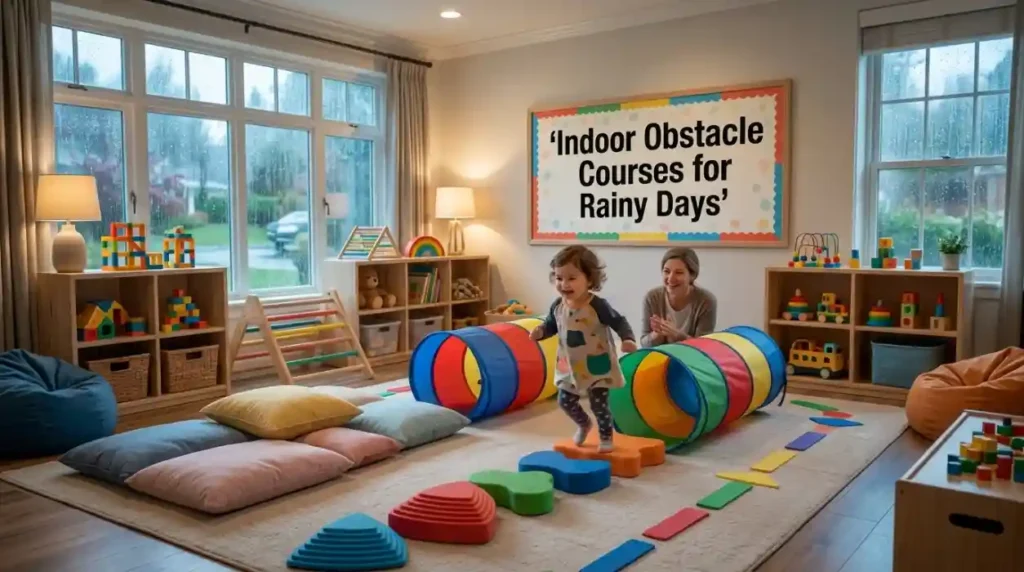
When stormy weather keeps you stuck inside, converting your hallway into an indoor action park prevents indoor cabin fever. You do not need commercial gym equipment to build an exciting course that challenges your child’s physical abilities safely.
Using soft household furniture, pillows, and masking tape allows you to create customizable tracks that adapt to any room size.
Let’s look at how to construct a safe, high-energy indoor obstacle route step-by-step.
Setting Up Safe Indoor Challenge Zones
Creating clear zones keeps movement predictable while guiding your child from one physical movement to the next smoothly. Use low-tack painter’s tape on hard floors or carpets to mark starting lines, zig-zag paths, and landing spots.
- The Pillow Balance Beam: Line up plush couch cushions end-to-end for a low-risk balance beam challenge.
- The Cardboard Tunnel: Open both ends of a large appliance box to create a cozy crawling passage.
- The Tape Zig-Zag Walk: Lay colorful tape lines on the rug for toddlers to walk heel-to-toe like tightrope artists.
- The Laundry Basket Target Toss: Place a plastic laundry basket five feet away for tossing rolled-up socks into.
Incorporating Animals and Roleplay
Adding playful imaginative themes turns basic physical movements into an exciting story game for your child. Ask your toddler to slither under dining chairs like a jungle snake or hop between couch cushions like an island frog.
Roaring like a lion while jumping off a low footstool helps hesitant toddlers overcome minor physical fear with laughter.
Imaginative storytelling keeps kids eager to complete the obstacle loop multiple times without losing enthusiasm.
Mess-Free Art Projects Parents Actually Love
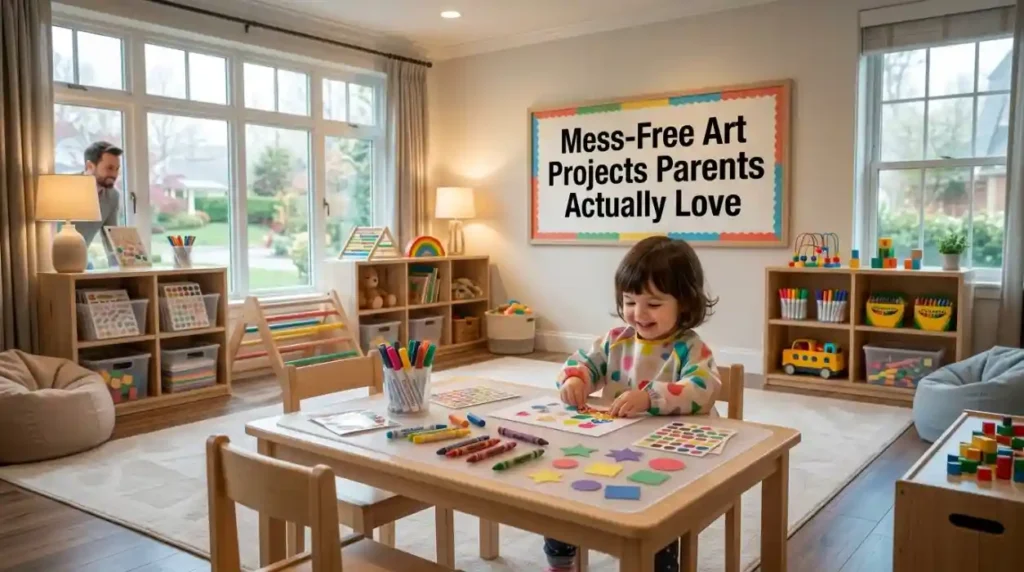
Many parents avoid home art sessions because cleaning wet paint off walls and scrubbing dyes out of carpets feels overwhelming. Fortunately, you can offer creative art experiences that let toddlers explore colors and patterns without creating a massive cleaning headache.
Mess-free art methods allow little ones to experiment with cause-and-effect visual results while keeping your home spotless.
Here are four low-stress art ideas that eliminate sticky messes.
Zip-Top Bag Painting Method
This brilliant technique lets toddlers mix bright colors without a single drop of wet paint touching their hands or table. Squeeze three small dollops of primary color washable paint inside a heavy-duty gallon zip-top storage bag.
Press out excess air, seal the zipper top tightly, and tape all four edges onto a sunny window or flat highchair tray.
Your child can use their fingers, palms, or plastic toy cars to squish and smear the colors together safely behind plastic.
Water Painting on Dark Construction Paper
Giving your child a small cup of clean water and a wide paintbrush opens up endless mess-free painting fun. Writing or painting with plain water onto dark blue or black construction paper creates bold, dark marks that dry away clear in minutes.
- Infinite Canvas: As the water evaporates off the paper, the marks vanish, leaving a fresh surface for continuous painting.
- Zero Stain Worry: Spilling clean tap water onto clothing, wood tables, or carpets requires nothing more than a quick towel wipe.
- Outdoor Sidewalk Fun: Take the water bucket outside to let toddlers paint dark designs on dry concrete driveways.
Easy Kitchen Science and Food Exploration Games
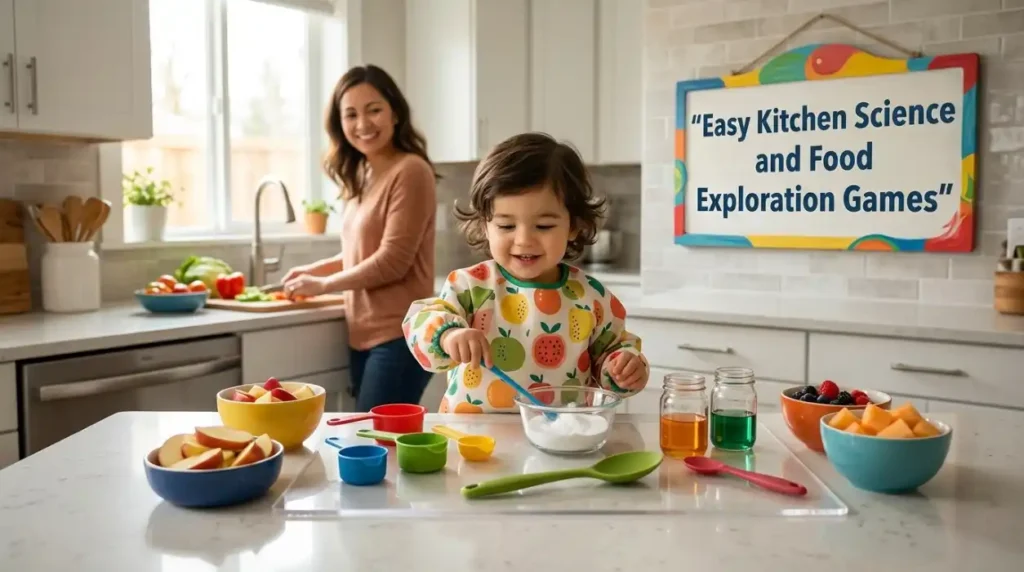
The kitchen is a natural laboratory packed with fascinating textures, scents, temperature changes, and safe liquid mixing opportunities. Involving toddlers in simple culinary exploration builds early math concepts like measuring, volume, and chemical changes.
Working with food items encourages picky eaters to touch, smell, and taste new ingredients without pressure during meal times.
Let’s explore simple kitchen games that mix scientific curiosity with delicious everyday play.
The Great Sink or Float Water Experiment
Water play is an absolute classic for a reason—it captivates children while teaching fundamental physical concepts effortlessly. Fill a broad plastic dish basin halfway with lukewarm water and set it over a dry bath towel on the kitchen floor.
Gather a collection of safe kitchen objects like plastic spoons, wooden corks, metal whisks, and fresh apples to test in the bath.
Before dropping an item into the water, ask your toddler to guess whether it will stay on top or sink to the bottom.
Edible Playdough Creation
Commercial modeling clays can contain harsh chemicals, making homemade edible varieties a safer option for young kids who put everything in their mouths. Mixing simple pantry staples creates a silky, soft dough that smells delicious and molds easily.
Ingredients Needed
Combine two cups of all-purpose flour, one cup of fine table salt, two tablespoons of vegetable oil, and one cup of warm water.
Mixing and Customization
Knead the ingredients together until smooth, adding a few drops of natural food coloring or fruit extract for pleasant scents and vivid colors.
Quiet Time Activities for Calm Afternoons
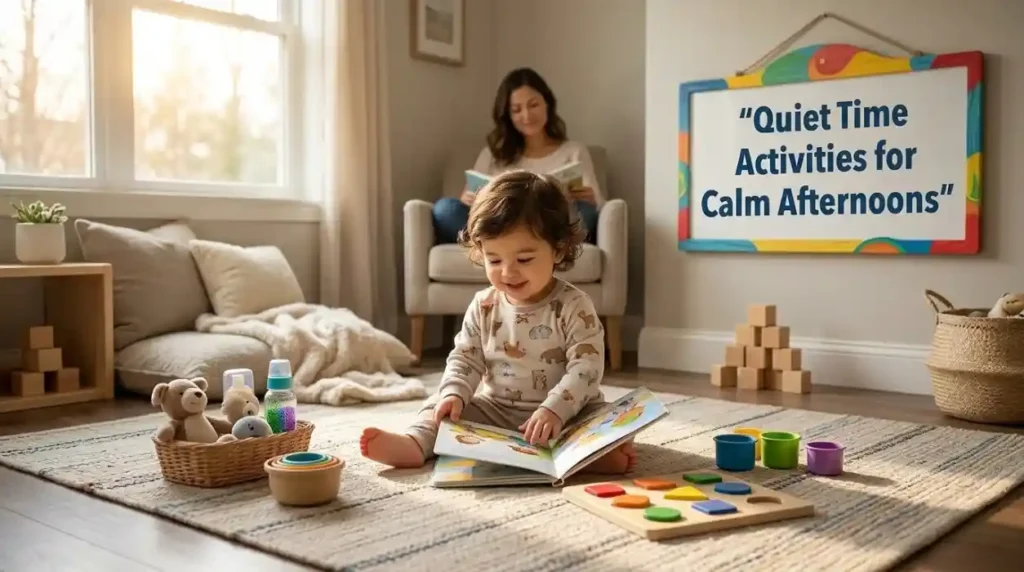
While high-energy games are essential for morning hours, calm quiet-time activities help toddlers unwind after lunch or before bedtime. Establishing a peaceful quiet-time routine gives growing bodies a chance to rest even if they have outgrown traditional afternoon naps.
Low-stimulation games promote focus, reduce sensory overload, and encourage independent solo play habits.
Here are effective quiet activities that bring peaceful energy back into your living room.
Color and Shape Sorting Trays
Sorting games help toddlers organize visual information, identify subtle differences, and categorize objects by attributes. Use a muffin tin or a plastic ice cube tray as a sorting station for colorful pom-poms, oversized buttons, or large plastic beads.
Give your child a pair of plastic kitchen tongs or a large wooden spoon to move items into matching color cups.
Using tools to grasp small objects strengthens hand muscles while satisfyingly teaching classification skills.
Interactive Storytelling with Felt Boards
Felt naturally clings to felt without adhesives, making felt boards an ideal screen-free medium for interactive storytelling. Cut simple geometric shapes, animal outlines, and trees from colorful felt sheets purchased at any local craft store.
Prop a felt board against a wall so your toddler can build custom landscapes, funny faces, or animal scenes independently.
Moving pieces around while you read picture books aloud helps children connect spoken words with physical characters.
Outdoor Nature Scavenger Hunts
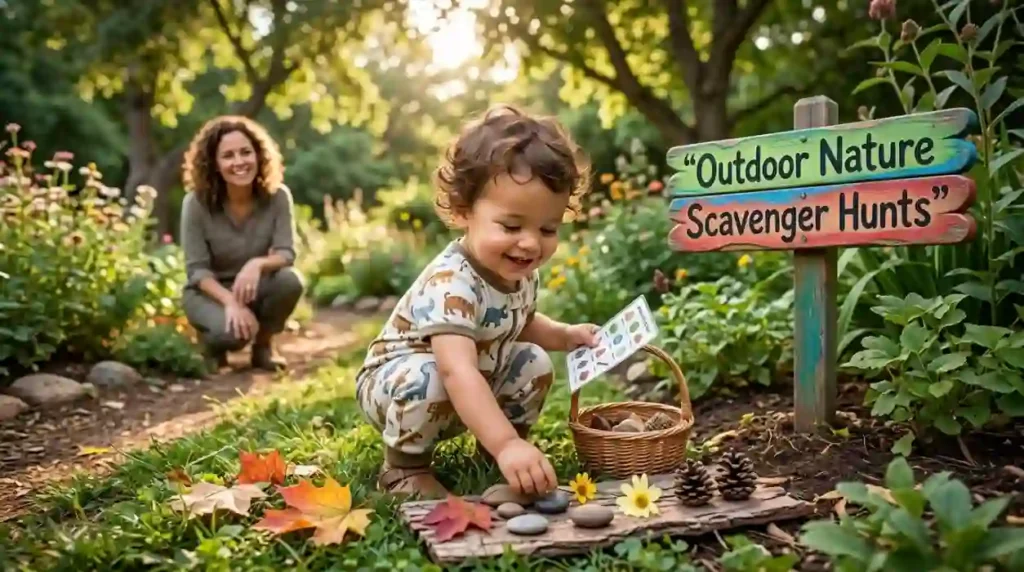
Stepping outside exposes toddlers to fresh air, natural sunlight, shifting footing, and rich sensory experiences that indoor spaces cannot match. Nature acts as an ever-changing playground where simple twigs, fallen leaves, and smooth river rocks become engaging toys.
A simple outdoor walk becomes a thrilling adventure when you frame it as a targeted search for natural treasures.
Follow these tips to plan a memorable neighborhood nature hunt with your little explorer.
Creating an Easy Visual Scavenger Card
Young toddlers cannot read written checklists, so using simple pictures or color swatches helps them hunt for items independently. Egg cartons painted with different colors inside each cup make perfect collecting boxes for neighborhood park walks.
- Green Cup: Hunt for a fresh blade of grass or a green clover leaf.
- Brown Cup: Search for a smooth pinecone or a small fallen tree twig.
- Gray Cup: Look for a smooth, rounded pebble or gravel stone.
- Yellow Cup: Find a bright dandelion blossom or yellow buttercup flower.
Building Sensory Awareness in Nature
Encourage your child to use all their senses while exploring natural environments safely under your supervision. Pause during your walk to close your eyes and listen quietly to birds chirping, wind blowing through trees, or dry leaves crunching underfoot.
Feeling the rough bark of an oak tree compared to the velvety softness of a mossy rock deepens tactile understanding.
Connecting with nature early fosters environmental appreciation and encourages an active, healthy outdoor lifestyle.
Practice Exercise
Test your understanding of play mechanics, child development, and safety guidelines with this quick five-question multiple-choice quiz.
- How does gross motor movement like balancing on low pillows directly support brain growth in toddlers?
A. It changes the color of the eyes
B. It stimulates the inner ear vestibular system to build spatial awareness and balance
C. It eliminates the need for night sleep
D. It teaches complex reading skills instantly - Why are sensory bins filled with dry rice or oats effective for overstimulated toddlers?
A. They force toddlers to sit completely still for three hours
B. Sifting materials through fingers provides calming tactile input that relaxes the nervous system
C. They teach kids how to bake bread
D. They clean carpet floor fibers automatically - What is the primary benefit of the mess-free zip-top bag painting technique?
A. It lets toddlers mix colors and explore paint effects without creating mess or stains
B. It makes paint dry in less than one second
C. It keeps paint usable for over twenty years.
D. It replaces the need for paintbrushes in high schools - What simple tool can toddlers use during sorting games to build fine motor hand strength?
A. Heavy metal hammers
B. Plastic kitchen tongs or clothespins
C. Sharp craft knives
D. Long wooden rulers - Why are visual picture guides or painted egg cartons used for toddler nature scavenger hunts?
A. Toddlers cannot read written words yet, so pictures help them search independently
B. Pictures make nature items weigh less
C. Egg cartons keep wild animals away
D. Painted cardboard lasts forever outdoors
Answer Key:
- B
- B
- A
- B
- A
Frequently Asked Questions
How long should I expect a toddler to stay focused on a single activity?
A general guideline is two to three minutes of focused attention per year of age, meaning a two-year-old typically focuses for four to six minutes independently. If a child stays engaged longer, let them play freely without interrupting their natural focus flow.
How can I make playdough activities safer for toddlers who put things in their mouth?
Prepare homemade playdough using simple edible pantry staples like flour, table salt, water, vegetable oil, and natural food colorings. Edible ingredients ensure that if a toddler takes a curious nibble, it remains completely harmless, though the high salt taste discourages eating.
What should I do if my toddler gets frustrated during a fine motor game?
Simplify the game immediately or offer gentle hands-on assistance to reduce frustration before a meltdown occurs. For example, if pinching clothespins is too difficult, switch to placing large wooden pegs into soft playdough blocks instead.
How do I store and organize daily activity supplies without creating home clutter?
Rotate supplies using clear plastic storage bins kept inside a closet out of your child’s continuous line of sight. Exposing toddlers to three or four toys at a time prevents choice overload while making daily cleanup fast and manageable.
Are expensive educational toys necessary to boost toddler development?
No, expensive commercial gadgets are never required because toddlers learn best using simple, open-ended household objects like boxes, Tupperware, water, and spoons. Everyday items encourage more imagination, problem-solving, and creative play than single-purpose electronic toys.
Conclusion
Incorporating engaging fun toddler activities into your family’s weekly routine is a simple, effective way to nurture early learning and create lasting memories. By balancing high-energy physical games, messy sensory exploration, and quiet creative moments, you support every angle of your child’s physical and emotional growth.
Remember that play does not need to be complicated or expensive to be deeply meaningful for a toddler.
The simplest games made from everyday household items often bring the biggest smiles and longest stretches of focus.
Are you ready to bring new excitement into your home play routine? Grab a few cardboard boxes, set up a simple water station, and watch your little one’s imagination come alive today!

Jack Olive is the creative mind behind buzzgiggles.com, a fun-focused website built to bring smiles, laughter, and lighthearted entertainment to everyday life. With a passion for humor and enjoyable content, Jack Olive creates and shares playful ideas, amusing stories, entertaining discoveries, and cheerful moments designed for readers of all kinds.
Through buzzgiggles.com, Jack Olive combines creativity, curiosity, and a positive sense of humor to explore the lighter side of life. Whether visitors are looking for a quick laugh, something interesting to share, or a cheerful break from their routine, the website offers content created with fun in mind. Jack Olive believes great entertainment should be easy to enjoy, memorable, and capable of brightening someone’s day.