
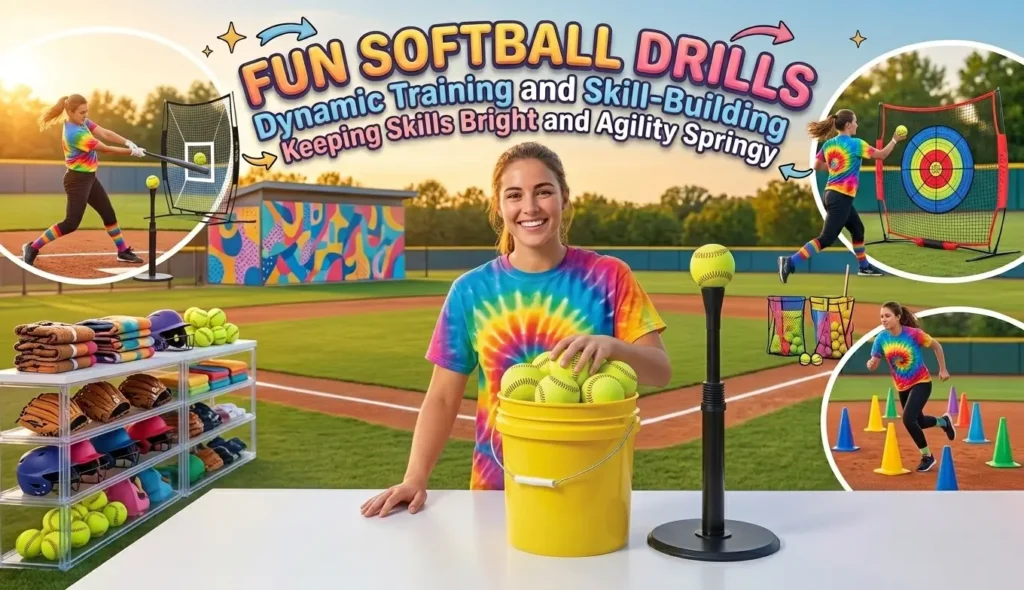
Fun softball drills are gamified training exercises designed to teach fundamental skills—like fielding, hitting, base running, and throwing—through friendly competition and high-energy scenarios. By turning repetitive practice into engaging games, these drills improve muscle memory, build team chemistry, and keep players enthusiastic about improving their performance.
Have you ever walked up to a ball field and noticed players dragging their cleats, looking totally bored before practice even starts? Integrating high-energy fun softball drills turns repetitive practice routines into exciting team challenges that everyone looks forward to.
When young athletes enjoy what they are doing, they absorb fundamental mechanics faster and build genuine confidence on the diamond. Using interactive, fun softball drills helps coaches teach footwork, throwing accuracy, and hitting power without relying on monotonous lectures.
Whether you are managing a youth recreation team or prepping a high school squad for tournament play, keeping energy levels high is the secret sauce. Incorporating competitive fun softball drills creates a positive environment where players work hard and support their teammates.
Let’s explore top fielding games, hitting challenges, base-running races, and practical coaching tips to transform your next session. Grab your gloves and let’s make practice the highlight of the week!
The Power of Gamification: Why Playful Practice Beats Boring Reps
If you ask any player why they fell in love with softball, nobody responds with “doing standing throwing lines for forty-five minutes.” Traditional military-style reps often lead to mental burnout, lazy footwork, and distracted athletes.
Gamification takes core mechanical goals and wraps them inside friendly competitions, point systems, and time trials.
Building Muscle Memory Through Active Play
When players focus on winning a mini-game, their movements become instinctual rather than overthought. The natural urge to field a ground ball quickly in a game setting forces proper lower-body positioning without constant coaching reminders.
Repetition remains crucial for skill development, but disguised repetition keeps attention spans sharp across long practice sessions.
- Enhanced Focus: Friendly stakes keep minds fully present on every single pitch and throw.
- Faster Instincts: Simulated game pressure trains players to make quick decisions under stress.
- Increased Touches: High-speed games maximize the total number of ball touches per minute.
- Better Attendance: Enthusiastic players rarely miss practice because they look forward to team activities.
Boosting Team Chemistry and Communication
Softball is a deeply vocal sport that requires constant chatter between outfielders, middle infielders, and catchers. Gamified drills encourage natural cheering, loud ball calls, and positive encouragement among teammates.
Working together to win a team challenge builds trust faster than any off-field team bonding exercise ever could.
High-Energy Fielding Drills to Sharp Movement
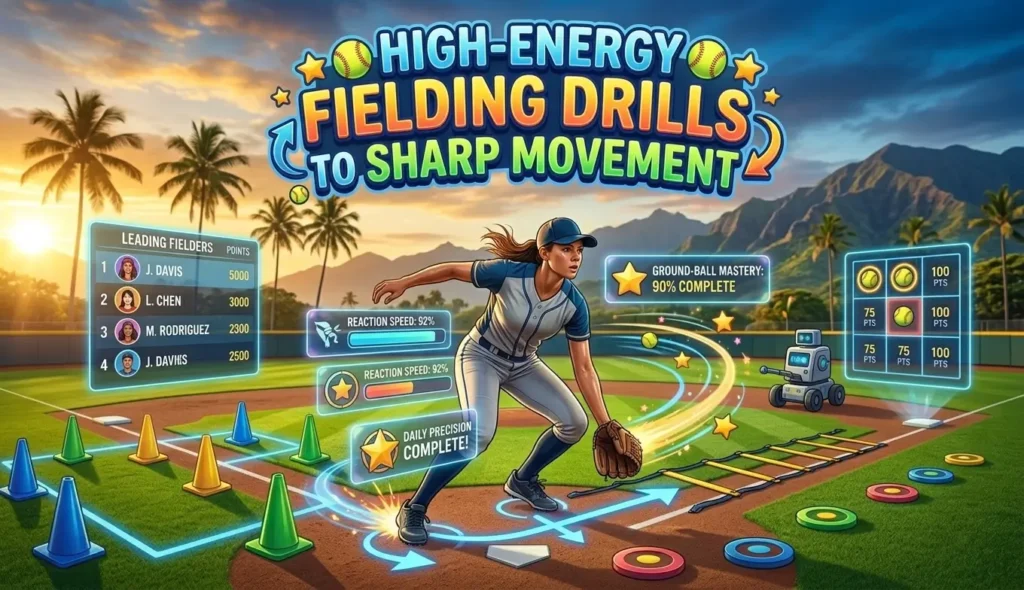
Fielding requires quick lateral footwork, soft hands, and immediate transitions from glove to throwing hand. These fielding games refine those technical skills while maintaining an upbeat, competitive tempo.
Let’s look at how to structure fielding practice, so players stay active on their toes.
The Knockout Ground Ball Challenge
Set up two lines of fielders at shortstop and second base, with a coach hitting grounders rapidly between the positions. If a player makes a clean fielding field-to-glove transfer and throws accurately into a target net, they stay in the game.
If a player bobbles the ball or misses the target, they step aside and perform a quick five-jump-squat penalty before joining the back of the line.
Knockdown Outfield Relay Race
Divide your team into two outfield squads positioned deep in left field and right field. Hit high fly balls or driving line drives to the lead player in each line simultaneously.
The player must track the ball, make the catch, and execute a crow-hop throw to hit a bucket set up at second base. The first team to register ten direct hits on the bucket wins the challenge.
Dynamic Hitting and Base Running Games

Hitting a round ball with a round bat is one of the toughest feats in all of sports. Removing tension from the batter’s box helps hitters relax their shoulders, track pitches longer, and swing with natural power.
Pairing hitting precision with aggressive base running creates well-rounded offensive threats.
Home Run Derby Points Competition
Transform tee work or soft-toss practice into an exciting points battle by dividing the field into scoring zones. Hitting a crisp grounder through the middle earns one point, line drives into the outfield gap net three points, and clearing an inflatable target yields five points.
This setup teaches hitters to drive the ball with line-drive trajectory rather than popping up harmlessly into the infield air.
The Base Stealing Freeze-Tag Dash
Position your base runners at first base while a pitcher works through a simulated windup on the rubber. Runners read the pitcher’s front knee movement to time their secondary lead and sprint toward second base.
If the catcher catches a pop-up toss and tags the runner before they touch second base, the runner freezes in place until a teammate tags them free.
Coaching Strategies: Managing Energy and Keeping Drills Moving
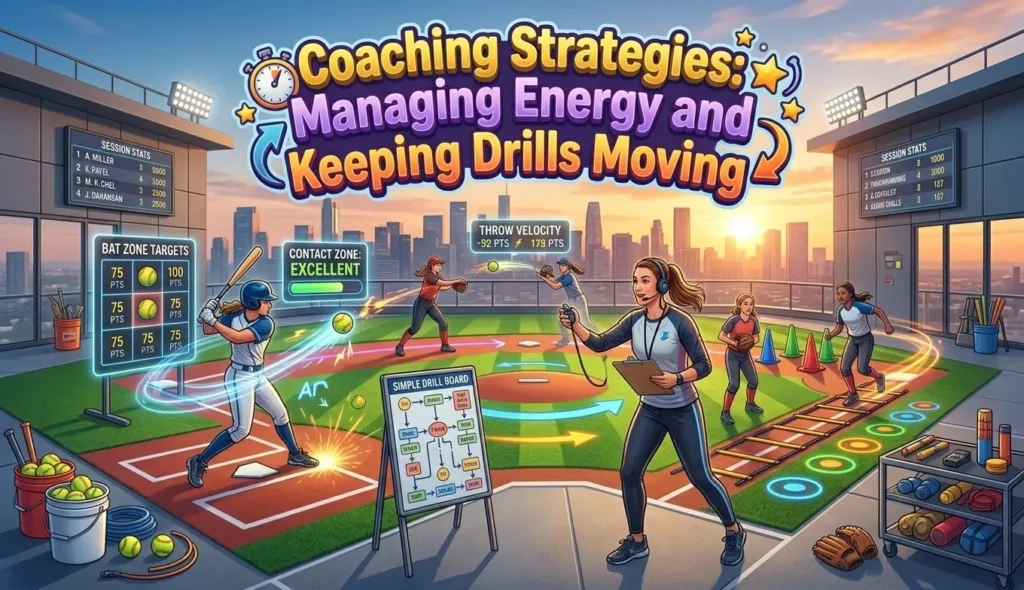
Even the most creative drill will flop if players spend fifteen minutes standing in a long line waiting for their turn. Effective practice design relies on smart field layout and fast-paced transitions.
Here is how coaches can structure practice to maximize movement and minimize downtime.
Station Rotation and Small Group Numbers
Divide your roster into small groups of three or four players and rotate them through different skill stations every ten minutes. Keeping station numbers tiny ensures every athlete gets dozens of reps in a short window.
One group can focus on tee work, another on backhand fielding, and a third on pitching accuracy without crowding the field.
Utilizing Soft Training Balls for Aggressive Movement
Fear of getting hit by a hard leather softball often makes beginner fielders hesitate or pull their heads up early. Using foam balls, rubber smush balls, or tennis balls allows players to dive aggressively without fear of injury.
Once muscle memory and footwork are locked in, transition back to standard regulation softballs with confidence.
Measuring Progress and Celebrating Small Wins
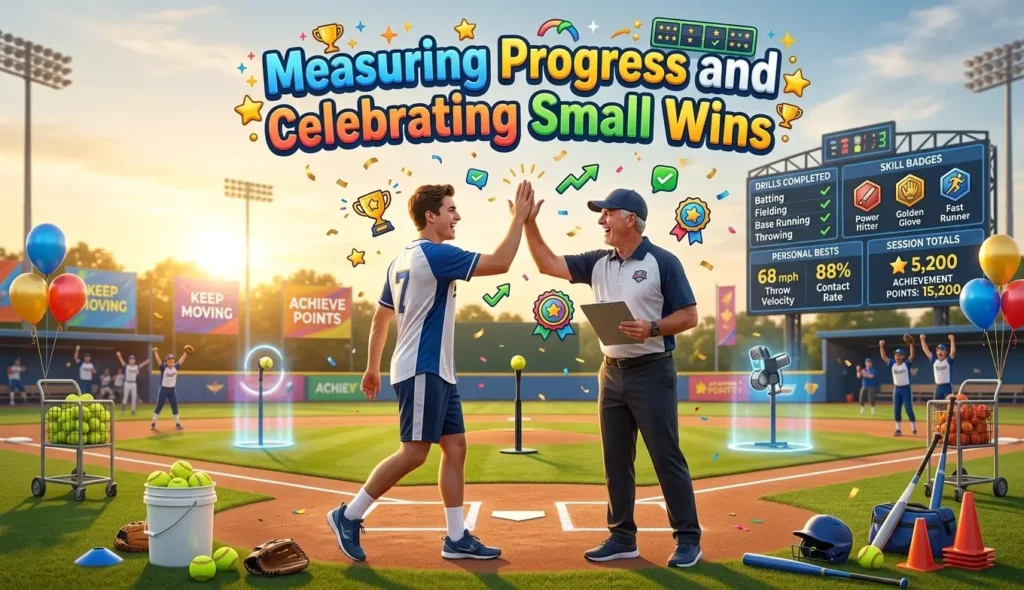
Tracking metrics helps players see their tangible growth over a season, turning abstract practice goals into concrete achievements. Celebrating individual milestones builds lasting motivation and pride.
Implement these tracking ideas to keep your athletes engaged in their long-term development.
The Personal Record Board
Maintain a simple whiteboard in the dugout where players record their personal best scores from weekly accuracy and velocity games. Celebrate when a player improves their relay throw accuracy score or hits a new personal record on the hitting tee.
Focusing on personal growth rather than comparing players against each other fosters a healthy, supportive culture.
Weekly Spirit and Hustle Awards
Recognize players who bring exceptional communication, positive energy, and hustle to every drill session. Simple rewards like carrying a fun team mascot trophy home for the week build enthusiasm across the entire roster.
When effort is praised just as much as talent, every player feels valued regardless of their starting role.
Practice Exercise
Test your understanding of drill design, practice management, and player motivation with these 5 multiple-choice questions.
- What is the main benefit of turning repetitive softball mechanics into gamified drills?
A. It eliminates the need for coaches to attend practice.
B. It increases player engagement and speeds up skill retention.
C. It allows players to skip warm-up stretches completely.
D. It guarantees that a team will win every official league game. - Which fielding drill helps players practice fly ball tracking and long-distance throwing accuracy?
A. Zone Hitting Derby
B. Outfield Bucket Relay
C. Tee-work bunting practice
D. Static wrist flips - How does keeping station groups small (3 to 4 players) improve practice quality?
A. It maximizes reps per player and eliminates long waiting lines.
B. It requires hiring five additional paid head coaches.
C. It keeps the outfield empty all afternoon.
D. It lets players take long naps between drills. - Why are soft training balls useful when introducing aggressive diving or short-hop fielding techniques?
A. They cost ten times more than leather softballs.
B. They remove the fear of injury, so players focus entirely on proper mechanics.
C. They fly twice as far as real balls when hit with an aluminum bat.
D. They do not require using a fielding glove. - What is an effective way to encourage team communication during base-running games?
A. Telling all fielders to stay completely silent during play.
B. Awarding extra points when teammates actively cheer and call out ball locations.
C. Punishing players who speak to one another on the bench.
D. Turning off field lights during practice sessions.
Answer Key:
- B
- B
- A
- B
- B
FAQs
How long should a single fun softball drill last during practice?
Keep individual drills focused and fast-paced, lasting between 10 and 15 minutes max. Rotating activities frequently prevents physical fatigue and keeps player attention sharp throughout the entire session.
Can these competitive games be adapted for tee-ball and younger age groups?
Yes, basic games like target hitting and base-running races work wonderfully for tee-ball players. Simply simplify the rules, use soft foam balls, and emphasize fun participation over complex scoring metrics.
How do I handle a player who gets overly frustrated during competitive drills?
Focus praise on effort and execution rather than just the final winning outcome. Remind the athlete that practice is a safe space to make mistakes and learn skills.
What equipment do I need to set up interactive practice stations?
Basic gear like cones, hitting tees, soft training balls, plastic buckets, and target nets are all you need. Simple low-cost items allow you to create endless engaging station variations easily.
How do I balance fun games with serious game-prep conditioning?
Integrate physical conditioning directly into the games themselves through relay races and active base-running challenges. Combining fitness with competitive play achieves conditioning goals without resorting to dull sprint laps.
Conclusion
Integrating high-energy fun softball drills into your weekly practice plan transforms skill development into an exciting adventure for every athlete on your team. Combining gamified drills, small station rotations, and positive reinforcement keeps players engaged while building rock-solid mechanics.
Whether you are teaching basic fielding footwork or refining aggressive base-running habits, keeping enthusiasm high leads to faster learning and stronger team chemistry.
Grab your clipboards, set up those target buckets, and bring maximum energy to the diamond at your next practice session!

Jack Olive is the creative mind behind buzzgiggles.com, a fun-focused website built to bring smiles, laughter, and lighthearted entertainment to everyday life. With a passion for humor and enjoyable content, Jack Olive creates and shares playful ideas, amusing stories, entertaining discoveries, and cheerful moments designed for readers of all kinds.
Through buzzgiggles.com, Jack Olive combines creativity, curiosity, and a positive sense of humor to explore the lighter side of life. Whether visitors are looking for a quick laugh, something interesting to share, or a cheerful break from their routine, the website offers content created with fun in mind. Jack Olive believes great entertainment should be easy to enjoy, memorable, and capable of brightening someone’s day.