

Fun whiteboard drawings are engaging, temporary illustrations crafted with dry-erase markers on smooth white boards. They range from simple cartoon doodles and motivational classroom prompts to complex visual mind maps, providing an easy, low-pressure way to spark creativity, simplify big ideas, and bring playful energy into classrooms, offices, or home spaces.
Have you ever caught yourself staring at a blank dry-erase board during a long meeting and feeling the sudden urge to doodle a quick cartoon? Creating fun whiteboard drawings turns a plain white surface into an exciting canvas for quick ideas, daily laughs, and creative breakthroughs.
Whether you want to welcome students into a classroom or break the ice in a corporate boardroom, sketching fun whiteboard drawings instantly brightens the energy of any room.
The temporary nature of dry-erase markers means you never have to worry about making mistakes because a quick swipe of an eraser gives you a fresh start.
Let’s explore beginner doodle steps, clever marker techniques, and engaging group activities that make creating fun whiteboard drawings easy and enjoyable for everyone.
The Unique Magic of Dry-Erase Canvas Art
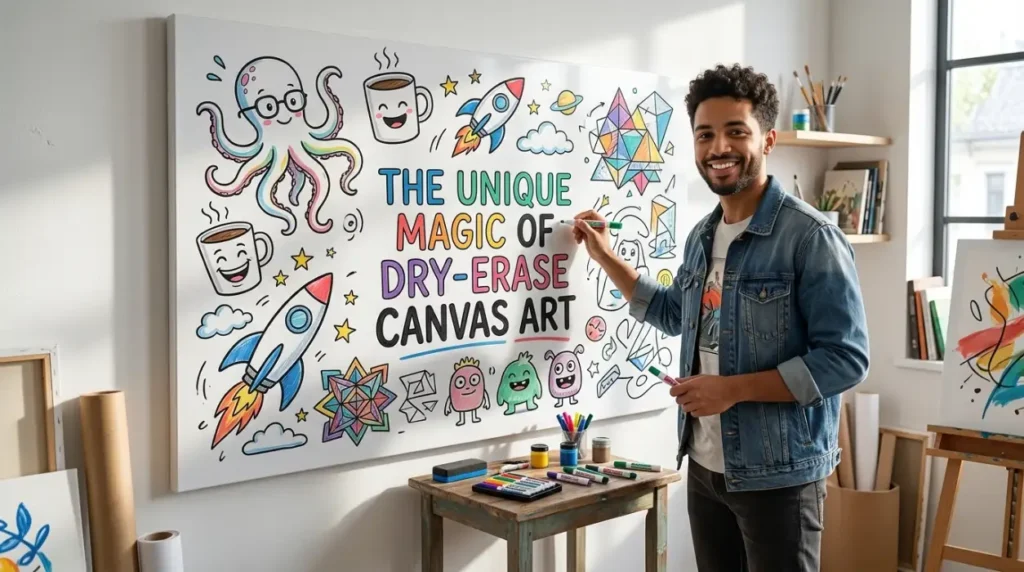
Drawing on a slick white board feels completely different from sketching on paper or digital tablets.
Why Temporary Art Removes Creative Pressure
When people draw on paper with ink or paint, the fear of making a permanent mistake often causes hesitation.
Whiteboards eliminate that anxiety because every stroke can disappear in a split second with a simple felt eraser or cloth.
This freedom encourages risk-taking, bolder lines, and playful experimentation that helps your inner artist shine without self-judgment.
The Power of Visual Communication in Group Settings
Humans process visual information thousands of times faster than written blocks of text.
Adding quick illustrations to lesson plans or project brainstorming sessions helps hold attention and improves memory retention.
Even simple stick figures with speech bubbles make dry topics feel approachable, memorable, and lighthearted.
Boosting Everyday Productivity Through Doodling
Research shows that simple doodling actually keeps your brain engaged and prevents mind-wandering during lengthy lectures.
Sketching small icons next to your daily task list transforms a stressful chore list into an inviting visual game board.
Essential Tools and Marker Techniques for Crisp Drawings
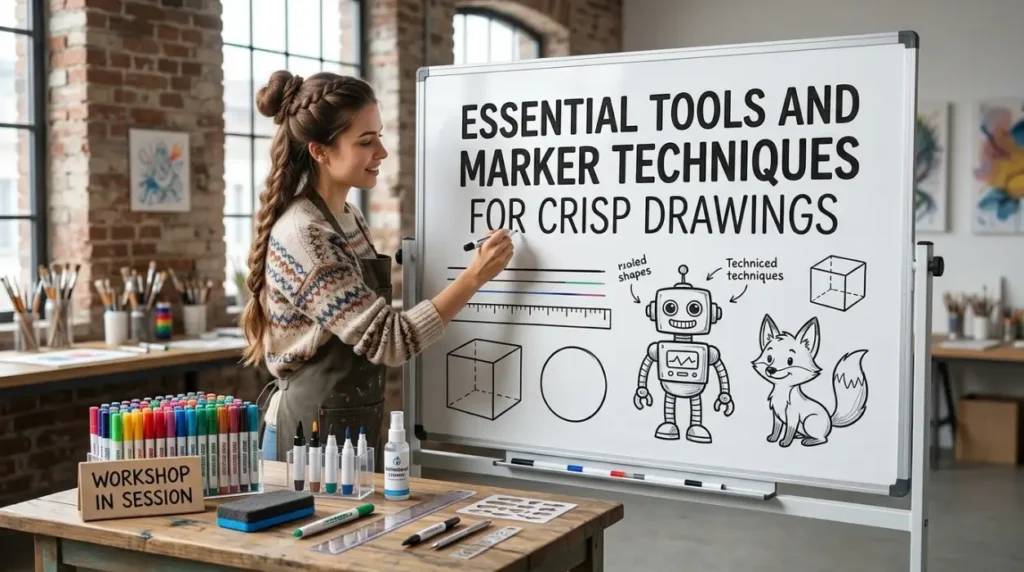
Getting clean, vibrant results on a whiteboard relies on picking the right markers and understanding basic line control.
Selecting the Right Dry-Erase Markers
Not all markers perform equally when you want bold lines and easy erasing.
- Chisel Tip Markers: Allow you to draw thin accent lines with the point or thick fill areas using the broad side edge.
- Fine Bullet Tip Markers: Perfect for detailed facial expressions, small lettering, and tight geometric patterns.
- Color Selection: Dark colors like black, blue, and green build strong outlines, while red and orange add energetic highlights.
Master the Light Source and Shading Hacks
You do not need fancy shading pencils to give your dry-erase characters real depth and personality.
Use parallel hatch lines or dense dot patterns to create soft shadows underneath arms, hats, or chin lines.
Leaving blank white space inside eye pupils or on shiny apple cheeks makes your illustrations pop off the board naturally.
Cleaning Techniques for Stain-Free Surfaces
Ghosts of old drawings can ruin the crisp contrast of your fresh new sketches over time.
Clean your board weekly using dedicated whiteboard spray or isopropyl alcohol mixed with water to remove stubborn pigment oils.
Always let fresh ink dry completely before trying to wipe away small mistakes, or you will smear dark residue across the board.
Beginner-Friendly Doodling Ideas for Everyone
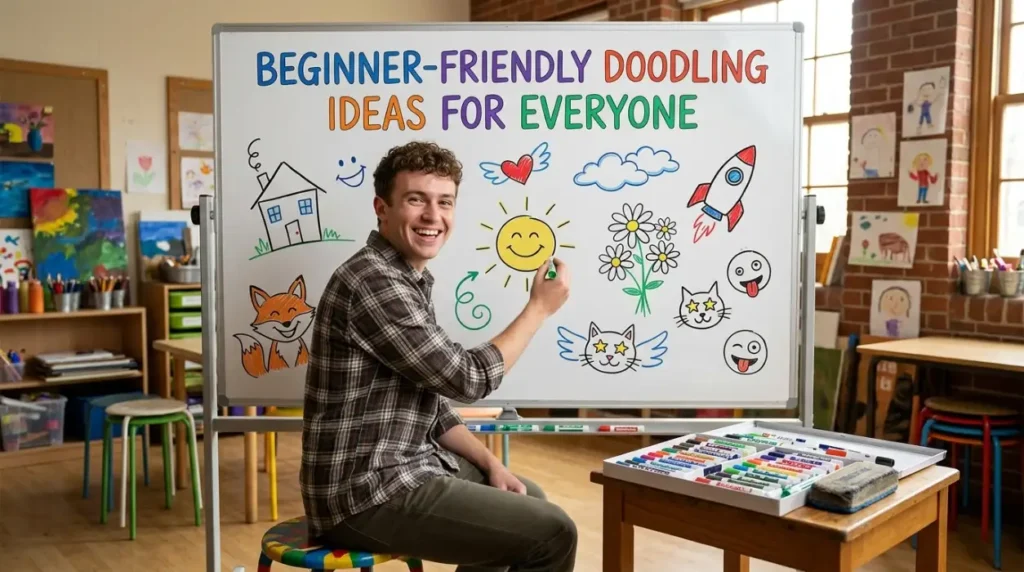
You do not need formal art training to create charming characters and icons that bring smiles to people’s faces.
Cute Cartoon Animals Built from Basic Shapes
Starting with simple geometric foundations makes drawing cute animal mascots surprisingly easy.
- The Circular Bunny: Draw a large circle for the head, add two tall ovals for ears, and finish with dots for eyes and a small ‘W’ nose.
- The Boxy Robot Dog: Combine square boxes for the torso and head, then attach spring-like coiled lines for legs and tail.
- The Triangular Cat: Sketch an inverted triangle for the face, add two small pointy triangles on top for ears, and add curved whiskers.
Everyday Objects with Big Personalities
Giving everyday household items cute eyes and smiling mouths turns mundane objects into fun characters.
Try drawing a coffee mug with steam rising in heart shapes or a cheerful alarm clock wearing running shoes.
Adding small emotion lines around faces instantly communicates excitement, confusion, or sleepy morning vibes.
Quick Seasonal and Holiday Themes
Changing your board’s theme throughout the year keeps your workspace or kitchen feeling fresh and festive.
Sketch friendly jack-o’-lanterns in autumn, snowy pine trees in winter, or sunny beach umbrellas when summer arrives.
Comparing Marker Styles and Drawing Applications
Matching your marker style to your specific goal ensures your drawings look clear, balanced, and easy to read.
Interactive Whiteboard Games for Offices and Classrooms

Transforming your dry-erase board into a shared game space builds teamwork and breaks up boring daily routines.
Pictionary and Quick-Draw Challenges
Divide your group into two teams and set a one-minute timer for players to draw random prompt cards.
Watching teammates try to sketch complex phrases like “space station barbecue” under time pressure creates instant laughter.
Collaborative Storytelling Chain Drawings
Start a drawing in the morning by sketching a single character standing in an empty landscape.
Invite coworkers or students to add one new element to the scene every time they walk past the board throughout the day.
By late afternoon, a simple lone explorer evolves into an epic alien landscape filled with funny background details.
Daily Brain Teasers and Visual Puzzles
Post a daily visual riddle or “find the hidden object” drawing on the board near your breakroom or classroom door.
Leave a small box of markers nearby so people can write their guesses or add funny commentary below the puzzle.
Whiteboard Art Ideas for Educators and Parents

Using visual art in learning spaces boosts student participation and makes daily instructions much easier to follow.
Morning Welcome Boards that Set a Positive Tone
A bright, welcoming message paired with a cheerful morning illustration instantly puts students in a great mood as they arrive.
Include a “Question of the Day” surrounded by fun doodles, such as asking everyone to vote for their favorite superhero using tally marks.
Visual Math and Science Explanations
Complex scientific processes become much easier to grasp when you break them down into step-by-step visual stories.
- Water Cycle Cartoon: Draw a smiling cloud dropping raindrops into an ocean, then show sunbeams pulling vapor back up with arrows.
- Fraction Pizza Wheels: Illustrate math concepts using sliced pizzas or pie charts that students can shade in themselves.
- Cell Structure Diagrams: Use bright, distinct marker colors to highlight different organelles within a plant cell diagram.
Incentive Charts and Goal Trackers
Turn boring chore lists or reading goals into interactive adventure maps drawn across the board.
Students can move custom magnetic markers along a drawn mountain trail every time the class finishes a chapter book together.
Advanced Tips for Large-Format Whiteboard Murals
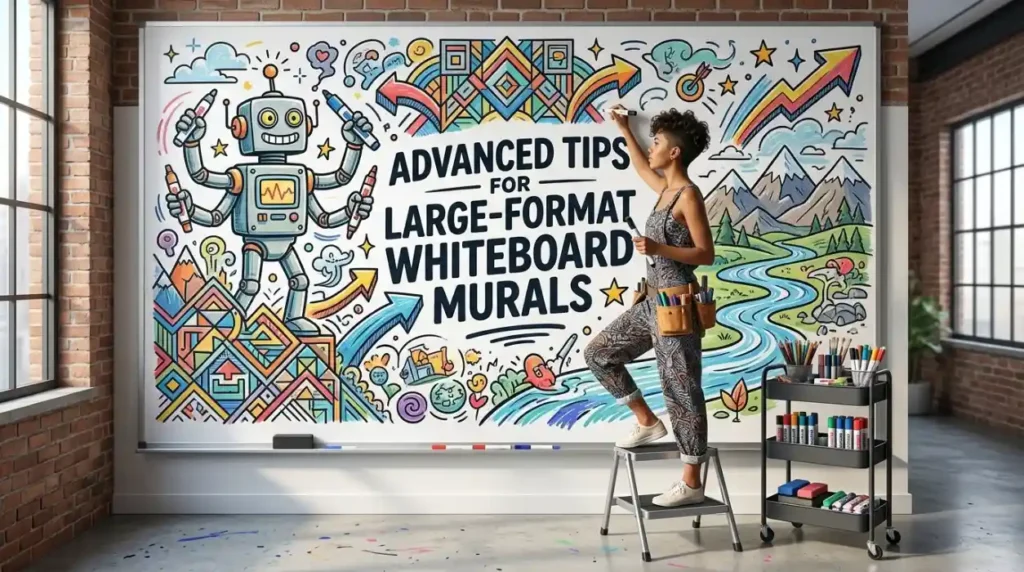
If you have access to a large wall-mounted board, you can create impressive, full-scale decorative murals.
Grid Methods for Scaling Up Small Sketches
Scaling up a small paper doodle onto a massive wall board is easy when you use a basic grid alignment method.
Lightly sketch a grid of faint squares across the board using a light yellow or light green marker.
Copy your small sketch section by section into the corresponding grid boxes before tracing over final lines with dark black ink.
Mixing Text and Imagery with Hand Lettering
Combining stylish block lettering with cartoon borders turns simple quotes into striking visual posters.
Draw banner ribbons across the top of the board to frame title words, using drop shadows behind letters to make them stand out.
Surround key quotes with small decorative doodles like stars, leaves, or geometric sparkles to fill space naturally.
Preserving Your Best Whiteboard Masterpieces
Because dry-erase art is temporary, taking high-quality photos before erasing your favorite work is essential for saving memories.
Stand directly in front of the board with even room lighting to avoid harsh glare from overhead fixtures or camera flashes.
Crop out surrounding wall frames using simple phone photo editing apps to create clean digital portfolios of your artwork.
Practice Exercise
Test your understanding of dry-erase techniques, marker selections, and visual engagement strategies with these 5 multiple-choice questions.
- Why does drawing on a whiteboard reduce creative anxiety compared to paper drawing?
A. Whiteboard markers are impossible to smudge or erase by hand.
B. The temporary nature of dry-erase ink allows instant erasing and risk-free experimentation.
C. Whiteboards automatically correct crooked lines using built-in magnetic guides.
D. Whiteboard drawings can only be seen when using specialized ultraviolet lamps. - Which marker tip style is best suited for sketching crisp facial details and intricate outlines?
A. Ultra-broad chisel tip markers.
B. Wide paint roller applicators.
C. Fine bullet tip markers.
D. Liquid chalk foam sponges. - How does adding simple doodles to educational lessons benefit students?
A. It forces students to memorize long dictionary definitions word-for-word.
B. It speeds up processing time and improves memory retention through visual engagement.
C. It eliminates the need for teachers to speak aloud during class time.
D. It keeps the classroom completely dark during morning lectures. - What is the recommended way to remove stubborn marker ghosting stains from your board?
A. Scraping the surface heavily with a steel wire scrubber.
B. Applying thick coats of oil-based wall paint over old lines.
C. Wiping the board with dedicated whiteboard spray or dilute isopropyl alcohol.
D. Leaving the board exposed to direct flame torch heat for ten minutes. - How can you scale up a small paper sketch onto a large wall whiteboard accurately?
A. By drawing faint grid lines on the board to guide section-by-section copying.
B. By guessing measurements while keeping your eyes closed during sketching.
C. By using only red markers for the entire background surface.
D. By soaking the whiteboard in water before starting your drawing.
Answer Key:
- B
- C
- B
- C
- A
FAQs
How do I remove permanent marker if someone accidentally uses one on my whiteboard?
Draw directly over the permanent marker lines using a fresh, dark dry-erase marker, making sure to cover the ink completely. Wait ten seconds for the solvents to mix, then wipe both inks away smoothly using a standard felt eraser.
What are the best colors to use for clear readability from a distance?
Black, dark blue, and dark green offer the highest contrast against white backgrounds, making them easiest to read from far away. Use lighter colors like red, orange, and light green primarily for accents, shading, and highlighting key details.
Can I leave dry-erase drawings on my board for months without ruining it?
Leaving dry-erase ink on a board for months allows pigment oils to settle deep into microscopic surface pores, causing stubborn ghosting stains. If you leave drawings up long-term, use dedicated whiteboard cleaner and microfiber cloths to restore the surface afterward.
How can I draw straight lines on a whiteboard without a ruler slipping?
Use a plastic ruler equipped with rubber grip pads on the back to prevent slipping across slick board surfaces. Alternatively, place your hand flat against the board and slide your finger along the frame edge as a natural guide line.
What is the best way to prevent glare when photographing whiteboard art?
Avoid using your camera’s direct flash and position yourself at a slight angle to the board rather than straight on. Turning off harsh overhead lights directly above the board while relying on natural indirect room light reduces bright hot spots significantly.
Are liquid chalk markers safe to use on traditional dry-erase whiteboards?
Liquid chalk markers work best on non-porous glass boards or dark chalkboards and can be difficult to erase from standard whiteboards. Always test a small corner of your board first before drawing a full illustration with chalk markers.
Conclusion
Creating fun whiteboard drawings is an easy, relaxing way to spark creativity and add playful energy to classrooms, offices, or homes. From simple cartoon animals and colorful shapes to interactive games and visual notes, whiteboard art makes communication more engaging for everyone.
With a few quality markers, basic drawing techniques, and simple cleaning habits, you can transform a blank board into an exciting creative space. Experiment with shapes, characters, patterns, and bright ideas while enjoying the freedom to erase and start again.
Grab your marker, let your imagination lead the way, and start creating fun whiteboard drawings today. Turn everyday ideas into playful artwork and make your whiteboard more memorable.

Jack Olive is the creative mind behind buzzgiggles.com, a fun-focused website built to bring smiles, laughter, and lighthearted entertainment to everyday life. With a passion for humor and enjoyable content, Jack Olive creates and shares playful ideas, amusing stories, entertaining discoveries, and cheerful moments designed for readers of all kinds.
Through buzzgiggles.com, Jack Olive combines creativity, curiosity, and a positive sense of humor to explore the lighter side of life. Whether visitors are looking for a quick laugh, something interesting to share, or a cheerful break from their routine, the website offers content created with fun in mind. Jack Olive believes great entertainment should be easy to enjoy, memorable, and capable of brightening someone’s day.