
Fun Spanish phrases are playful idioms, colourful slang, and expressive sayings that native speakers use to add humor, warmth, and flare to everyday conversations. Learning these expressions helps you sound more natural, understand local culture, break the ice easily, and connect with Spanish speakers on a deeper level.
Have you ever listened to native Spanish speakers chatting in a café and wished you could join in on their jokes? Learning a handful of fun Spanish phrases is the fastest way to drop rigid textbook grammar and start speaking naturally.
When you use playful idioms and local slang, conversations instantly feel warmer and more relaxed. Mastering authentic fun Spanish phrases helps you break the ice, make local friends, and understand the colorful humor embedded in Spanish culture.
Whether you are preparing for an upcoming vacation or just want to impress your bilingual friends, adding witty sayings to your vocabulary makes language learning a total joy. These engaging, fun Spanish phrases will transform your spoken Spanish from formal to effortlessly cool.
Let me walk you through the funniest idioms, slang words, and expressive idioms from across the Spanish-speaking world. Grab your notebook, and let’s get chatting!
Why Learning Idioms and Slang Beats Textbook Spanish
If you only study formal grammar rules, you might sound like a friendly instruction manual when you visit a Spanish-speaking country. Native speakers rarely talk like textbook examples in casual settings.
Learning colloquial expressions bridges the gap between basic classroom vocabulary and real-world conversations.
Sound Like a Local, Not a Translation App
Translating English expressions word-for-word into Spanish often leads to hilarious misunderstandings. For instance, if you tell someone you are “feeling blue,” they might look at you funny, thinking you turned a strange shade of navy!
Using natural Spanish idioms shows that you understand the culture behind the language. It shifts your speech pattern from clunky translations to fluent, rhythmic conversation.
- Natural Flow: Slang phrases help fill pauses and make your speaking rhythm sound smooth.
- Cultural Connection: Idioms reflect the history, humor, and lifestyle of specific Spanish-speaking regions.
- Confidence Boost: Dropping a clever phrase makes native speakers smile and instantly warms up the room.
- Better Comprehension: You will finally understand movie dialogue, street signs, and comedy skits.
The Brain Science of Fun Language Learning
Your brain retains new words much faster when they are tied to vivid imagery, humor, or strong emotions. Memorizing a funny image—like someone “being a piece of bread”—creates strong mental associations that stick permanently.
Playful learning reduces stress, making your brain more receptive to picking up complex grammar structures effortlessly.
Hilarious Everyday Idioms That Make No Sense Literally
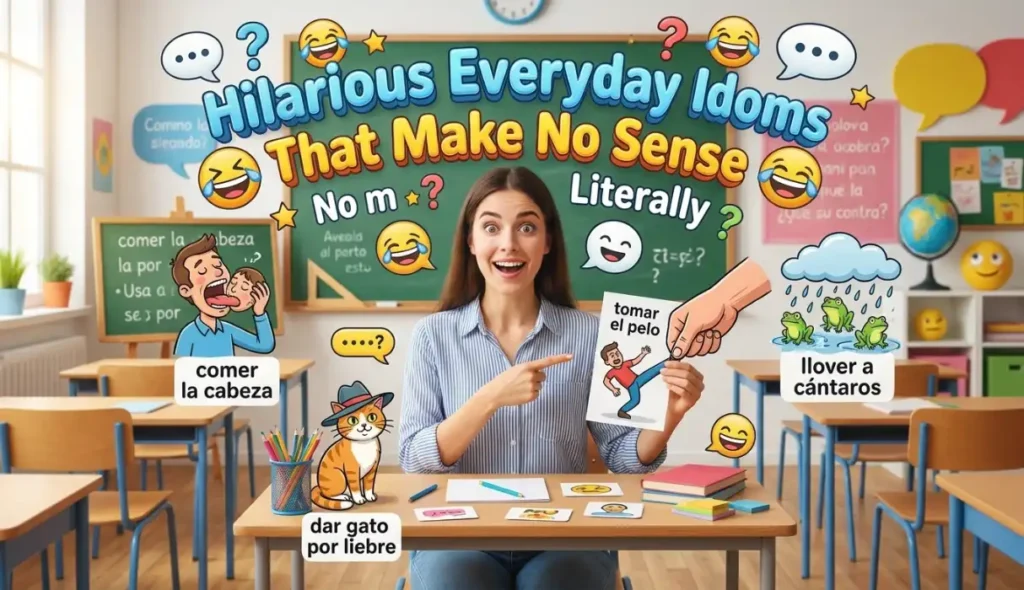
Spanish is famous for its colorful imagery. Some of the most common expressions sound completely wild when translated word-for-word into English, but they make total sense to native speakers.
Let’s look at some hilarious idioms you can start using immediately in daily chats.
Food-Based Expressions That Will Make You Smile
Food plays a massive role in Hispanic culture, so it is no surprise that kitchen ingredients show up everywhere in everyday speech.
Here are a few tasty idioms to spice up your vocabulary:
- Ser un pan de Dios (To be a bread of God): This means someone is a sweet, kind-hearted soul who wouldn’t hurt a fly.
- Estar como una cabra (To be like a goat): Use this when a friend is acting completely silly, wild, or eccentric.
- Temblar como un flan (To shake like a flan pudding): Perfect for describing someone who is extremely nervous before a big speech.
- Pedir peras al olmo (To ask the elm tree for pears): This means expecting something completely impossible from a situation.
Animal Analogies for Human Behavior
Comparing people to animals is another classic feature of casual Spanish conversations. These phrases paint an instant picture in the listener’s mind.
For example, calling someone a lince (lynx) means they are sharp and clever. Saying someone is estar en la edad del pavo (to be in the age of the turkey) describes the awkward teenage years when kids get easily embarrassed.
Cool Street Slang Across Spain and Latin America
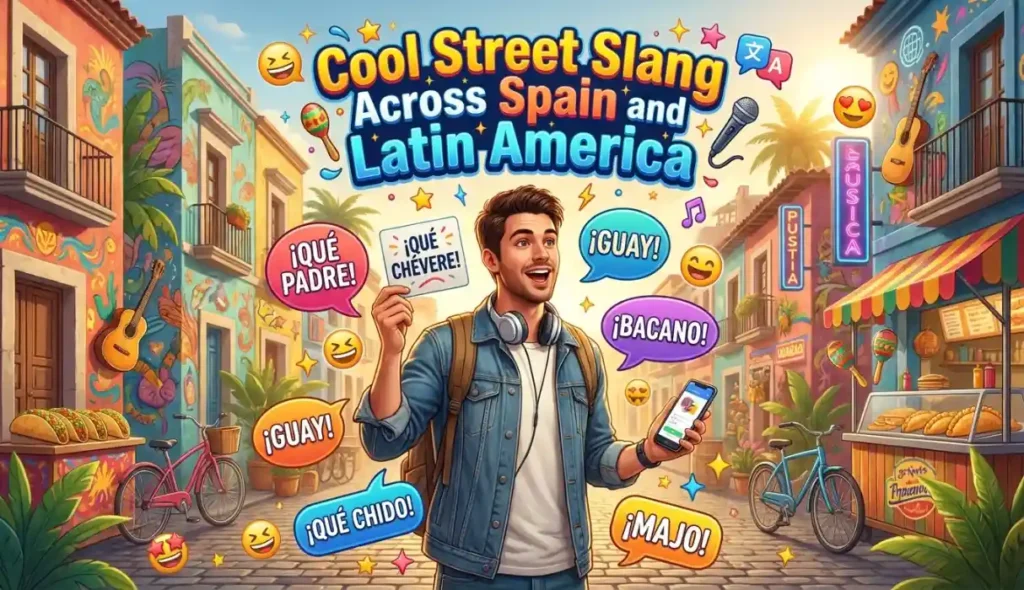
Slang varies greatly depending on which country you visit. A word that is popular in Madrid might sound completely foreign in Mexico City or Buenos Aires.
Knowing regional slang helps you fit in wherever your travels take you.
Popular Spanish Slang from Spain
In Spain, street talk is filled with punchy words that add high energy to casual conversations.
- ¡Mola mucho!: This translates to “It’s super cool!” or “I really like it!”
- Qué guay: A classic way to say “How awesome!” when hearing good news.
- Me cae genial: Used to express that you really like someone’s personality.
- Estar en su salsa: Describes someone who is completely in their element or comfort zone.
Essential Latin American Expressions
Across Central and South America, slang brings warmth, rhythm, and friendly charm to daily interactions.
In Mexico, you will hear people say ¡Qué padre! to describe something fantastic. In Colombia, people use ¡Qué bacano! or parce (pal) to greet their best friends at a gathering.
Expressive Interjections to Elevate Your Conversational Flow

Sometimes you don’t need a full sentence to express your feelings. Short interjections and conversational fillers give you time to think while keeping the dialogue moving smoothly.
Mastering these tiny vocal cues makes you sound dramatically more fluent overnight.
Fillers That Buy You Thinking Time
When you need a second to construct a sentence, avoid saying “um” or “uh.” Instead, lean on natural Spanish filler words that keep your speech sounding authentic.
Using words like pues (well), bueno (okay), or o sea (I mean) keeps your voice grounded in the language rhythm while your brain searches for the right verb conjugation.
Emotional Exclamations for Surprise and Joy
Reacting to news in a foreign language takes practice. Adding these natural exclamations to your vocabulary will make your reactions feel genuine and lively:
- ¡No me digas!: Translates to “Don’t tell me!” or “No way!” when hearing surprising gossip.
- ¡Ojalá!: A beautiful word meaning “I hope so!” or “God willing!” derived from ancient Arabic influences.
- ¡Menos mal!: Means “Thank goodness!” or “At least that’s over!” after escaping a close call.
Actionable Tips for Remembering New Phrases Quickly
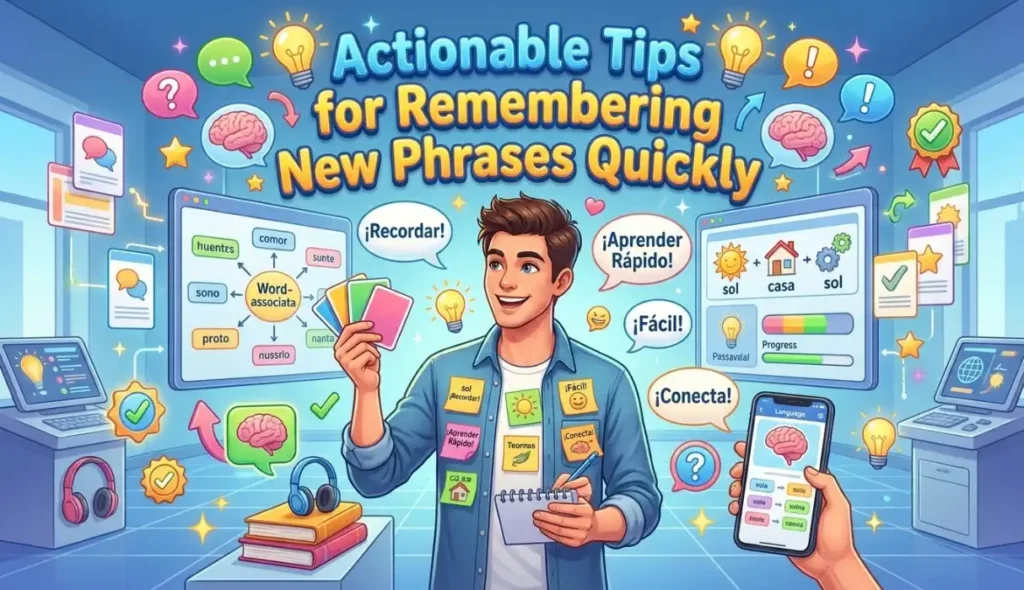
Memorizing lists of expressions can feel overwhelming if you don’t have a smart study strategy. The key to long-term memory is active usage and spaced repetition.
Here are practical, easy techniques to lock new sayings into your brain permanently.
Use Sticky Notes and Visual Flashcards
Write your favorite expressions on colorful sticky notes and place them on household items. Put ponerse las pilas on your laptop keyboard or ser un pan de Dios on your kitchen pantry door.
Seeing these visual cues every day reinforces the connection between the words and your physical environment.
Practice Out Loud in Low-Pressure Situations
Don’t wait until you are standing in a crowded market to try out a new phrase for the first time. Talk to yourself in Spanish while making morning coffee, showering, or walking the dog.
Saying the words out loud trains your mouth muscles to produce foreign sounds smoothly without hesitation.
Practice Exercise
Test your understanding of popular idioms, slang meanings, and regional usage with these 5 multiple-choice questions.
- What does the Spanish idiom “estar como una cabra” actually mean?
A. To be very hungry for green grass.
B. To be acting completely silly or wild.
C. To run up a steep mountain quickly.
D. To wear a warm wool sweater. - If a friend tells you to “ponerse las pilas,” what are they asking you to do?
A. Buy electronics at the store.
B. Go to sleep early tonight.
C. Focus, wake up, and get to work.
D. Turn off your mobile phone. - Which phrase would you use in Spain to say that something is “super cool”?
A. ¡Mola mucho!
B. Pedir peras al olmo.
C. Temblar como un flan.
D. Ser un pan de Dios. - What is the real meaning of the expression “tomar el pelo”?
A. To get a fresh haircut at a salon.
B. To pull someone’s leg or tease them playfully.
C. To wash your hair with fancy shampoo.
D. To brush your pet dog’s fur. - How is the filler word “o sea” commonly used in everyday conversation?
A. To order fresh seafood at a restaurant.
B. To clarify a point, meaning “I mean” or “in other words.
“C. To say goodbye at the end of a phone call.|
D. To complain about stormy ocean weather.
Answer Key:
- B
- C
- A
- B
- B
FAQs
Are these slang phrases suitable to use in professional business settings?
It is best to save street slang for casual chats with friends, travel, or informal social gatherings. In professional meetings, stick to polite, standard language to maintain a respectful tone.
How do regional differences affect the meaning of these idioms?
While most food-based idioms are understood everywhere, local slang words can have completely different meanings across borders. Always listen to how locals speak first before using regional street terms.
What is the fastest way to start using these phrases in real life?
Pick just two or three sayings each week and actively look for opportunities to use them in conversations or text messages. Small, consistent practice builds natural confidence faster than cramming long lists.
Can beginners use these complex idioms right away?
Yes, beginners can use short idioms immediately to sound more natural even before mastering complex grammar. Idioms are learned as complete blocks of speech, making them very easy to memorize.
Why do so many Spanish expressions mention food and animals?
Spanish culture historically centers around agricultural life, family meals, and vibrant outdoor community living. These strong cultural connections naturally shaped the language’s colorful, image-rich everyday idioms over centuries.
Conclusion
Mastering a collection of fun Spanish phrases transforms your language journey from a rigid study routine into an exciting adventure. Adding these witty idioms, expressive interjections, and street slang terms helps you speak with natural confidence and humor.
Whether you are teasing a friend with tomar el pelo or powering through your workload with ponerse las pilas, these sayings bridge cultural divides instantly.
Keep practicing out loud, stay curious about regional variations, and start using your favorite new phrase in your next conversation today!

Jack Olive is the creative mind behind buzzgiggles.com, a fun-focused website built to bring smiles, laughter, and lighthearted entertainment to everyday life. With a passion for humor and enjoyable content, Jack Olive creates and shares playful ideas, amusing stories, entertaining discoveries, and cheerful moments designed for readers of all kinds.
Through buzzgiggles.com, Jack Olive combines creativity, curiosity, and a positive sense of humor to explore the lighter side of life. Whether visitors are looking for a quick laugh, something interesting to share, or a cheerful break from their routine, the website offers content created with fun in mind. Jack Olive believes great entertainment should be easy to enjoy, memorable, and capable of brightening someone’s day.