
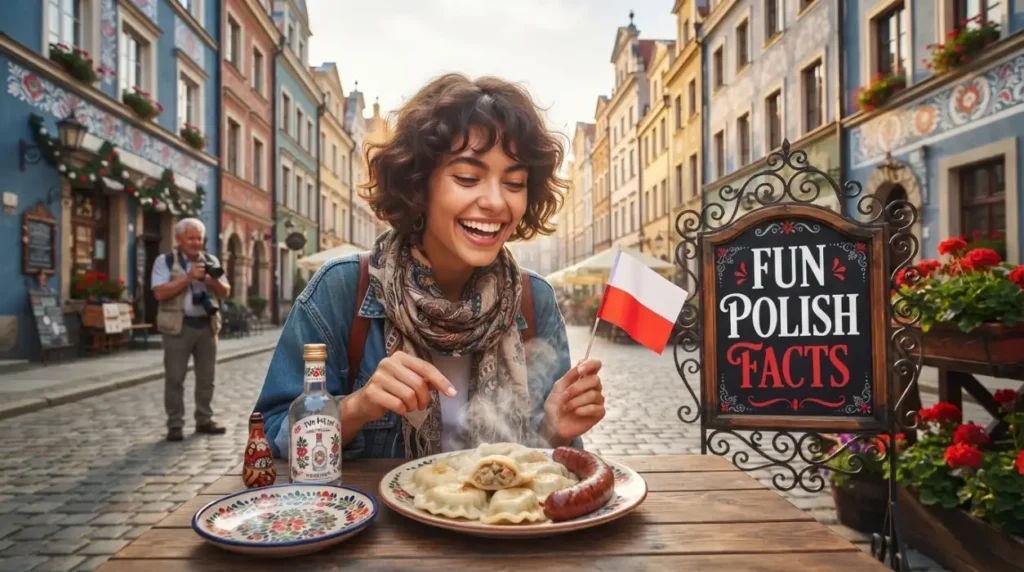
Exploring fun Polish facts reveals a rich tapestry of unique traditions, deep history, delicious cuisine, and linguistic quirks. From hosting the world’s largest castle to celebrating wet Monday water fights, Poland offers endless cultural surprises that entertain travelers, history buffs, and curious minds alike.
Have you ever wondered which European country is home to one of the world’s largest brick castles or celebrates a spring tradition with playful water fights? Exploring fun Polish facts opens the door to fascinating traditions, remarkable history, delicious food, and surprising cultural stories.
Whether you are planning a trip to Poland or simply enjoy learning interesting trivia, discovering fun Polish facts offers plenty of entertainment and fresh insights. Each fact reveals another unique side of this captivating country.
Poland is filled with unexpected customs, historic landmarks, colorful celebrations, and culinary traditions that may challenge what you thought you knew about Europe.
Let’s take a journey through some of the most fascinating fun Polish facts and discover the stories, traditions, and cultural treasures that make Poland truly unforgettable.this vibrant nation.
Extraordinary Historical Wonders of Poland
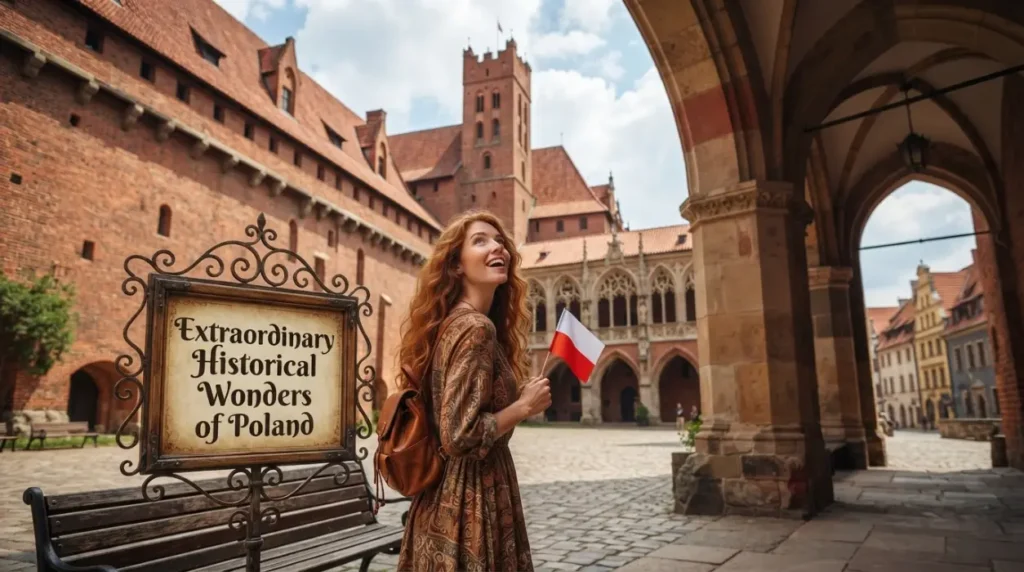
Poland holds a unique place in world history, filled with inspiring resilience, groundbreaking inventions, and remarkable architecture.
The Largest Castle in the World by Land Area
When people think of massive castles, they often picture medieval fortresses in England or Germany.
However, Malbork Castle in northern Poland holds the official record as the largest castle in the world measured by land area.
Constructed by the Teutonic Knights in the 13th century, this giant red-brick fortress covers over 50 acres.
The World’s Second Oldest Written Constitution
Poland has a proud tradition of democratic ideals and legal innovation that shaped modern government history.
In May 1791, the Polish-Lithuanian Commonwealth adopted the May 3 Constitution, the first modern constitution in Europe.
This historic legal document was the second written national constitution in the entire world, created just four years after the United States Constitution.
A Country That Disappeared from the Map
One of the most mind-boggling chapters in European history involves Poland completely vanishing from official world maps.
In the late 18th century, neighboring empires partitioned Polish territory, wiping the nation off geopolitical maps for 123 years.
Despite having no sovereign state until 1918, the Polish people fiercely preserved their language, traditions, and national identity until Poland was officially restored.
Unique Polish Cultural Traditions and Celebrations
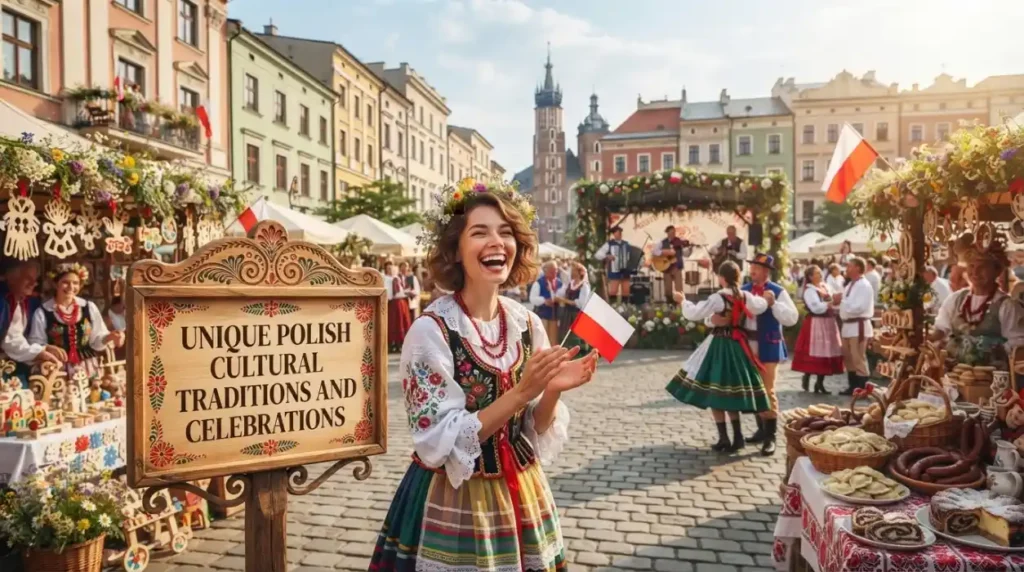
Polish cultural life is packed with colorful holidays and unusual customs that bring families and communities together.
Smigus-Dyngus: The Legendary Wet Monday Water Fight
If you visit Poland on Easter Monday, prepare to get thoroughly soaked from head to toe.
Known locally as Śmigus-Dyngus or “Wet Monday,” this playful tradition involves people throwing buckets of water at friends, family, and unsuspecting passersby.
Historically linked to ancient spring cleansing rituals, it has evolved into a massive, lighthearted nationwide water fight enjoyed by all ages.
Fat Thursday: A Holiday Dedicated Entirely to Donuts
While many cultures celebrate Pancake Tuesday, Poles reserve their biggest food celebration for Tłusty Czwartek, or Fat Thursday.
On this special day right before Lent, people across Poland stand in long bakery lines to consume millions of fried donuts called pączki.
Traditional pączki are filled with sweet rose petal jam or plum butter and dusted with powdered sugar or orange glaze.
- Massive Consumption: Over 100 million pączki are eaten in Poland on a single Fat Thursday.
- Good Luck Legend: Local lore says that failing to eat at least one donut on Fat Thursday brings bad luck for the rest of the year.
- Pączki vs Regular Donuts: Unlike standard American donuts, authentic Polish pączki use rich dough made with eggs, butter, and alcohol to prevent oil absorption during frying.
Wafers and Empty Plates at Christmas Eve Dinner
Christmas Eve, known as Wigilia, is considered the most important festive gathering in Polish households.
Before sitting down to eat, family members break and share a thin sacred wafer called opłatek while exchanging personal blessings.
Polish families also set an extra place setting with empty plates at the dinner table for any unexpected traveler or stranger who might knock on the door.
Mouth-Watering Culinary Delights and Food Culture
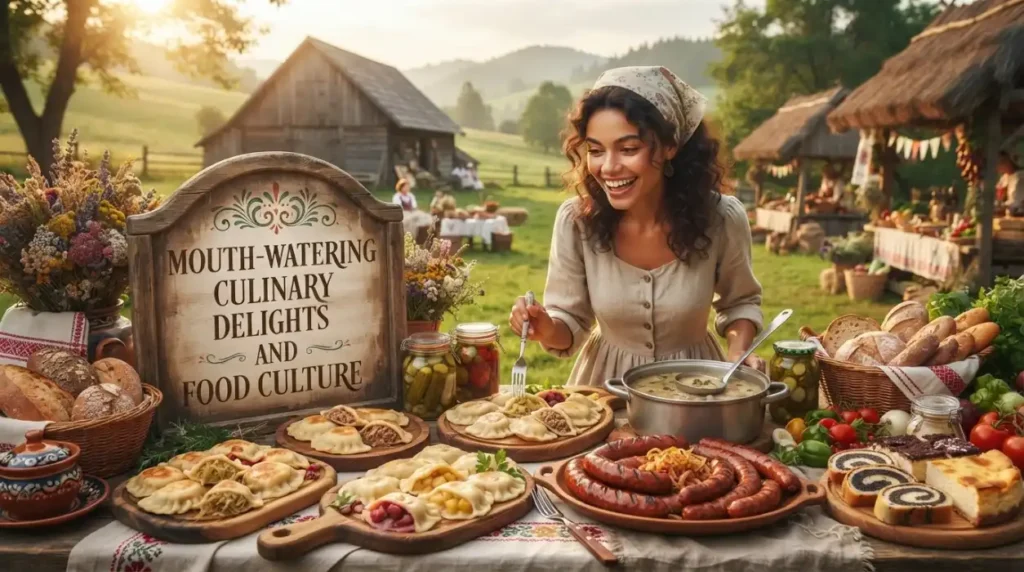
Polish cuisine is hearty, comforting, and deeply rooted in seasonal ingredients like cabbage, potatoes, beets, and forest mushrooms.
Pierogi: The Ultimate Comfort Food
No discussion of Polish food is complete without highlighting pierogi, the famous filled dumplings loved across the globe.
These soft dough pockets are filled with savory ingredients like mashed potatoes, farmer’s cheese, sauted sauerkraut, or minced meat.
Sweet versions filled with fresh summer berries or sweet curd cheese are equally popular as main lunch dishes during warm summer months.
The Famous Polish Forest Mushroom Hunting Craze
When autumn rolls around, millions of Poles head straight into local pine forests carrying wicker baskets for mushroom picking.
Mushroom hunting, or grzybobranie, is practically a national sport where families pass down secret harvesting spots across generations.
Wild forest mushrooms are carefully dried or pickled to flavor traditional holiday soups, stews, and savory dumpling fillings.
Kompot: The Traditional Fruit Drink
Instead of drinking soda or iced tea with lunch, traditional Polish households serve a warm or chilled homemade beverage called kompot.
Kompot is made by simmering seasonal fruits like apples, plums, sour cherries, and berries in water with sugar and spices.
It offers a refreshing, natural fruit flavor that balances rich, savory dinners perfectly.
Fascinating Facts About Polish Language and Science
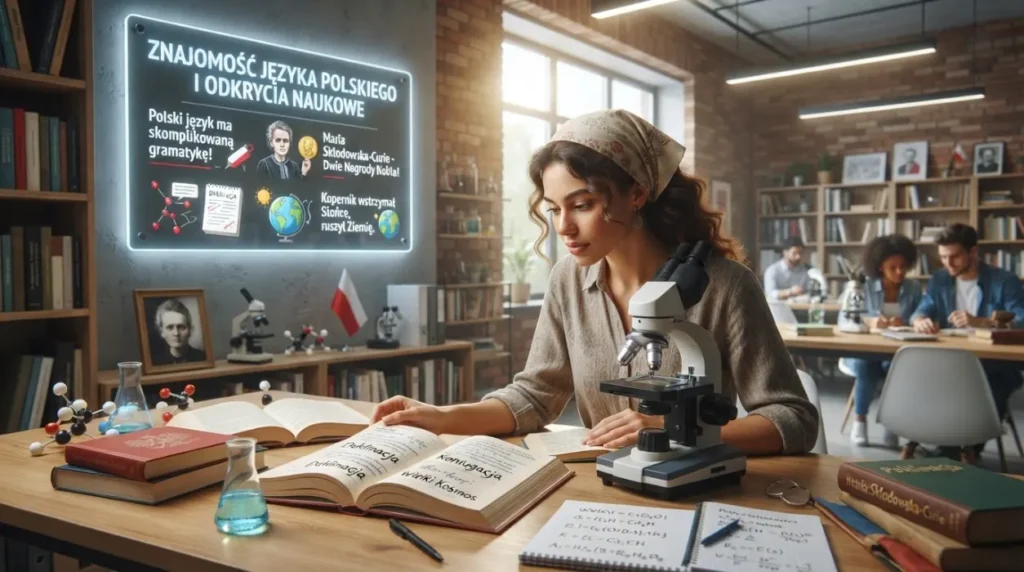
From complex tongue-twisters to groundbreaking scientific discoveries, Poland has left a massive mark on global knowledge.
Nicolaus Copernicus and Marie Curie Changed the World
Polish scientists have repeatedly transformed how humanity understands the universe and natural physics.
Astronomer Nicolaus Copernicus famously proved that the Earth revolves around the Sun, fundamentally changing astronomy forever.
Born in Warsaw, Marie Skłodowska Curie became the first person to win two Nobel Prizes in different scientific fields for her pioneering work on radioactivity.
A Language Full of Ch, Sz, and Cz Sounds
The Polish language is famous among linguistics students for its complex consonant clusters and challenging pronunciation rules.
Words are frequently packed with combinations like “sz,” “cz,” “dz,” and “rz,” creating distinctive rustling sounds when spoken quickly.
One famous Polish tongue-twister, “W Szczebrzeszynie chrząszcz brzmi w trzcinie,” translates amusingly to “In Szczebrzeszyn, a beetle buzzes in the reeds.”
The Unique Polish Alphabet Features 32 Letters
Although Polish uses the Latin alphabet, it incorporates nine unique diacritic letters that do not exist in standard English.
Characters like Ą, Ę, Ć, Ł, Ń, Ó, Ś, Ź, and Ż change word meanings completely based on subtle vocal inflections.
For instance, the letter Ł is pronounced like the English letter “W,” making the city name Łódź sound like “Woodch.”
Essential Comparison of Popular Polish Traditions and Symbols
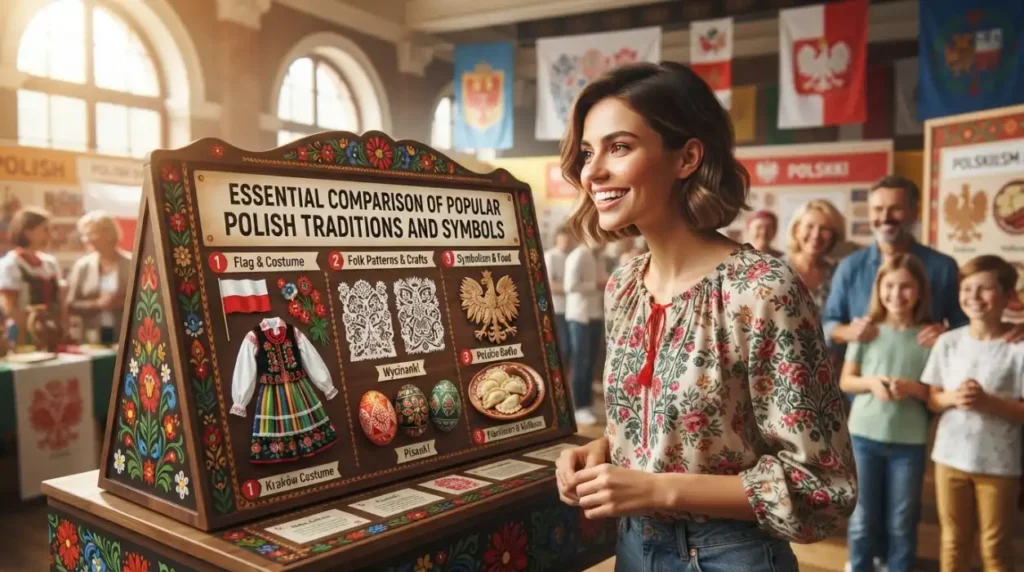
Understanding the core symbols, holidays, and regional features of Poland helps bring its rich cultural identity into clear focus.
Surprising Geography and Nature Facts
Poland features surprisingly diverse landscapes ranging from sandy sea beaches to dense primeval forests and mountain peaks.
Home to Europe’s Last Primeval Forest
Białowieża Forest, straddling the border between Poland and Belarus, is an ancient woodland ecosystem unlike anywhere else in Europe.
This UNESCO World Heritage site contains massive old-growth trees that have stood undisturbed for thousands of years.
It is also the primary sanctuary for the European bison, the continent’s heaviest land mammal, which was successfully saved from total extinction here.
The Only Natural Desert in Central Europe
When people picture Poland, they imagine rolling green hills, dense forests, and snowy mountain ranges.
Surprisingly, southern Poland is home to the Błędów Desert, a unique expanse of natural sand covering over 30 square kilometers.
Created by a combination of medieval mining activity and natural wind currents, it looks like a mini Sahara right in the middle of Europe.
Over 9,000 Lakes in Northern Poland
The Masurian Lake District in northeastern Poland features an interconnected system of over two thousand scenic freshwater lakes.
Across the entire northern region of the country, there are over 9,000 lakes, making Poland a paradise for sailing, kayaking, and swimming.
This picturesque water landscape draws outdoor enthusiasts from all across Europe every summer.
Amazing Inventions and Cultural Legacy
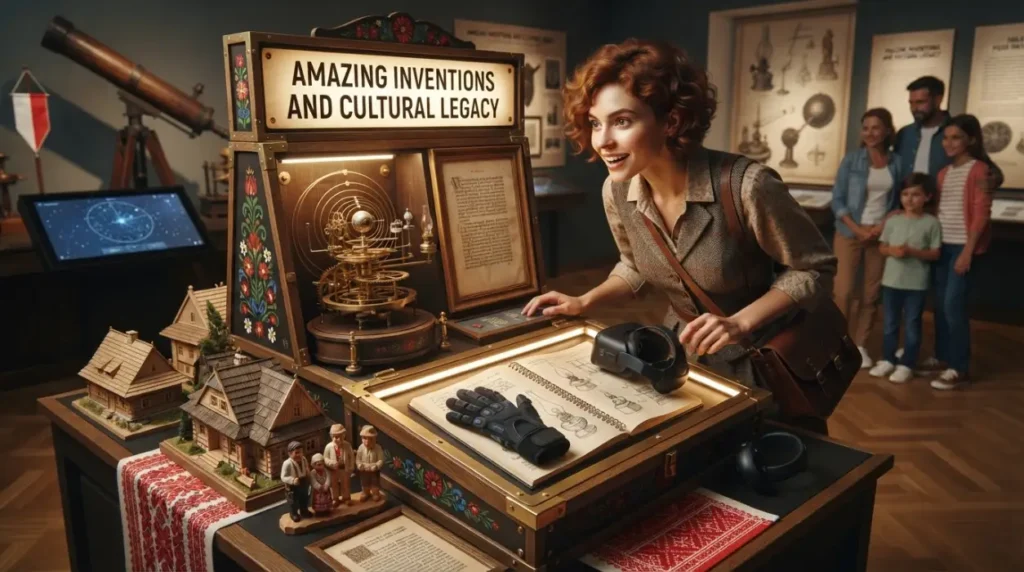
Polish innovators, artists, and thinkers have created everyday items and artistic masterpieces that influence modern culture.
The Invention of the Kerosene Lamp
In 1853, Polish pharmacist Ignacy Łukasiewicz invented the world’s first practical kerosene lamp in the city of Lwów.
This brilliant innovation provided safe, affordable indoor lighting long before electric light bulbs were developed.
Łukasiewicz also constructed the world’s first industrial oil well in southern Poland, laying early foundations for the modern energy industry.
The Musical Genius of Frédéric Chopin
Frédéric Chopin, one of the world’s greatest Romantic composers and pianists, was born near Warsaw in 1810.
His emotional piano works drew deep inspiration from traditional Polish folk dances like the mazurka and polonaise.
Today, Warsaw’s international airport is named in his honor, and benches across the city play his famous compositions at the touch of a button.
Heavy Metal and Video Game Pop Culture Dominance
Modern Poland has emerged as a major global powerhouse in contemporary digital entertainment and video game development.
The world-famous video game series The Witcher, based on books by Polish fantasy author Andrzej Sapkowski, was developed by a Polish studio.
Poland is also home to world-renowned heavy metal music bands and a thriving digital animation industry.
Practice Exercise
Test your knowledge of Polish history, culture, geography, and traditions with these 5 multiple-choice questions.
- Which historic landmark in Poland holds the official record as the largest castle in the world by land area?
A. Wawel Royal Castle
B. Malbork Castle
C. Niedzica Castle
D. Moszna Castle - What popular Polish holiday features nationwide water fights on Easter Monday?
A. Tłusty Czwartek
B. Wigilia
C. Śmigus-Dyngus
D. Andrzejki - Which famous Polish scientist became the first person to win two Nobel Prizes in different scientific categories?
A. Nicolaus Copernicus
B. Marie Skłodowska Curie
C. Ignacy Łukasiewicz
D. Fryderyk Chopin - What is the name of the rare animal species saved from total extinction within Poland’s Białowieża Forest?
A. European bison
B. Siberian tiger
C. Alpine ibex
D. Brown bear - What traditional sweet pastry is consumed by the millions across Poland on Fat Thursday?
A. Babka
B. Sernik
C. Pączki
D. Makowiec
Answer Key:
- B
- C
- B
- A
- C
FAQs
What is the capital city of Poland?
Warsaw is the capital and largest city of Poland. Located along the Vistula River, Warsaw was completely rebuilt after World War II and now serves as a major European cultural, economic, and political hub.
What currency is used in Poland?
Poland uses the Polish Złoty (PLN) as its official national currency. While Poland is a member of the European Union, it has not adopted the Euro, making travel expenses relatively affordable for international visitors.
What is the most popular traditional Polish dish?
Pierogi are widely considered the national dish of Poland. These delicious stuffed dumplings are boiled or pan-fried and filled with savory ingredients like potato and cheese, or sweet fruits like blueberries.
Why is Poland famous for amber jewelry?
Poland’s Baltic Sea coast is home to the world’s largest deposits of natural amber, often called “Baltic Gold.” Polish craftspeople have been harvesting and carving fossilized tree resin into fine jewelry for thousands of years.
Is Polish a difficult language to learn for English speakers?
Yes, Polish is generally considered challenging for native English speakers due to complex grammar rules, seven noun cases, and dense consonant clusters. However, basic greeting phrases are easy to pick up with practice.
What is the dominant climate type in Poland?
Poland features a temperate climate with warm summers and cold, snowy winters. Spring and autumn bring pleasant weather, making them fantastic seasons for outdoor sightseeing and hiking across Polish nature reserves.
Conclusion
Exploring these intriguing fun polish facts shows a resilient nation filled with warm traditions, natural beauty, and astonishing history. Whether you plan to sample pierogi or visit crooked pine trees, Poland offers endless discoveries. Start planning your own Polish adventure today!
Learning about these unique traditions and cultural details can give you a deeper appreciation of Poland and its place in Central European history. These fascinating discoveries also make exploring the country even more exciting.
Whether you are interested in history, food, traditions, or unusual cultural stories, Poland has plenty to discover. Start exploring today and uncover even more fascinating facts about this remarkable country!
Jack Olive is the creative mind behind buzzgiggles.com, a fun-focused website built to bring smiles, laughter, and lighthearted entertainment to everyday life. With a passion for humor and enjoyable content, Jack Olive creates and shares playful ideas, amusing stories, entertaining discoveries, and cheerful moments designed for readers of all kinds.
Through buzzgiggles.com, Jack Olive combines creativity, curiosity, and a positive sense of humor to explore the lighter side of life. Whether visitors are looking for a quick laugh, something interesting to share, or a cheerful break from their routine, the website offers content created with fun in mind. Jack Olive believes great entertainment should be easy to enjoy, memorable, and capable of brightening someone’s day.