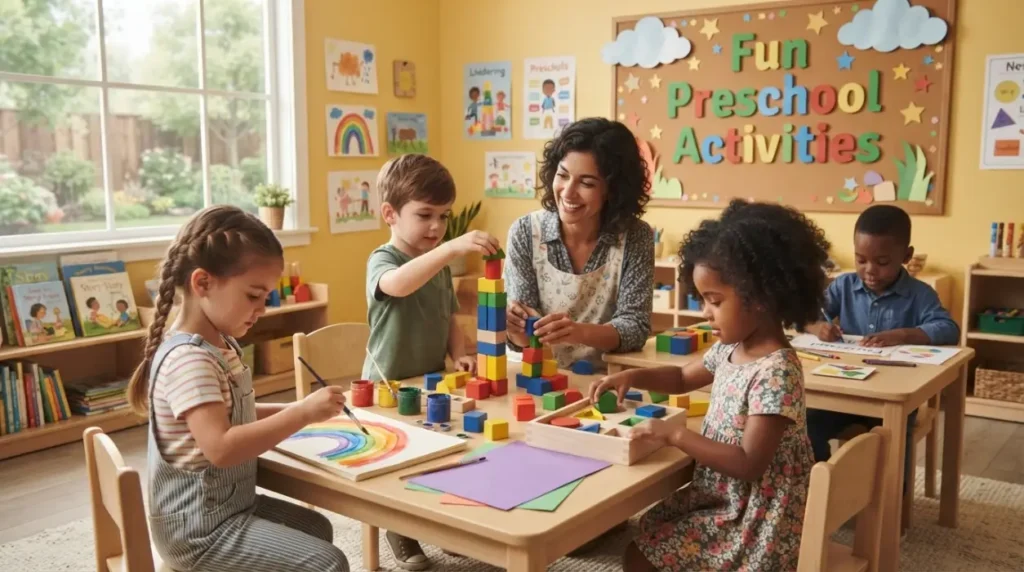
Fun preschool activities engage young children through hands-on play, sensory exploration, creative crafts, and energetic games. By blending early learning with playful discovery, these structured and unstructured experiences build essential fine motor skills, social confidence, emotional intelligence, and problem-solving abilities in three- to five-year-olds while keeping entertainment at the center.
Have you ever wondered why young kids can turn a simple cardboard box into a magical castle within seconds? Planning fun preschool activities leverages that boundless imagination to build core developmental skills through pure, joyful play.
Instead of sitting children down with endless worksheets, interactive games create meaningful learning moments naturally. Discovering fun preschool activities that balance high energy with quiet focus helps keep your daily routine stress-free and exciting.
Early childhood is all about exploring the world through touch, sound, color, and active movement. Turning everyday household objects into playful learning tools turns routine afternoons into memorable adventures.
If you are ready to spark curiosity and keep little hands happily busy, you have arrived at the perfect guide. Let’s explore how simple, fun preschool activities can make early learning feel completely effortless for everyone involved.
The Magical Science of Learning Through Play
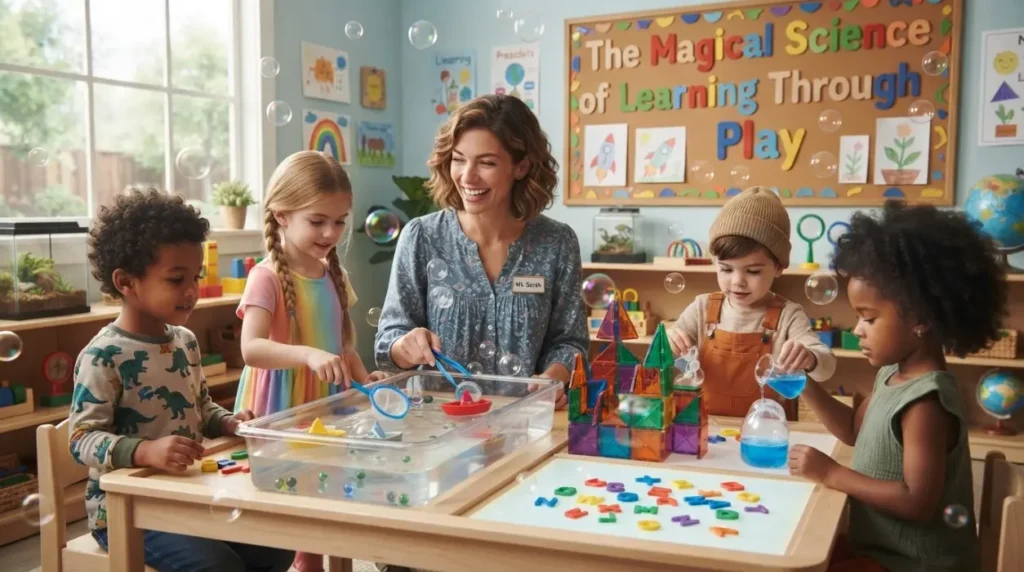
For three- to five-year-olds, play is not just a break from learning; it is the primary way their brains grow. When a child stacks wooden blocks until they tumble over, they are actually testing early physics concepts like gravity and balance.
Neuroscientists often highlight that physical play triggers neural connections much faster than passive instruction. When little hands touch textured materials, build structures, or run through obstacle courses, the brain builds strong networks for future learning.
Choosing the right mix of active play and quiet exploration creates a balanced schedule that prevents fatigue and keeps curiosity alive.
Developing Essential Fine Motor Control
Fine motor skills involve the small muscles in hands and fingers that allow children to hold pencils, button shirts, and use safety scissors. Simple play ideas build this hand strength long before formal writing starts.
- Squishing, rolling, and cutting playdough builds finger intrinsic muscle strength.
- Threading oversized pasta onto dry spaghetti noodles develops hand-eye coordination.
- Using plastic tweezers to pick up soft pom-poms strengthens the pencil grip pinch.
Boosting Social and Emotional Development
Group activities teach young children how to navigate shared spaces, take turns, and express their feelings clearly. Experiencing small triumphs and minor setbacks during games builds resilience in a safe environment.
When children share craft supplies or collaborate on a giant floor puzzle, they practice empathy and cooperative problem-solving naturally.
Creative Sensory Bin Ideas for Toddlers and Preschoolers
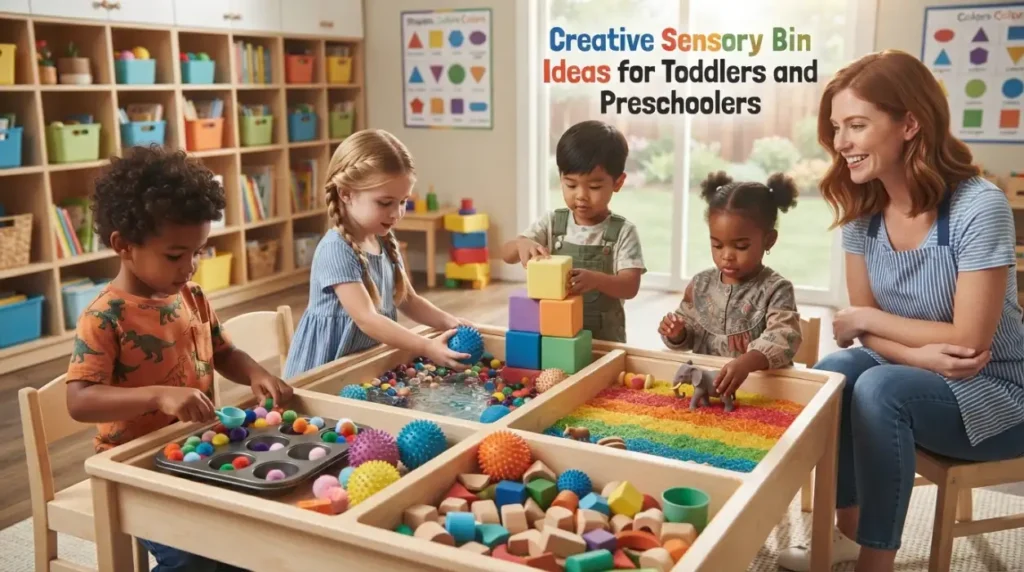
Sensory bins are simple containers filled with textured materials that invite open-ended exploration. They give children complete freedom to scoop, pour, hide, and uncover hidden objects at their own speed.
Setting up a sensory bin takes less than five minutes using everyday kitchen staples like rice, dried beans, or water.
The Rainbow Rice Discovery Tub
Rainbow rice is visually striking and offers a satisfying tactile sensation as it flows through tiny fingers. You can easily dye white rice at home using food coloring and a tiny splash of white vinegar.
Hide small plastic letters or colorful buttons beneath the rice layers. Give your child a pair of scoopers and a small bucket so they can hunt for treasure while practicing color sorting.
Water Play and Floating Science Lab
Water play is exceptionally soothing for active young minds, making it ideal for quiet afternoons. Fill a broad plastic tub with warm water and add a few drops of blue food coloring.
Provide plastic cups, basters, floating sponges, and light plastic toys. Ask open questions like which items will float and which will sink to spark early scientific inquiry.
Hands-On Early Literacy and Math Games
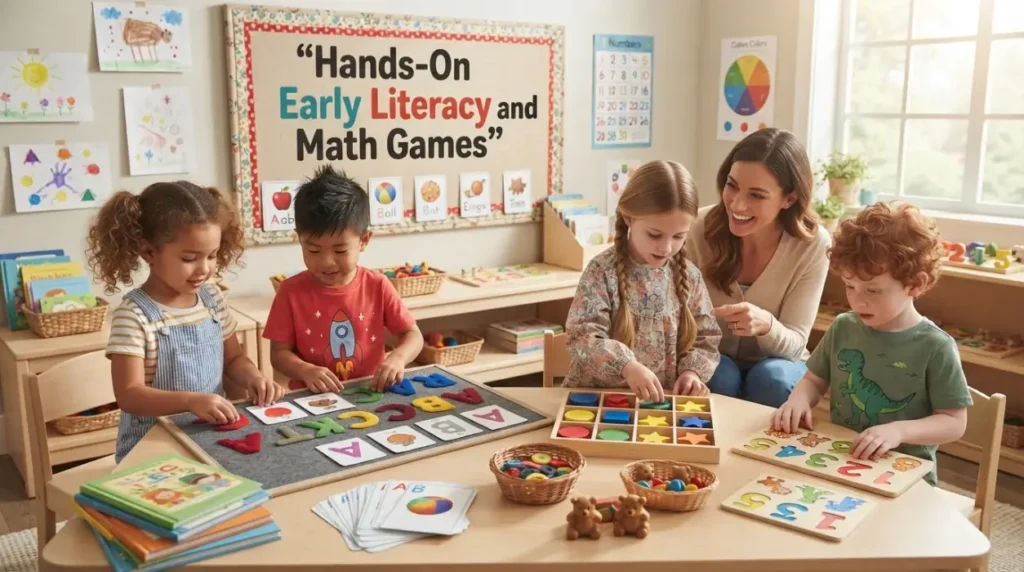
Teaching letters and numbers to preschoolers should always feel like an interactive game rather than a test. Combining physical movement with recognition games makes abstract symbols meaningful to young minds.
When kids move their whole bodies while learning letter sounds, they retain information much more effectively.
The Alphabet Floor Hop
Transform letter recognition into an energetic indoor game using painter’s tape and paper plates. Write bold uppercase and lowercase letters on paper plates and tape them across your living room floor.
- Call out a letter sound and ask your child to hop onto the matching plate.
- Have them move like different animals to reach each letter island.
- Spell out simple short words together by jumping from letter to letter in sequence.
Counting and Sorting with Nature Treasures
Head outside for a short neighborhood nature walk to collect twigs, smooth pebbles, pinecones, and colorful fallen leaves. Outdoor collections connect early math concepts directly to the real world.
Once back inside, set up small bowls for sorting by size, color, or texture. Draw large numbered circles on butcher paper and ask your child to place the correct quantity of pebbles into each circle.
Easy Art and Craft Projects with Household Items
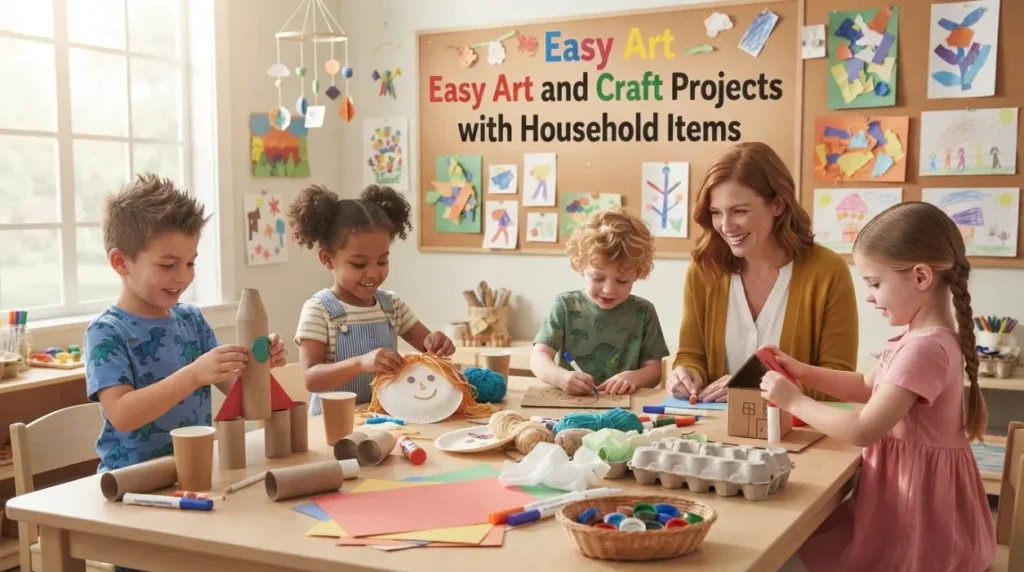
Art projects for young children should focus entirely on the process of creation rather than making a perfect final product. Process art builds creative confidence because there are no strict rules or wrong moves.
Using everyday household items as stampers and brushes makes art time surprising and budget-friendly.
Bubble Wrap Printmaking
Save the plastic bubble wrap from recent package deliveries for a unique painting session. Wrap a strip of small-bubble packaging around a cardboard tube or rolling pin and tape it securely.
- Roll bright washable paint across the bubble surface using a foam roller.
- Press the textured surface onto heavy paper to reveal striking honeycomb patterns.
- Cut the printed paper into fun animal shapes once the paint dries completely.
Kitchen Sponge Stamping Castle
Clean kitchen sponges can easily be cut into squares, triangles, rectangles, and arches with household scissors. Dip these foam geometric shapes into shallow dishes of washable tempera paint.
Children can stamp their own colorful towers, houses, and castles while identifying geometric shapes along the way.
Active Indoor Games for Rainy Afternoons
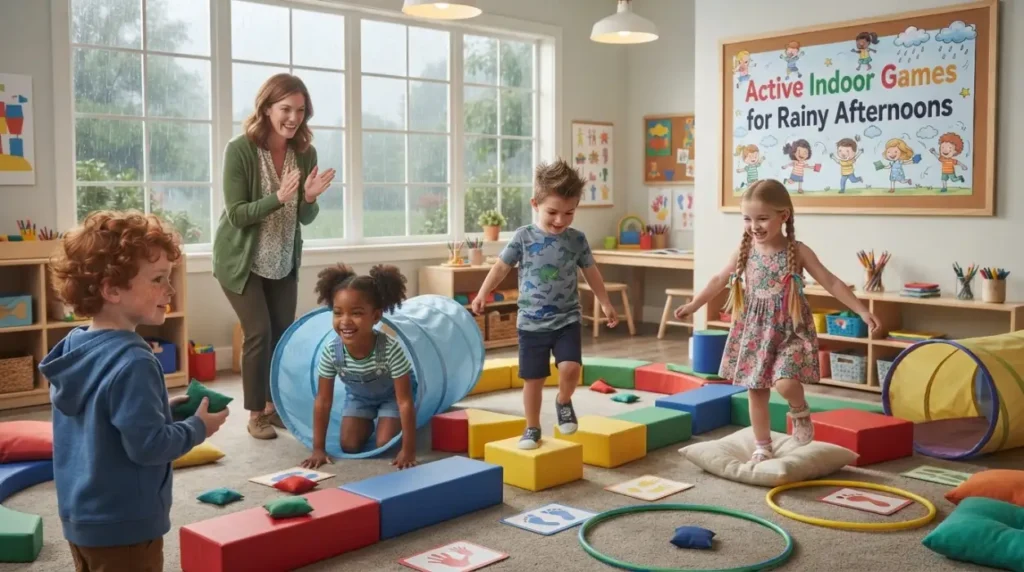
When weather keeps children indoors, burn off excess energy with structured physical challenges. Indoor active games refine gross motor skills, balance, and spatial awareness while preventing cabin fever.
Simple living room setups keep kids moving safely without risking broken household items.
The Floor Is Lava Obstacle Course
Transform your living room floor into an exciting imaginary landscape where the floor has turned into molten lava. Arrange couch cushions, non-slip rugs, and sturdy step stools across the room.
- Guide children to step carefully from cushion to cushion without touching the floor carpet.
- Add balance challenges like holding a stuffed animal on their head while stepping.
- Use a timer to see if they can cross the imaginary fiery river faster on their second try.
Masking Tape Movement Tracks
Strips of blue painter’s tape stick easily to carpets or hardwood floors without leaving sticky residue behind. Use tape lines to build custom tracks for various balance exercises.
- Create zigzag lines for balance-beam walking.
- Make spiral shapes that children can follow from the outside toward the center.
- Tape down parallel lines to mark long-jump landing zones.
Nature Exploration and Outdoor Discovery
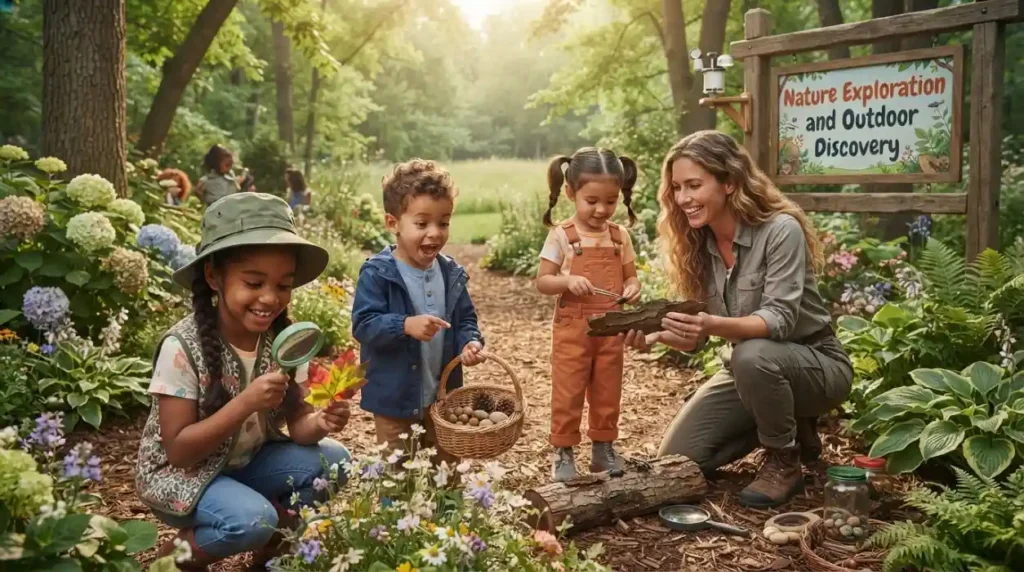
Stepping outdoors exposes children to fresh air, shifting natural light, and rich sensory stimulation. Outdoor environments encourage bigger physical movements, louder laughter, and deeper curiosity about living organisms.
Even a small apartment balcony or local patch of grass provides endless opportunities for biological discovery.
Outdoor Texture Scavenger Hunts
Print a simple picture checklist containing natural textures found in a park or backyard. Include items that feel rough, smooth, squishy, prickly, or dry.
Give your child a small magnifying glass and a paper bag to gather their discoveries. Feeling tree bark, soft moss, and wet soil helps children develop rich descriptive vocabulary.
DIY Mud Kitchen Cooking
Mud play might feel messy, but it offers incredible sensory satisfaction and fosters unstructured dramatic play. Dedicate a small corner of your yard to an outdoor cooking station using old pots, pans, and wooden spoons.
- Provide water pitchers, dirt, flower petals, and pine needles.
- Watch kids mix mud soups, bake dirt pies, and decorate mud cakes with leaves.
- Hose down cooking tools easily outside when play concludes for the day.
Practice Exercise
Test your knowledge on organizing effective, high-value early childhood activities by selecting the correct answer for each multiple-choice question below.
- What is the primary developmental benefit of using plastic tweezers to pick up pom-poms?
A. Improving long-distance vision
B. Strengthening hand muscles for fine motor control
C. Developing cardiovascular endurance
D. Learning geographic map skills - Which timing window represents the best focus duration for a typical preschool activity?
A. 10 to 20 minutes
B. 60 to 90 minutes
C. 2 to 3 hours
D. 4 hours continuously - What distinguishes process art from product-focused art in early childhood settings?
A. Process art requires expensive imported materials.
B. Process art prioritizes creative exploration over a pre-determined final picture.
C. Process art must always follow strict step-by-step instructions.
D. Process art is reserved strictly for older primary school students. - Why are sensory bins using rice or water beneficial for three-year-olds?
A. They force children to sit completely still in silence for hours.
B. They provide open-ended tactile exploration that builds hand-eye coordination.
C. They replace the need for physical outdoor exercise entirely.
D. They teach children how to read complex sentences immediately. - What is the safest and easiest way to create temporary indoor balance tracks on flooring?
A. Permanent marker lines
B. Blue painter’s tape
C. Wet soap trails
D. Loose electrical cords
Answer Key:
- B
- A
- B
- B
- B
FAQs
How long should a preschool activity typically last?
Most activities for three- to five-year-olds should last between 10 and 20 minutes. Young attention spans are naturally short, so switching tasks frequently keeps engagement high and prevents frustration.
What are the best low-prep materials to keep at home?
Stock your play area with painter’s tape, washable markers, playdough, paper plates, plastic scoops, and cardboard tubes. These versatile, low-cost items can be transformed into dozens of different learning games.
How can I manage the mess during sensory play?
Place a large plastic tablecloth or shower curtain liner underneath your sensory bin before starting play. Cleaning up becomes as simple as gathering the corners of the sheet and shaking stray materials back inside.
How do play-based activities prepare children for school?
Hands-on play builds essential fine motor strength, social sharing skills, listening habits, and emotional regulation naturally. These foundational abilities make transitioning into structured classroom settings much smoother.
What should I do if my child loses interest quickly?
Follow your child’s natural curiosity rather than forcing them to complete a strict activity plan. Adjust the game by adding new props or transition to an active movement game if they need to burn energy.
Conclusion
Planning creative play routines should feel like a joyful opportunity to connect with young children. Prioritizing hands-on exploration, simple household crafts, and active movement ensures every day brings new growth and genuine laughter.
Every sensory bin, outdoor scavenger hunt, and alphabet game lays a strong foundation for future learning. These simple, shared moments create lasting childhood memories while building vital confidence.
Start picking out your favorite ideas today and jump right into your next fun preschool activities to make learning an unforgettable daily adventure!

Jack Olive is the creative mind behind buzzgiggles.com, a fun-focused website built to bring smiles, laughter, and lighthearted entertainment to everyday life. With a passion for humor and enjoyable content, Jack Olive creates and shares playful ideas, amusing stories, entertaining discoveries, and cheerful moments designed for readers of all kinds.
Through buzzgiggles.com, Jack Olive combines creativity, curiosity, and a positive sense of humor to explore the lighter side of life. Whether visitors are looking for a quick laugh, something interesting to share, or a cheerful break from their routine, the website offers content created with fun in mind. Jack Olive believes great entertainment should be easy to enjoy, memorable, and capable of brightening someone’s day.