

A fun wallpaper is a decorative wall covering featuring vibrant patterns, playful illustrations, bold textures, or whimsical themes. Unlike plain paint, it instantly adds personality, energy, and charm to any room while offering easy peel-and-stick or paste-the-wall options for effortless home transformations.
Have you ever walked into a room and instantly felt your mood lift because of the colorful designs on the walls? Choosing a fun wallpaper is one of the easiest ways to inject personality and energy into any plain living space.
Whether you love bold botanical prints, playful geometric shapes, or whimsical animal motifs, hanging a fun wallpaper turns boring drywall into an exciting visual story.
You do not need to be a professional interior designer or spend thousands of dollars to create a space that feels completely tailored to your personal taste.
Let’s explore creative patterns, easy installation techniques, and smart decorating tricks that make decorating with a fun wallpaper an enjoyable project for your home.
The Evolution of Wall Coverings Throughout History

Wall coverings have come a long way from the heavy, delicate woven tapestries used in medieval European castles.
From Hand-Painted Papers to Mass Production
Centuries ago, wealthy homeowners used hand-printed blocks and delicate silk panels to dress their living spaces. These early coverings were incredibly costly, meaning only elite royal palaces could afford intricate wall art.
The Industrial Revolution changed everything by introducing steam-powered rotary printing presses during the nineteenth century. Suddenly, beautiful floral prints and repeating geometric patterns became affordable for everyday working families across the globe.
The Rise of Washable Synthetic Materials
Early paper coverings suffered from a major drawback: water damage. Moisture from steam, kitchens, or humid weather caused early paper designs to warp, stain, or peel away from plaster walls.
During the mid-twentieth century, manufacturers began adding vinyl coats and synthetic fibers to wallpaper rolls. This development made surfaces wipeable, scrubbable, and resistant to everyday household wear and tear.
The Peel-and-Stick Revolution for Renters
The biggest leap for modern home decor came with the invention of self-adhesive removable backings.
Renters and DIY enthusiasts no longer need messy buckets of paste, heavy smoothing brushes, or professional installers to transform a room. You can peel off the backing paper, stick it directly to a clean wall, and remove it years later without damaging the paint underneath.
Popular Styles of Playful Wall Patterns
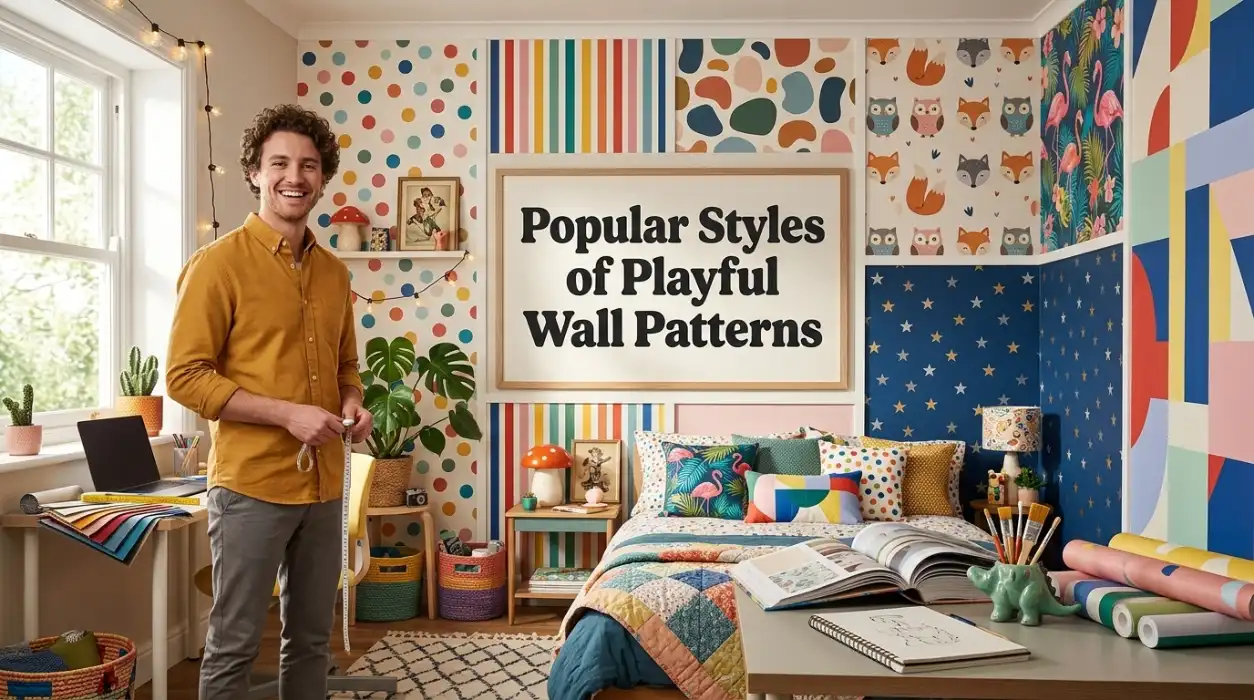
Finding the right pattern design depends on the mood you want to create in your favorite room.
Whimsical Botanical and Tropical Jungle Prints
Oversized banana leaves, vibrant palm fronds, and colorful foreign birds bring nature directly into your home.
- Foreign Floral Patterns: Large hibiscus blooms and cascading vines create a lush, greenhouse feeling inside quiet bedrooms.
- Playful Jungle Animals: Hidden leopards, playful monkeys, and toucans tucked between giant leaves add an element of playful discovery for guests.
- Subtle Woodland Moss: Soft green fern illustrations bring a calm, refreshing outdoor atmosphere into home office spaces.
Modern Geometric and Retro Abstract Motifs
Geometric patterns use repeating lines, bold arches, and contrasting colors to give rooms a clean, mid-century modern aesthetic.
Checkerboard patterns, terrazzo stone prints, and soft pastel arches create striking backdrop walls for living room sofas or dining tables.
Interactive and Specialty Wall Coverings
Some modern designs offer functional entertainment alongside visual appeal.
Chalkboard wall coverings let children draw freely across bedroom walls, while dry-erase maps make excellent interactive study tools for home classrooms. Color-in wallpaper options even let kids paint their own murals over time using washable markers.
Comparing Wallpaper Material Types
Choosing the correct material ensures your wall covering stays securely in place while remaining easy to clean.
Creative Places to Add Accent Wall Coverings
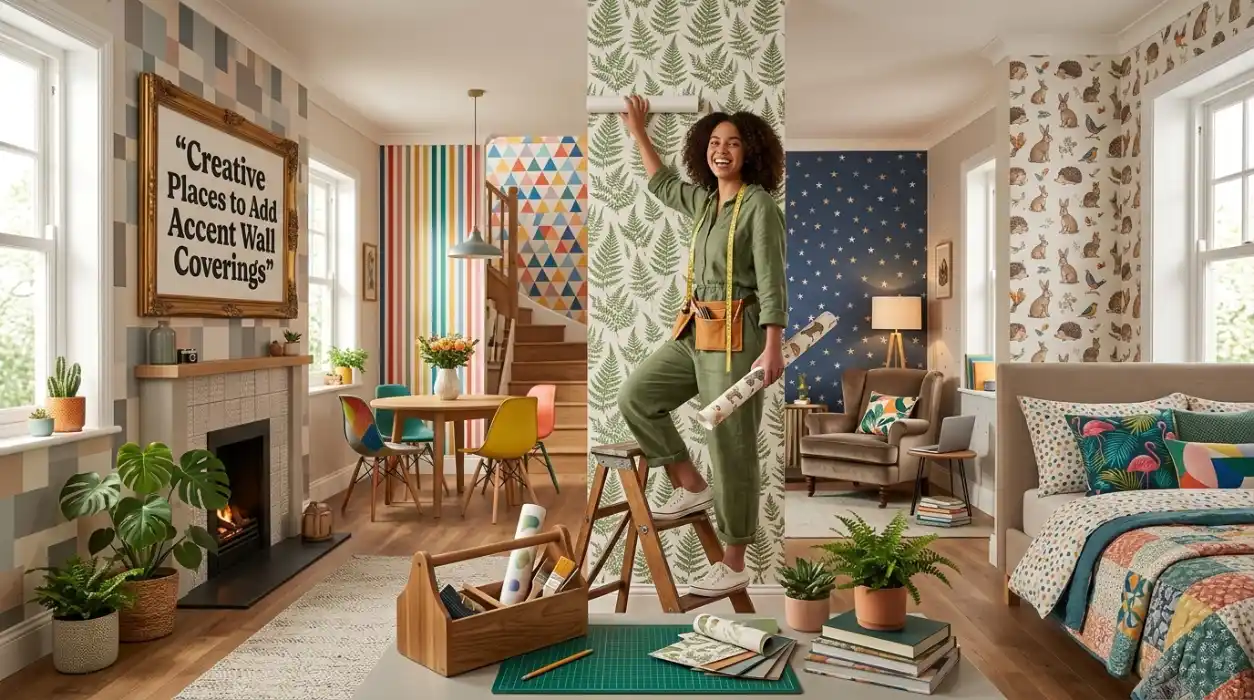
You do not have to cover all four walls of a massive room to make a memorable statement with your design choices.
Framing a Small Powder Room or Entryway
Powder rooms are tiny spaces where bold choices shine without feeling overwhelming.
Because visitors only spend a few minutes in a half-bathroom, using bright, quirky prints creates a delightful surprise that leaves a lasting impression on guests.
Transforming Furniture and Cabinet Backings
Placing leftover wall covering scraps inside unexpected places adds subtle custom detailing throughout your house.
Line the wooden backing of open bookshelves, cover plain dresser drawer fronts, or stick removable sheets onto kitchen cabinet backings to make glassware pop against colorful patterns.
Accent Walls Behind Bed Frames or Desks
Creating a single focal point wall behind your bed frame replaces the need for an expensive headboard.
A single wall of bold pattern anchors the room, drawing eyes directly toward your sleeping space while keeping the remaining three walls simple and soft.
Essential Tools for a Smooth DIY Installation
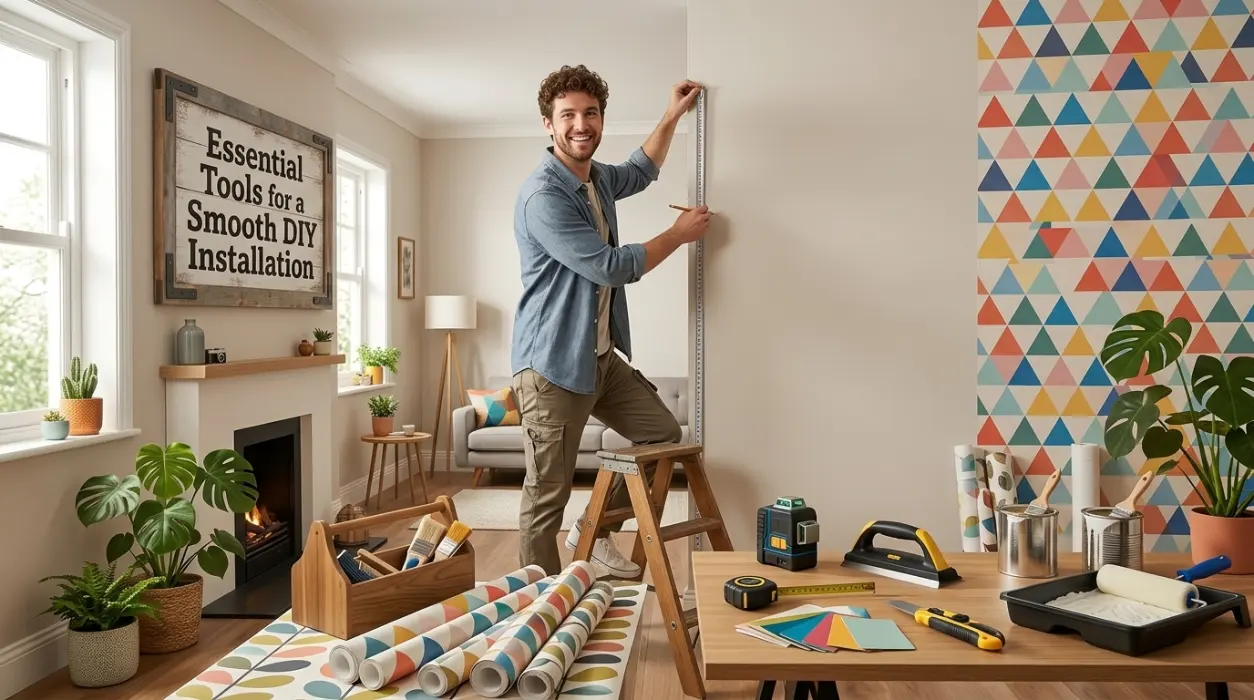
Gathering the proper equipment before opening your rolls prevents frustrating delays while hanging your panels.
Preparing Your Tool Kit
- Measuring Tape and Plumb Line: Essential for marking a perfectly straight vertical line before hanging your first panel strip.
- Sharp Utility Knife: A fresh, razor-sharp blade ensures clean cuts along baseboards without tearing damp paper edges.
- Smooth Plastic Squeegee: Helps push trapped air bubbles toward panel edges without scratching decorative printed surfaces.
- Damp Microfiber Sponge: Wipes away excess paste or dust along seam lines as you smooth panels into place.
Preparing Wall Surfaces for Maximum Grip
Plaster and drywall must be completely clean, dry, and smooth before applying any adhesive backing.
Wipe down walls with a mixture of warm water and mild dish soap to clear away dust, grease, and pet hair. Fill small nail holes with spackle, sand the patches flat, and allow new paint to cure for at least two weeks before applying peel-and-stick sheets.
Matching Pattern Repeats Accurately
Every patterned roll features a metric measurement known as the pattern repeat distance.
When cutting your second panel strip, align the side edges with the first panel on the floor before making your top cut. This simple step prevents misaligned patterns along horizontal seam lines.
How to Remove Wall Coverings Without Damaging Paint
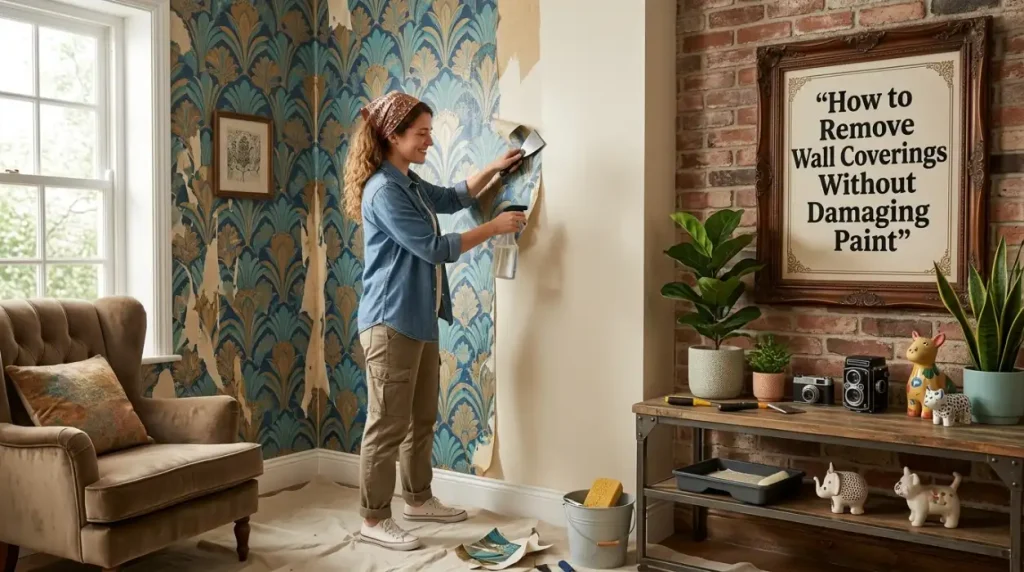
Removing old wall coverings should be a stress-free process when you follow the correct steps.
Removing Peel-and-Stick Sheets Safely
Peel-and-stick products pull away easily when removed at a sharp forty-five-degree angle.
If a section feels stubborn, warm the surface with a handheld hairdryer set to low heat for ten seconds. The mild heat softens the adhesive glue, allowing the panel to glide off smoothly without pulling away underlying wall paint.
Stripping Traditional Paste Coverings
Traditional paper coverings require moisture to loosen old paste bonds beneath the paper layer.
- Score the outer paper layer lightly using a plastic wallpaper scoring tool to allow moisture inside.
- Mix warm water with a few drops of liquid dish soap inside a spray bottle.
- Spray the wall thoroughly and let the liquid soak into the backing for ten minutes.
- Use a flexible plastic putty knife to scrape away the softened paste sheets gently from bottom to top.
Practice Exercise
Test your understanding of wallpaper materials, installation tools, and removal techniques with these 5 multiple-choice questions.
- Which material type is best suited for rental apartments because it pulls away without damaging wall paint?
A. Solid heavy vinyl installed with traditional paste.
B. Textured grasscloth applied with industrial glue.
C. Self-adhesive peel-and-stick vinyl.
D. Hand-painted silk panels attached with metal staples. - Why should you let newly painted walls cure for two weeks before applying peel-and-stick paper?
A. Fresh paint emits moisture and gases that ruin adhesive backings if applied too early.
B. Wallpaper automatically changes color if applied over dry paint surfaces.
C. It takes two weeks for the wallpaper roll to adjust to room temperature.
D. Wall paint needs two weeks to turn into a magnetic surface. - What tool should you use to smooth out trapped air bubbles during panel installation?
A. A rough wire bristle brush.
B. A smooth plastic squeegee.
C. A sharp metal razor blade.
D. A heavy rolling pin used for baking. - How does applying mild heat from a hairdryer assist in removing self-adhesive sheets?
A. It melts the vinyl layer so it washes down the floor drain.
B. It softens the adhesive backing, allowing panels to peel away smoothly.
C. It bakes the paper permanently onto the drywall surface.
D. It changes the pattern color to make seams easier to see. - Where is an ideal location to use a bold, high-energy pattern without overwhelming a living space?
A. Across every wall and ceiling inside a small dark hallway.
B. On a single accent wall behind a bedroom bed frame or desk.
C. Inside an outdoor uncovered patio garden space.
D. Directly over dusty, uncleaned brick fireplace surfaces.
Answer Key:
- C
- A
- B
- B
- B
FAQs
Can I install peel-and-stick wall coverings over textured walls?
No, peel-and-stick products require smooth surfaces to bond correctly. Textures like orange peel or popcorn create air pockets that allow moisture inside, causing the self-adhesive backing to lift and fall away over time.
Is wallpaper safe to use inside humid bathrooms?
Solid vinyl and non-woven coverings handle moisture well when installed with proper ventilation. Ensure your bathroom features a working exhaust fan to pull humidity out before steam softens the backing glue.
How do I calculate how many rolls I need for my room?
Multiply the total width of your walls by room height to find overall square footage. Divide that number by the square footage listed on your chosen roll, adding ten percent extra to cover pattern matching waste.
Can I apply new wallpaper directly over old wallpaper layers?
It is always best to strip old coverings first to create a clean surface. Applying new layers over old paper can cause the bottom layer to peel away under the added weight, creating ugly bubbles and lumps.
How do I clean fingerprints off my decorative walls?
Wipe surfaces gently using a soft microfiber cloth dampened with warm water and mild dish soap. Avoid harsh chemical cleaners or abrasive scrubbing sponges that can dull or scratch printed ink designs.
Will peel-and-stick paper stick to cold basement walls?
Cold temperatures make adhesive backings less sticky during installation. Warm the room with a space heater to standard room temperature before hanging your panels to ensure a strong, lasting bond against the wall surface.
Conclusion
Decorating your living space with fun wallpaper is an exciting way to express your personality and create a warm, welcoming atmosphere. From tropical leaves and playful prints to modern geometric designs, the right wallpaper can instantly transform plain walls into beautiful focal points.
Choosing the right wallpaper material and pattern is essential for achieving lasting results. Carefully prepare your walls, measure the space accurately, and gather the proper tools before starting your DIY decorating project. Good preparation makes installation easier and helps create a smooth, professional finish.
Explore different patterns, colors, and textures to find your perfect style. With creativity and planning, fun wallpaper can bring comfort, character, and joy to any room.

Jack Olive is the creative mind behind buzzgiggles.com, a fun-focused website built to bring smiles, laughter, and lighthearted entertainment to everyday life. With a passion for humor and enjoyable content, Jack Olive creates and shares playful ideas, amusing stories, entertaining discoveries, and cheerful moments designed for readers of all kinds.
Through buzzgiggles.com, Jack Olive combines creativity, curiosity, and a positive sense of humor to explore the lighter side of life. Whether visitors are looking for a quick laugh, something interesting to share, or a cheerful break from their routine, the website offers content created with fun in mind. Jack Olive believes great entertainment should be easy to enjoy, memorable, and capable of brightening someone’s day.