
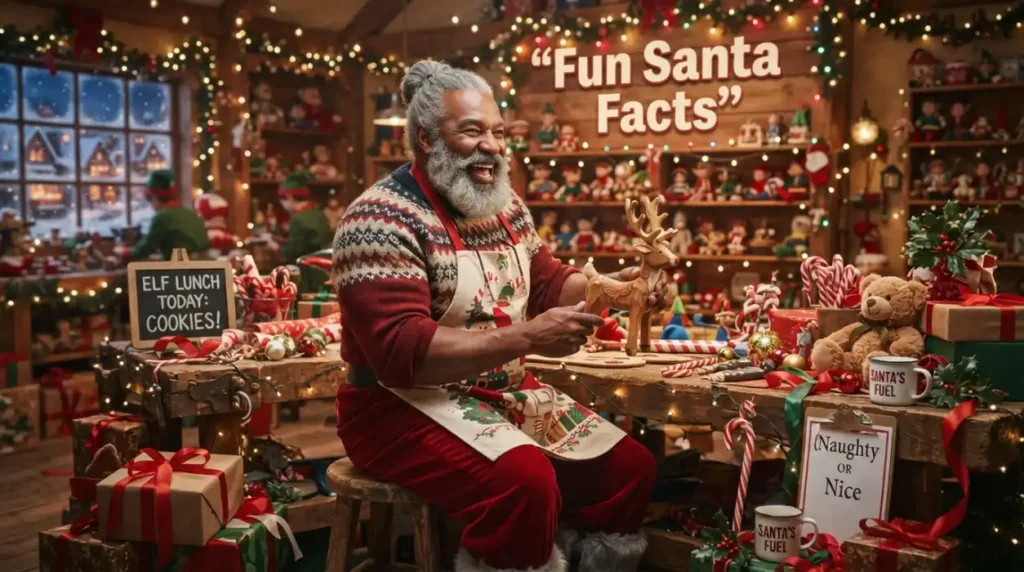
Fun Santa facts reveal the fascinating history, folklore, and global traditions behind Father Christmas. Originating from Saint Nicholas in third-century Myra, modern Santa lore combines Dutch legends, 19th-century poems, and pop culture imagery to create the jolly, gift-giving figure loved by millions around the world today.
Have you ever wondered how a third-century monk transformed into the jolly man in the red suit who slides down chimneys? Uncovering fun Santa facts brings a magical wave of holiday cheer to kids and adults alike during the festive winter season.
From his ancient Mediterranean origins to his modern North Pole workshop, discovering fun santa facts reveals surprising historical twists and heartwarming traditions.
Did you know that Santa did not always wear bright red, or that his reindeer had very different original names? Exploring these fun santa facts turns ordinary family gatherings into lively holiday trivia nights full of laughter.
Ready to impress your friends and family with amazing holiday lore before Christmas Eve arrives? Let’s take a festive journey through the most surprising traditions, historical secrets, and quirky stories surrounding Old Saint Nick.
The Historical Origin of Saint Nicholas
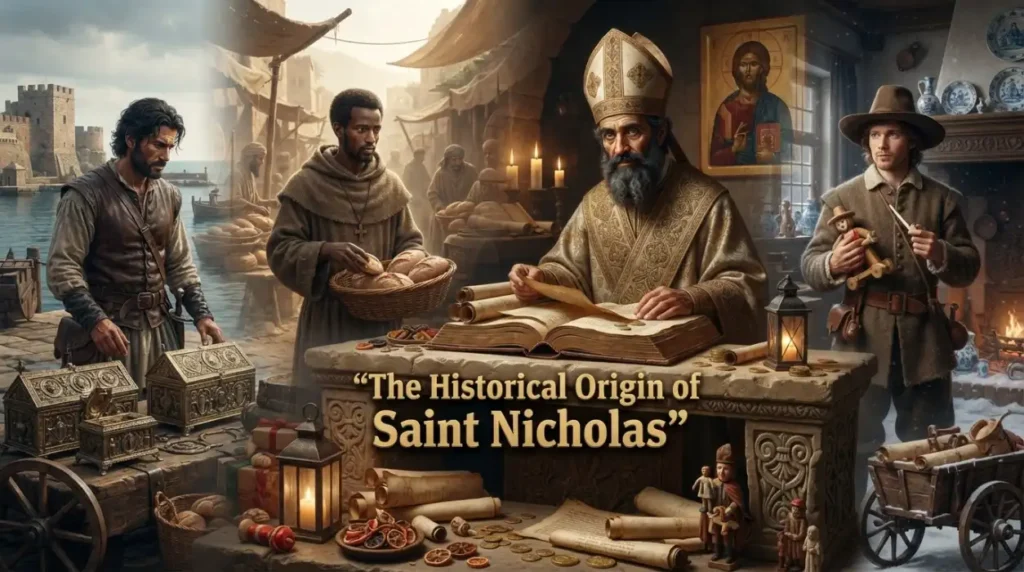
Long before Santa Claus had a fleet of flying reindeer, he was a real person living in the ancient Greek city of Myra, located in modern-day Turkey. Born around 270 AD, Saint Nicholas was known throughout the region for his incredible generosity and deep kindness toward those in need.
He inherited a large fortune from his parents but chose to give it all away to help poor, sick, and suffering villagers.
His reputation as a secret gift-giver grew rapidly across Europe, laying the foundation for the beloved holiday figure we recognize today.
The Legend of the Gold Coins and Stockings
One of the most famous stories about Saint Nicholas explains why we hang stockings by the fireplace every December. Legend says a poor father could not afford dowries for his three daughters, threatening their future happiness.
- Secret Charity: Nicholas wanted to help anonymously, so he visited the family’s home secretly at night.
- Golden Surprise: He tossed three bags of gold coins directly through an open window.
- Stocking Drop: One bag landed inside a freshly washed wool stocking hanging near the chimney to dry.
- Holiday Legacy: This generous act inspired the global tradition of filling hung stockings with small gifts and sweet treats.
How Sinterklaas Made the Journey to America
Dutch settlers brought their beloved tradition of “Sinterklaas” to New Amsterdam, which later became New York City, during the 17th century. Sinterklaas was depicted as a tall, stately bishop who rode a white horse across rooftops to deliver gifts to good children.
As English-speaking neighbors adopted the Dutch custom, the name “Sinterklaas” gradually evolved into the familiar American name “Santa Claus.”
How 19th-Century Writers and Artists Shaped Modern Santa
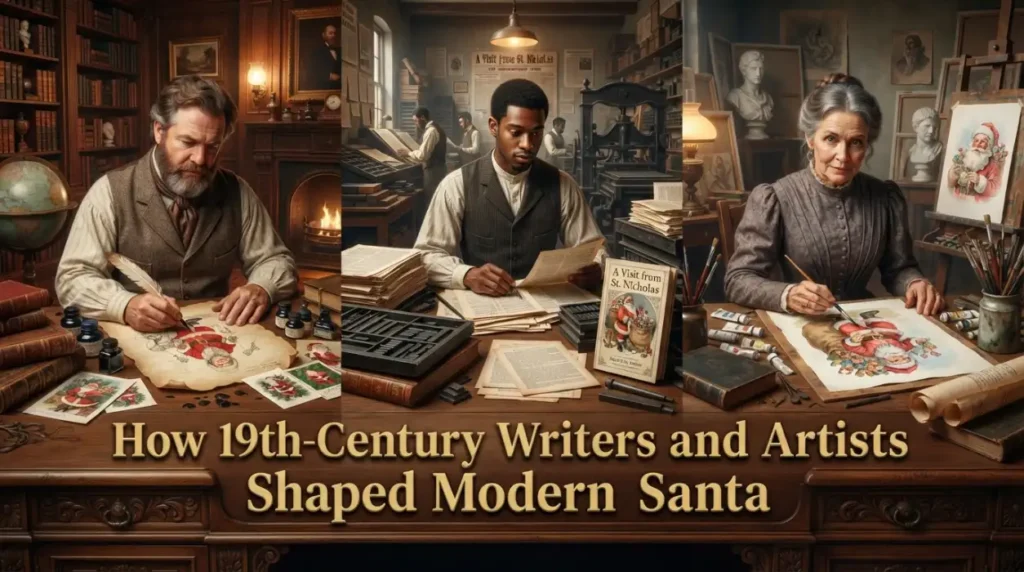
The modern image of Santa Claus as a merry, plump man with a white beard did not happen overnight. During the 1800s, legendary American authors and illustrators added key creative elements that defined Santa’s look and personality.
These literary works helped unite regional folklore into a single, cohesive holiday tradition across North America and Europe.
Clement Clarke Moore and the Famous 1823 Poem
In 1823, a poem titled “A Visit from St. Nicholas”—commonly known today as “‘Twas the Night Before Christmas was published anonymously. This legendary poem forever changed how the world pictured Santa’s annual Christmas Eve journey.
The poem introduced the idea that Santa traveled in a miniature sleigh pulled by eight flying reindeer, each given a distinct name.
It also described him as a jolly, round elf with twinkle-filled eyes, rosy cheeks, and a beard as white as snow.
Thomas Nast and the North Pole Workshop
Famed political cartoonist Thomas Nast spent decades drawing Christmas illustrations for Harper’s Weekly magazine in the late 1800s. Nast was the very first artist to give Santa a permanent home base at the snowy North Pole.
He also established that Santa kept a master ledger sorting children into “nice” and “naughty” categories throughout the year.
Surprising Secrets About Santa’s Reindeer Team
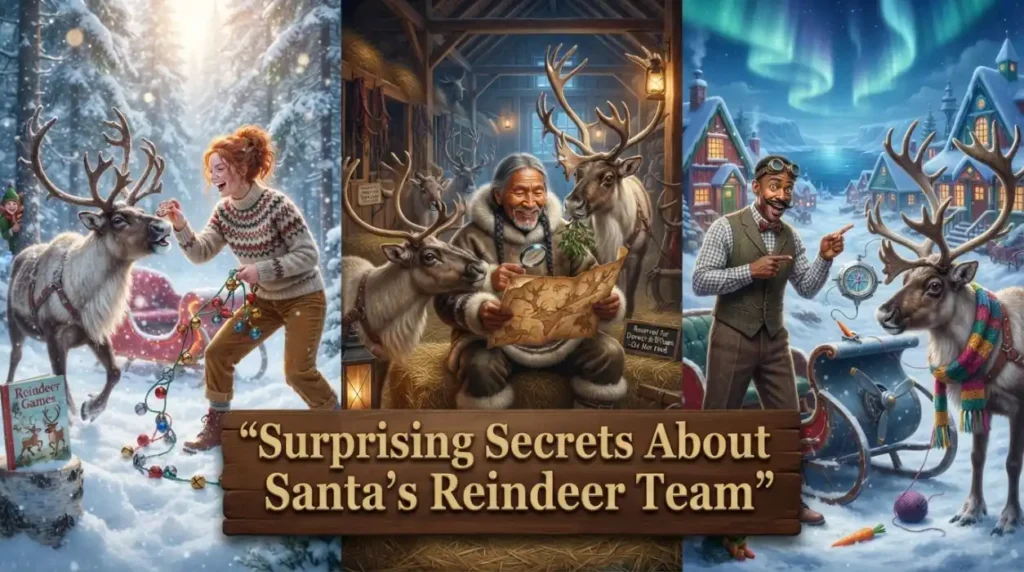
Santa’s flying reindeer are just as famous as the jolly man himself, but their stories contain several surprising details that many people overlook. From language origins to biological facts, the sleigh team has a rich history of its own.
Understanding these details adds extra magic to watching the night sky on Christmas Eve.
The Original Names of Donner and Blitzen
When Clement Clarke Moore wrote his famous 1823 poem, two of the reindeer had very different names than the ones we use today. The original poem named the final pair “Dunder and Blixem,” which were Dutch words meaning “Thunder and Lightning.”
Over time, as publishers reprinted the poem, those Dutch words evolved into the German names “Donner and Blitzen.”
- Dasher: Known for incredible speed and athletic leaps.
- Dancer: Nimble, graceful, and famous for elegant movements.
- Prancer: High stepping and proud of his shiny hooves.
- Vixen: Clever, fast, and skilled at navigating sharp turns.
- Comet: Bright, fast, and leaves a streak of light across the night sky.
- Cupid: Warmhearted, affectionate, and brings extra holiday cheer.
- Donner: Powerful voice that sounds like rolling thunder.
- Blitzen: Fast as a flash of lightning during winter storms.
Why Santa’s Reindeer Team Is Likely All Female
Male reindeer shed their heavy antlers in early winter, usually around late November or early December after the mating season. Female reindeer, however, retain their strong, sharp antlers through winter until spring arrives.
Since every classic drawing and movie depicts Santa’s reindeer pulling the sleigh with full sets of antlers on Christmas Eve, science suggests the entire team consists of strong female reindeer!
Global Names and Unique Christmas Traditions

Around the globe, different cultures celebrate the spirit of gift-giving with unique local names, outfits, and companions. While North Americans look for Santa Claus, children in other countries welcome distinct figures steeped in local history.
Exploring these global variations shows how the universal theme of kindness unites people across different continents.
Father Christmas, Père Noël, and Babbo Natale
In the United Kingdom, he is traditionally known as Father Christmas, a character originally associated with adult festive feasting rather than children’s toys. In France, children leave their shoes by the hearth for Père Noël to fill with delicious treats and small gifts.
Italian children eagerly await Babbo Natale on Christmas, but they also celebrate La Befana, a friendly witch who delivers candy on Epiphany Eve.
Netherlands, Scandinavia, and the Yule Goat
In Nordic countries, holiday traditions blend ancient winter folklore with modern gift-giving figures. Sweden celebrates Jultomten, a small gnome-like creature accompanied by a magical Yule goat, who walks right through the front door to deliver presents.
In the Netherlands, Sinterklaas arrives by steamboat from Spain in mid-November, riding his white horse named Amerigo through crowded city streets.
Fun Technical Facts: The Physics of Christmas Eve
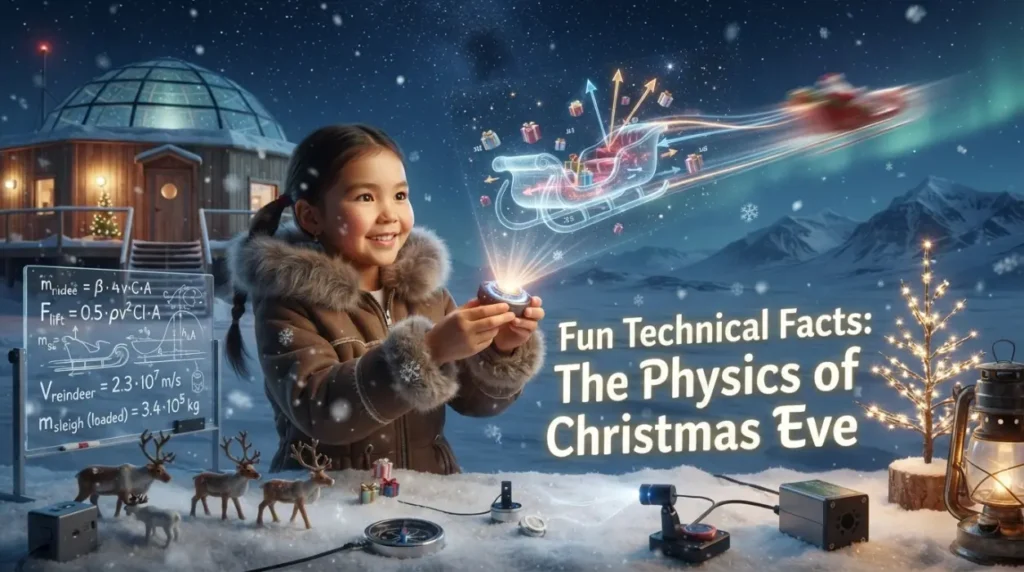
Delivering billions of presents to every corner of the globe in a single night sounds like an impossible task. However, when you look at the sheer numbers involved, Santa’s Christmas Eve flight becomes an incredible study in magical speed and logistics.
Scientists and engineers love calculating the astonishing stats required to pull off Santa’s annual globe-trotting mission.
Navigating Time Zones and Relativistic Speeds
Because the Earth rotates and features multiple time zones, Santa actually has about 31 hours to complete his deliveries, assuming he travels from east to west. To visit every household that celebrates, his sleigh must travel at roughly 650 miles per second—thousands of times faster than the speed of sound!
At those mind-boggling speeds, Santa’s sleigh encounters intense atmospheric resistance, which explains why he needs magical magic to protect the toys from heat.
The Calories in All Those Milk and Cookies
If every household leaves out a standard plate of three cookies and a glass of milk, Santa consumes an astonishing amount of energy on his journey.
- Total Cookie Count: Over 500 million cookies eaten in a single evening.
- Calorie Total: Roughly 2 billion calories consumed during his 31-hour flight.
- Reindeer Fuel: Fortunately, his flying reindeer help burn off the extra energy as they trek across oceans and mountain ranges.
How Pop Culture Redefined Santa’s Modern Image
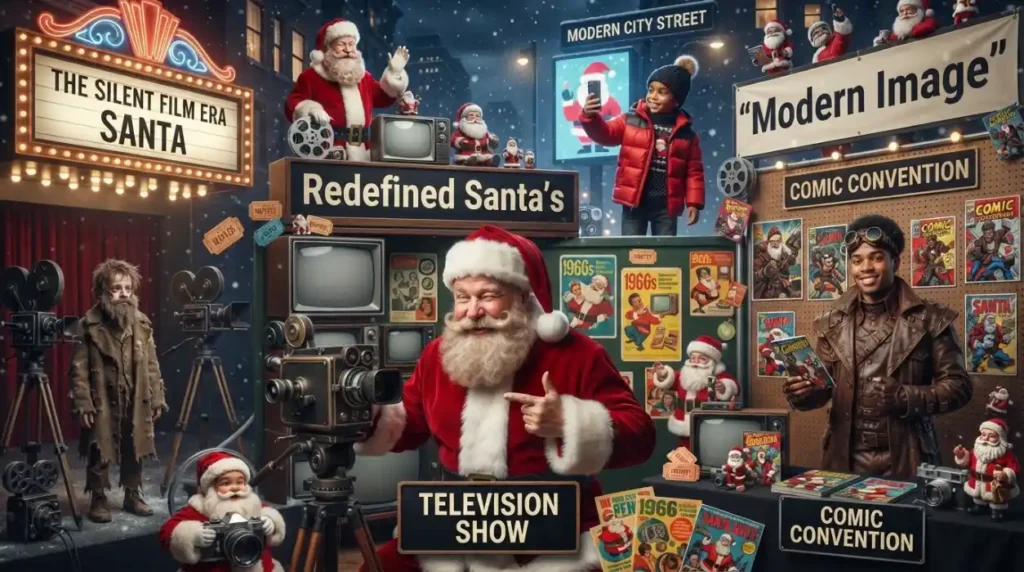
While 19th-century literature created Santa’s backstory, 20th-century mass media made his visual image consistent worldwide. From colorful magazine advertisements to classic television specials, modern media cemented the iconic Santa we love today.
These creative depictions transformed local folklore into a universally recognized global symbol of goodwill.
The Coca-Cola Connection Myth Debunked
A widespread holiday myth claims that the Coca-Cola Company invented Santa’s red and white suit during an advertising campaign in the 1930s. While Coca-Cola did not invent the red suit, Santa appeared in red garments on magazine covers decades earlier; artist Haddon Sundblom’s paintings did help popularize his warm, human-sized appearance.
Sundblom painted a realistic, grandfatherly Santa with a glowing smile, forever replacing older images that depicted him as a tiny, stern elf.
Rudolph’s Rise to Global Fame
Rudolph the Red-Nosed Reindeer was created in 1939 by a department store copywriter named Robert L. May as a promotional holiday coloring book. The heartwarming story about an outcast reindeer whose glowing red nose saved Christmas resonated instantly with millions of families.
A decade later, Gene Autry recorded the iconic song version, turning Rudolph into one of the most popular holiday characters in music history.
Practice Exercise
Test your knowledge of holiday history, reindeer lore, and global Santa traditions by selecting the best answer for each question below.
- In which ancient city did the real Saint Nicholas serve as a bishop during the third century?
A. Rome
B. Myra
C. Athens
D. Alexandria - What were the original Dutch names given to the reindeer known today as Donner and Blitzen?
A. Dasher and Dancer
B. Dunder and Blixem
C. Comet and Cupid
D. Flasher and Striker - Which artist drew illustrations for Harper’s Weekly that established Santa’s home at the North Pole?
A. Haddon Sundblom
B. Thomas Nast
C. Clement Clarke Moore
D. Robert L. May - Why do scientists suggest that Santa’s flying reindeer team is made up of female reindeer?
A. Female reindeer are the only ones that enjoy cold winter snow.
B. Male reindeer shed their antlers in early winter, while females keep theirs through spring.
C. Female reindeer fly twice as fast as male reindeer.
D. Male reindeer refuse to pull heavy wooden sleighs. - How did the beloved character Rudolph the Red-Nosed Reindeer originate in 1939?
A. As a promotional holiday coloring book for a department store.
B. In an ancient Scandinavian poem discovered in a cave.
C. Through an official press release from the United States Postal Service.
D. As a character in a classic French opera.
Answer Key:
- B
- B
- B
- B
- A
FAQs
Was Santa Claus a real historical person?
Yes, Santa Claus is based on Saint Nicholas, a real Greek Christian bishop who lived in Myra during the third and fourth centuries. He was famous for his wealth, generosity, and secret gift-giving, which inspired the modern Santa tradition.
Why does Santa Claus live at the North Pole?
19th-century cartoonist Thomas Nast popularized the idea that Santa lives at the North Pole in his magazine illustrations. The remote, snowy location fit the mysterious nature of a magical workshop where elves could build toys undisturbed.
Did Coca-Cola invent Santa’s red suit?
No, Coca-Cola did not invent Santa’s red suit. Santa appeared in red coats in 19th-century illustrations and postcards long before Coca-Cola commissioned artist Haddon Sundblom to paint his famous, warm-hearted advertising illustrations during the 1930s.
What is Santa Claus called in other countries?
Santa Claus goes by many different names around the world, including Father Christmas in the United Kingdom, Père Noël in France, Babbo Natale in Italy, Sinterklaas in the Netherlands, and Jultomten in Sweden.
How fast would Santa’s sleigh need to travel on Christmas Eve?
To visit every celebrating household across all time zones in one night, Santa’s sleigh would need to travel at roughly 650 miles per second. That speed is roughly 3,000 times the speed of sound!
Conclusion
Discovering the origin story behind Father Christmas proves that holiday traditions are woven from centuries of history, folklore, and creative storytelling. From the quiet generosity of Saint Nicholas in ancient Myra to modern holiday songs, this festive story continues to inspire kindness across generations.
Whether you are hanging stockings by the chimney, baking sugar cookies, or scanning the night sky for a glowing red nose, these festive tales bring extra joy to winter gatherings. Sharing these stories keeps the true spirit of giving alive in our hearts every year.
Ready to share the magic of the holiday season with your loved ones? Dive deeper into festive lore and explore more fun santa facts to make your holiday celebrations brighter than ever!

Jack Olive is the creative mind behind buzzgiggles.com, a fun-focused website built to bring smiles, laughter, and lighthearted entertainment to everyday life. With a passion for humor and enjoyable content, Jack Olive creates and shares playful ideas, amusing stories, entertaining discoveries, and cheerful moments designed for readers of all kinds.
Through buzzgiggles.com, Jack Olive combines creativity, curiosity, and a positive sense of humor to explore the lighter side of life. Whether visitors are looking for a quick laugh, something interesting to share, or a cheerful break from their routine, the website offers content created with fun in mind. Jack Olive believes great entertainment should be easy to enjoy, memorable, and capable of brightening someone’s day.