
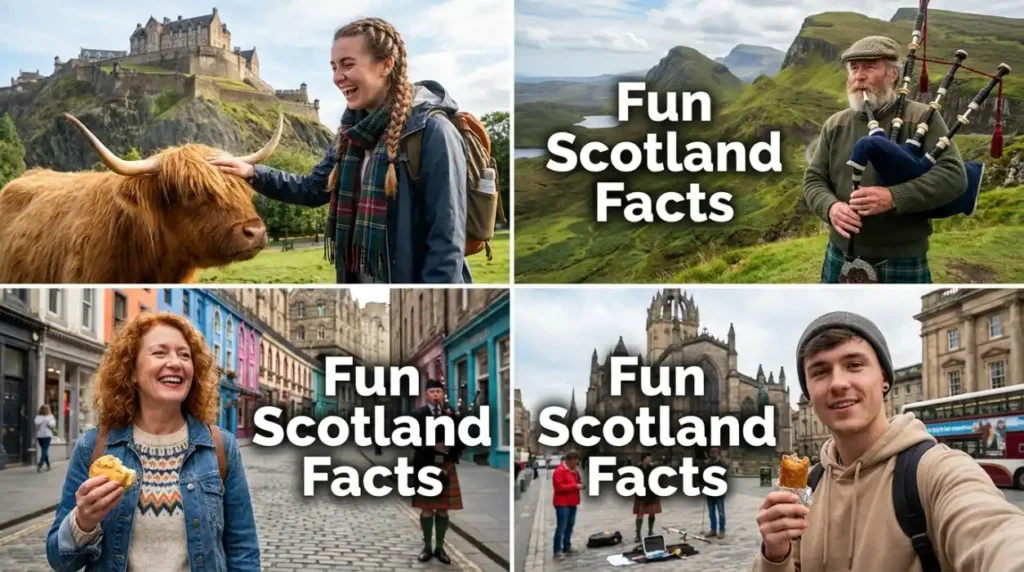
Fun Scotland facts show a country filled with unique history, stunning geography, and rich culture. From having the unicorn as its official national animal to housing over 790 offshore islands and the world’s shortest commercial flight, Scotland blends incredible natural beauty with fascinating traditions loved across the globe.
Have you ever wondered why a country famous for rugged mountains and ancient stone castles chose a mythical creature as its national symbol? Learning fascinating fun Scotland facts unveils a world where folklore, groundbreaking inventions, and dramatic landscapes meet.
From hidden underground cities to ancient trees that witnessed thousands of years of history, these fun Scotland facts show how vibrant Scottish culture really is.
Did you know that Scotland is home to the shortest scheduled flight on Earth, lasting under two minutes? Exploring fun Scotland facts makes traveling or learning about this northern nation infinitely more enjoyable for curious minds of all ages.
Ready to test your knowledge and discover quirky stories from the land of kilts, bagpipes, and misty lochs? Let’s take an exciting journey through the most surprising secrets Scotland has to offer!
The Royal Unicorn and Scotland’s Quirky Symbols
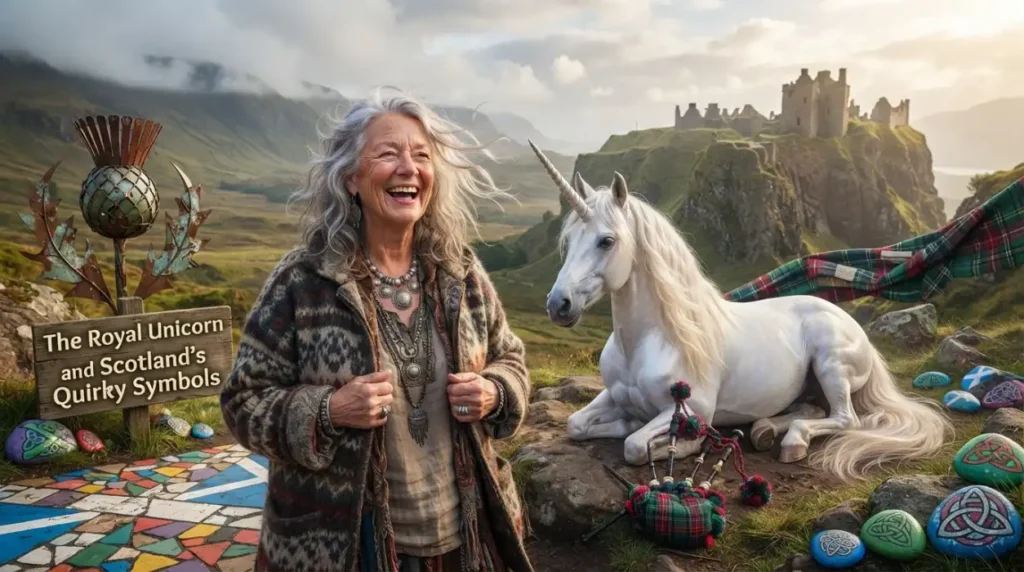
When you think of official national animals around the world, powerful lions, fierce eagles, or noble bears usually come to mind. Scotland took a completely different path in the 12th century by choosing the unicorn as its official national creature.
This choice was not just about loving fantasy stories; it carried deep political and historic meaning for Scottish kings.
Understanding why a mythical beast stands proud on royal heraldry gives us a wonderful peek into medieval history.
Why the Mythical Unicorn Became a National Symbol
In ancient Celtic mythology, the unicorn represented purity, innocence, malevolence-fighting power, and untamed freedom. Legend held that only a true, noble king could master the fierce, untamable spirit of a unicorn.
- Chivalric Pride: Scottish monarchs used the creature to show their proud, independent strength against rival nations.
- Chained Beauty: Royal coats of arms depict the unicorn wrapped in golden chains, showing the king’s power to tame even the wildest beast.
- Heraldic History: William the Lion first adopted the symbol on the Scottish royal coat of arms during the 12th century.
- Modern Sightings: You can spot statues of chained unicorns across historical sites like Edinburgh Castle and Stirling Castle today.
The Thistle: A Prickly Savior of the Kingdom
The humble thistle is Scotland’s official national flower, and its selection comes with a dramatic legend. According to popular lore, a sleeping army of Scottish warriors was saved from a surprise nighttime invasion by Norse Vikings.
One Viking stepped barefoot onto a sharp, spiky thistle plant and screamed out in sudden pain.
The loud cry alerted the Scottish soldiers in time to defeat the invaders and protect their native homeland.
Mind-Blowing Geography and Wild Island Life
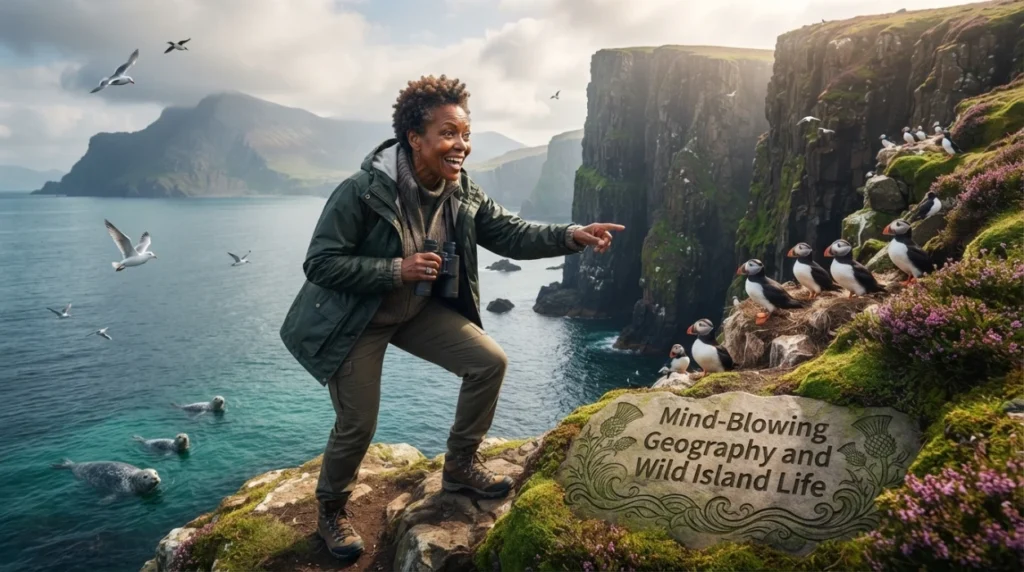
Scotland occupies the northern third of the island of Great Britain, surrounded by the Atlantic Ocean and the North Sea. Its geographic layout features wild mountain ranges, deep freshwater lakes called lochs, and hundreds of tiny offshore islands.
The physical landscape is constantly surprising visitors with extreme distances, isolated communities, and breathtaking natural wonders.
The World’s Shortest Commercial Flight
If you take a flight between the Orkney islands of Westray and Papa Westray, do not bother getting too comfortable in your seat. The total distance between the two airstrips is just 1.7 miles, making it the shortest scheduled flight in the world.
Under ideal wind conditions, the entire airborne journey takes a lightning-fast 53 seconds from takeoff to landing!
Residents and visiting doctors rely on this speedy air hop for daily commuting across the stormy ocean channels.
Deep Lochs and Mysterious Water Creatures
Scotland is famous for its freshwater lochs, which hold vast amounts of cold, murky water shaped by ice-age glaciers. Loch Ness is world-famous for its legendary monster “Nessie,” but it also holds more water than all lakes in England and Wales combined.
Loch Morar is even deeper, dropping down over 1,000 feet into dark, mysterious depths that spark endless local legends.
Extraordinary Inventions That Changed the Modern World

Despite having a relatively small population throughout history, Scottish thinkers and scientists have shaped the modern world in extraordinary ways. From medical breakthroughs to everyday communication tools, Scottish curiosity drove world-changing innovations.
If you enjoy modern technology or clean hospitals, you have Scottish ingenuity to thank for many daily conveniences.
Connecting the World Through Science and Sound
In 1876, Edinburgh-born inventor Alexander Graham Bell received the first official patent for the electromagnetic telephone. His curiosity about human speech and sound led directly to the communication devices we rely on every single minute today.
Decades later, Scottish engineer John Logie Baird demonstrated the world’s very first working mechanical television system in London.
His pioneering experiments paved the way for broadcast entertainment, forever changing how human beings share stories and news.
Medical Breakthroughs and Saving Millions of Lives
Scottish scientists have saved countless lives through brilliant discoveries in chemistry, biology, and clinical medicine.
- Penicillin: Sir Alexander Fleming discovered penicillin in 1928, creating the world’s first true antibiotic medication.
- Chloroform Anesthesia: Sir James Young Simpson pioneered the safe use of chloroform to eliminate pain during surgery in 1847.
- Hypodermic Needles: Dr. Alexander Wood invented the modern syringe for delivering targeted medication quickly through the skin.
- Daily Sanitation: Scottish innovations in public health helped cities create clean water supplies and reduce disease spread.
Fascinating Culture, Kilts, and Bagpipes
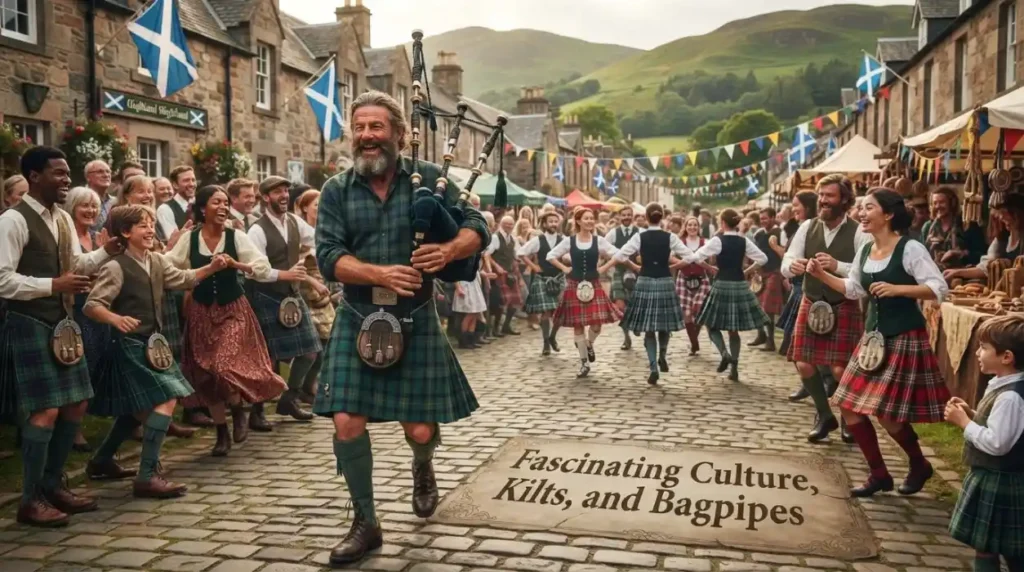
Scottish culture is instantly recognized worldwide through its distinct traditional music, colorful woven textiles, and festive gatherings. These traditions carry deep ancestral meaning, connecting modern Scots to clan histories that span thousands of years.
Exploring these customs reveals how art, craftsmanship, and community blend in everyday celebrations.
The Meaning Behind Tartan and Clan Colors
Tartan is a woven cloth featuring crisscrossed horizontal and vertical bands in multiple colors, commonly called plaid in North America. Historically, people wore woven patterns dyed with local plants, roots, and berries found in their specific regional glens.
Over time, specific color patterns became officially associated with individual Scottish family clans, representing pride and shared ancestry.
Today, wearing a kilt in your family’s tartan is a popular choice for weddings, formal dances, and sporting events.
Bagpipes: From Battlefield Signal to Musical Icon
The great Highland bagpipe is widely considered Scotland’s national musical instrument, known for its powerful, echoing sound. Originally, clan leaders and military commanders used the loud instrument to send clear signals across noisy, foggy battlefields.
The sound could easily carry over long distances, inspiring friendly troops while striking fear into approaching enemies.
Today, bagpipers perform at happy festivals, solemn ceremonies, and street corners worldwide, keeping this ancient musical tradition alive.
Historical Castles and Underground Secrets
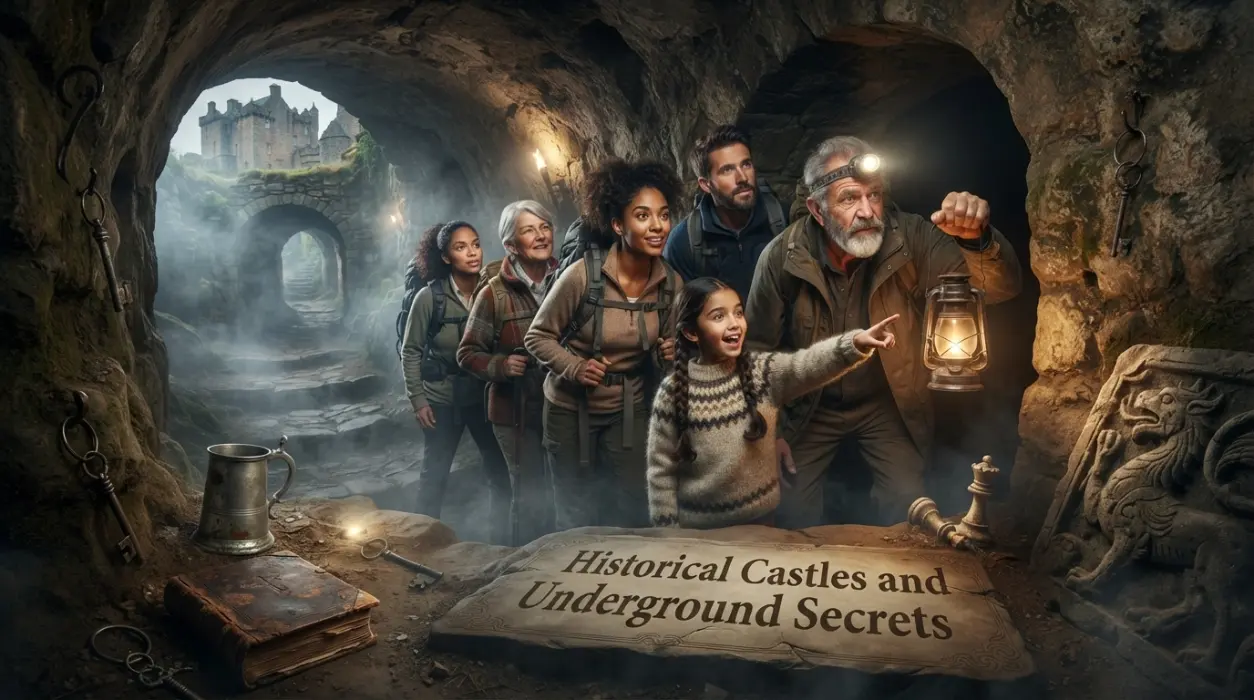
Scotland’s dramatic history of clan rivalries, royal battles, and foreign invasions left behind a landscape dotted with historic fortresses. Experts estimate that Scotland once housed over 3,000 castles, though many now stand as picturesque stone ruins.
Looking beneath these historic structures reveals fascinating secrets that urban builders left behind centuries ago.
Edinburgh’s Hidden Underground Streets
Beneath the bustling cobblestones of Edinburgh’s famous Royal Mile lies a hidden network of buried medieval streets and dark stone vaults. During the 17th century, the city was densely crowded, forcing builders to construct tall stone tenements directly over older alleyways.
As modern buildings were erected on top, places like Mary King’s Close were completely sealed underground for generations.
Today, guided walking tours allow visitors to explore these spooky, preserved chambers and experience what medieval city life felt like.
Castles Built on Extinct Volcanoes
Some of Scotland’s most famous fortresses sit directly on top of massive, ancient volcanic rock formations created millions of years ago. Edinburgh Castle, for example, sits high atop Castle Rock, a steep volcanic plug that provided natural military defenses against attackers.
Stirling Castle sits on a similar volcanic outcrop, giving soldiers a clear view of strategic river crossings across the lowlands.
These natural stone towers made the castles nearly impossible for enemies to conquer during medieval sieges.
Practice Exercise
Test your understanding of Scottish history, geography, and cultural traditions by choosing the correct option for each question below.
- What mythical creature serves as Scotland’s official national animal?
A. Dragon
B. Unicorn
C. Phoenix
D. Griffin - How long does the world’s shortest scheduled flight between Westray and Papa Westray take under ideal conditions?
A. About 15 minutes
B. About 53 seconds
C. Exactly 5 minutes
D. Exactly 10 seconds - Which Scottish scientist discovered penicillin in 1928, revolutionizing modern medicine?
A. Alexander Graham Bell
B. Sir Alexander Fleming
C. John Logie Baird
D. Sir James Young Simpson - Why did medieval Scottish builders put Edinburgh Castle on top of Castle Rock?
A. Castle Rock was made of soft clay that was easy to dig.
B. Castle Rock was a steep extinct volcano that offered natural defense.
C. The location was close to warm tropical beaches.
D. Kings wanted to hide the castle behind dense forests. - What plant became Scotland’s national flower after its sharp prickles allegedly alerted soldiers to a surprise attack?
A. Rose
B. Thistle
C. Heather
D. Clover
Answer Key:
- B
- B
- B
- B
- B
FAQs
What is the national animal of Scotland and why?
Scotland’s national animal is the mythical unicorn. Adopted in the 12th century by royal rulers, the unicorn represented purity, untamed strength, and noble independence, making it a proud heraldic symbol for Scottish kings who resisted foreign domination.
How many islands belong to Scotland?
Scotland features approximately 790 offshore islands, though only around 93 of them are permanently inhabited by people. These island groups include the Hebrides, Orkney, and Shetland archipelagos scattered across the cold northern Atlantic waters.
Why is tartan so famous in Scottish culture?
Tartan is famous because its crisscrossed woven patterns historically represented regional dyes and clan identities. Wearing specific tartan patterns allows families to honor their ancestral heritage during special ceremonies, traditional dances, and formal holiday gatherings.
Is the monster in Loch Ness real?
There is no scientific evidence proving the existence of a real monster in Loch Ness. However, deep murky waters, floating logs, and optical illusions continue to spark fun legends that attract curious travelers from all over the world.
What important things were invented in Scotland?
Scottish inventors created the telephone, working mechanical television, penicillin antibiotics, steam engines, and modern logarithms. These groundbreaking medical, scientific, and technological advancements helped shape modern global industry, healthcare, and daily communication networks.
Conclusion
Exploring the stories, history, and traditions behind this northern nation reveals why its heritage captures imaginations across the globe. From ancient royal symbols like the noble unicorn to life-saving medical discoveries, Scottish history offers an endless supply of wonder.
Whether you dream of exploring ancient stone castles, taking short island flights, or learning your family’s tartan pattern, these stories bring history to life. Sharing these facts keeps the rich spirit of discovery alive for travelers and trivia fans alike.
Ready to explore even more fascinating travel stories and cultural trivia from around the globe? Take time to discover more fun Scotland facts to plan your next great adventure or impress your friends!
Jack Olive is the creative mind behind buzzgiggles.com, a fun-focused website built to bring smiles, laughter, and lighthearted entertainment to everyday life. With a passion for humor and enjoyable content, Jack Olive creates and shares playful ideas, amusing stories, entertaining discoveries, and cheerful moments designed for readers of all kinds.
Through buzzgiggles.com, Jack Olive combines creativity, curiosity, and a positive sense of humor to explore the lighter side of life. Whether visitors are looking for a quick laugh, something interesting to share, or a cheerful break from their routine, the website offers content created with fun in mind. Jack Olive believes great entertainment should be easy to enjoy, memorable, and capable of brightening someone’s day.