
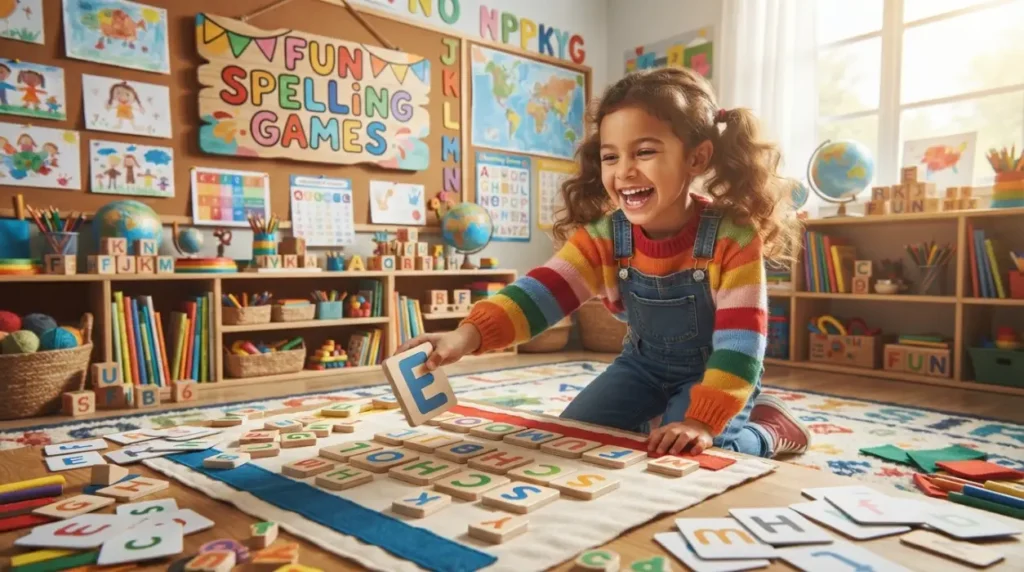
Engaging in fun spelling games turns traditional word memorization into interactive play through movement, socially friendly competition, digital challenges, and hands-on tactile activities. By combining phonics patterns with playful rewards, these games help learners build long-term memory, expand active vocabulary, improve reading confidence, and develop strong language skills.
Have you ever noticed how traditional spelling lists often lead to groans and heavy sighs at the dinner table? Introducing fun spelling games completely transforms daily language practice from a boring chore into an exciting family event.
Playing interactive word challenges activates multiple sensory pathways in the brain, making complex letter patterns much easier to remember.
Whether you need quick classroom activities or entertaining weekend ideas, exploring fun spelling games offers endless ways to spark curiosity.
Ready to see how fun spelling games can turn struggling spellers into confident word masters? Let’s take a look at the best play-based strategies that make language learning truly enjoyable!
Why Play-Based Learning Beats Rote Memorization
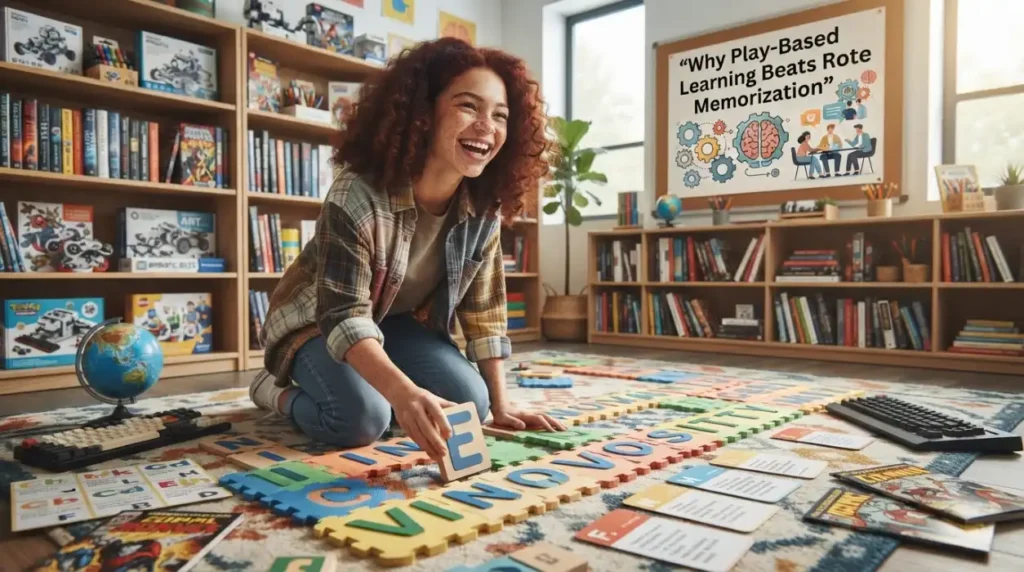
For generations, the standard way to study spelling involved writing a list of ten words five times every night. While repetition has its place, modern educational psychology shows that passive copying rarely creates long-term language retention.
When children simply copy letters from a sheet, their brains operate on autopilot without processing word structure.
Play-based learning changes everything by inviting learners to actively solve problems, spot patterns, and use new vocabulary in context.
The Brain Chemistry of Educational Play
When a child plays a game, their brain releases dopamine, a chemical linked to motivation, pleasure, and sharp focus. Higher dopamine levels signal to the brain that the current activity is important, which strengthens memory connections.
This natural neurological response turns spelling practice into an enjoyable experience rather than a high-stress chore.
When stress drops, emotional barriers fall away, allowing learners to absorb complex phonetic rules naturally.
Building Confidence Through Friendly Competition
Traditional weekly tests often trigger test anxiety, causing young learners to freeze up when put on the spot. Interactive games create a safe environment where making a mistake is just part of the playing process.
- Low-Stakes Mistakes: Misspelling a word in a game simply means losing a turn, not getting a red mark on a paper.
- Immediate Feedback: Players see instantly which letter sounds work, allowing them to adjust their strategy on the spot.
- Shared Laughter: Playing together turns learning into a social bonding experience that builds healthy self-esteem.
- Continuous Progress: Small victories during gameplay encourage kids to tackle increasingly challenging vocabulary lists.
Hands-On Spelling Games for Kinesthetic Learners
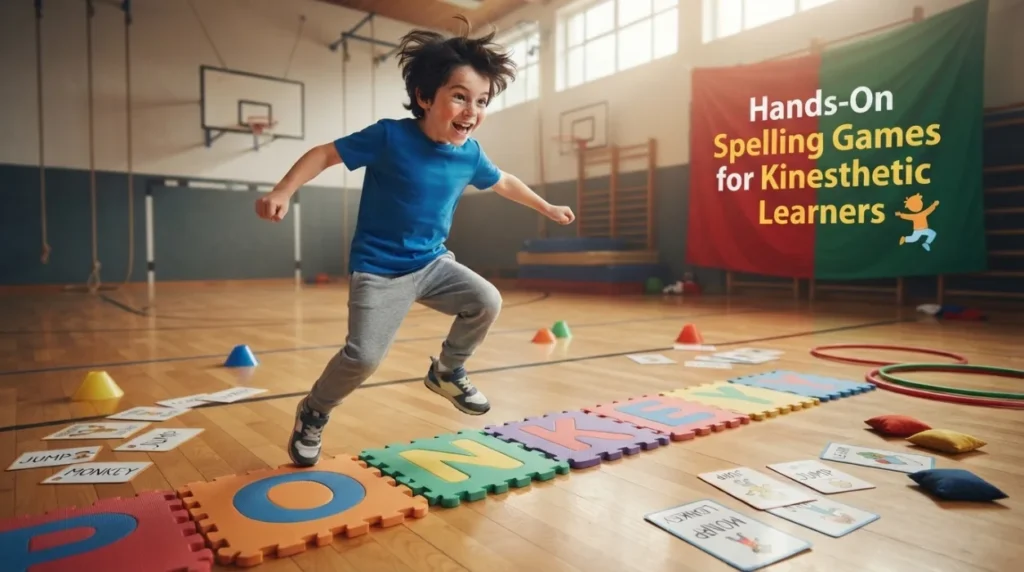
Many children learn best when they can move their bodies and touch physical objects while processing new information. Kinesthetic learners often struggle sitting still with a pencil, but they flourish when spelling becomes a full-body action.
Incorporating physical touch and body movement turns abstract letter sounds into tangible, real-world concepts.
Here are several simple, low-prep activities that get kids moving while mastering tough vocabulary words.
Sidewalk Chalk Word Hopscotch
Hopscotch is a classic playground activity that easily transforms into a high-energy literacy activity outdoors. Draw a standard hopscotch grid on your driveway or sidewalk, writing target letters or letter blends inside each square.
Call out a target word, and have your child hop onto the correct letters in sequence to spell it out.
Saying each letter sound out loud while landing on the concrete reinforces neuromuscular memory pathways.
Shaving Cream and Sand Sensory Trays
Sensory trays offer a fantastic tactile way to practice letter formation without the frustration of pencil grip fatigue. Spread a thin layer of foam shaving cream, fine beach sand, or colorful salt across a shallow baking sheet.
Have your learner use their index finger to trace letters directly into the textured surface while spelling out loud.
When they finish a word, a quick shake of the tray wipes the slate clean for the next challenge.
Low-Prep Indoor Word Games for Families
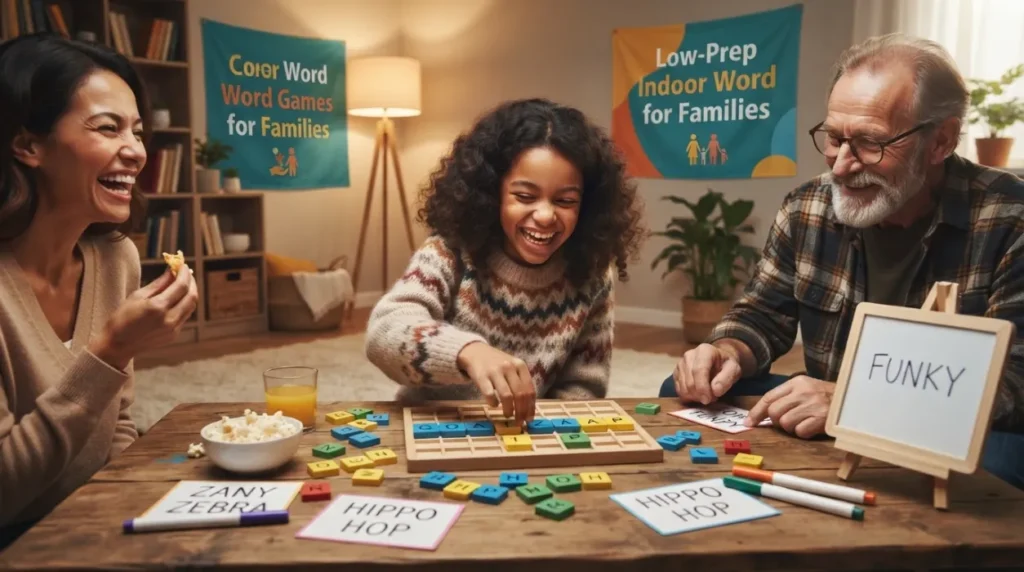
You do not need expensive commercial board games or fancy materials to create engaging learning moments at home. With a simple deck of index cards, a timer, or paper plates, you can build custom activities in minutes.
These simple indoor options work wonderfully for rainy afternoons, family game nights, or quick after-school study sessions.
Let’s look at how basic household supplies turn into memorable word games.
Word Builder Fly Swat
This high-energy living room activity requires only index cards, painter’s tape, a marker, and two clean plastic fly swatters. Write common vowels and consonants on individual index cards and tape them across a blank wall or table.
Call out a word like “CAT” or “JUMP,” and challenge players to quickly swat the matching letters in order.
The physical action of searching and swatting keeps energy levels high while training fast visual recognition skills.
Reverse Hangman: Building the Snowman
Traditional Hangman carries dark imagery that many modern parents and teachers prefer to avoid in early learning environments. Replacing the gallows with a friendly drawing alternative keeps all the strategic deductive thinking while keeping the tone lighthearted.
- Draw the Target: Draw blank lines representing each letter of your secret vocabulary word on a whiteboard.
- Set the Counter: Draw a cheerful snowman with a hat, face, stick arms, and three large snowball buttons beside the lines.
- Guessing Letters: As players guess incorrect letters, erase one piece of the snowman until the word is solved.
- Saving the Snowman: The objective is to guess the complete word before the sunshine melts the entire snowman away.
Digital and Screen-Based Spelling Challenges

When used thoughtfully, educational apps and interactive computer platforms offer fantastic personalized spelling practice for modern kids. Digital platforms adapt to your child’s specific skill level in real time, delivering gentle hints when they encounter difficulty.
Screen time becomes immensely productive when paired with high-quality software that rewards steady academic progress.
Let’s explore how modern technology turns word practice into an adventure.
The Power of Adaptive Learning Algorithms
Modern educational software uses smart tracking algorithms to monitor every single keystroke and answer attempt a child makes. If a player repeatedly misses silent letters or drops the final “e,” the system automatically provides targeted practice.
This targeted approach prevents frustration by keeping challenges inside the child’s natural learning zone.
Parents can easily track growth through clean data dashboards without needing to stand over their child’s shoulder.
Gamification Elements That Keep Kids Engaged
Digital games draw inspiration from popular video game mechanics, keeping players eager to practice night after night. Earned virtual coins, customizable avatars, unlocking new levels, and collectible badges turn daily drills into rewarding quests.
- Custom Avatar Outfits: Children earn points for correct answers, using virtual currency to unlock funny hats and costumes.
- Level Progression: Unlocking new map areas keeps players curious about what fun challenges lie just around the corner.
- Daily Streaks: Fire icons and daily reward counters encourage short, consistent study habits over weekly cramming.
Advanced Word Games for Older Kids and Tweens
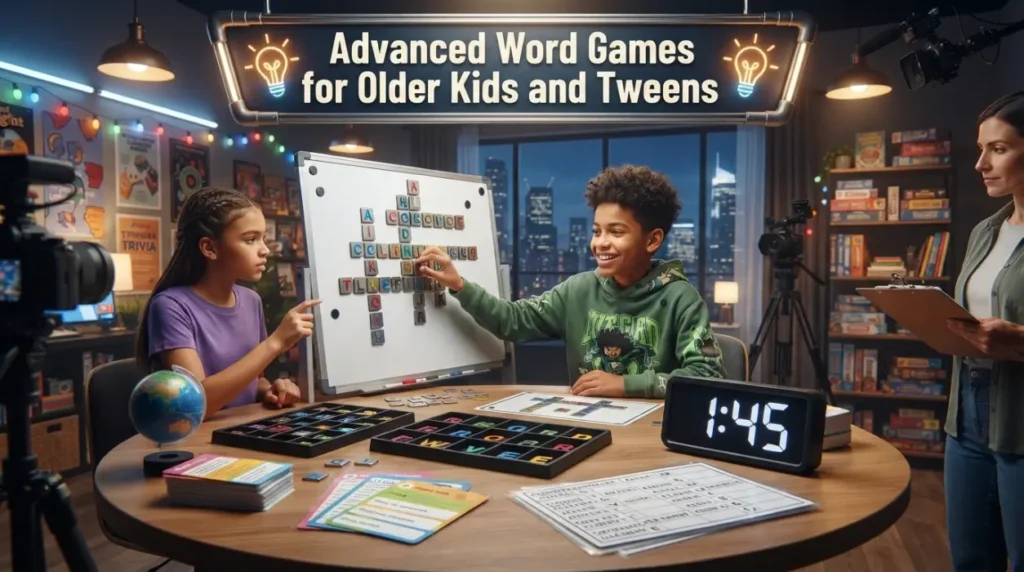
As children transition into middle school, simple phonetic matching games no longer provide enough intellectual challenge. Older learners need activities that push them to explore word origins, prefixes, suffixes, root structures, and complex meanings.
Advanced word puzzles build deep reading comprehension while expanding sophisticated vocabulary for academic essay writing.
Here are mature game formats that keep older kids and teenagers fully invested in language arts.
Etymology and Root Word Detectives
Teaching older students the Latin and Greek roots behind English words opens up the secret code of academic language. Over sixty percent of English words contain Greek or Latin roots, making root mastery a massive reading shortcut.
Create a detective game where players decode unfamiliar words by analyzing root clues, such as “tele” (far) or “graph” (write).
When students realize that “telephone” simply means “far sound,” spelling complex multi-syllable terms becomes logical and straightforward.
Anagram Races and Boggle Scrambles
Scrambling letters forces the brain to mentally rotate consonant clusters and vowel pairs to find hidden word patterns. Set a timer for three minutes, dump a collection of letter tiles on the table, and challenge players to build words.
Award bonus points for longer words, rare letters like “Z” or “Q,” or words using target vocabulary lists.
This fast-paced visual sorting exercise strengthens flexible thinking and spatial awareness while improving overall spelling accuracy.
How to Adapt Games for Children with Learning Differences
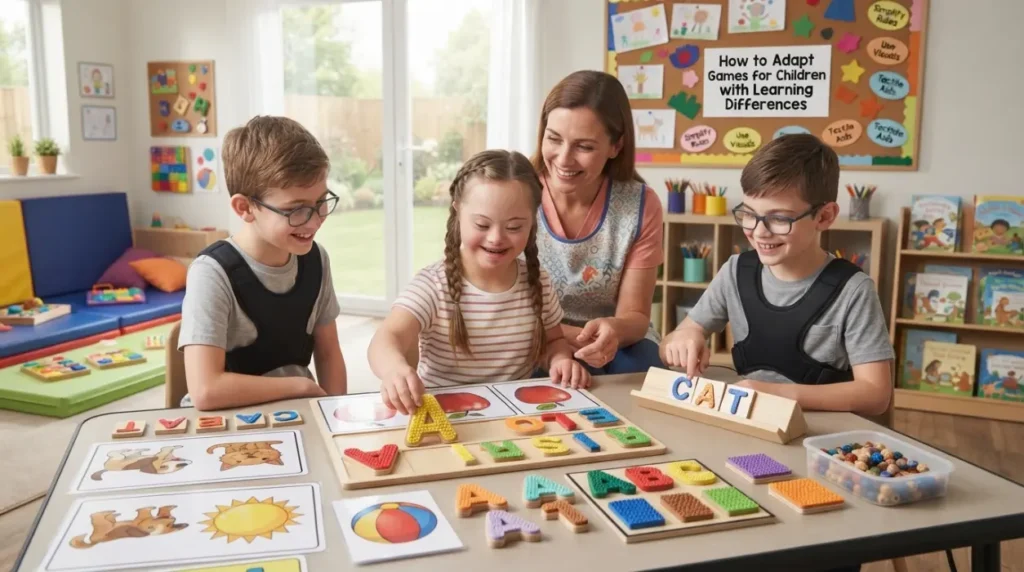
Every learner processes written language differently, and children with dyslexia or auditory processing challenges need thoughtful accommodations. Standard spelling games can occasionally feel overwhelming if the rules are too rigid or speed-focused.
Modifying game structures ensures that neurodivergent learners enjoy the exact same playful benefits without experiencing unnecessary stress.
Here are practical tweaks that make any literacy activity inclusive and accessible for all learning styles.
Multi-Sensory Phonics Integration
Children with dyslexia benefit immensely from Orton-Gillingham approaches that engage sight, sound, and touch simultaneously. Combine visual letter cards with auditory pronunciation and tactile movement to build stronger neural pathways.
Color-Coded Letter Cards
Use blue index cards for consonants and red cards for vowels to help players visually distinguish core word structures. Highlight silent letters with green markers so learners instantly recognize special orthographic rules during gameplay.
Air-Writing Technique
Before building a word with physical tiles, have the player write the letters in the air using their entire arm. Engaging large shoulder muscles activates muscle memory, helping brain circuits store correct letter sequences long-term.
Eliminating Speed Pressures for Anxious Learners
Timed games often cause processing speed bottlenecks, causing bright children to freeze up under clock pressure. Simply removing timers transforms an anxiety-inducing test into a relaxed, thoughtful puzzle-solving session.
Focus on rewarding accuracy, strategic thinking, and creative word attempts rather than celebrating who answers first.
Allowing children the time they need to process phonetic sounds builds true academic confidence that lasts a lifetime.
Practice Exercise
Test your understanding of play-based literacy strategies, sensory integration, and game adaptations by answering the five questions below.
- What neurotransmitter is naturally released in the brain during educational play, boosting motivation and long-term memory retention?
A. Cortisol
B. Dopamine
C. Melatonin
D. Insulin - Why is color-coding vowels and consonants helpful for learners with dyslexia during word-building games?
A. It makes the game board look more colorful for photos.
B. It helps players visually categorize core sound structures and orthographic patterns.
C. It allows players to score double points on every turn.
D. It eliminates the need to pronounce letters out loud. - What key benefit does using a sensory tray filled with shaving cream or sand provide for young writers?
A. It speeds up handwriting speed by fifty percent instantly.
B. It engages tactile muscle memory pathways without causing pencil grip fatigue.
C. It teaches children how to clean baking sheets properly.
D. It replaces the need to learn letter sounds altogether. - Which game mechanic is best to remove when adapting spelling activities for children with processing speed differences?
A. Virtual avatar rewards
B. Colorful index cards
C. Strict countdown timers
D. Out-loud letter pronunciation - How does learning Greek and Latin root words help older students master complex vocabulary?
A. It allows them to bypass learning English alphabet letters entirely.
B. It provides structural clues that make decoding multi-syllable words logical and predictable.
C. It replaces the need to read books in middle school.
D. It forces them to memorize dictionary pages in alphabetical order.
Answer Key:
- B
- B
- B
- C
- B
FAQs
How often should my child play spelling games each week?
Short daily sessions of ten to fifteen minutes are far more effective than long weekly cramming sessions. Consistent short play keeps learning fun while continually reinforcing memory pathways without causing mental fatigue.
Are digital spelling apps as effective as physical hands-on games?
Both formats offer unique benefits that complement each other when balanced thoughtfully throughout the week. Digital apps excel at personalized adaptive feedback, while hands-on physical games build valuable tactile memory and social connection.
What should I do if my child gets frustrated during a game?
Pause the game immediately, offer warm encouragement, and simplify the word challenge or remove speed pressures. Focus on celebrating their effort and small wins rather than dwelling on temporary mistakes or incorrect letter guesses.
Can spelling games help improve reading fluency as well?
Yes, playing word games strengthens fast visual word recognition, which directly improves overall reading speed and fluency. When children instantly recognize letter patterns in games, they decode sentences in storybooks much faster.
How can I make spelling practice fun for older teenagers?
Use mature word games like anagram scrambles, crossword creation challenges, or root-word decoding mysteries. Connecting vocabulary to popular video games, creative writing, or trivia topics keeps older students engaged without feeling babied.
Conclusion
Incorporating fun spelling games into your daily routine turns learning into an exciting adventure that children naturally look forward to experiencing. By replacing passive memorization with physical movement, sensory trays, digital tools, and family game nights, you create lasting language connections.
Choosing activities tailored to your child’s unique learning style builds incredible academic confidence step-by-step.
Whether you are jumping across sidewalk chalk hopscotch or solving digital word scrambles, learning together brings pure joy.
Ready to transform word practice at home and help your learner shine? Pick one simple activity, grab some basic supplies, and start playing your way to spelling success today!

Jack Olive is the creative mind behind buzzgiggles.com, a fun-focused website built to bring smiles, laughter, and lighthearted entertainment to everyday life. With a passion for humor and enjoyable content, Jack Olive creates and shares playful ideas, amusing stories, entertaining discoveries, and cheerful moments designed for readers of all kinds.
Through buzzgiggles.com, Jack Olive combines creativity, curiosity, and a positive sense of humor to explore the lighter side of life. Whether visitors are looking for a quick laugh, something interesting to share, or a cheerful break from their routine, the website offers content created with fun in mind. Jack Olive believes great entertainment should be easy to enjoy, memorable, and capable of brightening someone’s day.