
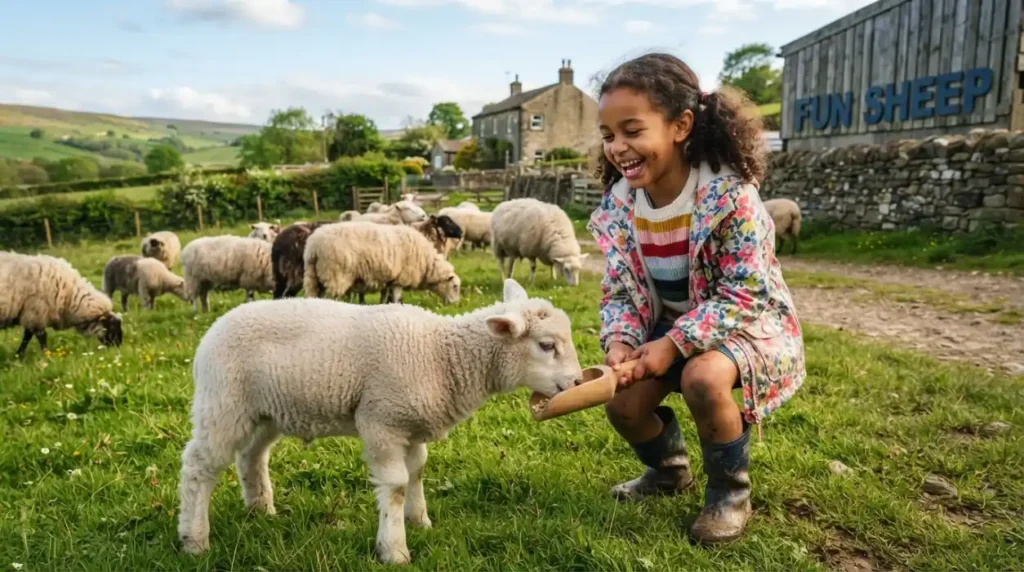
Fun sheep facts reveal that these gentle barnyard animals are highly intelligent, deeply emotional, and socially complex creatures. With panoramic vision covering nearly 300 degrees, the ability to recognize over 50 human faces, and a rich history spanning thousands of years, sheep offer fascinating surprises beyond their fluffy wool coats.
Have you ever looked at a fluffy flock grazing in a grassy meadow and wondered what goes on inside their curious minds? Exploring fun sheep facts reveals that these gentle farm animals are far smarter and more social than most people ever realize.
From recognizing human faces to navigating complex mazes, learning about fun sheep turns common barnyard myths completely upside down.
Did you know that their unique rectangular pupils give them built-in panoramic vision without even turning their heads? Uncovering these fun sheep secrets makes visiting countryside farms and homesteads an absolute delight for animal lovers of all ages.
Ready to test your farmyard knowledge and discover surprising stories about woolly herds from around the globe? Let’s take a cheerful stroll through the fields to meet these incredible creatures up close!
Extraordinary Intelligence and Memory Capabilities

For generations, old pop culture tropes depicted farm animals as timid creatures that blindly follow the herd. However, modern animal behavior researchers have proved that sheep possess remarkable cognitive abilities and impressive memory systems.
They learn quickly through observation, solve practical problems to reach tasty snacks, and remember familiar places for years.
Understanding how their brains work gives us a newfound respect for these peaceful grazing companions.
Facial Recognition Skills That Rival Human Brains
One of the most mind-blowing discoveries in animal science is how well sheep process visual information. Research shows they can recognize and remember at least 50 individual faces of both other sheep and human handlers.
- Long-Term Memory: They store distinct facial features in their memory banks for over two years without seeing the individual.
- Photo Recognition: In laboratory tests, they easily identify familiar faces shown on digital computer screens.
- Emotional Perception: They can tell the difference between a stressed face and a calm, happy expression on human caretaker faces.
- Brain Architecture: They use specialized brain regions and neural pathways similar to those humans use to recognize familiar friends.
Navigating Mazes and Learning Complex Rules
Sheep are natural problem solvers when given clear incentives like sweet apples or fresh oats. Scientists testing their cognitive flexibility discovered they can navigate multi-turn mazes just as effectively as rodents or monkeys.
When researchers altered the maze rules mid-test, the animals adapted their routes within a few attempts.
Their sharp spatial awareness allows them to remember tricky pasture gates, hidden water troughs, and safe shelter spots across massive pastures.
Panoramic Vision and Unique Physical Adaptations
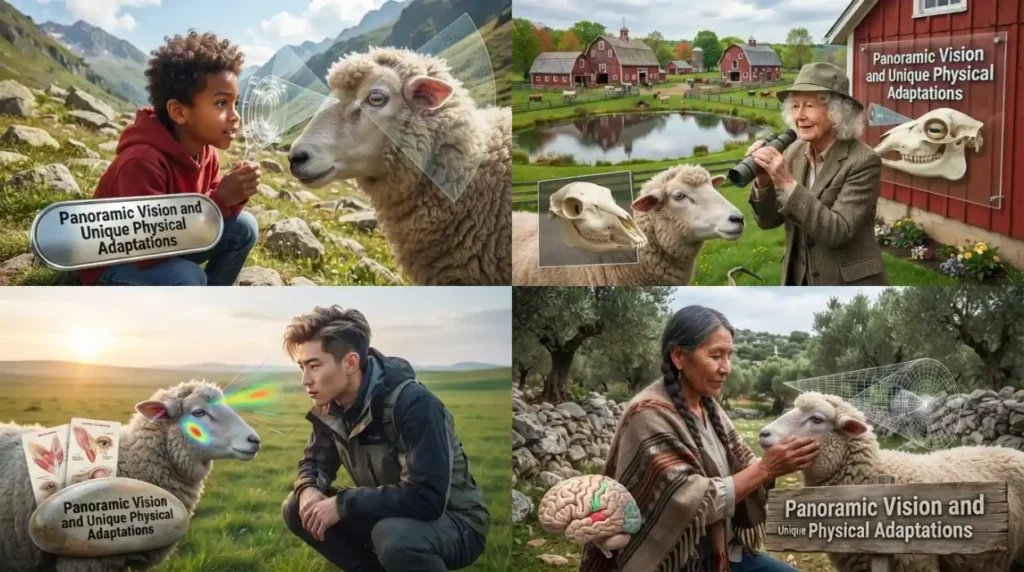
A sheep’s physical body is built specifically to survive as a prey animal in wide-open grasslands. Every physical feature, from their hooves to their eyes, serves a distinct purpose in keeping them safe, comfortable, and well-fed.
Their specialized physical adaptations allow them to spot hidden predators while grazing quietly on sweet meadow grasses.
Seeing the World in Broad Panoramic Color
If you try to sneak up behind a grazing flock, you will almost certainly get caught instantly. Because their eyes are set on the sides of their heads, their horizontal rectangular pupils give them a wide field of vision.
They cover between 270 and 320 degrees without moving their necks at all!
This broad field of view means they keep a constant eye on the horizon while their heads remain lowered toward the grass.
The Magic of the Ruminant Digestive System
Like cows and goats, sheep are ruminant animals equipped with a four-chambered stomach system. This specialized anatomy permits them to thrive on fibrous grasses that human stomachs could never digest.
- Rumen: The massive first chamber acts as a fermentation vat, breaking down tough plant fibers with beneficial microorganisms.
- Reticulum: Softens ingested plant material into small wads called “cud” for later regurgitation.
- Chewing the Cud: The animal rests in the shade and re-chews the regurgitated cud to grind fibers even finer.
- Omasum and Abomasum: The final chambers absorb moisture and digest proteins through natural stomach acids.
Wool Wonders and Textile Traditions
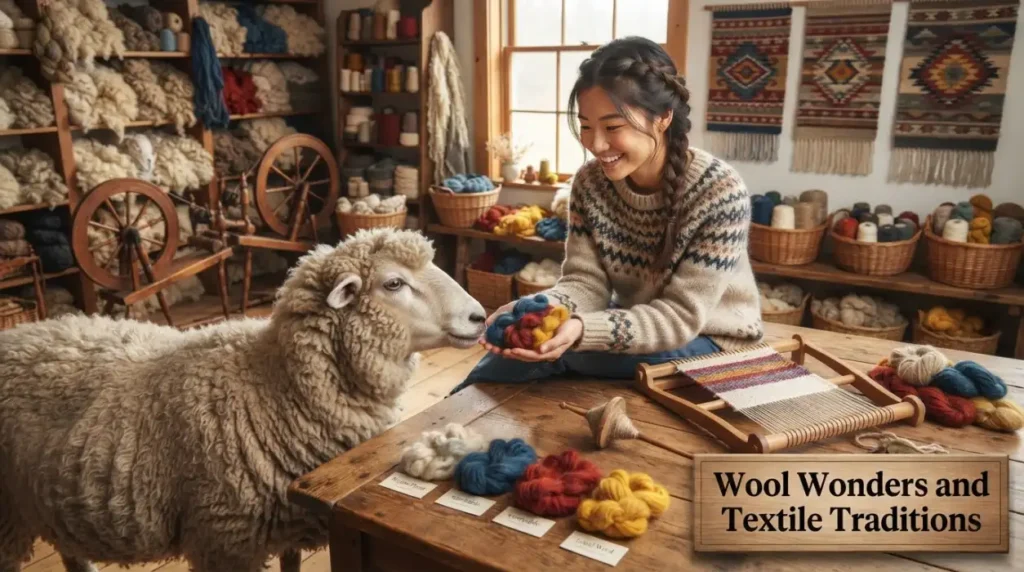
Wool is one of the most versatile, durable, and sustainable natural fibers on Earth. Humans have bred domestic sheep for thousands of years to produce soft, warm fleeces that protect against winter snow and summer heat.
Harvesting wool through gentle shearing keeps the animals cool and comfortable while providing renewable material for clothing, blankets, and insulation.
Exploring textile history reveals how deeply connected human fashion is to barnyard farming.
Why Shearing Is Essential for Health and Comfort
Unlike wild mountain sheep that naturally shed their short winter coats every spring, domestic breeds require regular shearing. Selective breeding over centuries created sheep whose wool grows continuously throughout the year.
If a domestic coat is left unsheared, it becomes heavy, matted, dirty, and dangerously hot during summer months.
Annual shearing by skilled professionals is completely painless and keeps the flock clean, mobile, and hygienic.
The Incredible Physics of Natural Wool Fibers
Natural wool possesses extraordinary physical properties that synthetic petroleum-based fabrics cannot easily replicate.
- Water Repellency: Lanolin, a natural waxy oil secreted by sheep skin, makes raw wool water-resistant.
- Moisture Absorption: Wool fibers can absorb up to 30 percent of their weight in moisture without feeling damp to the touch.
- Temperature Regulation: Tiny air pockets trapped inside crimped wool fibers insulate against both cold wind and warm weather.
- Fire Resistance: Natural wool resists burning and extinguishes itself when removed from open flames.
Deep Social Connections and Herd Behavior
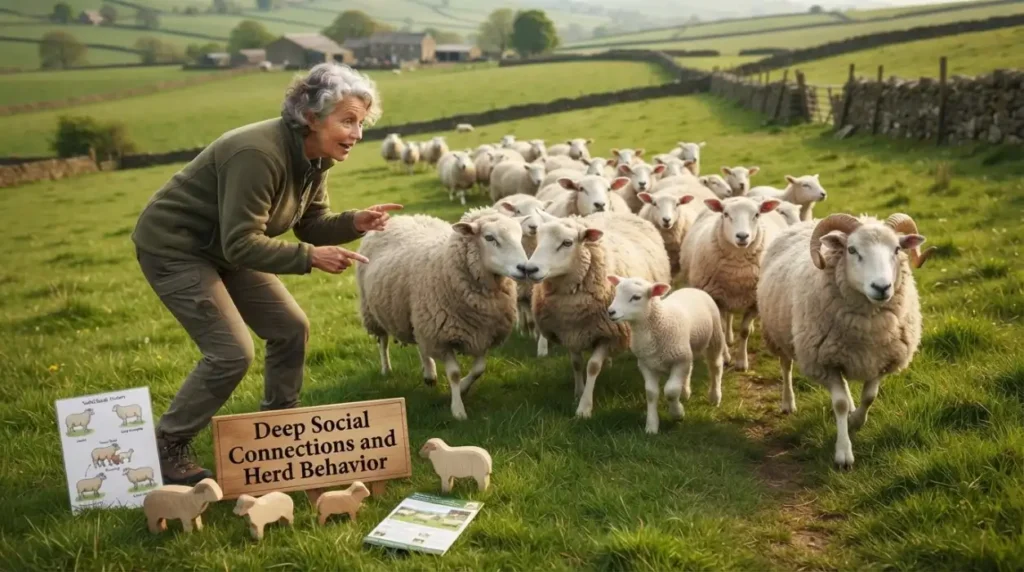
When you watch a flock move across a hillside, it looks like a single, seamless wave of white fleece. This tight movement is not random coincidence; it is driven by strong social bonds, clear hierarchies, and subtle vocal cues.
Living within a close-knit group provides emotional comfort and physical safety to every individual member.
Observing herd dynamics shows how deeply these animals care for one another.
Best Friends and Emotional Support Within the Flock
Sheep form close-knit friendship circles within larger herds, often choosing specific grazing partners for life. They show clear signs of distress when separated from their favorite flock mates, experiencing elevated heart rates and stress hormones.
When reunited with their companions, their stress levels drop back to normal almost immediately.
Mother ewes recognize their newborn lambs through distinct calls and unique scent profiles within seconds of giving birth.
How Vocalizations Communicate Real Feelings
Baaing is far more than simple barnyard noise; it is a rich communication system filled with subtle emotional meaning. A ewe uses a low, soft rumble to soothe her nursing lamb when danger feels near.
A loud, high-pitched bleat serves as an alarm call to alert the entire herd of approaching strangers or dogs.
By listening closely to pitch, volume, and rhythm, experienced farm handlers can identify whether an animal is happy, hungry, or calling for help.
Surprising Global Breeds and Unusual Characteristics

Not all sheep look like the classic white fluffy animals pictured in bedtime storybooks. Worldwide, there are over 1,000 distinct domestic breeds, each adapted to survive in specific local environments, altitudes, and climates.
From giant spiraled horns to pitch-black faces and silky curls, global diversity is truly staggering.
Discovering these unique breeds shows how versatile domestic animals really are.
The Jacob Sheep: Four-Horned Barnyard Marvels
The Jacob sheep is an ancient, spotted breed that looks like it stepped right out of a mythical fantasy story. Unlike most domestic animals that have two horns or none at all, Jacob sheep can grow four, five, or even six impressive horns!
Both male and female Jacob sheep grow these striking black and white horns, which curve outward in dramatic shapes.
Their piebald coats feature bold patches of dark brown or black mixed with bright white wool, making them popular on hobby farms.
The Valais Blacknose: The World’s Cutest Breed
Hailing from the steep mountain slopes of Switzerland, the Valais Blacknose is frequently called the world’s cutest sheep. They feature completely pitch-black faces, ears, and knees contrasted against dense, spiral-curled white fleeces that look like soft cotton balls.
Despite their rugged mountain origins, these Swiss animals are famous for being incredibly calm, friendly, and affectionate with human visitors.
Many people keep them as gentle pets because they love receiving head scratches and walking alongside their handlers.
Practice Exercise
Test your understanding of sheep biology, intelligence, and physical adaptations by picking the best option for each question below.
- How many individual human and animal faces can a sheep recognize and remember for up to two years?
A. Around 5
B. Exactly 10
C. At least 50
D. Over 1,000 - What horizontal pupil shape gives sheep a wide 270 to 320-degree panoramic field of vision?
A. Circular
B. Rectangular
C. Triangular
D. Vertical slit - Why is regular annual shearing necessary for domestic sheep breeds?
A. Domestic wool grows continuously and causes overheating if not sheared.
B. Shearing turns their fleece a bright white color.
C. Without shearing, domestic sheep cannot walk on grass.
D. Shearing prevents them from growing horns. - What natural waxy oil secreted by sheep skin makes raw wool water resistant?
A. Keratin
B. Lanolin
C. Tallow
D. Gelatin - Which Swiss mountain breed is famous for its pitch-black face, dark knees, and friendly personality?
A. Jacob sheep
B. Valais Blacknose
C. Merino
D. Suffolk
Answer Key:
- C
- B
- A
- B
- B
FAQs
Are sheep actually intelligent animals?
Yes, sheep are intelligent animals with impressive problem-solving skills and long-term memories. Scientific research proves they can recognize dozens of individual faces, navigate complex mazes, learn rules quickly, and form close social friendships within their flock.
Do sheep get hurt when their wool is sheared?
No, shearing does not hurt sheep when done by trained professionals. The process is very similar to getting a haircut, removing the heavy outer fleece layer while keeping the underlying skin safe and cool for summer.
Why do sheep follow each other so closely?
Sheep follow each other closely because their strong herd instinct provides safety from potential predators. Moving as a unified group makes it difficult for predators to isolate an individual animal, giving everyone in the flock protection.
How long do domestic sheep usually live?
Domestic sheep typically live between 10 and 12 years when cared for on farms with good food and shelter. Some healthy pet sheep on hobby farms even live up to 15 years or more.
Can sheep see in color?
Yes, sheep have color vision, though it differs slightly from human sight. They see short and long wavelengths well, meaning they easily distinguish between shades of yellow, green, and blue, but struggle to separate bright reds.
Conclusion
Discovering the truth about barnyard life shows that these fluffy animals are far more fascinating, intelligent, and affectionate than most people ever imagine. From their built-in panoramic eyes to their impressive facial recognition skills, these social creatures enrich human agriculture and textile traditions in countless ways.
Whether you are visiting a local petting farm, choosing natural wool blankets, or watching a herd graze on countryside hills, these stories bring farmyard life to light. Sharing these fun facts inspires a deeper appreciation for the gentle animals that share our world.
Ready to learn more about farmyard life, animal care, and countryside trivia? Explore even more fun sheep stories to continue your journey through the amazing world of farm animals!

Jack Olive is the creative mind behind buzzgiggles.com, a fun-focused website built to bring smiles, laughter, and lighthearted entertainment to everyday life. With a passion for humor and enjoyable content, Jack Olive creates and shares playful ideas, amusing stories, entertaining discoveries, and cheerful moments designed for readers of all kinds.
Through buzzgiggles.com, Jack Olive combines creativity, curiosity, and a positive sense of humor to explore the lighter side of life. Whether visitors are looking for a quick laugh, something interesting to share, or a cheerful break from their routine, the website offers content created with fun in mind. Jack Olive believes great entertainment should be easy to enjoy, memorable, and capable of brightening someone’s day.