
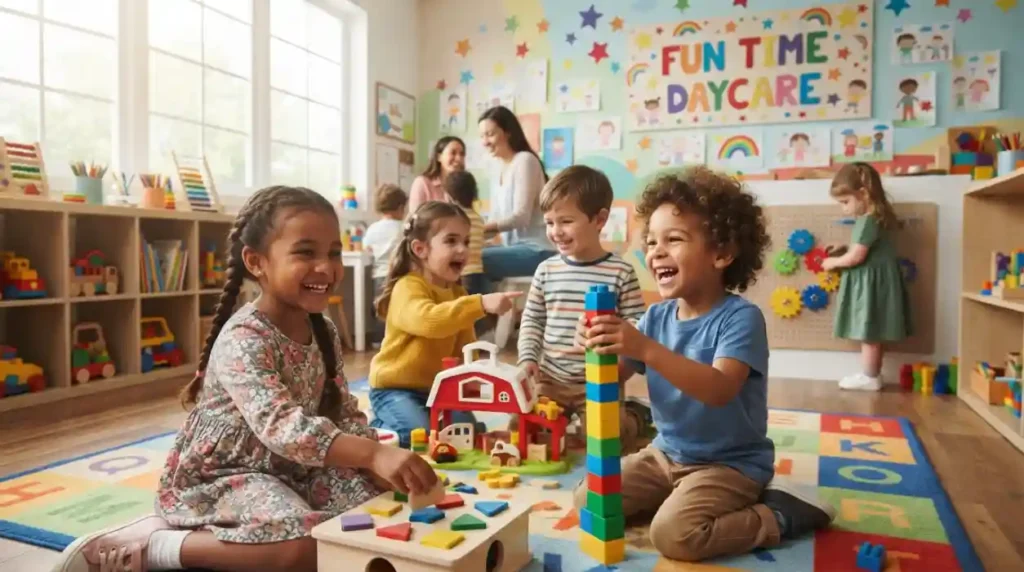
Finding a fun time daycare means choosing an early childhood center that blends unstructured play, creative learning, and strict safety standards. Quality facilities use play-based curricula to boost cognitive growth, social skills, and emotional resilience while keeping toddlers engaged, safe, and excited to learn every single day.
Have you ever wondered what makes a child light up with genuine excitement when they walk through the classroom door each morning? Choosing the right fun time daycare is all about finding a place where joyful play and early learning come together seamlessly.
When young kids spend their days in a warm environment filled with art, music, and group games, they develop essential brain skills without even realizing they are studying.
A high-quality fun time daycare supports emotional growth, helps toddlers build lasting friendships, and gives busy parents total peace of mind throughout the work week.
Ready to see how a great fun time daycare can set your child up for lifelong success? Let’s explore everything from play-based learning theories and safety checklists to daily routines, home activities, and expert evaluation tips!
The Science of Play in Early Childhood Development
For generations, scientists and educators have studied how young children process the world around them through hands-on activities. What looks like simple sandbox building or dress-up play is actually deep cognitive work happening in a young brain.
When toddlers play, their brains form thousands of neural connections every single second, building pathways for future learning.
Understanding how structured play transforms young minds helps parents make confident decisions about early care options.
How Active Play Shapes Brain Structure
During early childhood, the brain operates at double the adult activity level, constantly absorbing sensory information from the surroundings. Engaging in physical play releases neurochemicals like dopamine and endorphins, which improve attention spans and strengthen memory retention.
When a child builds a tower of wooden blocks, they learn gravity, balance, and spatial relationships firsthand.
Trial and error during play teaches persistence, showing children that making a mistake is just another step toward solving a puzzle.
Social and Emotional Benefits of Group Activities
Sharing toys with peers is one of the earliest social hurdles a toddler encounters during their day. Guided group play teaches young children how to take turns, listen to others, and express their feelings using words.
- Empathy Building: Watching a classmate react to a story helps children recognize and understand emotions in others.
- Conflict Resolution: Group games encourage kids to negotiate rules and share resources fairly under teacher guidance.
- Self-Regulation: Waiting for a turn on the slide helps toddlers practice self-control and patience in fun settings.
- Confidence Boosting: Completing a team puzzle or group art project gives children a strong sense of pride and personal achievement.
Key Pillars of a Quality Daycare Environment
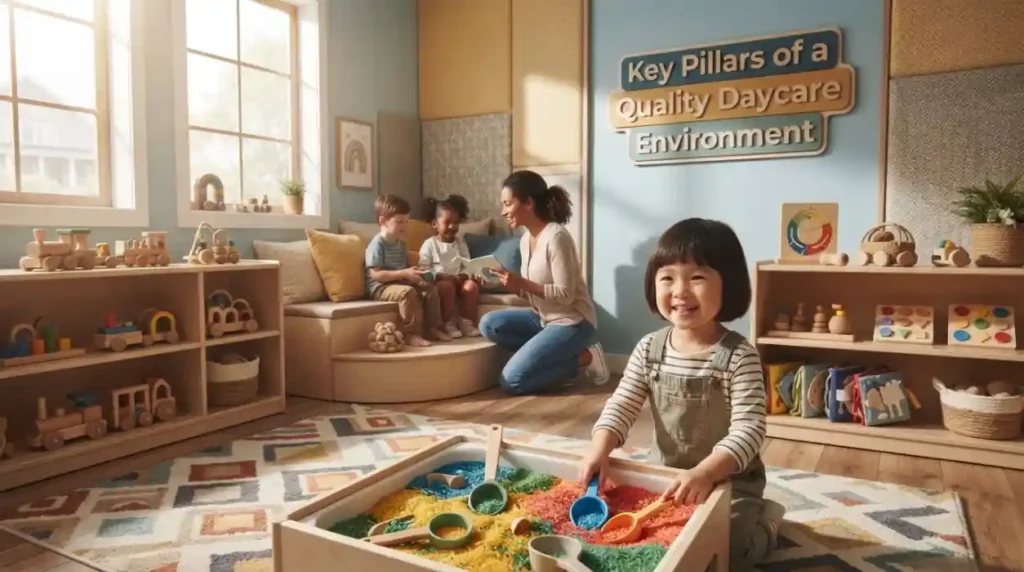
Every great early childhood center relies on core foundational pillars that keep children safe, happy, and intellectually curious. A welcoming physical layout combined with attentive care creates a space where toddlers feel comfortable expressing themselves.
When evaluating potential facilities, looking at physical cleanliness, staffing ratios, and teacher interactions gives you a clear picture of daily life.
Here is a quick overview summarizing the core pillars that define exceptional early childhood centers.
Low Teacher-to-Child Ratios
Having enough adult supervision in every room ensures that each toddler receives individual care, comfort, and direct guidance throughout the day. Lower ratios allow caregivers to notice subtle emotional shifts, assess physical milestones, and tailor activities to personal interests.
State licensing laws set maximum ratio caps, but top-tier centers often maintain even smaller group sizes voluntarily.
Fewer children per teacher creates a calmer environment where stress levels remain low for everyone involved.
Cleanliness and Injury Prevention Standards
Young children explore their world using hands and mouths, making strict sanitation routines essential for health and safety. Facilities must enforce regular handwashing schedules, sanitize toys daily with child-safe disinfectants, and maintain secure, gated play areas.
Finger-pinch guards on doors, padded flooring beneath outdoor swings, and covered electrical outlets prevent common childhood bumps and bruises.
A clean, well-maintained space shows that the staff takes pride in protecting the health of every child.
Daily Routines That Keep Kids Engaged and Happy
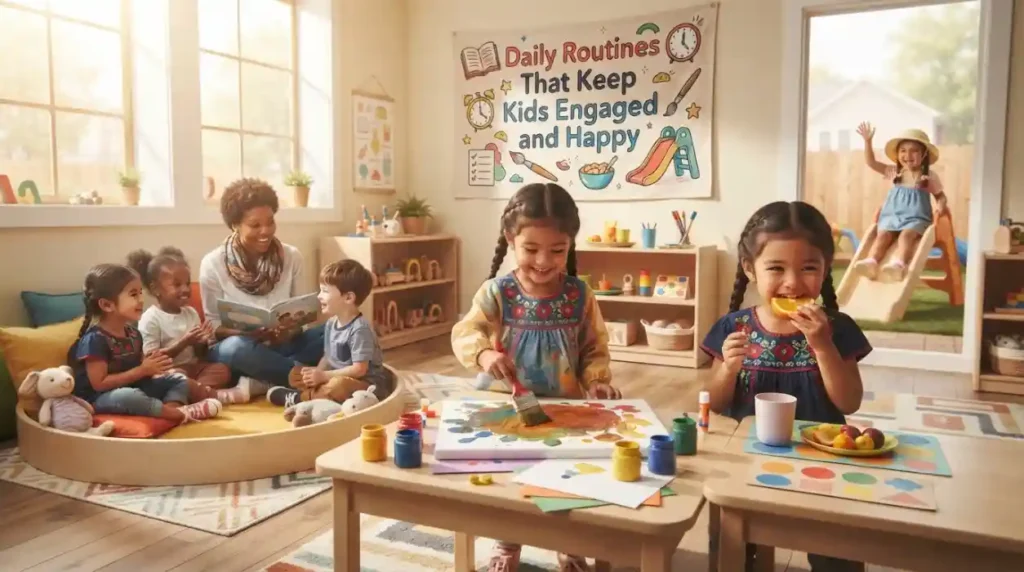
Children thrive when they have predictable daily schedules that balance energetic movement with quiet, restful periods. A well-designed day keeps energy levels steady while preventing the overtired meltdowns that often happen without structure.
Transitions between activities are carefully planned so kids move smoothly from one exciting task to the next.
Let’s break down the essential components that make a daily schedule both productive and enjoyable.
Morning Discovery and Circle Time
Starting the day with a warm welcome helps children transition smoothly from home to the classroom environment. Circle time brings the group together to sing morning songs, check the daily weather chart, and talk about the upcoming activities.
- Morning Welcome: Children hang up backpacks, store lunch boxes, and join their friends at designated play tables.
- Circle Time Gathering: Teachers lead interactive group discussions, read picture books, and introduce the day’s main learning theme.
- Focused Sensory Stations: Kids choose between water tables, kinetic sand stations, finger painting, or building blocks.
Balanced Nutrition and Rest Periods
Active bodies need nutritious fuel and adequate sleep to keep energy and spirits high all afternoon. Nutritious morning and afternoon snacks featuring fresh fruit, whole grains, and water maintain steady blood sugar levels throughout play sessions.
After lunch, a quiet rest period allows growing brains to process new information and recharge for afternoon activities.
Even children who no longer sleep benefit greatly from quiet time spent looking at books on soft floor mats.
Designing Fun Learning Stations at Home
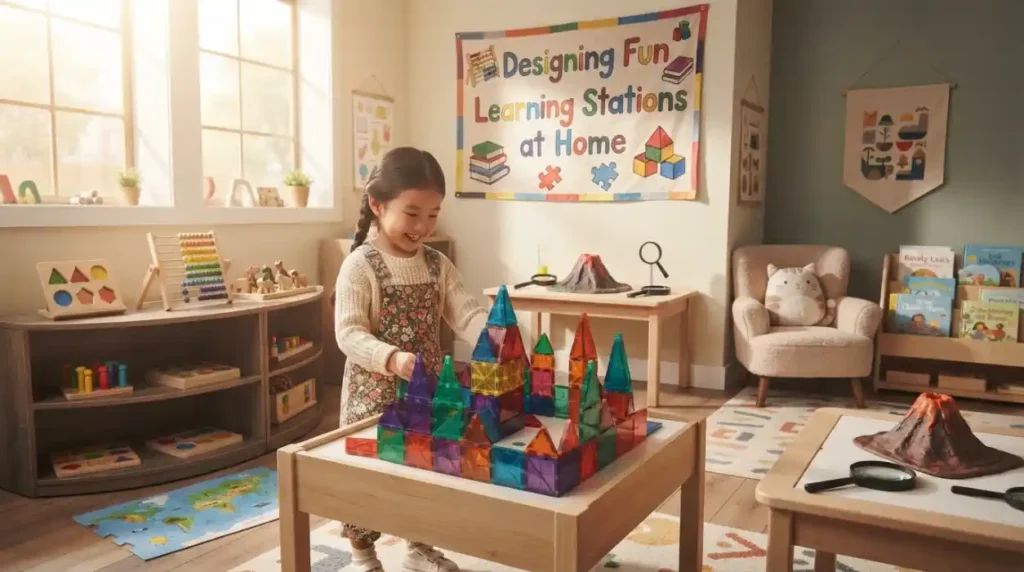
You do not need fancy equipment or commercial educational tools to create an engaging learning space in your own home. Simple household items like cardboard boxes, plastic tubs, and colorful painter’s tape can turn any living room corner into an exciting activity hub.
Bringing center-style activity stations into your home reinforces early skills through simple, everyday play.
Here are four easy learning stations you can set up quickly on a rainy afternoon.
The Creative Arts and Crafts Corner
Art activities develop fine motor skills by strengthening small muscles in fingers and hands used later for writing. Stock your home craft space with washable finger paints, non-toxic playdough, safety scissors, scrap paper, and oversized crayons.
- Playdough Sculpting: Rolling and squishing dough builds hand strength while encouraging kids to craft imaginary animals.
- Collage Making: Gluing pasta shapes and torn magazine pages onto cardboard teaches texture and spatial arrangement.
- Finger Painting: Mixing primary colors directly on paper gives toddlers a hands-on lesson in color creation.
The Imaginary Play and Dress-Up Station
Costumes and prop boxes allow young children to step into different roles, building language skills and emotional understanding. Old hats, worn-out adult clothes, empty food boxes, and plastic kitchen utensils inspire hours of storytelling and creative roleplay.
When a child pretends to run a grocery store or care for stuffed animals, they practice real-world communication skills naturally.
Encouraging imaginative play helps kids develop creative problem-solving abilities that serve them for a lifetime.
How to Tour and Evaluate Local Daycare Facilities
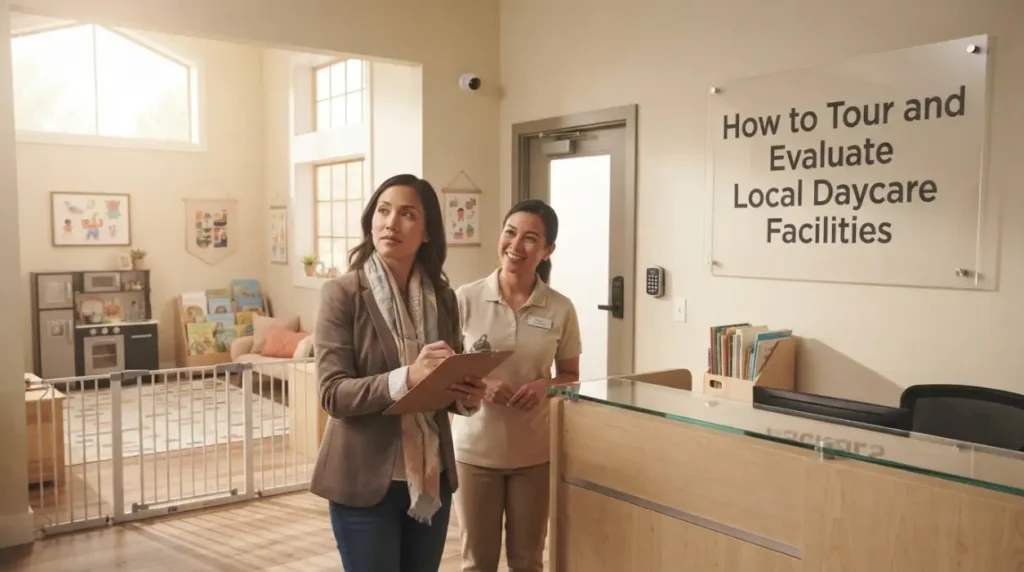
Visiting a facility in person is the single best way to evaluate whether a center fits your family’s needs and values. Paying close attention to how teachers interact with students reveals far more than any polished brochure or website photo gallery ever could.
Trusting your instincts during an initial tour saves time, stress, and energy down the line.
Here are practical steps to help you prepare for a successful and informative facility walk-through.
What to Observe During Your Classroom Walk-Through
As you walk through active classrooms, notice whether teachers are sitting down on the floor engaging directly with the children. Look for bright, cheerful spaces filled with child-created artwork displayed at eye level on walls rather than pre-made posters.
Observe how staff handle crying toddlers or disagreement over toys—do they speak with calm, reassuring voices?
Happy children who are actively engaged in play are the clearest sign of a healthy, supportive classroom culture.
Essential Questions to Ask the Director
Preparing a list of specific questions ensures you gather all the practical information needed to make an informed choice. Never hesitate to ask about emergency procedures, staff turnover rates, or policy guidelines regarding sickness and vacation days.
Staff Turnover and Credentials
Ask how long current teachers have worked at the facility and what ongoing early education training they complete each year. Stable teaching staff builds strong, comforting bonds with toddlers over time, helping them feel secure.
Discipline and Behavioral Guidance
Inquire about the center’s philosophy on correcting behavior, ensuring they use positive redirection rather than harsh scolding or isolation.
Practice Exercise
Test your understanding of play-based learning, facility evaluation, and childhood development with this quick five-question multiple-choice quiz.
- What is the primary benefit of play-based learning for young toddlers?
A. It forces kids to memorize complex math formulas early
B. It promotes brain growth, motor skills, and social interaction through hands-on activity
C. It eliminates the need for adult supervision
D. It keeps children completely silent for hours - Why are low teacher-to-child ratios important in early childhood centers?
A. They make the facility look bigger on tours
B. They allow teachers to provide individual care, safety, and guidance
C. They lower the building’s monthly electricity bill
D. They ensure kids never have to take afternoon naps - What type of activity best strengthens finger muscles for early handwriting skills?
A. Watching animated television shows
B. Squishing, rolling, and shaping playdough
C. Running in a wide open grassy field
D. Sitting silently during long lectures - What should parents look for regarding classroom artwork during a facility tour?
A. Expensive paintings bought from art galleries
B. Clean walls with no art displayed anywhere
C. Child-created art projects displayed low at the child’s eye level
D. Printed textbook pages taped to the ceiling - How does imaginary dress-up play help young children develop emotionally?
A. It teaches them how to sew their own clothing
B. It allows them to practice empathy, storytelling, and real-world communication
C. It proves which child is the fastest runner
D. It replaces the need for healthy meals and rest
Answer Key:
- B
- B
- B
- C
- B
Frequently Asked Questions
At what age can a child start attending a structured daycare program?
Most licensed centers accept infants starting around six to eight weeks old, offering specialized nurseries designed for baby care. As infants grow into toddlers, programs transition toward active play, sensory exploration, and social routines suited for growing minds.
How do centers help toddlers overcome separation anxiety during the first week?
Teachers use gentle redirection, comforting routines, and engaging sensory activities to help children adjust smoothly to new settings. Establishing a quick, consistent goodbye ritual at drop-off gives children confidence that parents will return at the end of the day.
What is the difference between daycare and traditional preschool?
Daycare programs offer full-day care and year-round schedules tailored for working parents, combining supervision with early learning activities. Preschools generally focus heavily on structured kindergarten readiness for older children, often running shorter half-day schedules following school calendars.
How do educators handle biting or aggressive behavior among toddlers?
Caregivers use positive redirection, shadow children closely, and teach simple words to help toddlers express frustration safely without physical acting out. Staff focus on understanding emotional triggers while working closely with parents to maintain consistent guidance between home and school.
What should I pack in my child’s daily bag for center care?
Pack two extra changes of clothes, labeled water bottles, comfort items like a small blanket for rest time, and necessary diapers or pull-ups. Always label every personal item clearly with your child’s full name to avoid mix-ups during busy classroom changes.
Conclusion
Choosing a quality fun time daycare is one of the most rewarding investments you can make in your child’s early growth and happiness. By prioritizing play-based learning, low teacher ratios, and clean, creative environments, you provide a space where your little one can thrive socially and emotionally.
Early childhood is a precious season filled with wonder, rapid growth, and exciting daily discoveries.
Surrounding your child with caring educators and engaging friends builds a strong foundation for future learning success.
Are you ready to take the next step in your early care journey? Schedule a tour with a local provider today, ask thoughtful questions, and find the perfect learning environment where your child can flourish!

Jack Olive is the creative mind behind buzzgiggles.com, a fun-focused website built to bring smiles, laughter, and lighthearted entertainment to everyday life. With a passion for humor and enjoyable content, Jack Olive creates and shares playful ideas, amusing stories, entertaining discoveries, and cheerful moments designed for readers of all kinds.
Through buzzgiggles.com, Jack Olive combines creativity, curiosity, and a positive sense of humor to explore the lighter side of life. Whether visitors are looking for a quick laugh, something interesting to share, or a cheerful break from their routine, the website offers content created with fun in mind. Jack Olive believes great entertainment should be easy to enjoy, memorable, and capable of brightening someone’s day.