
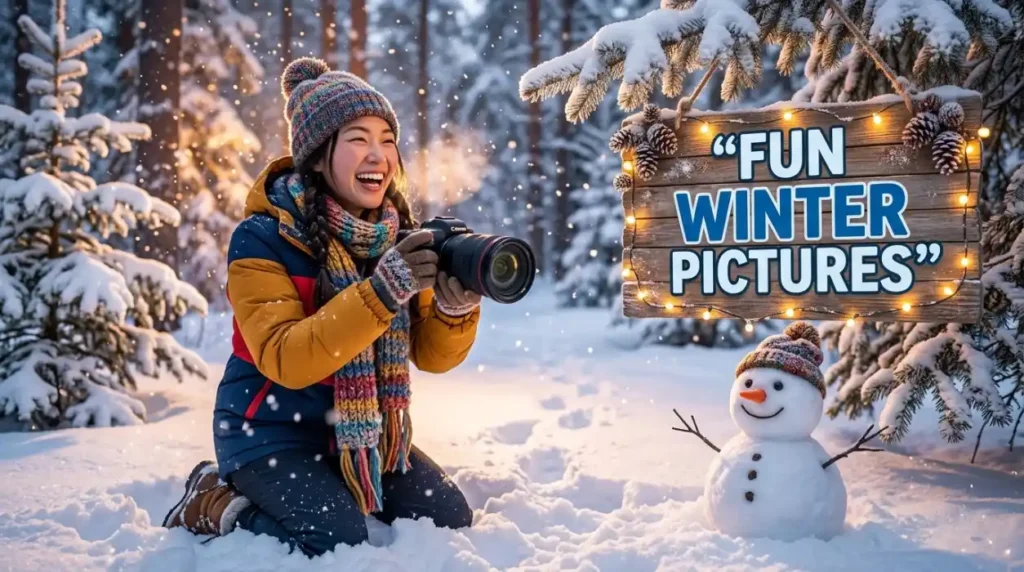
Fun winter pictures are creative, vibrant photographs that capture the joy, beauty, and playful spirit of the cold season. From action shots of snowball fights to cozy indoor portraits with steaming cocoa, these pictures use natural snow light, colorful outfits, and simple camera tricks to transform chilly days into lasting visual memories.
Have you ever stepped outside after a fresh snowfall and wished you could instantly capture that sparkling magic on camera? Learning how to take fun winter pictures turns crisp morning walks and freezing snowy days into an exciting creative playground.
Whether you are snapping candid photos of kids building snowmen or capturing cozy evenings indoors by a roaring fire, taking fun winter pictures brings out the warmth of the season.
The bright white snow acts as a massive natural reflector, giving you unique lighting opportunities that you simply cannot find during any other time of the year.
Let’s explore simple camera settings, creative pose ideas, and easy phone tricks that will make shooting fun winter pictures enjoyable and stress-free for everyone.
The Secret Magic Behind Winter Photography
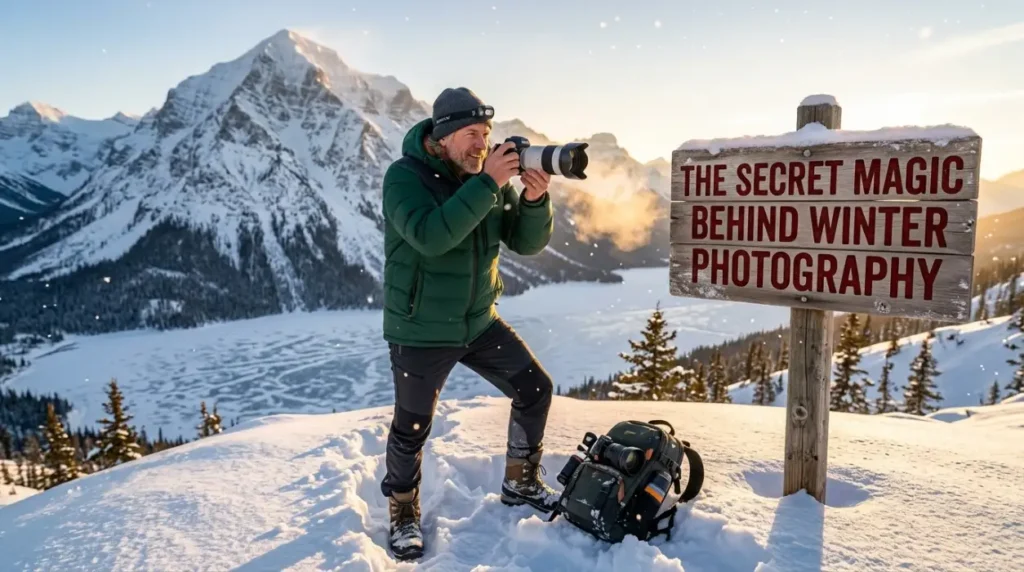
Winter landscapes offer a completely different visual experience compared to warm summer beach trips or colorful autumn walks.
How Snow Transforms Natural Outdoor Light
Fresh snow works like a giant, soft light bounce board placed right at your feet.
Instead of harsh shadows under eyes, sunlight bouncing off snow fills in dark spots across faces naturally and evenly.
This unique bounce lighting creates bright, smooth portraits that look professional without requiring expensive studio equipment or flash units.
Creating High-Contrast Images That Stand Out
A snowy landscape is essentially a clean white backdrop waiting for vibrant splashes of color.
Wearing bright red coats, yellow knitted scarves, or cobalt blue beanies creates instant visual contrast against soft white drifts.
This striking color separation draws the viewer’s eye straight to your subject, making simple backyard pictures look like magazine covers.
Capturing the Quiet Emotional Feeling of Cold Days
Beyond active play, winter carries a peaceful atmosphere that makes for deeply emotional and atmospheric photographs.
Frost patterns creeping across glass windows, bare tree branches dusted in white, and soft morning fog all tell a quiet story.
Blending energetic action shots with peaceful scenic pictures gives your seasonal photo album a rich, balanced feel.
Essential Gear and Camera Setup Tips for Cold Weather
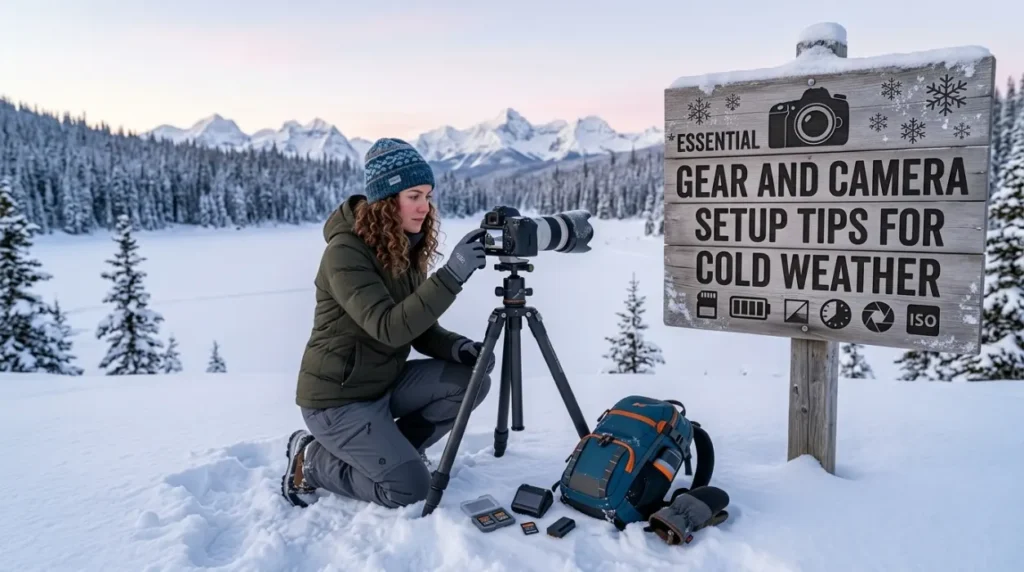
Shooting in freezing temperatures comes with a few physical challenges that are easy to overcome once you know the basics.
Protecting Your Camera Batteries from Cold Drain
Sub-zero temperatures drain lithium-ion camera and smartphone batteries much faster than warm indoor air.
- Keep Spares Warm: Store extra batteries in an inside coat pocket close to your body heat until you need them.
- Warm Your Phone: Slip a pocket hand-warmer into the same jacket pocket as your phone while walking between photo spots.
- Avoid Sudden Shifts: Never bring a freezing camera directly into a hot room, or condensation will form inside the lens.
Adjusting Exposure Settings for Crisp White Snow
Digital camera meters are programmed to see the world as a neutral medium gray.
When your camera looks at a huge field of white snow, it automatically darkens the image, turning pure white snow into dull gray sludge.
Increase your camera’s exposure compensation by +1 or +2 stops to tell the camera to keep the snow looking bright, clean, and truly white.
Mastering Focus in Bright, Low-Contrast Environments
Autofocus systems often struggle to lock onto smooth, featureless fields of plain white snow.
Point your camera’s focus dot at an area of high contrast, such as a dark tree trunk, a colorful glove, or a jacket zipper.
Once your lens locks focus on that sharp edge, hold the shutter button halfway down and reframe your shot before snapping the picture.
Creative Outdoor Photo Ideas for Everyone
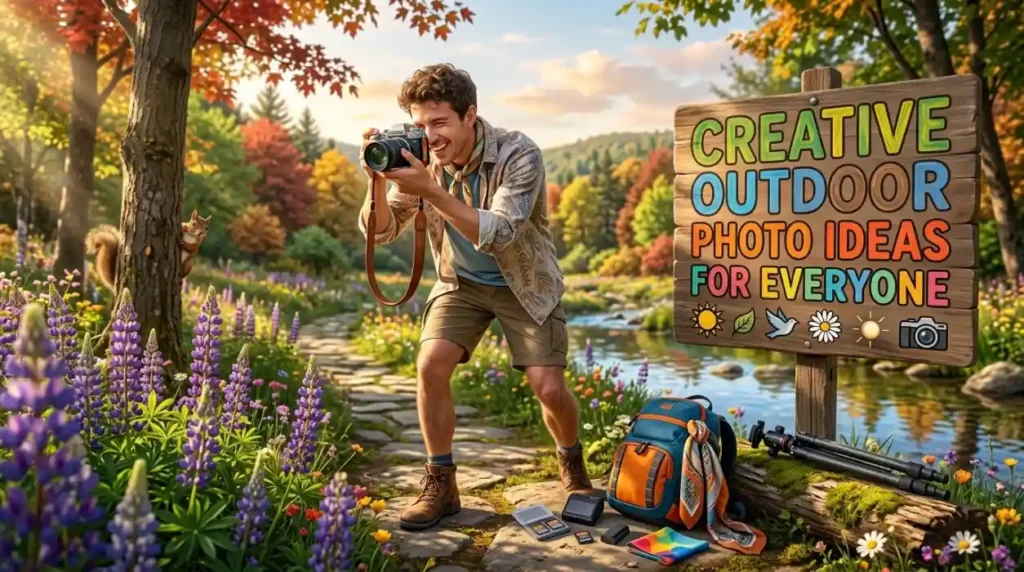
You do not need to travel to distant mountain resorts to capture unforgettable seasonal moments.
Action Shots in Fresh Powder
Capturing motion brings excitement and energy to your cold-weather picture collection.
- Snowball Toss: Have your friend throw a handful of loose powder directly toward the camera while you shoot in high-speed burst mode.
- Sledding Races: Crouch down low near the bottom of a hill to shoot upward as sleds zoom past, creating a sense of rapid speed.
- Snow Angels: Position yourself on a small step stool or porch railing to take a direct overhead shot of someone making snow angels.
Playful Portrait Poses and Expressions
Stiff, formal poses often feel out of place in snowy settings where playful energy works much better.
Encourage your subjects to blow fresh, powdery snow off their open palms toward the camera lens.
Capture candid laughter when a heavy branch dumps a small pile of soft snow onto someone’s hat unexpectedly.
Micro Photography: The Intricate World of Ice and Frost
Zooming in close reveals intricate patterns that are completely invisible when walking past.
Look closely at frozen water droplets hanging from roof gutters or delicate ice crystals forming along the edges of fallen leaves.
Using a budget-friendly macro clip-on lens for your smartphone reveals stunning geometric snowflake patterns that will amaze your friends.
Comparing Winter Photo Styles and Camera Techniques
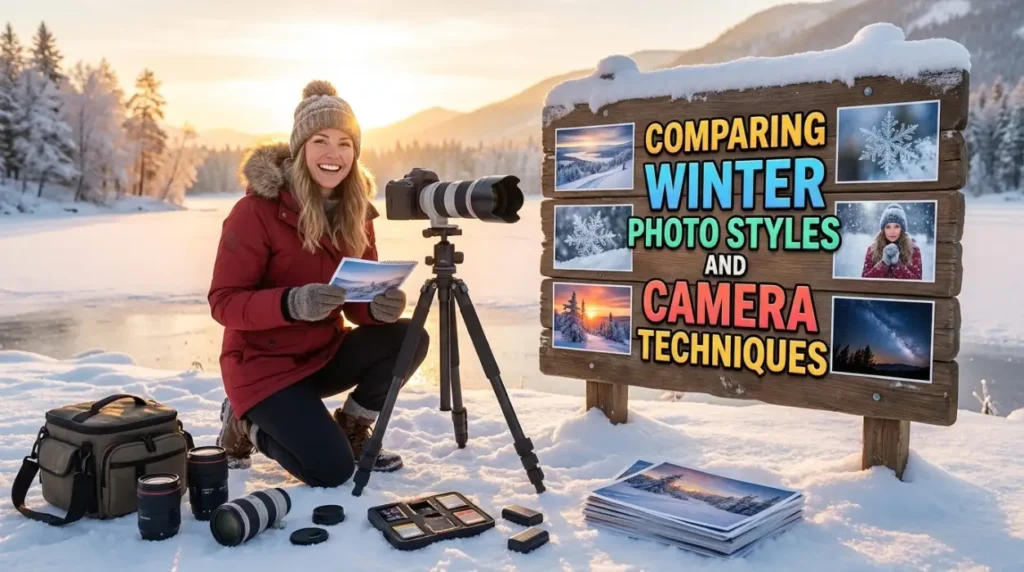
Different photography approaches highlight unique aspects of the cold season, from energetic play to serene landscapes.
Warm and Cozy Indoor Photography Ideas
When the outdoor wind chill becomes too extreme, move inside to capture sweet, intimate moments by the heater.
Steaming Mugs and Fireplace Glows
Warm drinks provide wonderful visual elements that naturally communicate comfort and warmth.
Position a large ceramic mug filled with marshmallows near a window so the natural side-light highlights the rising steam against a dark background.
Use the warm orange glow of a fireplace or string lights to illuminate faces softly while keeping the rest of the room dim.
Window Reflections and Frosty Views
Windows act as a beautiful physical barrier between cold outdoor environments and warm indoor living spaces.
Photograph someone wrapped in a thick blanket looking out through a fogged windowpane as fresh snow falls outside.
You can even draw simple heart shapes or smileys into the condensation on the glass to add a charming human touch to the image.
Baking Holiday Treats and Kitchen Chaos
Indoor winter days are perfect for baking gingerbread cookies, rolling dough, and dusting treats with powdered sugar.
Powdered sugar airborne during baking looks remarkably like falling snow when captured with a quick camera flash.
Capture candid messy moments, like kids with flour on their noses or mixing bowls filled with colorful frosting sprinkles.
Advanced Lighting Tricks for Twilight and Night
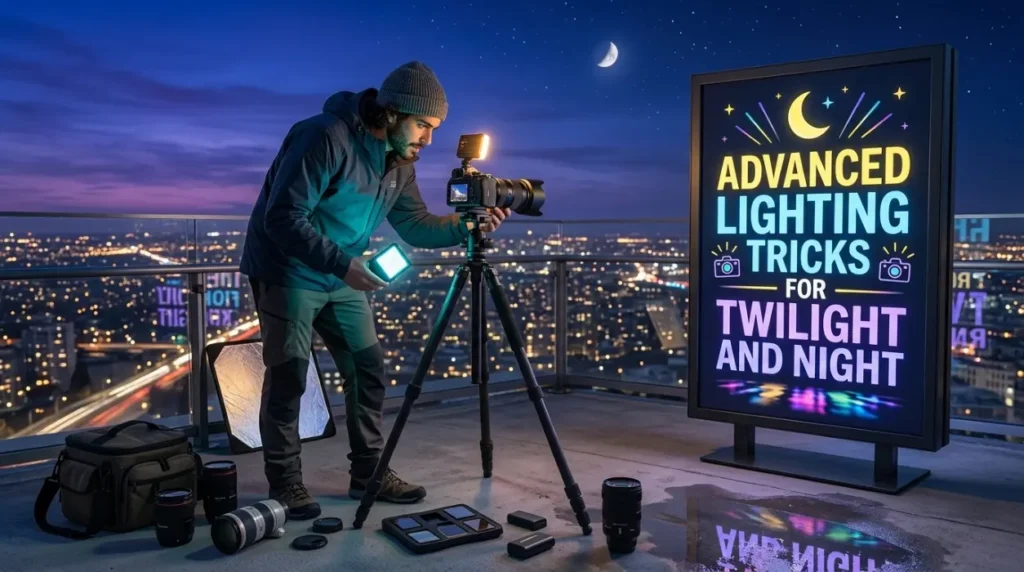
Winter days are notoriously short, but early dark hours offer incredible opportunities for dramatic lighting.
Backlighting Falling Snowflakes with Flash
Falling snow can appear invisible in flat daytime light, but adding a light source behind the flakes changes everything instantly.
Position a small pop-up camera flash or a friend’s smartphone flashlight directly behind your subject, pointing back toward your camera.
The light illuminates the falling snowflakes from behind, making them glow like bright, floating specks of magical dust around your subject.
Capturing the Magical Golden Hour on White Snow
Because the sun sits much lower on the horizon during winter months, golden hour light lasts longer and creates rich, warm tones.
Low-angle sunlight casts long, dramatic blue shadows across ripples in the snow, creating stunning textures across open fields.
Position your subjects so the low golden sun catches the edges of their hair, creating a bright halo effect that separates them from the dark background.
Blue Hour and Town Holiday Lights
The brief 20-minute window right after the sun dips below the horizon is known as the “blue hour.”
During this time, the sky turns a deep cobalt blue that contrasts brilliantly with warm orange streetlamps and glowing window lights.
Set your camera on a stable wall or tripod to avoid blurry handheld shots in this soft, low-light environment.
Best Practices for Editing and Sharing Cold Weather Shots
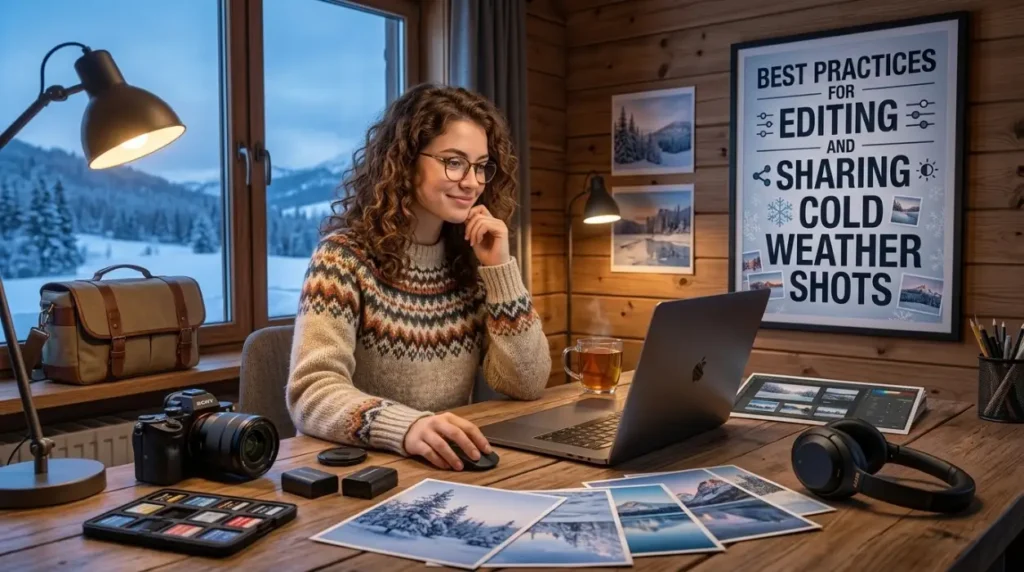
A few simple photo editing adjustments turn ordinary snapshots into polished, eye-catching images.
Fixing Color Temperature and White Balance
Snow often takes on a harsh blue tint in shade or an overly yellow tone under bright afternoon sun.
Adjust your photo editing app’s “Temperature” slider toward warm yellow to neutralize cool blue shadows in shade.
Be careful not to over-correct, as keeping a subtle hint of cool blue helps communicate the chilly atmosphere accurately.
Enhancing Contrast Without Blowing Out Highlights
Bright snow makes it easy to accidentally lose texture in pure white areas of your photograph.
Use the “Highlights” slider in your favorite photo app to pull back harsh glare, bringing back soft ripples and footprint tracks in the snow.
Slightly boost the “Clarity” or “Structure” setting to make fine frost details and fuzzy wool sweater textures pop.
Preparing Images for Social Media and Prints
Vertical cropping formats like 4:5 or 9:16 fill phone screens, giving your images maximum visual impact on social feeds.
If you plan to print your pictures for physical holiday cards, make sure your camera is set to record high-resolution files.
Adding a thin white border around dark winter portraits creates a clean, classic framing style that looks great on home display shelves.
Practice Exercise
Test your understanding of winter photo techniques, camera settings, and lighting strategies with these 5 multiple-choice questions.
- Why do digital cameras often make white snow look dull and gray when using automatic settings?
A. Cameras use built-in heaters that cause snow to melt digitally inside the lens.
B. Camera light meters are programmed to average scene brightness to neutral medium gray.
C. Cold air permanently damages the digital camera’s internal color processing chip.
D. White snow absorbs all natural light wavelengths, making images completely dark. - What simple adjustment fixes dull gray snow, making it look bright and clean?
A. Turning off the camera and letting it sit in a freezer for twenty minutes.
B. Increasing the exposure compensation setting by +1 or +2 stops.
C. Spraying water onto the front element of your glass camera lens.
D. Switching your camera language setting to a different language. - Why is it important to keep spare camera batteries inside an inner jacket pocket in winter?
A. Freezing temperatures rapidly drain battery power, so keeping them warm preserves charge.
B. Batteries need direct sunlight inside pockets to recharge their solar cells.
C. Keeping batteries in pockets prevents them from swelling up to twice their size.
D. Outer coat pockets are always magnetised, which destroys stored digital photos. - What happens when you position a light source directly behind falling snowflakes?
A. The snow turns into dark black dots across the entire picture.
B. The snowflakes glow brightly as the light illuminates them from behind.
C. The camera lens instantly cracks from the sudden bright reflection.
D. The snow melts in mid-air before it reaches the ground. - How can you create striking visual contrast in a snowy portrait?
A. Have your subject wear pure white clothes that blend in with the background.
B. Shoot only inside completely dark rooms without any windows open.
C. Have your subject wear bright, bold colors like red, yellow, or deep blue.
D. Throw white powder over your camera lens right before pressing the shutter.
Answer Key:
- B
- B
- A
- B
- C
FAQs
What should I do if my camera lens fogs up when moving indoors?
Leave your camera sealed inside your zippered camera bag when stepping inside from the cold. Letting the equipment warm up gradually over an hour inside the sealed bag prevents warm room moisture from condensing on cold glass lenses.
How can I keep my fingers warm while operating camera controls outdoors?
Wear thin touch-screen gloves beneath convertible mittens that fold back to expose your fingertips when adjusting small dials. This layered glove approach protects your hands from bitter wind while giving you precision control when taking pictures.
What is the best way to capture falling snow without blur?
Set your camera to shutter priority mode and select a fast shutter speed of 1/500s or 1/1000s to freeze moving flakes sharply. If you want soft, dreamy blur lines instead, drop your shutter speed down to 1/30s while keeping your camera steady.
Can I take great winter photos using just my everyday smartphone camera?
Yes, modern smartphones feature excellent HDR processing and dedicated night modes that handle snowy scenes brilliantly. Tap the screen on the brightest area of snow and slide the exposure sun icon up slightly to keep your snow looking crisp and white.
What are the best colors to wear for outdoor family winter photos?
Rich jewel tones like ruby red, emerald green, deep sapphire blue, and mustard yellow contrast wonderfully against white backgrounds. Avoid plain white or pale gray clothing, as those shades tend to wash out and blend directly into snowy surroundings.
How do I photograph holiday streetlights without getting weird glare spots?
Clean your camera lens thoroughly with a microfiber cloth to remove oily fingerprints that create long, streaky light flares. Angle your camera slightly away from direct bulb light sources to minimize internal lens reflections in low-light settings.
Conclusion
Capturing fun winter pictures is a wonderful way to showcase the beauty and cozy charm of the cold season. Snowy landscapes, frosty mornings, colorful scarves, and warm clothing can create eye-catching photos. Try adjusting your exposure settings to capture bright snow without losing important details.
For better results, experiment with natural backlighting and different camera angles. Candid laughter and playful moments can make your winter photos feel more genuine and memorable. Whether you are outside during snowfall or relaxing indoors, look for small details that add warmth, personality, and visual interest to every image.
Keep batteries warm, pack extras, grab your favorite scarf, and start capturing fun winter pictures today!
Jack Olive is the creative mind behind buzzgiggles.com, a fun-focused website built to bring smiles, laughter, and lighthearted entertainment to everyday life. With a passion for humor and enjoyable content, Jack Olive creates and shares playful ideas, amusing stories, entertaining discoveries, and cheerful moments designed for readers of all kinds.
Through buzzgiggles.com, Jack Olive combines creativity, curiosity, and a positive sense of humor to explore the lighter side of life. Whether visitors are looking for a quick laugh, something interesting to share, or a cheerful break from their routine, the website offers content created with fun in mind. Jack Olive believes great entertainment should be easy to enjoy, memorable, and capable of brightening someone’s day.