

Fun review games are interactive activities, digital quizzes, and team challenges designed to test knowledge while increasing engagement. By replacing traditional study sessions with playful competition, these activities help learners of all ages retain complex information faster, lower test anxiety, and build lasting confidence through collaborative learning.
Have you ever noticed how quickly eyes glaze over during a traditional study session? Bringing fun review games into your routine instantly changes low energy into active focus and enthusiasm.
Whether you teach third graders, train corporate teams, or run college study groups, playing fun review games transforms boring test prep into an exciting challenge.
Instead of staring blankly at index cards, learners shout out answers, strategize with teammates, and remember key concepts effortlessly. Interactive challenges trigger natural dopamine hits that make complex facts stick permanently.
Ready to trade dry lectures for high-energy trivia, digital game shows, and physical movement activities? Let’s explore how fun review games can turn your very next review day into an unforgettable event.
The Science of Playful Learning and Retention

Why do games work so much better than reading a textbook page three times in a row? The secret lies in how the human brain processes active participation versus passive intake.
When you participate in an interactive activity, your brain releases dopamine, a neurotransmitter linked to pleasure, focus, and memory formation. Play reduces performance anxiety, making it much easier to recall tricky concepts during high-stakes exams.
Transforming study material into friendly competition shifts learning from a chore into a rewarding social experience.
How Active Retrieval Builds Stronger Neural Pathways
Reading over notes feels productive, but it only creates short-term recognition rather than real understanding. Active retrieval forces the brain to pull stored facts out of memory, which strengthens neural connections over time.
- Forced Recall: Quizzing yourself forces your mind to locate and reconstruct information, making it easier to access later.
- Immediate Feedback: Spotting wrong answers right away stops bad habits before they take root in your memory.
- Contextual Anchors: Remembering a funny moment during a game helps you recall the correct answer during a formal test.
Why Friendly Competition Drives Lasting Engagement
Healthy competition creates natural urgency and focuses attention like nothing else. When points, timers, or simple prizes are involved, learners naturally invest more energy into every single question.
Working in teams adds social accountability, encouraging peers to support, teach, and coach one another through difficult questions.
Essential Low-Prep Physical Review Games

You do not need fancy software or hours of setup time to run an exciting activity. Low-prep physical activities use everyday supplies like scrap paper, dry-erase markers, and whiteboards to create instant fun.
These classic activities get learners out of their seats and moving, keeping physical energy levels high throughout the lesson.
Trashketball: The Ultimate Classroom Classic
Trashketball turns simple question-and-answer review into a high-stakes indoor basketball tournament. Divide your group into three or four teams and give each team a mini dry-erase board.
- Ask a review question and give teams 30 seconds to agree on an answer.
- Every team with a correct answer earns one guaranteed point for their knowledge.
- One representative from each scoring team gets to toss a crumpled paper ball into a clean trash can for bonus points.
- Set up two shooting lines: a close line worth one extra point and a distant line worth three extra points.
Flyswatter Buzz-In Challenge
Write key vocabulary words, math answers, or historical dates randomly across a large whiteboard. Two players stand several feet back, holding clean plastic flyswatters in hand.
When you read a definition or clue out loud, both players rush forward to swat the correct term on the board. The first player to swat the right word wins a point for their team before passing the swatter to the next player.
High-Tech Digital Review Games for Modern Classrooms
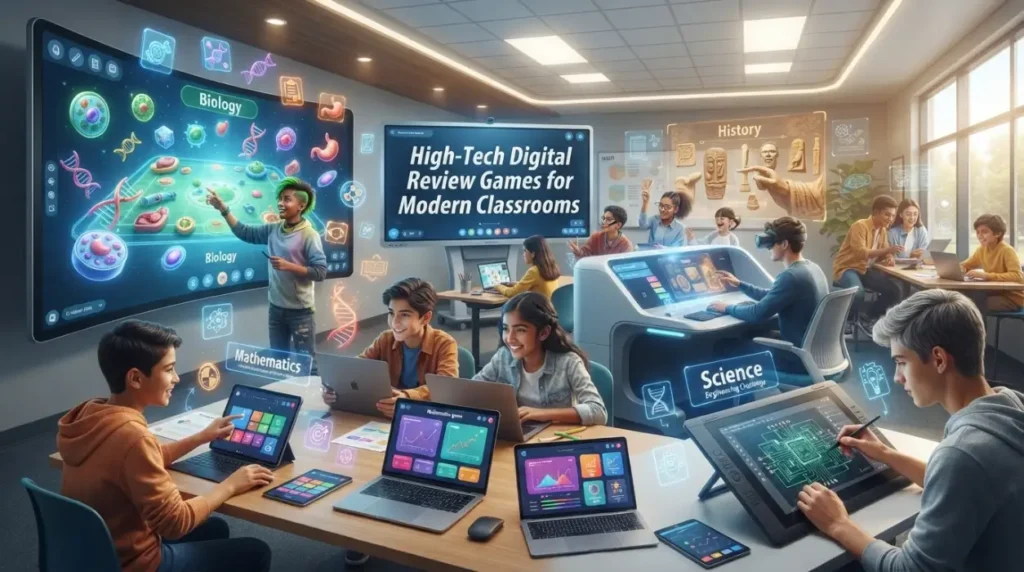
When technology is readily available, digital platforms let you run game shows with zero physical cleanup. Digital tools automate scoring, track student progress instantly, and provide clear data on which concepts need more work.
These platforms work wonderfully for both in-person sessions and remote learning environments.
Gamified Quiz Platforms and Live Leaderboards
Popular quiz platforms let leaders host fast-paced trivia nights right from a smartphone or laptop. Participants view questions on a shared main screen and tap color-coded buttons on their own devices to answer quickly.
- Speed Bonuses: Answering correctly in fewer seconds yields higher point values, rewarding quick thinking.
- Streak Multipliers: Getting multiple correct answers in a row activates point multipliers that push players up the live leaderboard.
- Visual Reports: Built-in analytics show you exactly which questions confused the majority of the group.
Asynchronous Quest Games and Study Worlds
Not all digital activities need to happen in real time with the whole group. Self-paced digital quests let learners explore virtual maps, battle monsters, and collect digital pets by answering review questions correctly.
Students can complete these learning quests at home, turning routine homework assignments into engaging video game levels.
Creative Team-Based Strategy Games
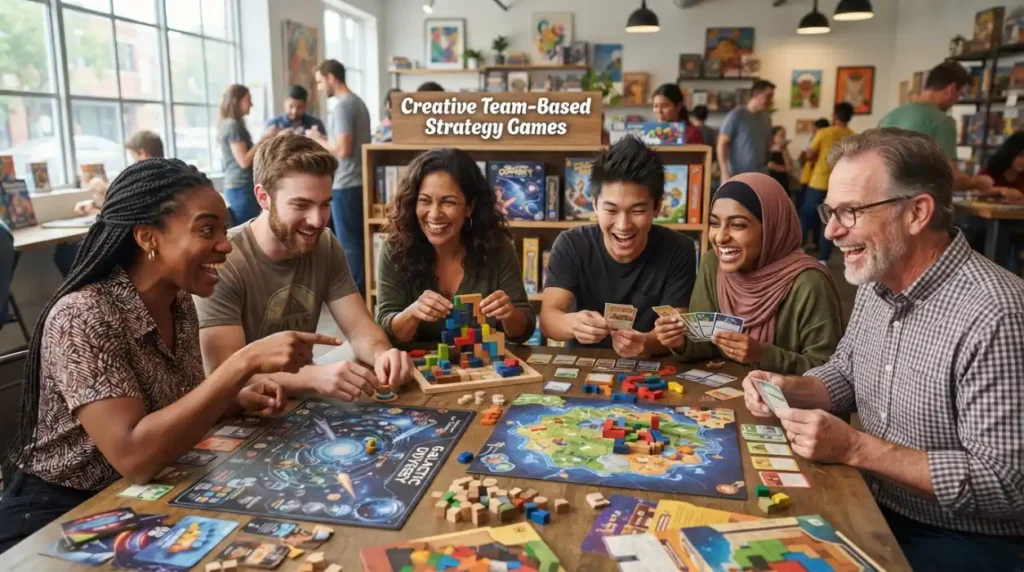
If you want to move beyond simple trivia, strategy games require players to collaborate, analyze options, and think critically together. These activities build teamwork while testing deeper subject mastery.
Adding elements of chance, risk, and resource management keeps teams locked in until the final round.
Grudgeball: Risk, Reward, and Team Rivalries
Grudgeball gives every team ten points or “X” marks on the board at the start of the game. Teams answer questions turn-by-turn to earn the right to strike points away from competing teams.
- Correct answers allow a team to erase two points from any opponent’s tally on the board.
- Before erasing points, the team can choose to take a shot at a target for a chance to remove extra points or regain their own lost points.
- This dynamic keeps every team involved, as trailing teams can ally against the leader to stay in the game.
Board Game Adaptations for Small Groups
Classic tabletop games adapt easily to academic review for small group work centers. Convert standard board games by requiring players to draw and answer a review card before making their turn.
If a player answers incorrectly, their turn ends immediately, giving them a clear incentive to study hard before taking their turn.
Quick 5-Minute Brain Break Review Games
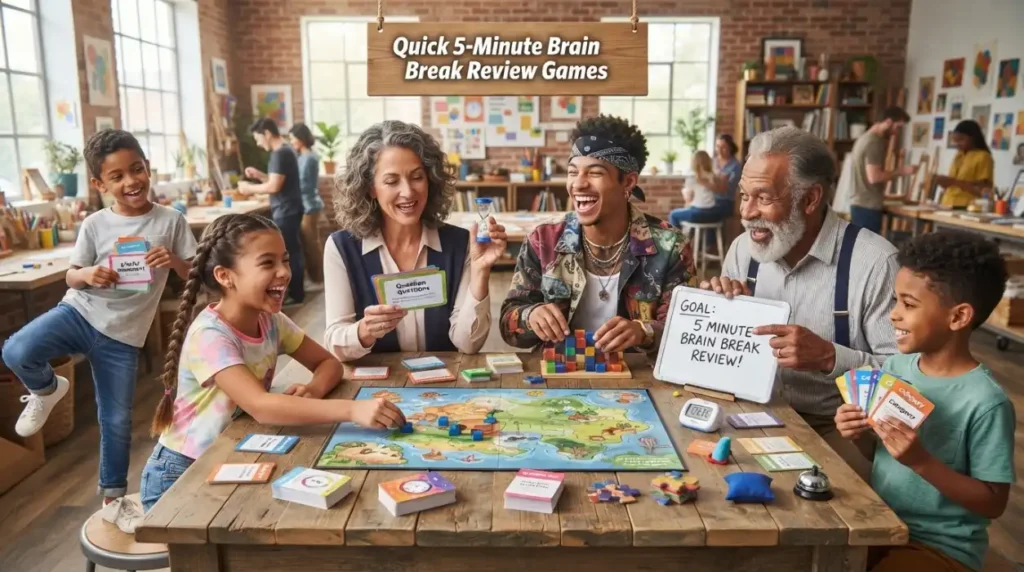
Sometimes you only have a few spare minutes at the end of a lesson to reinforce key concepts. Fast-paced filler activities fill small time gaps while keeping brains active right up until the bell rings.
These quick games require zero prep work and adapt easily to almost any subject matter.
Four Corners Vocabulary Sprint
Label the four corners of your room with numbers 1 through 4 or letters A through D. Read a multiple-choice question out loud and give everyone five seconds to walk quietly to the corner representing their choice.
Once everyone settles in a corner, reveal the correct answer and ask a student in that corner to explain why it is correct.
The 60-Second Lightning Round
Divide the room into pairs and give one partner a list of ten key terms or concepts. The first partner must explain each term without saying the word itself, while the second partner guesses as many words as possible in 60 seconds.
Switch roles for the next round so both partners get practice explaining and identifying key information.
How to Match Games to Different Age Groups

Not every game works for every audience. A game that delights an elementary school class might feel silly to corporate adults or high school seniors.
Tailoring your approach ensures participants stay fully engaged without feeling bored or patronized.
Tailoring Activities for Young Learners
Elementary learners thrive on physical movement, colorful visual props, and simple rule structures. Keep instructions brief, celebrate small wins enthusiastically, and rotate through activities often to match shorter attention spans.
Focus heavily on cooperative goals where the whole class works together to reach a target score.
Adapting Content for High School and Corporate Teams
Older students and working professionals prefer strategic challenges, friendly rivalries, and polished digital interfaces. Incorporate complex scenarios, real-world case studies, and problem-solving elements rather than simple memory recall.
Allow adults to work in small peer teams where they can draw on their own experience to solve difficult challenges.
Smart Tips for Effortless Game Management
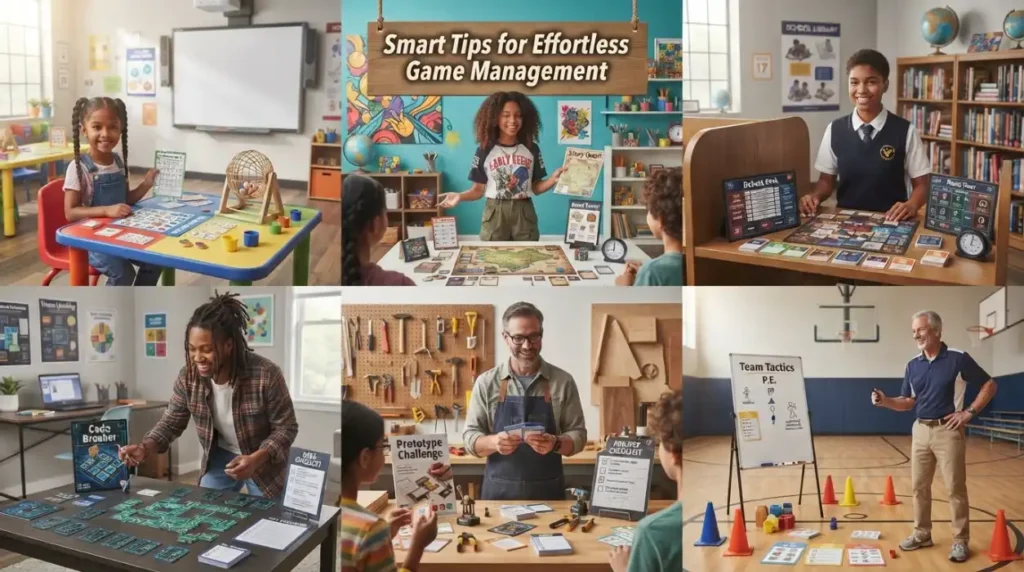
Even the best activity can derail if classroom management and ground rules fall apart. Setting clear expectations before starting ensures the activity remains productive, safe, and fun for everyone involved.
Proactive planning keeps the focus strictly on learning rather than managing behavior issues.
Establishing Clear Rules and Noise Controls
Set firm boundaries for volume levels, sportsmanship, and physical safety before handing out any equipment or displaying a game board.
- Noise Tokens: Give each team three noise warnings; losing all tokens results in a point penalty for the team.
- Equal Participation: Require teams to rotate who answers so outgoing players do not dominate the game.
- Positive Sportsmanship: Mandate that teams cheer for great plays and refrain from gloating over points won.
Balancing Fun with Genuine Learning Assessment
Always keep the core learning goals at the center of your activity design. If players spend 90% of their time setting up game pieces and only 10% answering questions, simplify the game mechanics.
Take brief pauses between rounds to clarify confusing concepts and explain why specific answers are correct.
Practice Exercise
Test your understanding of review game strategies, game mechanics, and management tips by selecting the best answer for each question below.
- What is the primary psychological benefit of using active retrieval in review games?
A. It eliminates the need for any formal exams later in the year.
B. It forces the brain to recall information, building stronger neural pathways than passive reading.
C. It allows players to memorize answers without understanding the underlying concepts.
D. It guarantees that every player receives a perfect score on their next test. - In the game Trashketball, what must a team do before they get a chance to shoot a paper ball for bonus points?
A. Win a coin toss against the leader.
B. Answer a review question correctly.
C. Run three laps around the classroom.
D. Draw a picture of the teacher on the whiteboard. - Which feature makes digital quiz platforms particularly useful for leaders and instructors?
A. They automatically grade every student’s final report card for the year.
B. They provide real-time data showing which concepts need further review.
C. They prevent participants from using smartphones or laptops.
D. They replace the need for lesson planning entirely. - What is a recommended way to manage noise levels during high-energy classroom activities?
A. Cancel the game instantly at the first sound of laughing.
B. Use a noise warning system with clear team consequences for exceeding limits.
C. Require all participants to wear noise-canceling headphones.
D. Only allow students to communicate using sign language. - Why is it important to adapt game mechanics when designing activities for adult learners?
A. Adults refuse to play any games that involve technology.
B. Older learners respond better to complex strategy, real-world scenarios, and peer collaboration.
C. Adults cannot follow simple multiple-choice formats.
D. Older learners only enjoy activities that involve writing long essays.
Answer Key
- B
- B
- B
- B
- B
FAQs
How often should I use review games in my routine?
Using games once or twice a week keeps them fresh, exciting, and highly effective. Overusing games daily can lower their novelty and impact, while using them strategically before assessments or after tough units maximizes engagement.
Can review games work effectively in remote or online settings?
Yes, digital platforms and screen-sharing tools make online games seamless and fun. Hosting live digital quizzes or virtual escape rooms keeps remote participants engaged and connected across distances.
What should I do if a game gets too loud or chaotic?
Pause the game immediately, gather everyone’s attention, and review your ground rules clearly. Using a simple point-penalty system or a brief quiet time resets the energy level without ruining the fun.
How do I ensure shy students participate without feeling stressed?
Use team-based formats where groups discuss answers together before submitting a final response. This removes individual pressure while allowing quieter learners to contribute their knowledge comfortably.
Do review games take away valuable teaching time?
No, well-designed games consolidate learning faster than passive review methods by increasing active focus. The time spent playing yields higher retention rates and better test scores in less total time.
Conclusion
Integrating playful activities into your study routine changes how learners approach tough material. Moving away from passive note-reading opens up a world of active focus, high retention, and genuine excitement.
Whether you choose quick 5-minute brain breaks, digital trivia leaderboards, or physical classroom relays, every session builds confidence. The secret lies in matching the right game mechanics with your group’s unique personality and goals.
Ready to transform your next study session into an engaging challenge? Explore creative options for fun review games and watch your group’s energy, participation, and test scores soar!

Jack Olive is the creative mind behind buzzgiggles.com, a fun-focused website built to bring smiles, laughter, and lighthearted entertainment to everyday life. With a passion for humor and enjoyable content, Jack Olive creates and shares playful ideas, amusing stories, entertaining discoveries, and cheerful moments designed for readers of all kinds.
Through buzzgiggles.com, Jack Olive combines creativity, curiosity, and a positive sense of humor to explore the lighter side of life. Whether visitors are looking for a quick laugh, something interesting to share, or a cheerful break from their routine, the website offers content created with fun in mind. Jack Olive believes great entertainment should be easy to enjoy, memorable, and capable of brightening someone’s day.