
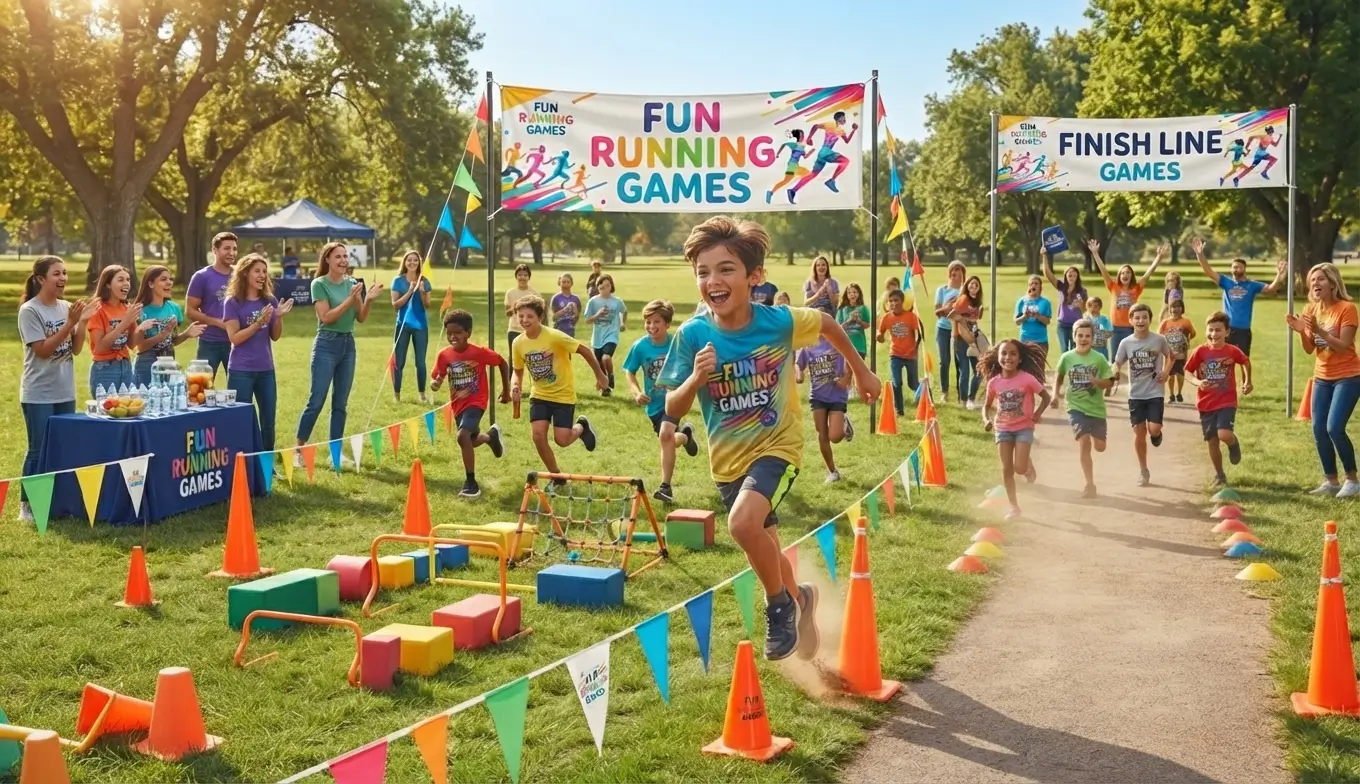
Fun running games are creative, movement-based activities that turn traditional cardio exercise into engaging play. By combining running with elements of chase, teamwork, strategy, and play, these active games improve cardiovascular fitness, agility, and endurance for kids and adults without feeling like a boring workout chore.
Have you ever noticed how a boring jogging routine suddenly feels exhausting after just ten minutes? Incorporating creative fun running games completely changes how your brain perceives physical exercise.
Instead of counting endless laps, playing fun running games keeps your mind focused on strategy, evasion, and teamwork. You end up burning calories and building stamina without constantly checking your watch.
Whether you are training young athletes, leading a gym class, or spicing up family outdoor time, active play works wonders. Simple rules and friendly competition turn basic cardio into pure excitement.
Let’s explore how fun running games build agility, boost endurance, and transform routine workouts into memorable adventures for all ages. Get ready to run, laugh, and move!
The Science of Active Play: Why Games Beat Monotonous Laps

Most people struggle to maintain a consistent running routine because traditional jogging feels repetitive and mentally draining. When you run in straight lines at a fixed speed, your brain tracks every passing second.
Transforming movement into an interactive challenge alters your mental state and improves physical results.
The Dopamine Response and Effort Perception
Playing active games triggers a natural release of dopamine and endorphins in your brain. This mental boost shifts your focus away from physical fatigue toward clear goals like tagging a friend or reaching a safe zone.
Researchers refer to this phenomenon as a lower rate of perceived exertion. You end up running faster and farther because your mind treats the physical output as play rather than forced labor.
Fartlek Training Disguised as Fun
Interval training involves alternating between fast sprints and slow recovery jogs to build heart strength. Most casual runners avoid high-intensity intervals because structured track workouts feel intimidating and painful.
Tag games and chase activities naturally replicate Fartlek training methods. You sprint to dodge an opponent, slow down to scan the field, and accelerate again without feeling like you are following a strict training regimen.
Classic Tag Variations with a Modern Twist

Standard tag is a staple of childhood play, but basic rules can get repetitive quickly. Adding fresh twists keeps players engaged while increasing physical movement for every participant.
These updated variations eliminate long waiting times so everyone stays active throughout the entire session.
Infection and Zombie Tag
Zombie tag starts with one designated runner acting as the original zombie while everyone else spreads out across the field. When the zombie tags a player, that runner joins the zombie horde to help hunt down the remaining survivors.
- Rapid Acceleration: Survivors must execute quick direction changes to escape expanding groups of taggers.
- Spatial Awareness: Players constantly scan 360 degrees to spot incoming chasers.
- Scalable Play Area: Shrink boundaries as the game progresses to intensify the action during final rounds.
Freeze Tag and Rescue Relays
Traditional tag often leaves tagged players standing still for long periods, which drops their heart rates and causes boredom. Adding rescue mechanics ensures frozen players return to active play almost immediately.
In rescue freeze tag, a free runner unfreezes a tagged teammate by crawling under their legs or high-fiving them. This mechanic encourages strong players to run extra laps across the field to save trapped friends.
Shadow Tag and Flashlight Chase
Shadow tag works brilliantly on sunny afternoons or under bright field floodlights. Instead of physically touching an opponent, the tagger must step directly on the target player’s ground shadow.
This variation requires precise distance control and sharp turns. Players must manipulate their body angles relative to the sun to shrink their shadows while sprinting away.
Team-Based Running Games for High Energy and Cooperation
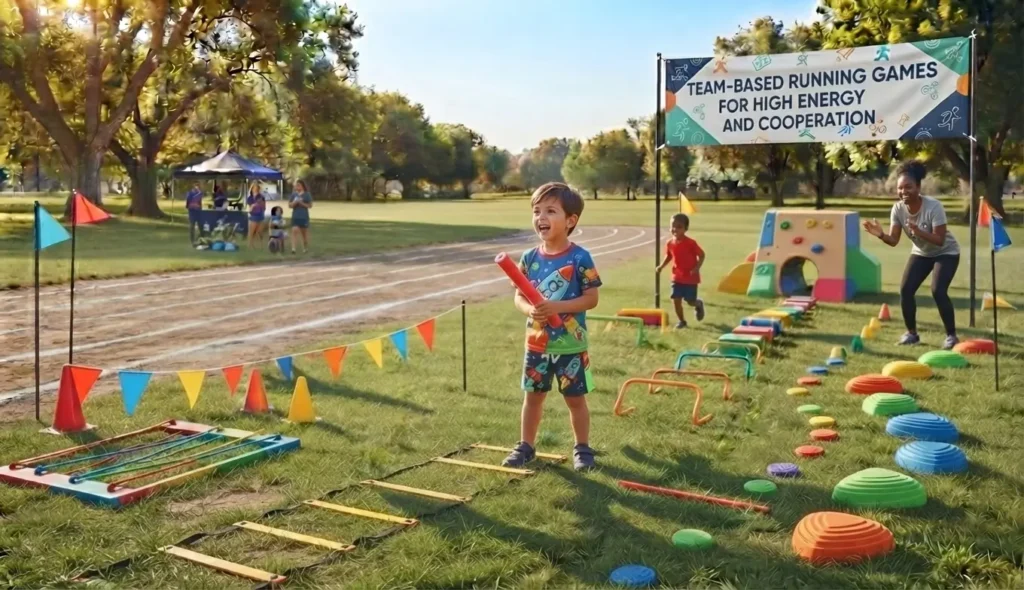
Individual chase games are great, but team-based activities build communication skills and collective strategy. Working together toward a shared victory helps reluctant runners forget about their physical exhaustion.
These group formats work exceptionally well for youth sports teams, physical education classes, and adult bootcamps.
Capture the Flag: The Ultimate Tactical Sprint
Capture the Flag combines long-distance endurance, explosive sprinting, and tactical defense across a divided field. Each team guards a designated territory while attempting to sneak across the center line to steal the opposing team’s flag.
Runners must balance offensive attacks with defensive coverage. Faster sprinters act as distractions while steady long-distance runners search for hidden paths around enemy defenders.
Cops and Robbers (Jailbreak)
Divide your group into two equal teams: officers and runners. The officers attempt to tag runners and escort them to a designated “jail” zone located in the center of the playing area.
Runners can free all jailed teammates simultaneously by sprinting into the jail zone and shouting “Jailbreak!” This constant back-and-forth dynamic creates relentless cardiovascular exercise as players cycle between attacking, defending, and escaping.
Steal the Bacon and Treasure Raids
Set up two teams facing each other from opposite boundary lines with numbered players. When you call out a specific number, those designated players sprint to the middle circle to grab a beanbag or ball.
The player who grabs the item must sprint back across their team line without getting tagged by the opposing runner. This setup trains fast reaction times, quick accelerations, and sharp defensive tracking.
Agility and Obstacle Games for Whole-Body Fitness

Running in a straight line works your hamstrings and calves, but it ignores rotational agility and core stability. Incorporating directional shifts and low-impact obstacles builds total-body strength while keeping workouts fresh.
These activities improve balance and reaction speeds for multi-sport athletes.
Red Light, Green Light with Dynamic Movements
The classic stopping-and-starting game gets an upgrade when you introduce varied movement patterns. Instead of standard jogging, change the movement command for every round.
- Bear Crawls: Promotes shoulder strength and core stability during slow forward movement.
- High Knees: Builds hip flexor strength and explosive toe-off power.
- Lateral Shuffles: Engages side-glute muscles to protect knee joints during lateral direction changes.
- Backpedaling: Strengthens quad muscles while improving backward balance and spatial awareness.
The Floor is Lava: Outdoor Terrain Edition
Transform park benches, tree roots, painted lines, and grass patches into a navigational obstacle course. Players must navigate across a field by hopping between designated “safe islands” without stepping on the bare grass.
This game challenges spatial judgment, single-leg landing stability, and continuous jump distance. Runners must constantly adjust their stride lengths to hit specific landing spots smoothly.
PAC-MAN Line Run
Use painted sports lines on a gymnasium floor or tennis court as fixed paths. One player acts as the ghost, while everyone else acts as dots navigating strictly along the painted lines.
Players cannot jump across empty spaces; they must stay on the lines at all times. This restriction forces constant 90-degree turns and sudden stops, giving your ankles and core a workout.
Age-Appropriate Games: From Kids to Adult Workouts

Movement activities should match the physical development and endurance levels of your specific participant group. A game that excites seven-year-olds might feel tedious for adult fitness clients.
Tailoring rules to your group ensures everyone stays challenged without getting overwhelmed or bored.
Early Childhood Games (Ages 4 to 7)
Young children thrive on imaginative storytelling, simple one-step directions, and short play bursts. Fantasy themes transform mechanical running into creative play.
Try “Sharks and Minnows,” where children pretend to swim across an ocean field while avoiding a tagger shark. The imaginative setup distracts young kids from physical fatigue, allowing them to build fundamental motor skills naturally.
Youth and Teen Games (Ages 8 to 15)
Older children and teenagers prefer competitive mechanics, strategic teamwork, and measurable skill progression. Complex rules like safe zones, hidden roles, and point scoring systems keep their interest high.
In corporate or club settings, youth players enjoy tournament-style tag systems with timed rounds. Adding leaderboard tracking or team color vests creates a real sports-match atmosphere.
Adult Fitness Modifications (Bootcamps & Clubs)
Adults often carry exercise stress, joint concerns, or performance anxieties that require thoughtful adjustments. Modify youth rules by introducing weighted items, timed intervals, or non-contact tag alternatives like flag belts.
“Ultimate Frisbee” or “Flag Football Chases” give adults a clear object focus, resulting in heavy sprint volume without the dull feeling of track laps.
Equipment and Setup Tips for Seamless Play

You do not need expensive commercial gear to set up engaging movement activities. A few basic tools allow you to transform any park, backyard, or schoolyard into a custom arena.
Proper setup prevents confusion over rules and keeps games running smoothly.
Essential Tools for Your Game Kit
- Bright Traffic Cones: Mark clear boundary lines and safe zones to prevent spatial arguments.
- Multi-Colored Pinnies/Vests: Differentiate team members instantly during fast-paced chaos.
- Flag Belts: Provide a clear, non-contact tagging alternative that prevents accidental pushing.
- Soft Foam Balls and Beanbags: Serve as treasure items, passable tags, or safe targets.
- Bluetooth Portable Speaker: Upbeat music elevates group energy and serves as an automatic start/stop timer.
Boundary Safety and Surface Checks
Before unleashing a group of energetic sprinters, inspect your outdoor field for hidden safety risks. Holes, exposed sprinkler heads, slick mud patches, and hidden rocks cause unnecessary ankle sprains.
Establish boundary lines at least ten feet away from brick walls, metal fences, or parking lots. Clear boundaries give fast runners plenty of space to slow down safely after high-speed chases.
Designing a 45-Minute Game-Based Cardio Session
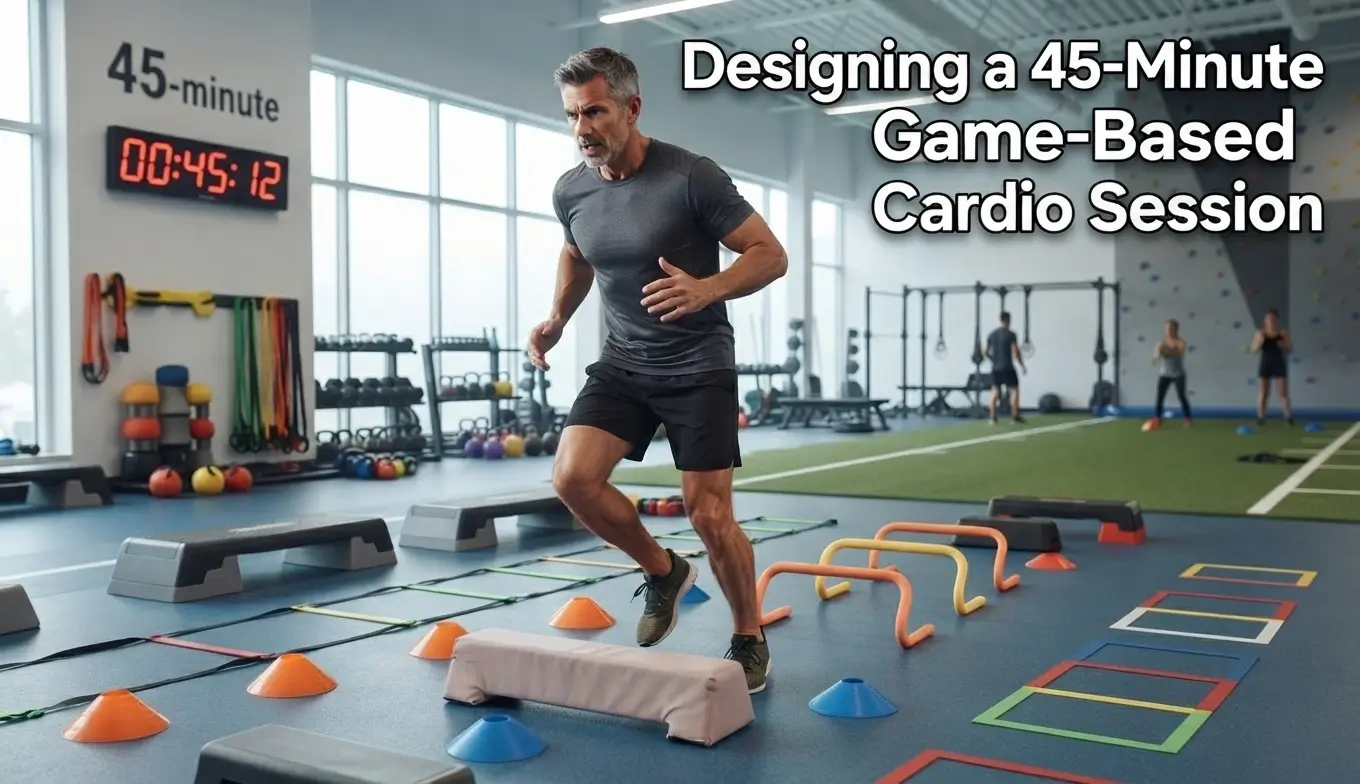
If you are leading a fitness class, youth practice, or family workout, structure your session to balance high-intensity sprints with adequate recovery time. A well-planned sequence prevents early exhaustion and keeps enthusiasm high.
Here is a ready-to-use lesson plan that maximizes movement and enjoyment.
Phase 1: Dynamic Warm-Up (10 Minutes)
Begin with light movement to raise core body temperature and prime joints for sudden turns. Avoid static stretching, which can temporarily reduce explosive muscle power before sprinting.
Use dynamic activities like high-knee walking, butt kicks, arm circles, and light side-shuffles. End the warm-up with a low-stakes game of “Simon Says” featuring movement commands like jumping jacks and lunges.
Phase 2: Main Event Play (25 Minutes)
Rotate through two contrasting game formats to challenge different energy systems. Pair an individual chase game with a team-based strategy activity to keep things interesting.
- Round 1 (10 Mins): Play “Zombie Tag” to build individual interval speed and reaction time.
- Water Break (5 Mins): Hydrate and explain the rules for the next game.
- Round 2 (10 Mins): Play “Capture the Flag” to build team communication and long-distance endurance.
Phase 3: Cool-Down and Reflection (10 Minutes)
Gradually reduce heart rates to prevent dizziness and clear lactic acid from worked muscles. Transition from fast running to light walking games like slow-motion shadow walking.
Finish with gentle static stretches focusing on calves, quads, hamstrings, and hip flexors. Take a moment to celebrate highlights, funny moments, and great teamwork from the session.
Practice Exercise
Test your understanding of game mechanics, fitness benefits, and safety strategies with these 5 multiple-choice questions.
- Why do active running games often feel less exhausting than running standard laps around a track?
A. Games eliminate the use of leg muscles.
B. Games trigger dopamine release, lowering the rate of perceived exertion.
C. Games force players to run at a slow, fixed walking pace.
D. Games prevent heart rates from increasing during play. - Which physical fitness component is trained when tag games require sudden stops, turns, and direction changes?
A. Static flexibility
B. Finger grip strength
C. Agility and dynamic balance - D. Fine motor eye movement
- What is the primary purpose of adding “rescue mechanics” (like unfreezing teammates) to freeze tag games?
A. It ensures frozen players stay completely still for the whole workout.
B. It eliminates the need for boundary lines on the field.
C. It keeps all participants moving and prevents long periods of inactive standing.
D. It allows the game controller to stop tracking scores. - Why should static stretching be avoided immediately before high-intensity sprinting games?
A. It increases core body temperature too fast.
B. It can temporarily reduce explosive muscle power and speed performance.
C. It causes immediate muscle growth during play.
D. It prevents players from hearing the game rules. - How does Capture the Flag mimic high-performance endurance training?
A. By forcing all players to sit quietly in safe zones for thirty minutes.
B. By combining continuous low-intensity jogging with high-intensity explosive sprints.
C. By limiting player movement to straight lines only.
D. By requiring players to lift heavy metal weights while running.
Answer Key:
- B
- C
- C
- B
- B
FAQs
How do I keep slow runners from getting tagged first every time?
Incorporate disability rules or safe zones that favor slower players. You can also play non-elimination variations where tagged runners receive points or helpful roles rather than sitting out, ensuring everyone stays active and confident throughout the game.
What is the best running surface for outdoor chase games?
A flat, clear grass field or artificial turf surface is ideal for chase activities. Soft surfaces cushion impact forces on joints during sudden stops and provide safer landings if a player slips or trips during high-speed direction changes.
Can running games replace traditional cardio for weight loss?
Yes, high-energy running games burn significant calories by combining interval sprinting, rapid directional changes, and continuous play. Because games are fun, people tend to play longer and stick with their routines more consistently over time.
How do I manage a group with widely different age levels?
Assign roles based on physical capability or create special “powerup” rules for younger or less experienced players. For example, give younger kids a five-second head start or allow them two “invincibility shields” per game round.
What should I do if players argue over whether a tag happened?
Use the “honesty rule” where contested tags automatically favor the runner, or introduce non-contact alternatives like flag-football belts. Removing physical contact arguments keeps the focus entirely on fun, high-speed movement and healthy competition.
Are fun running games suitable for indoor gymnasium spaces?
Yes, many games adapt well to indoor courts by reducing total player numbers or shrinking field boundaries. Use soft equipment and enforce “line-only” rules (like PAC-MAN) to control speeds and prevent collisions with gymnasium walls.
Conclusion
Incorporating creative fun running games into your routine turns monotonous workouts into rewarding play. By blending athletic intervals with strategic play, you build stamina, agility, and teamwork without watching the clock.
Whether you are leading youth practice, organizing a bootcamp, or playing with family, these activities bring lasting fitness benefits. Simple tools, clear safety rules, and inclusive mechanics ensure everyone moves with a smile.
Grab some bright cones, gather your group, and start playing your favorite fun running game today!

Jack Olive is the creative mind behind buzzgiggles.com, a fun-focused website built to bring smiles, laughter, and lighthearted entertainment to everyday life. With a passion for humor and enjoyable content, Jack Olive creates and shares playful ideas, amusing stories, entertaining discoveries, and cheerful moments designed for readers of all kinds.
Through buzzgiggles.com, Jack Olive combines creativity, curiosity, and a positive sense of humor to explore the lighter side of life. Whether visitors are looking for a quick laugh, something interesting to share, or a cheerful break from their routine, the website offers content created with fun in mind. Jack Olive believes great entertainment should be easy to enjoy, memorable, and capable of brightening someone’s day.