
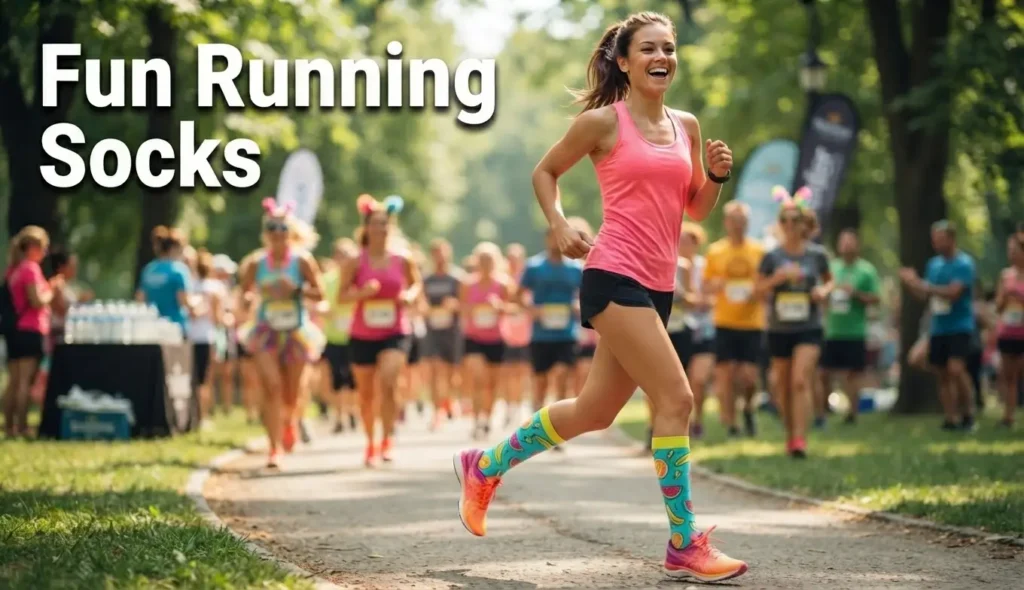
Fun running socks are high-performance athletic socks featuring vibrant patterns, witty slogans, or bold colors. Unlike plain white socks, they combine specialized moisture-wicking synthetic fibers or Merino wool with eye-catching designs, giving runners essential blister protection, arch support, and personality on every run.
Have you ever glanced down at your feet midway through a tough run and smiled because your toes were wrapped in bright tacos or neon lightning bolts? Slipping on colorful fun running socks instantly transforms a mundane morning workout into a playful personal celebration.
Beyond adding a splash of joy to your athletic kit, high-quality fun running socks deliver technical support that protects your feet over long distances. They prove that athletic gear never has to look boring to perform at a professional level.
When you pair moisture-wicking fabrics with bold graphics, running feels lighter, faster, and far more expressive. The right pair keeps friction away while showing off your unique personality on every stride.
Let’s explore how fun running socks cushion your steps, prevent painful blisters, and bring pure excitement to every mile you conquer. Your feet are going to thank you!
The Hidden Power of Fun Running Socks on Your Mental Momentum
Running is just as much a mental game as it is a physical test. When alarm clocks ring early in the morning, getting out of bed requires a quick spark of enthusiasm.
Small visual cues exert a surprising influence over our daily mindset.
The Science of Enclothed Cognition in Sports
Psychologists use the term enclothed cognition to explain how the clothes you wear shape your performance and mood. When you put on athletic gear that feels cheerful, your brain internalizes that positive energy.
Wearing lively gear creates a subtle psychological shift. You stop viewing your workout as a stressful obligation and start approaching it like an enjoyable hobby.
Breaking the Monotony of Daily Training
Training for a 5K or a marathon involves running the same neighborhood routes week after week. Repeating identical routines can cause mental fatigue long before your muscles actually give out.
Brightly patterned socks break up the visual monotony of pavement and treadmill belts. Glancing down at colorful graphics gives you quick micro-boosts of motivation when your legs begin to feel heavy.
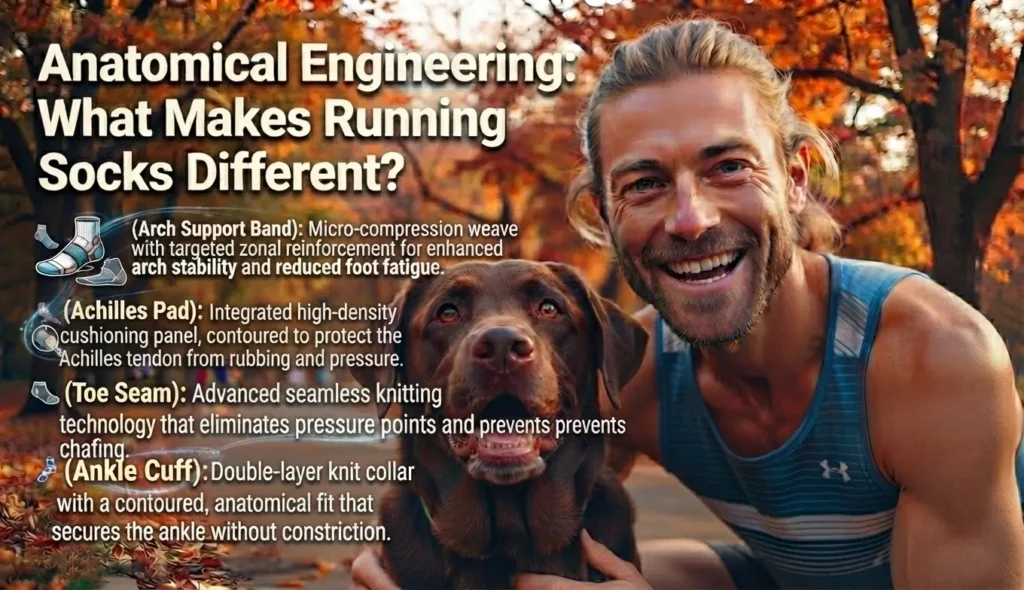
Anatomical Engineering: What Makes Running Socks Different?
It is easy to assume that all socks are built basically the same way. However, standard everyday socks and technical athletic footwear belong to completely different categories.
Understanding foot mechanics helps you pick gear that supports your stride while keeping your toes safe.
Targeted Arch Compression and Support
Your foot contains twenty-six bones and dozens of flexible ligaments that absorb heavy impact forces with every step. Athletic socks feature built-in elastane bands that wrap securely around your midfoot.
This compression band holds the sock firmly in place, preventing fabric from bunching up inside your shoe. It also offers gentle arch support that reduces foot fatigue over long distances.
Anatomical Left and Right Precision Fitting
High-end technical socks are knitted specifically for the unique shape of your left and right foot. Instead of a generic square toe box, these socks feature asymmetrical toe curves.
- Left-Foot Fit: Angled to match the longer big toe on the left side, eliminating excess fabric folds.
- Right-Foot Fit: Matches the slope of your right toes, reducing friction against shoe walls.
- Custom Heel Pockets: Deeply knitted Y-stitch heels prevent the sock from sliding down into your shoe.
- Reduced Bulk: Precise fitting prevents fabric gathering under the ball of your foot.
Fabric Science: Moisture, Heat, and Blister Prevention
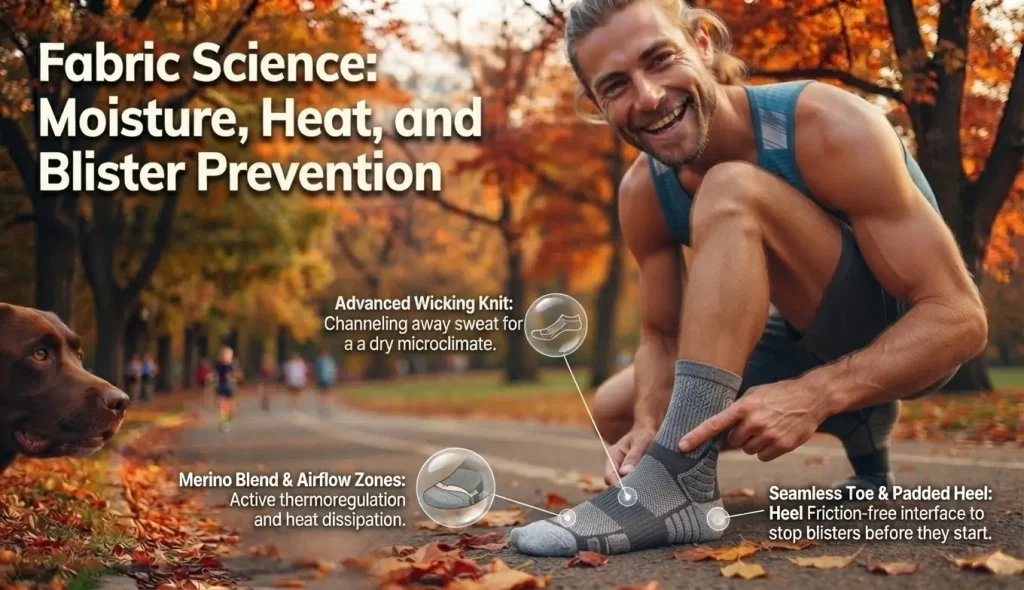
Blisters are not caused by bad luck; they are caused by heat, friction, and trapped moisture. When sweat stays trapped against your skin, your outer skin layer softens and tears easily under repeated rubbing.
Choosing the right material blend keeps your skin dry and tough across all seasons.
The Golden Rule: Say Goodbye to Cotton
Cotton is wonderful for soft casual t-shirts, but it is the worst material choice for athletic socks. Cotton fibers act like tiny sponges, soaking up moisture and holding it right against your skin.
When wet cotton rubs against your heel for thousands of steps, hot spots form rapidly. Synthetic fibers and specialized wool blends push moisture outward so it can evaporate quickly.
Synthetic Fibers vs. Merino Wool
Modern athletic footwear relies on advanced synthetic threads or natural miracle fibers to manage sweat and heat. Both materials work exceptionally well, but they offer distinct advantages depending on weather conditions.
Polyester and nylon provide durability, rapid drying times, and bright color retention for intricate designs. Merino wool offers natural temperature control, keeping feet warm in winter and surprisingly cool during hot summer runs.
Padding and Cushioning Levels Explained
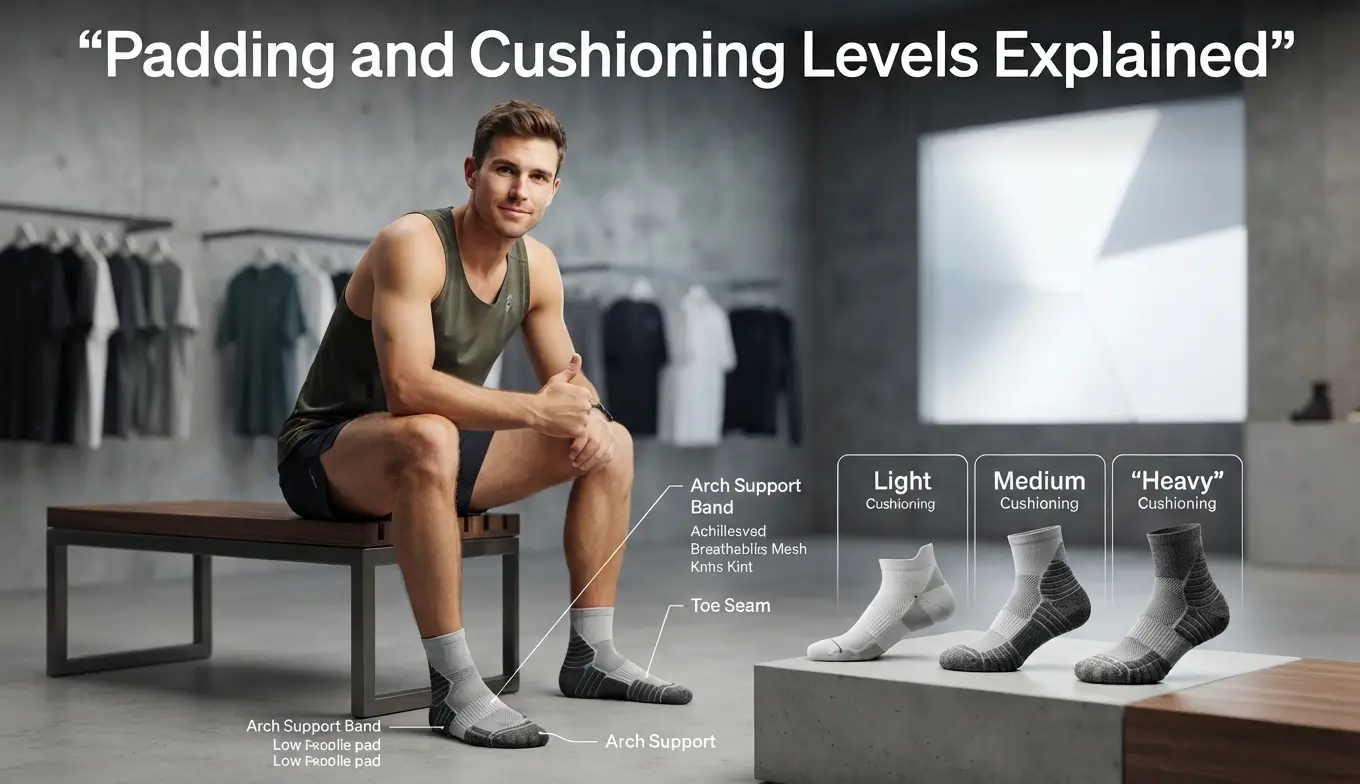
Different runners prefer different feelings underfoot when hitting the trail or road. Cushioning levels range from ultra-thin race liners to plush, pillowy trail socks.
Matching the cushion level to your shoe fit ensures maximum comfort without feeling cramped.
Ultra-Light Cushioning for Speedy Race Days
Ultra-light socks feature thin construction without extra terry-cloth padding inside the sole. They offer a direct, snug feel inside tight-fitting racing flats or minimalist running shoes.
- Maximum Airflow: Thin fabric mesh panels allow heat to vent out instantly.
- Snug Shoe Fit: Takes up minimal volume inside precision-fit athletic shoes.
- Fast Drying: Dries out almost instantly if you run through rain or water stations.
Medium and Maximum Cushioning for Trail and Long Runs
Medium cushion socks add extra loops of soft thread along the heel, toe box, and ball of the foot. This added material absorbs shock forces and provides an extra layer of protection on rugged dirt trails.
If your running shoes feel slightly roomy, thicker socks fill up excess space and stop your foot from sliding forward on steep downhill sections.
Decoding Cuff Heights: From No-Show to Knee-High
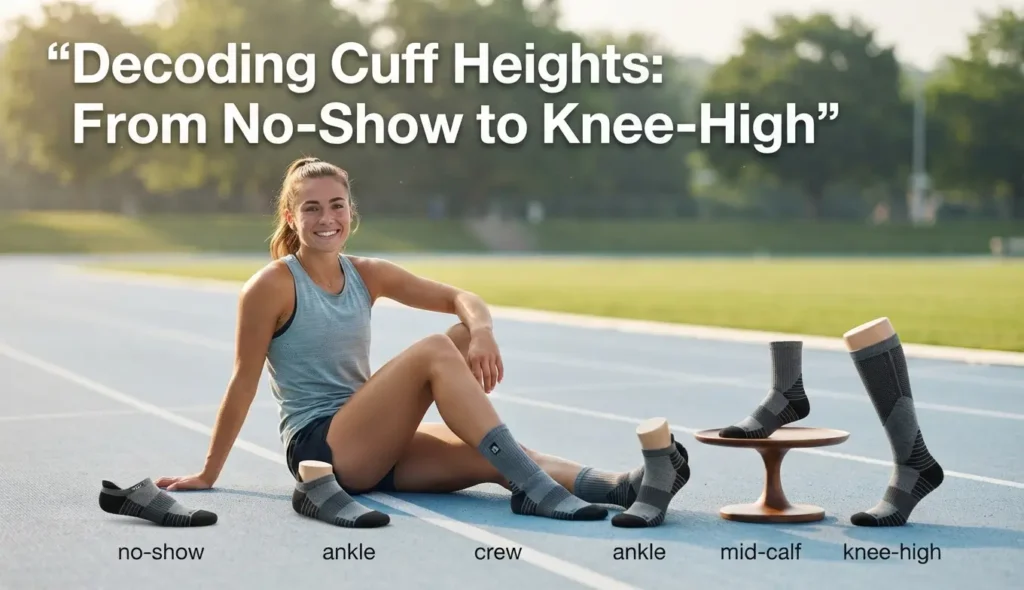
Socks come in a wide variety of heights, each serving a distinct practical purpose beyond personal style preferences. Selecting the right height depends on terrain, weather, and the type of shoes you wear.
Here is how to match cuff height with your running environment.
No-Show and Low-Cut Tabs
No-show socks sit completely below the ankle bone, offering a sleek, barely-there look. Quality low-cut options feature a raised fabric tab over the Achilles tendon to protect your back heel from collar friction.
These cuts work best for warm road runs, track workouts, and casual treadmill sessions where maximum ankle breathability is key.
Crew and Knee-High Compression Lengths
Crew socks extend several inches above the ankle, providing ideal real estate for funny slogans and wild graphic prints. They protect your lower legs from stray rocks, kicking dirt, and overgrown brush on trail runs.
Knee-high compression socks apply graduated pressure from your ankles up toward your calves, helping promote blood circulation and reducing muscle vibration during long endurance efforts.
Print Quality and Manufacturing Methods
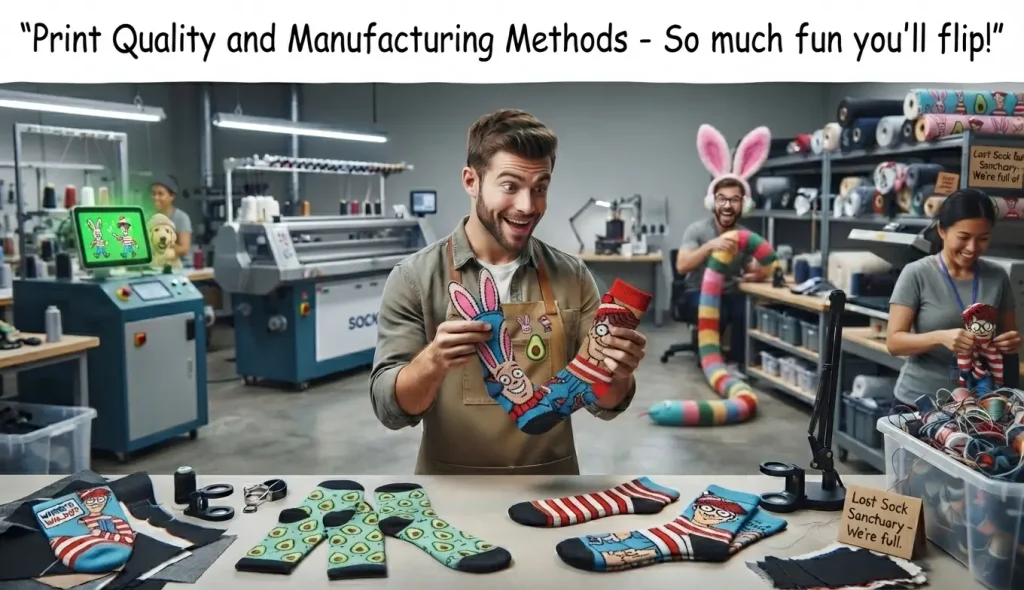
Have you ever bought a pair of socks with a cool design, only to watch the image distort into an unrecognizable mess when stretched? The manufacturing method determines how crisp graphics look on your calf.
Higher printing standards keep patterns sharp and colors vibrant even after heavy stretching.
Knit-In Patterns vs. Sublimation Printing
Knit-in designs use pre-dyed yarns stitched directly into the fabric structure. This creates soft, durable graphics that never peel off, though extremely detailed artwork can leave tiny thread loops inside the sock.
Sublimation printing uses high heat to transfer full-color dye directly onto synthetic blank socks. This technique allows for photorealistic details, bright neon shades, and seamless artistic prints without internal threads.
360-Degree Seamless Printing Technology
Older printed socks often left white, unstretched vertical lines running down the side when worn. Modern 360-degree printing stretches the blank sock over a circular leg form before applying color dyes.
This process ensures that intricate patterns look continuous around the entire leg. Your graphics maintain their bold colors whether sitting on a rack or stretching over muscular calf muscles.
Expressing Your Personality: Choosing Your Theme
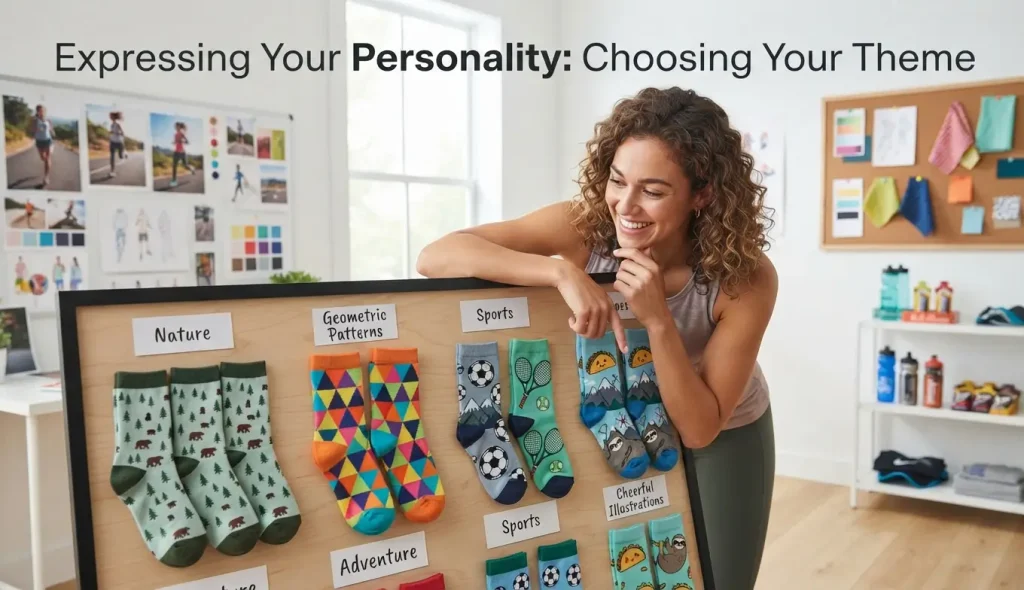
The most enjoyable part of buying athletic gear is picking designs that reflect your sense of humor, hobbies, or mood. Fun socks serve as low-stakes icebreakers at local running clubs and race starting lines.
Expressing yourself through your workout wardrobe makes exercise feel like self-care rather than a strict chore.
Food, Animals, and Pop Culture Graphics
From smiling avocado slices to sprinting sloths, animal and food prints remain wildly popular choices among runners. They add a lighthearted touch to serious athletic sessions, reminding everyone not to take training too seriously.
Wearing socks featuring your favorite movie characters, cartoon icons, or pet breeds helps you connect instantly with fellow runners who share similar interests.
Witty Slogans and Motivational Phrases
Sometimes you need your clothing to do the talking for you when you are too winded to speak. Sock soles and calf cuffs often showcase funny text visible to runners trailing behind you.
Phrases like “If you can read this, I am not last” or “Running on coffee and hope” bring genuine laughs along the racecourse, boosting community spirit.
Caring for Technical Athletic Socks
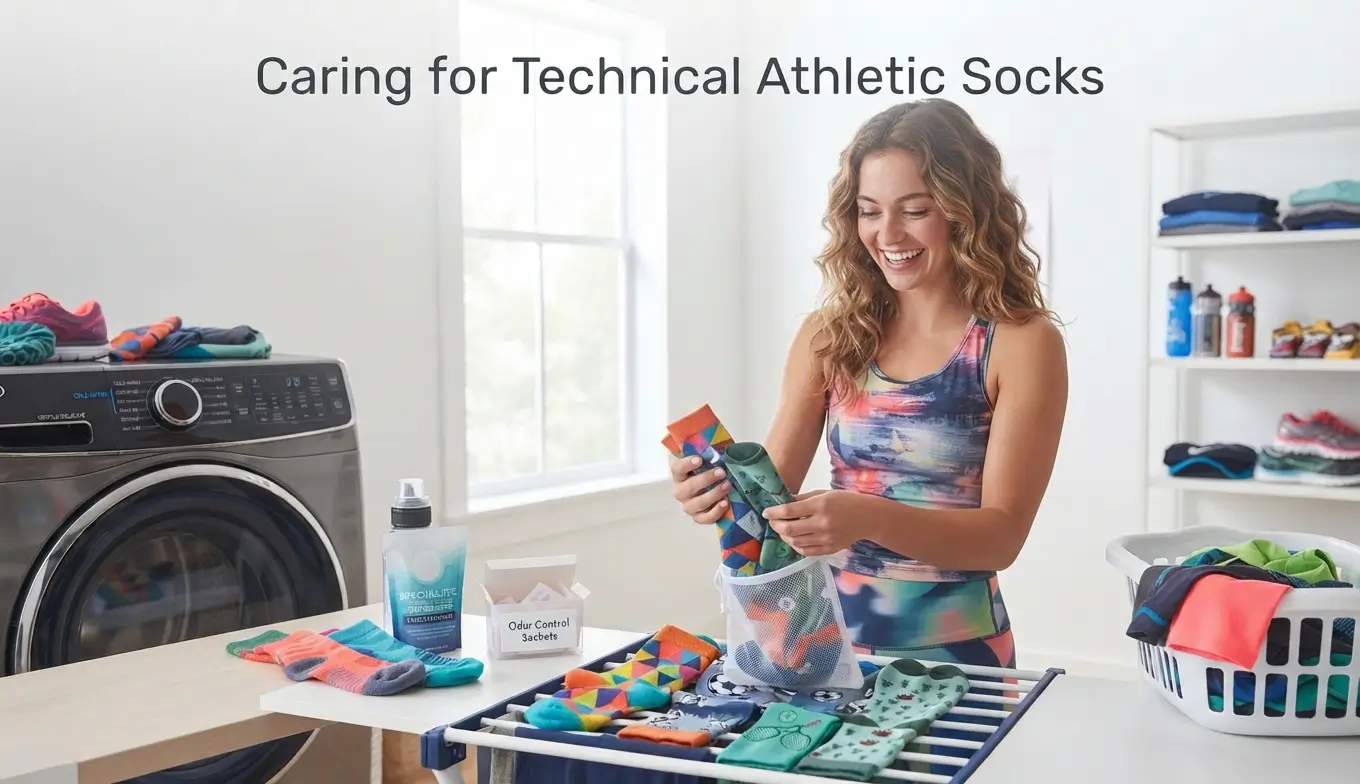
High-performance synthetic fibers and bright dye prints require proper laundering to stay soft, elastic, and vibrant. Washing your gear correctly preserves technical features like moisture wicking and arch support for years.
Follow these simple maintenance steps to protect your investment.
Smart Washing Rules for Synthetic Blends
Always turn your athletic socks inside out before tossing them into the laundry hamper. This exposes the inner sole fibers—where dead skin cells and sweat build up—directly to water and detergent.
- Cold Water Wash: Use cold or warm water to preserve elastane stretch and prevent color fading.
- Gentle Laundry Detergent: Standard liquid soaps break down oils without damaging delicate synthetic threads.
- Avoid Fabric Softener: Softeners leave a waxy coating that clogs moisture-wicking pores.
- Skip the Bleach: Harsh chemical bleaches degrade elastic fibers, causing cuffs to sag over time.
Drying and Storage Best Practices
High dryer heat is the ultimate enemy of stretch fabrics and printed graphics. Tumbling socks on high heat bakes elastane threads, leading to brittle fibers and loose, sloppy ankle cuffs.
Air-drying your socks flat or hanging them on a rack preserves their original elasticity and shape. If you must use a dryer, choose a low-heat air cycle to protect delicate technical materials.
Practice Exercise
Test your understanding of sock construction, fabric choices, and performance benefits with these 5 multiple-choice questions.
- Why is 100% cotton considered a poor fabric choice for running socks?
A. Cotton is too expensive to produce.
B. Cotton absorbs moisture and holds it against skin, increasing friction and blister risks.
C. Cotton causes athletic shoes to wear out faster.
D. Cotton makes socks feel too slippery inside running shoes. - What functional benefit does targeted midfoot compression provide during a workout?
A. It changes the color of the sock based on body heat.
B. It holds fabric firmly in place to prevent bunching and offers arch support.
C. It permanently increases the length of your running stride.
D. It makes the sole of your shoe completely waterproof. - Which feature helps protect the back of your heel from shoe collar rubbing on low-cut socks?
A. A raised Achilles tab
B. A steel toe cap
C. Thick knee-high elastic
D. A hard plastic heel cup - How does fabric softener harm performance running socks?
A. It strips all color out of printed designs.
B. It leaves a waxy film that clogs moisture-wicking pores in synthetic fibers.
C. It shrinks socks down to child sizes instantly.
D. It dissolves synthetic nylon threads on contact. - What is the primary advantage of Merino wool for running footwear?
A. It can only be worn during freezing winter storms.
B. It naturally regulates temperature and stays comfortable in both hot and cold weather.
C. It makes socks completely immune to tears or physical wear.
D. It glows in the dark without battery power.
Answer Key:
- B
- B
- A
- B
- B
FAQs
Can fun running socks actually prevent blisters on long runs?
Yes, high-quality running socks prevent blisters by using synthetic fibers like nylon or polyester to pull sweat away from your skin. Combined with seamless toe construction, this prevents the heat and friction that cause painful skin tears.
How tight should technical running socks feel on my feet?
They should fit snug against your skin without feeling uncomfortably restrictive. Look for a smooth, wrinkle-free fit around your heel and toes to ensure the fabric stays in place without cutting off healthy blood circulation.
Do I need different socks for trail running compared to road running?
Yes, trail running benefits from thicker cushioning and higher cuff lengths, like crew cuts, to protect your ankles from dirt, rocks, and scratches. Road running often favors lighter, thinner fabrics with maximum breathability.
Why do some running socks have separate left and right fits?
Left- and right-specific socks are knitted to match the natural asymmetrical shape of your feet. This precise fit eliminates excess fabric bunching around your smaller toes, reducing friction and improving overall comfort over long distances.
How many miles do performance running socks typically last?
A quality pair of synthetic or Merino wool running socks usually lasts between 300 and 500 miles of active use. Replacing them when cushioning thins out ensures your feet always receive optimal protection and support.
Is it okay to wear compression socks for everyday casual activities?
Yes, light to moderate compression socks are safe and comfortable for daily wear, long flights, or desk jobs. They help promote healthy venous blood flow back to your heart and reduce swelling in your lower legs.
Conclusion
Lacing up your running shoes should feel like an exciting step toward health, energy, and personal fun. Choosing high-performance fun running socks gives you the perfect balance of advanced blister protection, arch support, and vibrant self-expression.
By avoiding cotton, selecting proper cushioning, and caring for your synthetic fibers, your gear will keep your feet happy across hundreds of miles. Whether you prefer hilarious food prints, clever slogans, or bold neon geometric shapes, there is a pair out there that matches your spirit.
Treat your feet to vibrant comfort, share a smile with fellow runners, and enjoy every step of your journey!

Jack Olive is the creative mind behind buzzgiggles.com, a fun-focused website built to bring smiles, laughter, and lighthearted entertainment to everyday life. With a passion for humor and enjoyable content, Jack Olive creates and shares playful ideas, amusing stories, entertaining discoveries, and cheerful moments designed for readers of all kinds.
Through buzzgiggles.com, Jack Olive combines creativity, curiosity, and a positive sense of humor to explore the lighter side of life. Whether visitors are looking for a quick laugh, something interesting to share, or a cheerful break from their routine, the website offers content created with fun in mind. Jack Olive believes great entertainment should be easy to enjoy, memorable, and capable of brightening someone’s day.