
Fun shark facts reveal that these ancient ocean predators are far more gentle, diverse, and fascinating than movies suggest. With over 500 unique species ranging from bioluminescent pocket sharks to massive plankton-eating whale sharks, they possess extraordinary senses like electroreception and have roamed Earth’s oceans for over 400 million years.
Have you ever wondered what makes ocean predators so amazingly cool instead of scary? Exploring fun shark facts reveals an underwater world filled with glowing skin, unique superpower senses, and surprising habits.
From tiny creatures that fit inside your hand to gentle giants as long as school buses, learning about fun sharks completely changes how we view ocean life.
Did you know that these ancient fish existed before trees even grew on Earth? Discovering fun shark trivia turns ordinary ocean lessons into an exciting adventure for marine fans of all ages.
Ready to impress your friends with mind-blowing marine secrets and quirky facts? Let’s plunge into the deep blue sea to explore the most incredible shark stories on the planet!
Extraordinary Shark Species with Surprising Powers
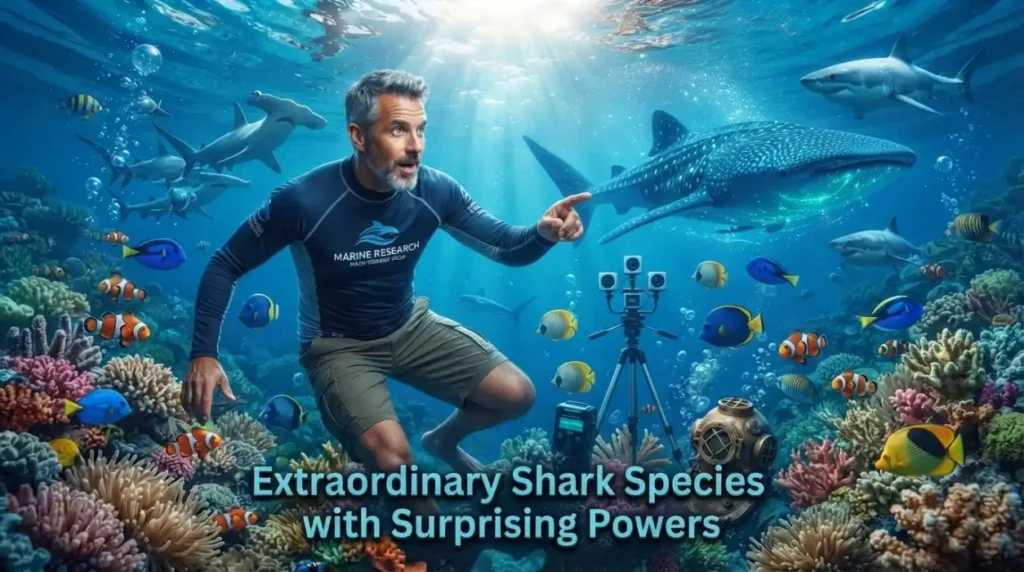
When most people picture a shark, they instantly think of a sharp-toothed Great White speeding through sunny coastal waves. However, the ocean houses over 500 distinct species, many of which look and behave in ways you would never expect.
Some species light up dark deep-sea waters, while others prefer strolling along shallow reefs using their fins like little feet.
Exploring these unconventional creatures shows us that ocean biodiversity is far wilder than fiction.
The Epaulette Shark: Walking on Dry Land
Imagine a fish that can literally walk out of the water and stroll across dry coral reefs during low tide. The epaulette shark does exactly that, using its padded pectoral and pelvic fins to creep across damp rocks between tide pools.
- Land Walking: It uses a swimming-like wriggling motion to walk across dry land when searching for stranded crabs and marine worms.
- Low-Oxygen Survival: This incredible creature can survive for up to three hours without fresh oxygenated water by slowing its heart rate and brain function.
- Reef Navigation: Its flexible body permits it to squeeze into tiny coral crevices where larger predators can never reach.
- Friendly Size: Growing to just three feet long, it poses zero threat to humans and remains a favorite among marine biologists.
The Cookiecutter Shark: Tiny Ocean Hole Puncher
Do not let its small, two-foot size fool you; the cookiecutter shark is one of the boldest creatures in the deep sea. It possesses glowing bioluminescent belly organs that mimic light filtering from above, tricking larger animals into swimming closer.
When a large fish or whale approaches, this sneaky parasite uses its suction-cup lips and razor-sharp bottom teeth to scoop out a neat, circular plug of flesh.
The bite leaves a round wound that looks like it was made with a pastry cutter before the tiny shark swims away unharmed.
Mind-Blowing Sensory Superpowers
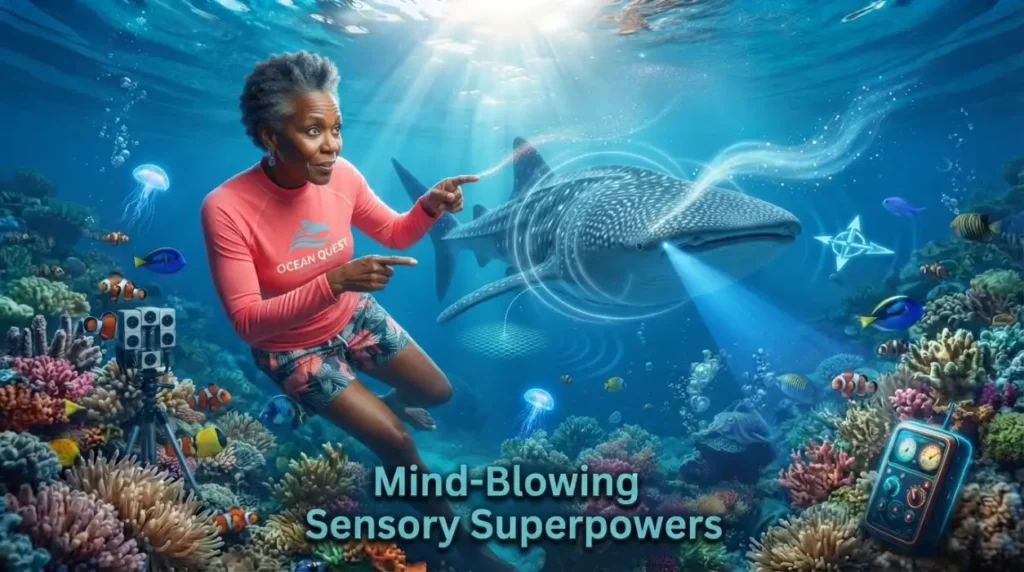
Sharks have survived multiple mass extinction events because their evolutionary biological toolkits are second to none. They do not rely solely on sight or smell to navigate dark ocean environments and locate hidden food.
Instead, they use specialized sensory organs that allow them to perceive invisible energy fields operating underwater.
Electroreception: Sensing Invisible Heartbeats
If you hide a flounder under three feet of wet ocean sand, a hunting shark can still find it effortlessly. This is thanks to tiny, jelly-filled pores scattered across its snout known as the Ampullae of Lorenzini.
These delicate organs detect faint electrical fields produced whenever an animal contracts its muscles or beats its heart.
This sixth sense allows predators to strike accurately even in total darkness or muddy estuary waters where eyes are useless.
Dermal Denticles: Wearing Armor Made of Teeth
If you stroke a shark from head to tail, its skin feels completely smooth, but stroking it backward feels like rough sandpaper. That is because shark skin is not made of traditional fish scales; it is covered in millions of microscopic teeth called dermal denticles.
These tooth-like scales reduce underwater drag, allowing the fish to glide silently through currents without making swimming noises.
Engineers have even copied this dermal structure to design high-tech swimsuits and drag-reducing paints for commercial airplanes.
Surprising Diet Habits and Ocean Ecology
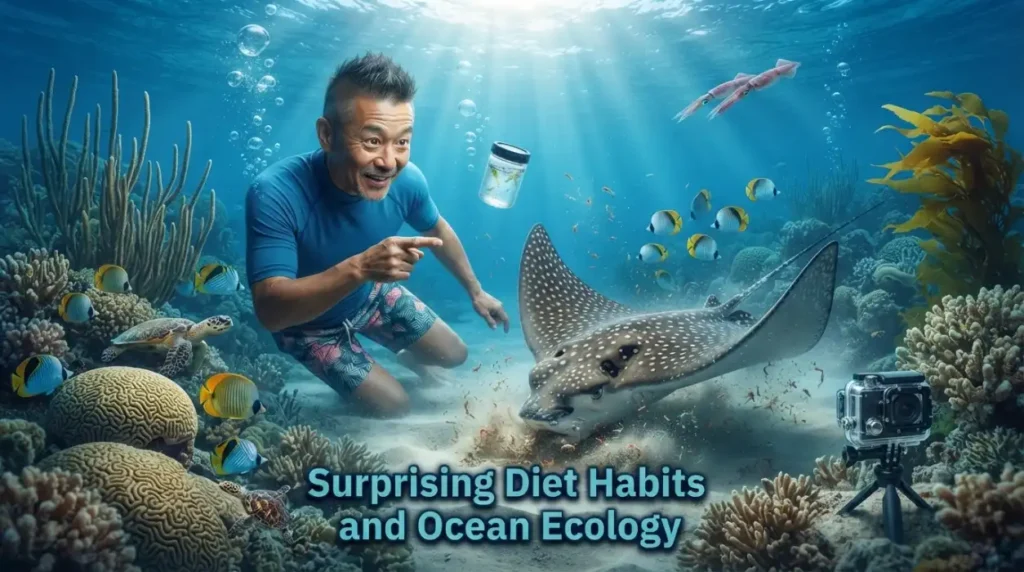
While movies portray these marine animals as non-stop eating machines, their actual feeding habits are surprisingly varied and controlled. Many species go weeks or even months between substantial meals, relying on fat stored in their massive, oil-rich livers.
Furthermore, several large species choose to eat tiny microscopic organisms rather than large marine mammals or fish.
Understanding what they eat reveals how essential they are for keeping global ocean ecosystems balanced and healthy.
The Gentle Giants Eating Microscopic Plankton
The two largest fish species in the entire world—the whale shark and the basking shark—are completely harmless filter feeders. Instead of hunting large prey with sharp teeth, they swim along surface currents with their cavernous mouths held wide open.
- Whale Sharks: These spotty giants grow up to 40 feet long and scoop up thousands of gallons of seawater filled with tiny krill.
- Basking Sharks: Possessing huge gill slits, these slow swimmers filter up to 2,000 tons of seawater every single hour.
- Megamouth Sharks: This rare deep-sea species uses bioluminescent glowing lips to attract tiny plankton straight into its mouth.
- Tooth Reduction: Though filter feeders possess thousands of teeth, those teeth are tiny and completely useless for biting.
The Omnivorous Bonnethead Shark
For decades, scientists believed every single shark species was a strict meat-eater, but recent discoveries proved that assumption wrong. The bonnethead shark, a small relative of hammerheads living in shallow estuaries, eats massive amounts of seagrass.
In fact, seagrass can make up to 60 percent of a bonnethead shark’s daily diet alongside small coastal crabs.
Specialized digestive enzymes allow them to break down plant cell walls and absorb nutrients just like land-dwelling plant eaters!
Ancient Origins and Fossil Secrets

Sharks are living fossils that have swum through Earth’s changing oceans for over 450 million years. That means they were already hunting in warm ancient seas long before the first trees sprouted or dinosaurs walked on land.
Because their skeletons are made of flexible cartilage rather than hard bone, fossilized shark remains are extremely rare.
However, their tough enamel teeth preserve exceptionally well, giving paleontologists millions of clues about prehistoric ocean life.
The Legendary Megalodon Monster
The most famous prehistoric predator is Megalodon, a giant shark that dominated warm coastal waters between 23 million and 3.6 million years ago. Its serrated teeth could reach over seven inches long—roughly the size of a modern human hand!
- Tremendous Size: Scientists estimate Megalodon reached lengths between 50 and 60 feet, weighing over 50 metric tons.
- Massive Bite Force: Its jaws exerted over 40,000 pounds of pressure, easily crushing the thick bones of ancient whales.
- Global Habitats: Fossilized Megalodon teeth have been discovered on every single continent except Antarctica.
- Extinction Reasons: Cooling ocean temperatures and shrinking populations of warm-water whales led to their ultimate extinction.
Why Cartilage Makes Them Agile Swimmers
Unlike bony fish that rely on heavy calcium skeletons, sharks possess lightweight skeletons crafted entirely out of flexible cartilage. This is the same soft, bendable tissue found inside human noses and ears.
Cartilage weighs half as much as true bone, reducing overall body weight and making it easier to stay buoyant in deep water.
This flexible framework also allows them to pull off tight, lightning-fast turns when chasing agile prey through rocky reefs.
Remarkable Reproduction and Life Cycles
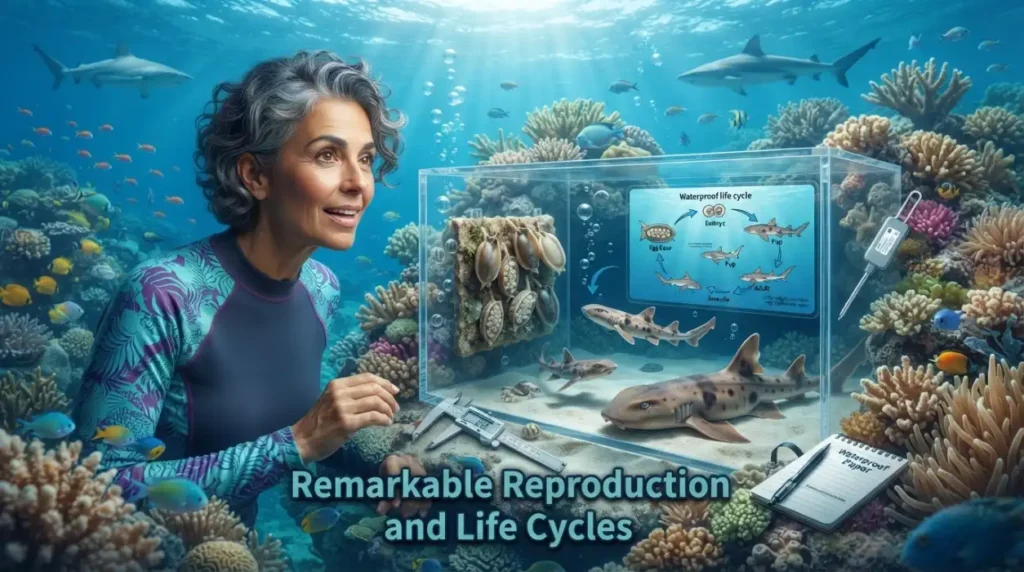
Shark reproduction is far more complex than that of most common ocean fish, which simply release thousands of eggs into open water. Depending on the specific species, mothers may lay eggs, give birth to live pups, or use a fascinating mix of both methods.
Because they grow very slowly and produce few offspring, protecting young sharks is vital for species survival.
Discovering how new generations are born highlights just how delicate marine life cycles really are.
Egg Cases: Mermaid’s Purses on the Beach
If you have ever walked along a windy ocean beach, you may have found a tough, leathery pouch washed up on the sand. These dark, tendriled pouches are empty egg cases, often called “mermaid’s purses” by beachcombers.
Species like horn sharks and swell sharks lay these spiral or pouch-shaped cases directly into rocky crevices or kelp forests.
Inside the tough outer shell, the developing embryo absorbs nutrients from a rich yolk sac for up to ten months before hatching.
Live Birth and Nursery Lagoon Sanctuaries
Many large species, including Great Whites and Hammerheads, skip egg-laying entirely and give birth to fully developed, swimming live pups. Pregnant females travel long distances to shallow, protected coastal lagoons, mangrove swamps, and sheltered bays known as shark nurseries.
These warm, shallow nurseries provide plenty of easy food while keeping young pups safe from larger open-ocean predators.
Practice Exercise
Test your understanding of shark biology, ocean senses, and species facts by selecting the best option for each question below.
- Which shark species can walk across dry coral rocks during low tide using its padded fins?
A. Cookiecutter shark
B. Epaulette shark
C. Whale shark
D. Great white shark - What specialized jelly-filled pores allow sharks to detect subtle electrical heartbeats of hidden prey?
A. Dermal denticles
B. Ampullae of Lorenzini
C. Tapetum lucidum
D. Lateral line canals - What tissue makes up a shark’s lightweight, flexible skeleton instead of hard bone?
A. Enamel
B. Cartilage
C. Calcium phosphate
D. Keratin - Which plant makes up a large portion of the bonnethead shark’s daily omnivorous diet?
A. Kelp forest fronds
B. Estuary seagrass
C. Floating sargassum weed
D. Mangrove tree roots - What common beach finding is actually the leathery egg case laid by certain shark species?
A. Sailor’s coin
B. Mermaid’s purse
C. Neptune’s necklace
D. Sea dollar
Answer Key:
- B
- B
- B
- B
- B
FAQs
Do sharks have to swim constantly to breathe?
Not all species must swim constantly to breathe. While open-ocean hunters rely on obligate ram ventilation—forcing water through their gills by swimming continuously—many reef species use spiracles or cheek muscles to pump oxygenated water over their gills while resting motionless on the ocean floor.
How many teeth can a shark grow in its lifetime?
A single shark can lose and regrow up to 30,000 teeth over the course of its life. Their teeth grow in continuous rows behind the jaw like a conveyor belt, moving forward to replace lost or broken teeth within a few days.
Are all sharks dangerous to human swimmers?
No, out of more than 500 known species, only a small handful ever interact with human swimmers. Most species are small, shy, or filter feeders that pose absolutely no danger to humans, far preferring their natural diets of fish, crabs, and plankton.
Why is shark skin so rough to the touch?
Shark skin is covered in microscopic tooth-like structures called dermal denticles instead of regular fish scales. These tiny denticles point backward, reducing drag and turbulence in the water so the animal can swim faster and quieter through ocean currents.
How long can a whale shark live in the wild?
Whale sharks are slow-growing marine creatures that can live for 80 to 130 years in the wild. Scientists estimate they do not even reach full adult maturity until they are around 30 years old.
Conclusion
Discovering the truth behind marine life shows that ocean predators are incredible, complex, and vital stewards of our blue planet. From walking epaulette sharks on shallow reefs to ancient Megalodon teeth preserved in stone, their world is packed with endless wonder.
By learning how their superpower senses operate and protecting their nursery habitats, we help keep ocean environments healthy for generations to come.
Whether you enjoy spotting egg cases on windy beaches or watching documentary clips of filter feeders, sharing these stories builds real respect for nature.
Ready to dive deeper into ocean adventures and share your favorite marine trivia? Explore even more fun shark facts to continue your journey through the amazing world of underwater science!

Jack Olive is the creative mind behind buzzgiggles.com, a fun-focused website built to bring smiles, laughter, and lighthearted entertainment to everyday life. With a passion for humor and enjoyable content, Jack Olive creates and shares playful ideas, amusing stories, entertaining discoveries, and cheerful moments designed for readers of all kinds.
Through buzzgiggles.com, Jack Olive combines creativity, curiosity, and a positive sense of humor to explore the lighter side of life. Whether visitors are looking for a quick laugh, something interesting to share, or a cheerful break from their routine, the website offers content created with fun in mind. Jack Olive believes great entertainment should be easy to enjoy, memorable, and capable of brightening someone’s day.