
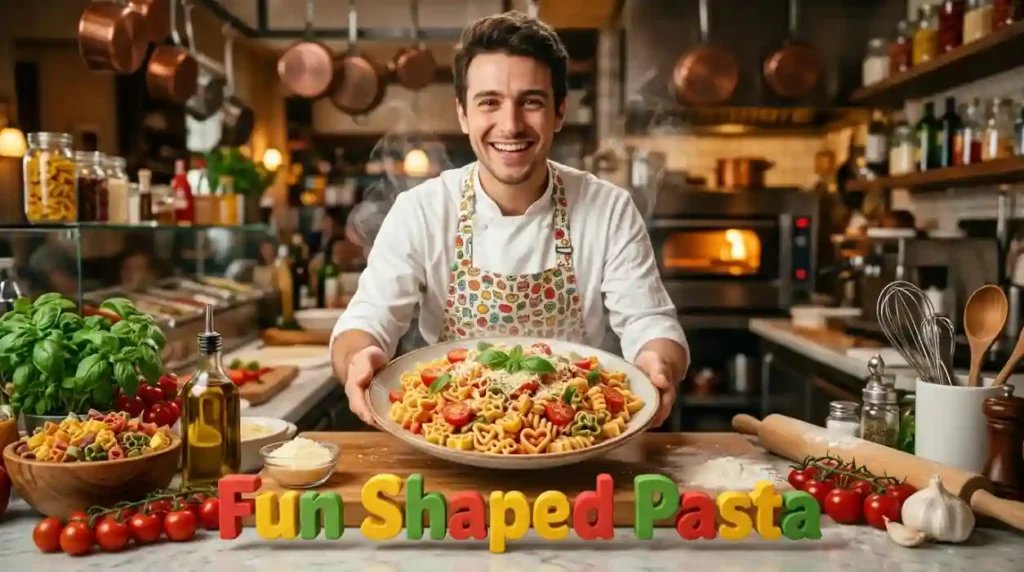
Fun-shaped pasta includes creative, non-traditional noodle designs like bowtie farfalle, radiator-like radiatori, wheels, animals, and seasonal figures. Beyond bringing visual excitement to family dinner tables, these unique shapes feature custom ridges, hollow pockets, and folds specifically engineered to hold heavy meat sauces, rich cheeses, and vibrant pesto dressings.
Have you ever stood in the grocery aisle staring at plain spaghetti boxes and wished for something more exciting? Cooking with fun-shaped pasta turns a routine weeknight meal into a joyful, interactive dining experience for everyone at your table.
These creative noodle designs do far more than look pretty on a serving platter.
High-quality fun-shaped pasta helps your favorite sauces cling to every bite, thanks to clever ridges, deep pockets, and unique folds.
Ready to turn basic dinner recipes into eye-catching culinary masterpieces with fun-shaped pasta? Let’s explore quirky historical designs, sauce pairing secrets, cooking tricks, and fun family recipes together!
The Hidden Engineering Science Behind Unique Pasta Shapes
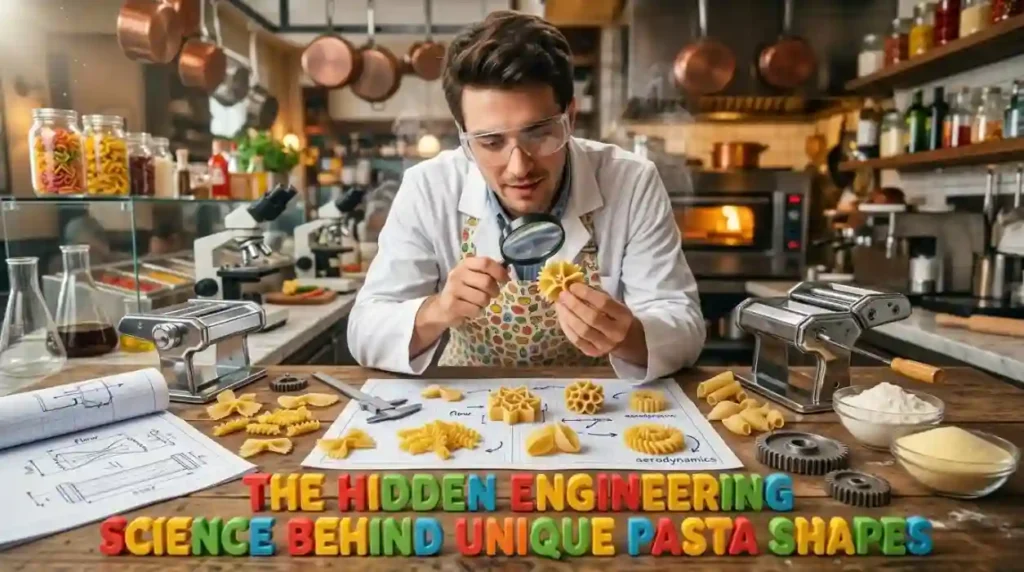
It is easy to assume that unique noodle shapes exist purely for playful decoration, but Italian pasta makers treat shape design as a precise culinary science. Every fold, curve, ridge, and hollow pocket alters how heat cooks the dough and how liquid sauces coat the surface.
Centuries of regional cooking traditions have refined these shapes to optimize bite texture and flavor delivery.
Understanding the balance between form and function turns you into a far more confident and creative home cook.
Surface Area and Sauce Adhesion Dynamics
When you toss cooked noodles in a pan with hot sauce, two physical forces dictate how well the meal comes together: surface friction and liquid containment. Smooth, flat noodles like fettuccine allow thin oil or cream dressings to slide off easily if there is no starch binding them.
Noodles crafted with intricate grooves, ruffled edges, or twisted spirals create mechanical friction that traps sauce particles.
Extruded dough pressed through traditional bronze dies creates a rough, chalky surface texture called superficie ruvida.
This micro-roughness acts like a tiny sponge, pulling sauce directly into the outer walls of the noodle rather than letting it puddle uselessly at the bottom of your bowl.
Pockets, Tubes, and Internal Sauce Traps
Certain creative shapes incorporate deep interior chambers designed to scoop up chunky ingredients like ground sausage, peas, chopped herbs, and melted cheese. As you stir the pot, liquid sauce flows into these open cavities and gets trapped inside by fluid surface tension.
When you take a bite, the trapped sauce bursts out, creating an intense pop of flavor.
Shapes like conchiglie (shells), pipe rigate, and cavatappi excel at capturing chunky ragùs that would normally slip off smooth long noodles.
Classic Fun Shapes and Their Perfect Culinary Partners
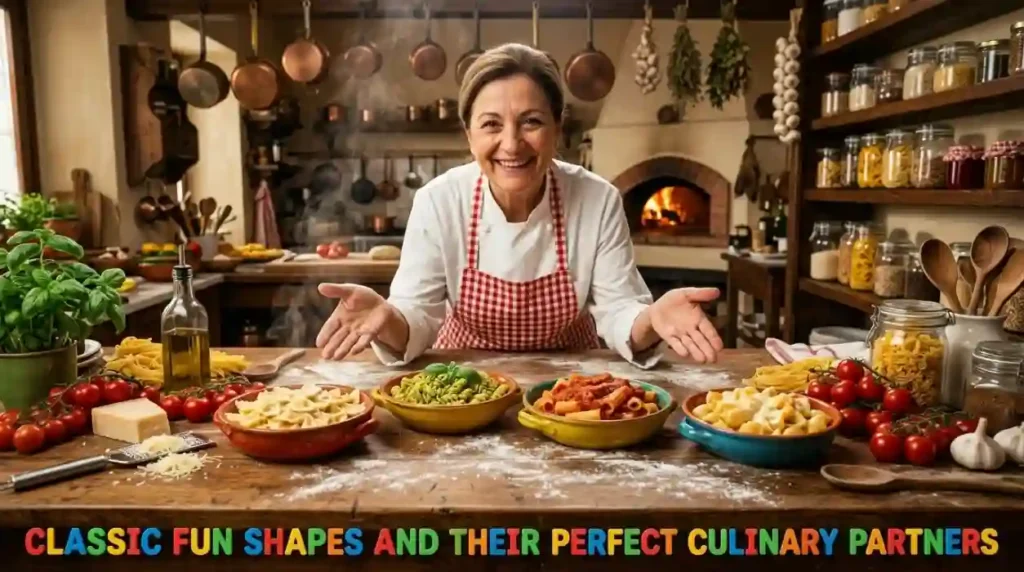
Matching the right noodle design to your specific sauce recipe is the secret to elevating homemade pasta dishes from average to restaurant-quality. Heavy, meat-rich ragùs require sturdy, thick-walled shapes, while light herb oils perform best with delicate twisted ribbons.
Here is a handy guide summarizing iconic shapes, their design features, and their ideal sauce companions.
Radiatori: The Industrial Marvel of the Pasta World
Radiatori resemble tiny, vintage steam radiator grates with deep, parallel cooling fins wrapping around a central hollow tube. Created in the early twentieth century during Europe’s industrial design boom, this shape represents pure sauce-trapping genius.
The deep parallel ridges offer massive surface area, catching ground meat, crushed tomatoes, and grated parmesan effortlessly.
Because the shape holds its structural integrity exceptionally well during boiling, it rarely breaks apart or turns mushy in hot casseroles.
Farfalle: The Elegant Butterfly Classic
Farfalle, commonly referred to as bowtie pasta, is made by cutting flat dough sheets into small rectangular ribbons with pinked edges, then pinching the exact center together. This pinched center creates a unique double-texture experience inside a single bite.
The outer pleated wings remain soft and tender, while the pinched center stays pleasantly firm (al dente).
Farfalle shines when paired with bright green basil pesto, light cream sauces, or tossed into cold summer pasta salads with cherry tomatoes.
Rotelle: Bringing Playground Energy to the Dinner Plate
Rotelle, also known as ruote or wagon wheels, features a round outer ring connected to a central hub by thin dough spokes. This whimsical geometric design captures the imagination of young children while offering genuine functional benefits for cooks.
The open spaces between the spokes act as miniature nets that capture diced vegetables, small beans, and crumbled turkey.
Rotelle is also a stellar choice for cold picnic salads because the sturdy spokes hold up against heavy mayonnaise and vinaigrette dressings without collapsing.
Novelty, Seasonal, and Pop-Culture Shapes for Special Occasions

Beyond traditional Italian regional shapes, modern artisan food producers manufacture thousands of themed novelty shapes for holidays and celebrations. From autumn pumpkins and winter snowflakes to zoo animals and sports equipment, novelty noodles bring festive energy to seasonal gatherings.
Using themed shapes makes hosting holiday parties, baby showers, and kids’ birthday dinners effortless and memorable.
Let’s look at how specialty manufacturers create these detailed edible sculptures without sacrificing taste.
How Specialty Novelty Pasta Is Made
Creating intricate shapes like dinosaurs, hearts, or holiday trees requires custom-engineered brass dies attached to industrial extrusion presses. High-pressure hydraulic pistons force warm durum wheat dough through precision-milled bronze cutouts, forming detailed 3D designs in seconds.
Once extruded, the wet dough shapes must be dried extremely slowly at low temperatures over twenty to thirty hours.
Slow drying preserves the detailed sharp edges of the design, ensuring the dinosaur or heart shape does not melt into a blob during boiling.
Natural Colorings that Add Visual Magic
Artisan producers frequently enhance novelty noodles by blending natural vegetable powders directly into the durum semolina dough before extrusion. These natural additives introduce vibrant colors and subtle herbal notes without relying on artificial chemical dyes.
- Spinach Powder: Creates deep forest-green shades perfect for holiday trees and spring garden themes.
- Tomato Paste & Beet Powder: Imparts rich red and pink hues ideal for Valentine’s Day hearts and autumn pumpkins.
- Squid Ink (Nero di Seppia): Produces dramatic jet-black noodles that pair brilliantly with seafood and Halloween themes.
- Turmeric & Carrot Juice: Yields sunny yellow and bright orange tones that brighten up summer salads.
Master Rules for Cooking Shaped Noodles Perfectly
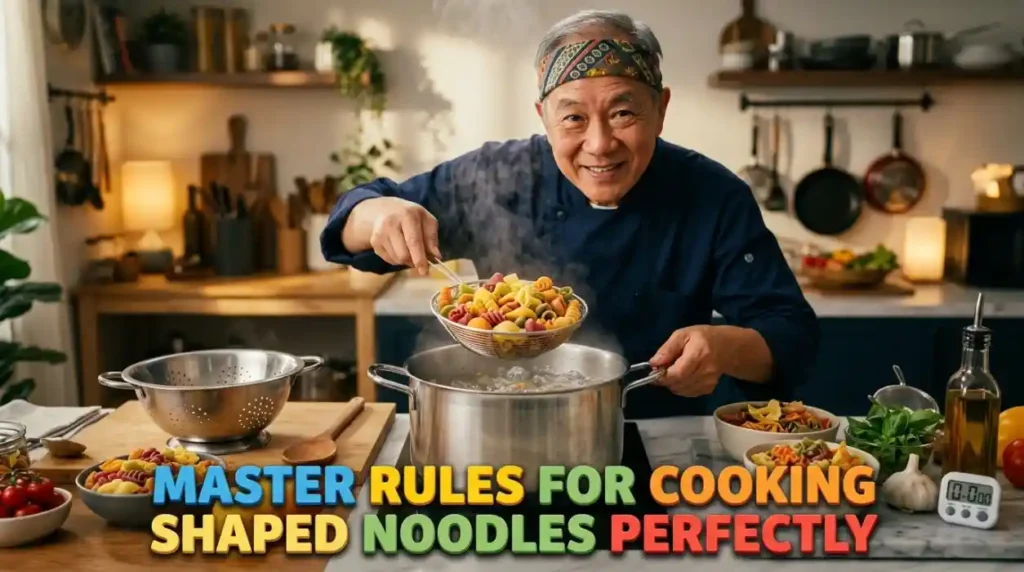
Cooking shaped noodles requires slightly more attention than boiling straight spaghetti or flat lasagna sheets. Because creative shapes feature varying dough thicknesses, such as pinched centers or thick ridges, cooking them too fast can cause the outer edges to turn mushy before the center cooks through.
Following precise boiling rules guarantees that every piece emerges perfectly tender with a satisfying al dente bite.
Here are four golden rules for cooking shaped dough like a professional Italian chef.
Rule 1: Use Plenty of Water and Heavy Salt
Always cook shaped dough in a large, heavy pot filled with at least four quarts of fresh water per pound of pasta. Shaped noodles need ample physical space to swim freely as the water boils furiously around them.
If you crowd too much dough into a small pot, the water temperature drops dramatically, causing the shapes to stick together in gummy clumps.
Salt the boiling water generously with one to two tablespoons of coarse kosher salt until it tastes like mild seawater.
Salting seasons the interior dough from the inside out while it hydrates and expands.
Rule 2: Never Add Oil to the Boiling Water
A common kitchen myth claims that adding olive oil to boiling water stops noodles from sticking together. In reality, adding oil creates a slick, greasy film over the outer walls of the cooked dough.
That greasy barrier prevents your delicious tomato sauce, pesto, or cheese blend from sticking to the noodle surface later.
Instead of oil, simply stir the pot thoroughly during the first two minutes of boiling to keep shapes separated naturally.
Rule 3: Reserve Your Starchy Pasta Water
Before dumping your cooked shapes into a sink colander, always scoop out half a cup of the cloudy, starchy cooking water. That hot, starchy liquid is pure liquid gold for creating smooth, silky restaurant-style sauces.
When you finish tossing your drained noodles with sauce in a hot skillet, splash in a few tablespoons of reserved starchy water.
The starch emulsifies oil and cheese into a creamy, cohesive glaze that coats every ridge and pocket evenly.
Fun Family Recipes Kids and Adults Will Love

Involving children in meal preparation is a proven way to expand their palates, build kitchen confidence, and reduce mealtime pickiness. Creative shapes make cooking feel like an art project, encouraging young helpers to explore new flavors and textures enthusiastically.
Here are two easy, delicious recipes featuring fun shapes that you can whip up in under thirty minutes.
1. The Ultimate Radiatori Three-Cheese Bake
This comforting baked dish uses the deep ridges of radiatori to trap a velvety sauce made from sharp cheddar, mozzarella, and creamy fontina cheese.
- Ingredients: 1 pound radiatori, 3 tablespoons butter, 3 tablespoons flour, 2 cups whole milk, 1.5 cups sharp cheddar, 1 cup mozzarella, 0.5 cup parmesan, 1 teaspoon garlic powder, salt, pepper, and crispy panko breadcrumbs.
- Step 1: Boil radiatori in salted water for 2 minutes less than the package directions until firm al dente, then drain.
- Step 2: Melt butter in a saucepan, whisk in flour to form a roux, then gradually pour in milk while whisking until thick.
- Step 3: Remove sauce from heat, stir in cheddar, mozzarella, and garlic powder until smooth, then fold in cooked radiatori.
- Step 4: Transfer to a greased baking dish, top with parmesan and panko breadcrumbs, and bake at 375°F (190°C) for 20 minutes until golden and bubbling.
2. Rainbow Rotelle Summer Garden Salad
This colorful cold salad showcases wagon wheels tossed with fresh garden vegetables, crumbled feta cheese, and a zesty lemon-herb vinaigrette.
- Ingredients: 1 pound tri-color rotelle, 1 cup cherry tomatoes (halved), 1 English cucumber (diced), 1 cup black olives (sliced), 1 cup crumbled feta cheese, 0.5 cup extra virgin olive oil, 3 tablespoons fresh lemon juice, 1 clove minced garlic, 1 tablespoon dried oregano, salt, and pepper.
- Step 1: Boil tri-color rotelle until tender, drain, rinse with cold water to stop cooking, and transfer to a large bowl.
- Step 2: Whisk olive oil, lemon juice, minced garlic, oregano, salt, and pepper in a small bowl to create the vinaigrette.
- Step 3: Add cherry tomatoes, diced cucumber, black olives, and crumbled feta to the bowl of cooled rotelle.
- Step 4: Pour dressing over the salad, toss gently to combine, and chill in the refrigerator for at least 30 minutes before serving.
Practice Exercise
Test your understanding of pasta shapes, sauce pairings, cooking techniques, and dough engineering with this quick five-question multiple-choice quiz.
- Why do pasta makers use traditional bronze dies during the dough extrusion process?
A. To make the noodles turn bright pink automatically
B. To create a rough surface texture that helps sauce cling to the noodle
C. To reduce the amount of water needed for boiling
D. To extend the shelf life of dry dough by ten years - Which unique physical design feature characterizes radiatori pasta?
A. Wide, flat sheets with smooth ruffled outer edges
B. Parallel cooling fins wrapping around a central tube resembling a radiator
C. Long, hollow strings shaped like drinking straws
D. Solid round balls shaped like marble stones - Why should you avoid adding olive oil to the pot while boiling noodles?
A. It causes the water to evaporate instantly
B. It leaves a greasy film on the dough that prevents sauce from clinging
C. It turns the pasta dough black during cooking
D. It lowers the boiling temperature of water below room level - What crucial ingredient should you save before draining your cooked noodles in a colander?
A. The boiling air steam above the pot
B. Half a cup of cloudy, starchy pasta cooking water
C. The raw salt crystals sitting at the bottom of the pot
D. The plastic packaging bag - Which shape design features open spokes that excel at trapping diced vegetables and small beans?
A. Angel hair (Capellini)
B. Rotelle (Wagon wheels)
C. Smooth penne lisce
D. Flat fettuccine
Answer Key:
- B
- B
- B
- B
- B
Frequently Asked Questions
What is the primary difference between extruded pasta and stamped pasta?
Extruded pasta is made by forcing warm dough through a metal die under high pressure, creating 3D shapes like tubes, radiatori, and macaroni. Stamped pasta is made by rolling dough into flat sheets and cutting or folding them into shapes like farfalle or ravioli.
How do I stop shaped noodles from sticking together after draining?
Toss your hot, drained noodles directly into your warm sauce skillet immediately after draining rather than letting them sit dry in a colander. The liquid sauce lubricates the outer walls, preventing the shapes from clumping together.
Are gluten-free fun shaped noodles as durable as traditional wheat pasta?
Gluten-free shapes made from corn, rice, or chickpea flour are slightly more delicate than durum wheat noodles because they lack gluten structure. Cook gluten-free shapes gently in simmering water and avoid over-stirring to prevent them from breaking apart.
Why do some shape designs take longer to boil than standard spaghetti?
Shapes featuring pinched centers (like farfalle) or thick interior walls (like cavatappi) require more time for boiling water to hydrate the dense core fully. Always test the thickest part of the shape for tenderness before draining.
Can I substitute fun shaped noodles into any traditional pasta recipe?
Yes, you can substitute shaped noodles into almost any recipe, provided you match the shape’s sauce-holding capacity to the sauce style. Use heavy ridged shapes for thick meat or cheese sauces, and lighter shapes for herb oils and broths.
Conclusion
Incorporating creative, fun-shaped pasta into your weekly meal plan is one of the easiest ways to bring excitement, color, and superior sauce performance to your dinner table. From the industrial sauce-trapping fins of radiatori to the playful spokes of rotelle, every design offers a unique culinary advantage.
Remember that cooking great meals is about enjoying the process and sharing delicious moments with those you love.
Experiment with new shapes, master the art of reserving starchy cooking water, and pair your noodles with rich, flavorful sauces.
Pick out a new box of creative shapes today, gather your favorite ingredients, and cook up an unforgettable family meal!

Jack Olive is the creative mind behind buzzgiggles.com, a fun-focused website built to bring smiles, laughter, and lighthearted entertainment to everyday life. With a passion for humor and enjoyable content, Jack Olive creates and shares playful ideas, amusing stories, entertaining discoveries, and cheerful moments designed for readers of all kinds.
Through buzzgiggles.com, Jack Olive combines creativity, curiosity, and a positive sense of humor to explore the lighter side of life. Whether visitors are looking for a quick laugh, something interesting to share, or a cheerful break from their routine, the website offers content created with fun in mind. Jack Olive believes great entertainment should be easy to enjoy, memorable, and capable of brightening someone’s day.