

Finding and using a fun PNG graphic involves choosing high-quality transparent images that easily layer over backgrounds without solid borders. Ideal for digital crafts, presentations, and social media, these graphics save design time while adding personality, humor, and visual excitement to any creative project.
Have you ever downloaded an image for a slideshow, only to discover an unwanted white box around it? A high-quality fun PNG with a transparent background can solve this issue while adding creativity and personality to your designs.
Whether you are creating birthday cards, social media graphics, invitations, or playful memes, a fun PNG helps you achieve a clean and polished look without spending hours removing backgrounds.
Transparent graphics also make it easy to layer colorful stickers, bold text, playful characters, and decorative elements over photos or custom backgrounds. This flexibility makes PNG files useful for many creative projects.
Let’s explore where to find quality transparent images, how to edit them effectively, and how selecting the right fun PNG can make your digital creations more attractive and professional.
Understanding the Power of Transparent Graphics

Digital image formats handle colors and background pixels in very different ways depending on their core file structure.
What Makes Portable Network Graphics Special
PNG stands for Portable Network Graphics, a digital image format built specifically to support alpha channel transparency.
Unlike standard JPEG files that fill empty spaces with solid white pixels, a transparent image leaves empty background areas completely clear.
This means you can place a floating graphic directly over patterned backgrounds, textured paper, or colorful photos without awkward borders.
Lossless Compression Keeps Every Detail Sharp
When you save photos as JPEG files, the computer compresses the image data, which can smudge sharp lines and fine text.
PNG graphics use lossless compression, meaning the file keeps every single pixel, color gradient, and sharp edge perfectly crisp.
This lossless quality makes transparent files ideal for logos, digital stickers, typography, and detailed graphic illustrations.
Saving Precious Time in Digital Editing
Manually erasing background borders using photo editing software takes patience and steady hands.
Starting your project with pre-cut transparent assets removes those tedious editing steps completely.
You can simply drag, drop, and resize your graphics instantly, keeping your creative workflow moving forward smoothly.
Popular Categories of Playful Transparent Images

Transparent graphic libraries contain millions of creative visual assets tailored for different themes, projects, and personal tastes.
Whimsical Cartoons and Character Stickers
Animated characters, funny animal doodles, and expressive emojis bring instant humor and life to digital layouts.
- Expressive Reaction Stickers: Add speech bubbles, exaggerated eyes, and funny hand gestures to family photos.
- Seasonal Holiday Graphics: Decorate greeting cards with floating snowflakes, autumn leaves, or festive party hats.
- Cute Animal Illustrations: Use playful cat, dog, or dinosaur graphics to create engaging learning sheets for children.
Custom Typography and Lettering Art
Hand-drawn quotes, bubble letters, and neon text banners add bold artistic statements to blog headers and social posts.
Transparent text graphics let background colors show through hollow spaces in letters, blending typography smoothly into your design.
You can layer shiny foil textures or glitter effects beneath transparent lettering to make headers pop off the screen.
Frames, Borders, and Decorative Accents
Framing photos with playful borders guides viewer attention directly to your primary focal point.
Splatters of watercolor paint, hand-drawn star bursts, and vintage Polaroid frames create a layered collage feel.
Combining multiple small accent graphics builds a rich visual texture that makes simple digital layouts feel custom-built.
How to Find and Verify Authentic Transparent Images
Searching the internet for transparent graphics can feel tricky because some file preview thumbnails trick users with fake checkerboard patterns.
The Fake Checkerboard Trap Explained
Many website images show a grey-and-white checkerboard background right inside the image search results page.
If you save that image directly, the checkerboard pattern remains burned into the picture as a solid background.
An authentic transparent file usually shows a solid white or black background in search previews, turning into a subtle grid only after loading completely.
Using Advanced Search Filters Effectively
Major internet search engines allow you to filter image results by color attributes to isolate genuine transparent files instantly.
- Open Image Search: Type your desired search terms into your browser image tab.
- Access Search Tools: Click the “Tools” or “Filters” button located beneath the main search bar.
- Select Transparent Color: Open the “Color” dropdown menu and choose “Transparent” to filter out solid background images.
Checking File Formats Before Downloading
Always verify the file extension listed under the download link before saving assets to your computer drive.
If the file extension reads .jpg or .webp, the file does not support true transparent background layers.
Confirm that the file ends in .png to ensure you are receiving a true transparent image asset.
Comparing Popular Image File Formats for Design Projects
Selecting the right file extension ensures your visual graphics display cleanly without slowing down website loading speeds.
Fascinating Historical Facts About Digital Graphic Formats
The technical history behind internet image formats explains why transparent graphics remain crucial for modern design work.
The Patent Controversy That Created the PNG Format
During the mid-1990s, the GIF format was the primary file type used to display graphics with transparent backgrounds across the web.
However, the company holding the patent for the compression technology inside GIF files unexpectedly announced it would charge licensing fees.
In response, computer programmers united in 1995 to invent an open-source, patent-free alternative, which they officially named Portable Network Graphics.
Why PNG Files Do Not Support Direct Animation
When developers created the original PNG specifications, they intentionally excluded multi-frame animation capabilities to keep the code lightweight and focused.
While developers later invented an animated variant called APNG, standard GIF files and modern MP4 video clips remain dominant for web animations.
Standard transparent graphics focus entirely on delivering pristine single-frame detail, rich color depth, and smooth edge blending.
The Invention of Alpha Channel Gradient Transparency
Early transparent images could only turn pixels fully on or fully off, leading to jagged, stair-stepped edges around curved shapes.
PNG introduced full 8-bit alpha channel support, allowing individual edge pixels to hold 256 different levels of partial transparency.
This breakthrough enabled smooth drop shadows, soft glowing edges, and realistic glass reflections that blend seamlessly over any background color.
Step-by-Step Guide to Editing and Layering Graphics
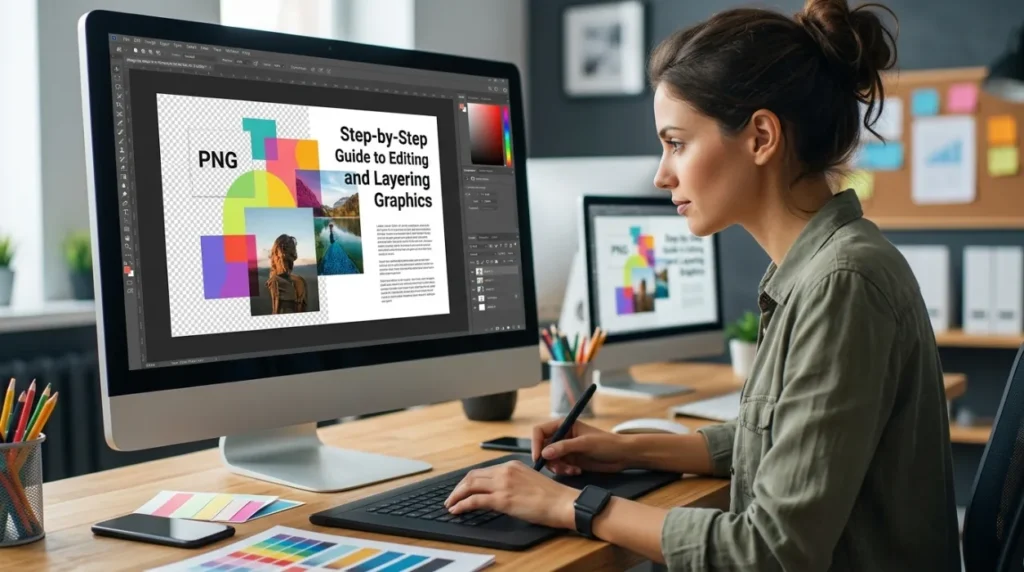
Creating custom photo collages and graphic layouts requires only basic software tools and a few simple layering steps.
Preparing Your Digital Workspace Canvas
Open your preferred graphics software or web-based editing program, and set your canvas dimensions to fit your final project needs.
- Social Media Posts: Set your canvas dimensions to a square 1080×1080 pixel layout for clear mobile display.
- Presentation Slides: Choose a standard widescreen 1920×1080 resolution to fit modern computer monitors and projector screens.
- Printable Crafts: Select physical paper measurements like 8.5×11 inches set to 300 DPI for crisp printing output.
Layering Backgrounds, Photos, and Accents
Think of digital graphics editing as stacking transparent sheets of clear plastic directly on top of one another.
Position your primary photo or background color texture on the bottom layer of your editing workspace.
Place your transparent sticker graphics on upper layers, adjusting their size and angle to build a dynamic, balanced composition.
Applying Drop Shadows for Depth and Realism
Flat graphics can sometimes look detached when placed directly over busy, colorful background photographs.
Adding a soft, dark drop shadow behind your transparent graphic creates the subtle illusion that the sticker is floating above the surface.
Lower the shadow opacity to around thirty percent and blur the shadow edges slightly to achieve a natural, realistic appearance.
Creative Practical Uses for Transparent Graphics
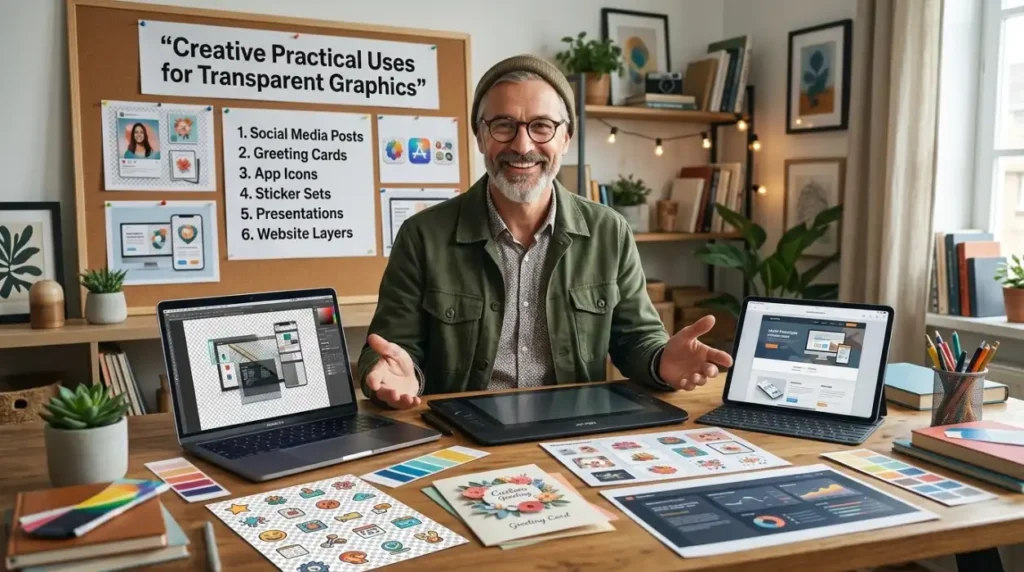
You can apply transparent visual assets across dozens of personal, educational, and business projects to grab audience attention.
Enhancing Educational Worksheets and Slideshows
Teachers and students use fun transparent icons to make classroom presentations and study guides visual and memorable.
Adding star badges, thumbs-up icons, and cheerful mascot graphics highlights important test topics and rewards student progress.
Visual cues help young learners absorb complex information faster while keeping lesson materials visually inviting.
Designing Custom Merchandise and Party Favors
Transparent files are required by professional print-on-demand services when creating custom T-shirts, mug prints, and event stickers.
Printers need to know exactly where the design ends so they do not print unwanted background ink onto physical fabric surfaces.
Using crisp transparent vector or PNG files guarantees your custom apparel graphics print with clean, sharp edges every time.
Crafting Engaging Social Media Content
In crowded social media feeds, adding expressive visual accents helps your personal posts stand out from standard photo uploads.
Wavy text banners, neon arrow highlights, and hand-drawn hearts encourage viewers to stop scrolling and read your post captions.
Consistently using a signature set of transparent visual accents builds a recognizable personal brand identity across platforms.
Practice Exercise
Test your understanding of graphic formats, transparency features, and editing techniques with these 5 multiple-choice questions.
- What does the abbreviation PNG stand for in digital imaging technology?
A. Printable National Grid
B. Portable Network Graphics
C. Pixel Number Generator
D. Programmed Network Graphics - What unique technical feature allows PNG images to blend smoothly over dark or light backgrounds without jagged edges?
A. Fixed 256 color limits
B. Alpha channel transparency
C. Audio playback tracks
D. Automated vector scaling - Why did software developers invent the open-source PNG format in 1995?
A. To replace printed paper books completely.
B. To create a patent-free alternative to the restricted GIF format.
C. To force all web photos to turn black and white.
D. To speed up dial-up internet connections for video games. - What happens when you save an image with a fake checkerboard background pattern?
A. The checkerboard becomes a permanent, solid part of your image.
B. The computer erases the background automatically.
C. The image file turns into an audio file.
D. The file deletes itself from your hard drive. - What canvas resolution setting is recommended when designing printable paper crafts to ensure sharp print quality?
A. 72 DPI
B. 300 DPI
C. 10 DPI
D. 1200 DPI
Answer Key:
- B
- B
- B
- A
- B
FAQs
How can I convert a JPEG photo into a transparent PNG file?
You can remove solid JPEG backgrounds using free online background removers or selection tools inside graphics software. Simply select the unwanted background pixels, press delete to reveal the clear checkerboard grid, and export the file specifically as a PNG.
Why do some PNG files have large file sizes compared to JPEGs?
PNG files use lossless compression to preserve every pixel, sharp edge, and transparent detail perfectly without compression artifacts. This high detail level creates larger file sizes than JPEGs, which discard visual data to reduce storage space.
Can I use transparent PNG graphics in word processing documents?
Yes, modern word processors fully support inserting transparent images directly into document pages. You can set the text wrapping option to “In Front of Text” or “Tight” to let document text wrap smoothly around graphic edges.
What is the main difference between PNG and SVG image files?
PNG files are raster images made of fixed pixel grids, meaning they can become blurry if enlarged too much. SVG files are vector images made of mathematical formulas, allowing infinite scaling without losing sharpness, though PNGs handle complex colors better.
How do I stop transparency from turning into a solid black background?
Some basic photo viewing apps display clear background areas as solid black or white by default. Importing the file into a dedicated design program or web browser confirms whether the true transparent background layer is preserved correctly.
Are PNG graphics suitable for printing on physical paper?
Yes, provided the image resolution is high enough, typically 300 dots per inch (DPI) at full physical print size. Low-resolution web graphics may appear pixelated or blurry when expanded onto large printed posters or t-shirts.
Conclusion
Adding a fun PNG to your creative workflow is an easy way to make digital designs, party crafts, presentations, and social media posts more engaging. Transparent backgrounds, sharp details, and flexible formats make these graphics simple to use in many projects.
By choosing reliable image sources, understanding PNG features, and using basic layering techniques, you can create eye-catching compositions without complicated editing. Transparent graphics can also save time when combining multiple visual elements.
Start exploring creative graphic libraries and discover unique designs for your next project. Whether you are creating invitations, posts, crafts, or digital artwork, an add personality, color, and creativity to almost any design.

Jack Olive is the creative mind behind buzzgiggles.com, a fun-focused website built to bring smiles, laughter, and lighthearted entertainment to everyday life. With a passion for humor and enjoyable content, Jack Olive creates and shares playful ideas, amusing stories, entertaining discoveries, and cheerful moments designed for readers of all kinds.
Through buzzgiggles.com, Jack Olive combines creativity, curiosity, and a positive sense of humor to explore the lighter side of life. Whether visitors are looking for a quick laugh, something interesting to share, or a cheerful break from their routine, the website offers content created with fun in mind. Jack Olive believes great entertainment should be easy to enjoy, memorable, and capable of brightening someone’s day.