
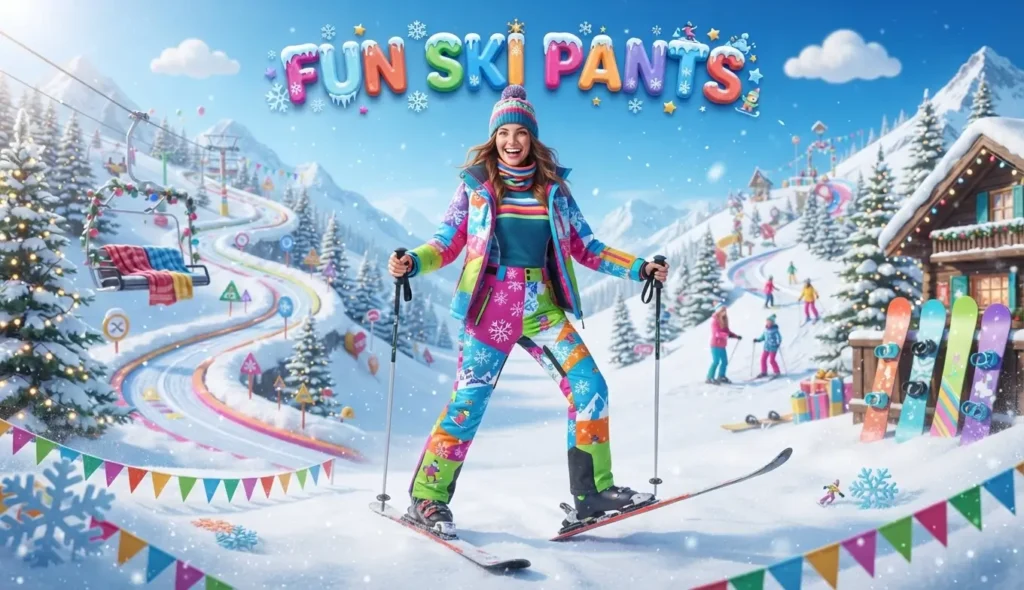
Fun ski pants are brightly patterned, colorful, or retro-styled waterproof snow trousers designed to bring personality and flair to winter sports gear. They combine vibrant aesthetic designs—like neon colors, animal prints, and geometric patterns—with technical performance elements like waterproof membranes, thermal insulation, and reinforced snow gaiters.
Have you ever stood in a chairlift line surrounded by a sea of dull black snow trousers and wished you could inject some personality into your winter wardrobe? Wearing a pair of vibrant fun ski pants turns every run into a stylish celebration on the mountain slopes.
These eye-catching snow trousers combine high-tech waterproof protection with playful patterns like neon retro swirls, animal prints, and bold geometric blocks. Choosing the right fun ski pants ensures you stay completely warm, dry, and easy to spot in snowy conditions.
Balancing eye-catching style with serious technical performance keeps your winter sports adventures comfortable and safe. The right pair protects you against freezing winds and wet chairlifts while boosting your confidence on the slopes.
Let’s explore waterproof ratings, insulation types, retro design trends, and washing tips for vibrant outerwear. Get ready to upgrade your winter slopes style!
Decoding Technical Specs: Waterproofing, Breathability, and Taped Seams
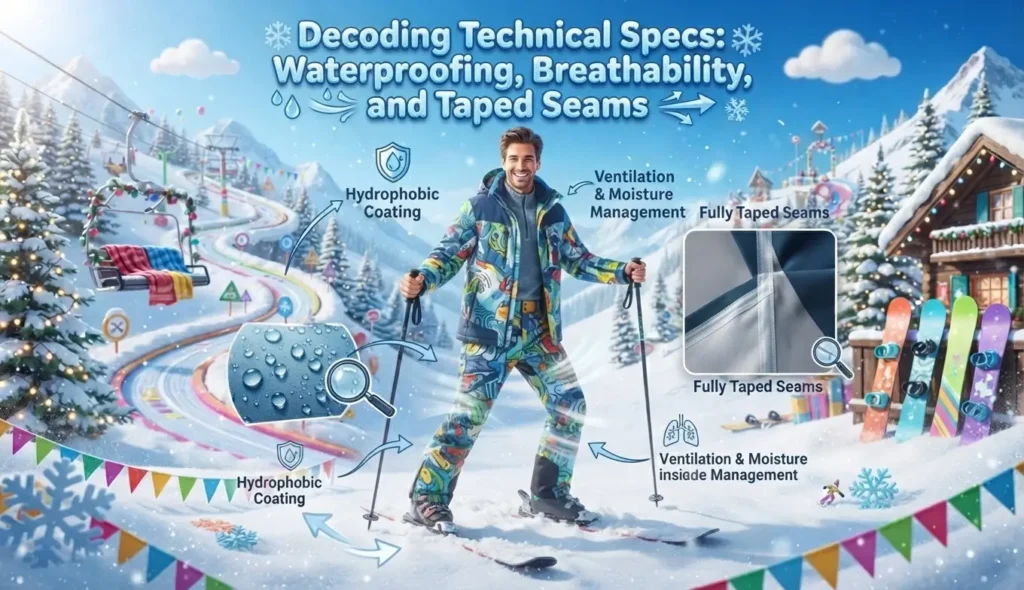
Behind every stylish pair of ski bottoms lies a technical barrier designed to keep freezing water and snow out. Understanding technical fabric ratings helps you stay dry during heavy snowfall and wet chairlift rides.
Here is how manufacturers balance weather protection with comfortable airflow during active mountain sports.
Understanding Millimeter Ratings for Waterproofing
Waterproof performance is measured in millimeters using a hydrostatic head pressure test. This test measures how much water pressure a fabric can withstand before moisture penetrates the fibers.
For casual resort skiing in dry powder, a rating between 10,000mm and 15,000mm offers great protection. If you frequently ski in heavy sleet or wet Pacific storms, look for 20,000mm ratings or higher.
- 5,000mm: Basic water resistance for dry snow and short outings.
- 10,000mm: Standard protection for typical resort skiing conditions.
- 15,000mm: Advanced waterproofing for heavy wet snow and deep powder.
- 20,000mm+: Premium stormproof protection for extreme mountain weather.
Why Breathability Ratings Matter on High-Energy Runs
Skiing and snowboarding require intense physical effort, generating body heat and moisture inside your clothing layers. If sweat cannot escape through your trousers, it condenses against your skin, leaving you chilled during chairlift rides.
Breathability is measured in grams of water vapor escaping through one square meter of fabric over 24 hours (g/m²). Choose outerwear with a breathability rating of at least 10,000g/m² to ensure sweat evaporates quickly while riding.
Fully Taped vs. Critically Taped Seams
Stitching fabric pieces together creates thousands of tiny needle holes where liquid water can leak through. Manufacturers apply heat-sealed waterproof tape along seam lines to seal these vulnerable points.
Fully taped outerwear features sealed seams across every joint, including pockets and zippers. Critically taped pants seal only high-exposure areas like the seat, knees, and crotch seam, offering budget-friendly protection for light snow days.
Insulation Types: Shells vs. Insulated Snow Trousers
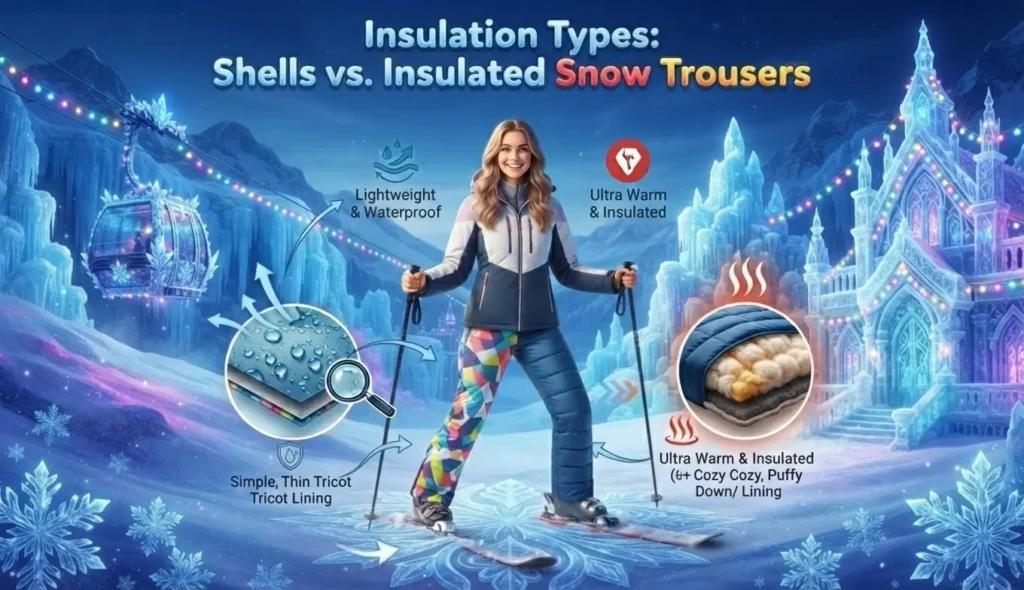
Choosing between lightweight shell bottoms and padded insulated trousers depends on your personal body temperature and local climate. Matching your gear to weather conditions ensures you never shiver on frozen lift lines or overheat on sunny afternoon runs.
Let’s compare the two main construction styles used in modern snow pants.
The Versatility of Uninsulated Shell Pants
Uninsulated shell trousers consist of a durable waterproof outer fabric lined with a smooth mesh or tricot layer. Shells offer zero thermal warmth on their own, acting purely as a windproof and waterproof shield against snow.
The primary benefit of shell bottoms is layering versatility. You can adjust your internal warmth by changing your thermal base layers beneath the shell, making them ideal for spring skiing or backcountry hiking.
Padded Insulated Options for Sub-Zero Days
Insulated ski trousers feature synthetic polyester fill sandwiched between the inner lining and outer waterproof fabric. Insulation weight is measured in grams per square meter, usually ranging from 40g to 80g in performance snow pants.
Synthetic insulation traps warm air inside tiny microfiber pockets, keeping your legs warm even if dampness creeps inside. Insulated trousers are perfect for cold mid-winter days or skiers who naturally run cold.
Exploring Design Trends: Retro Neons, Wild Prints, and Bibs

Snow outerwear has evolved from boring, muted tones into a vibrant fashion movement. Expressing your personal style on the mountain brings extra joy to every ski trip.
Here are the most popular design styles dominating the resort slopes today.
Throwback 80s and 90s Neon Aesthetics
Retro 1980s and 1990s ski fashion has massively returned to modern resorts. Fluorescent pinks, electric blues, neon yellows, and bold color-blocked panels add instant nostalgia to your winter outfit.
Beyond looking stylish, bright neon colors increase your visibility on foggy mountains and in heavy snowstorms. High visibility makes it easier for family members and ski instructors to spot you in crowded resort areas.
Animal Prints, Geometric Patterns, and Tie-Dye
If solid colors feel too basic, wild pattern prints bring fun personality to your winter wardrobe. Leopard spots, cheetah prints, psychedelic tie-dye swirls, and retro geometric patterns make a bold statement on the mountain.
When wearing printed trousers, pair them with a neutral black, navy, or white ski jacket to keep your overall outfit balanced and cohesive.
The Rise of Snow Bibs vs. Standard Waistband Pants
Snow bibs feature integrated shoulder straps and a chest panel, functioning like insulated overalls. Bibs offer superior protection against deep powder snow, preventing freezing snow from sliding down your back during falls.
Standard waistband trousers rely on adjustable Velcro side straps or belt loops to stay in place. While waistband trousers are easier to take off during bathroom breaks, bibs offer unmatched warmth and powder protection.
Essential Functional Features: Gaiters, Vents, and Scuff Guards
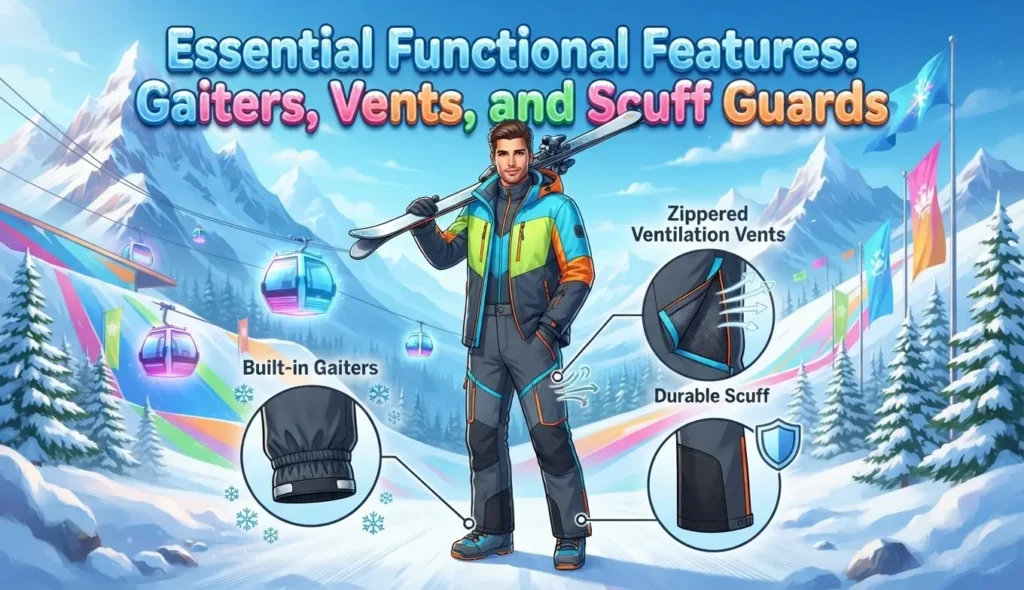
A great pair of snow trousers must balance fun style with rugged, practical features. Small functional details make a massive difference in your daily comfort on the mountain.
Look for these essential construction features when shopping for your next pair.
Integrated Ankle Snow Gaiters
Ankle gaiters are elasticized inner cuffs built into the bottom leg openings of technical snow pants. They stretch tightly over the top plastic shell of your ski or snowboard boots, sealing out deep snow.
Quality gaiters feature grippy rubber strips along the inner elastic band to prevent the cuff from riding up during deep turns or walking through snowdrifts.
Thigh Zipper Vents for Quick Cooling
When temperature levels rise, or after high-energy mogul runs, mesh-lined thigh zippers allow you to dump heat rapidly. Opening these vents lets cool mountain air circulate across your legs without letting snow inside.
Look for vents featuring double zippers so you can customize airflow from either direction while riding chairlifts.
Reinforced Heavy-Duty Scuff Guards
Ski edges and snowboard bindings are razor-sharp, frequently rubbing against the inner ankles of your snow pants while walking or carving turns. Without protection, metal ski edges can slice right through soft outer fabrics.
Scuff guards are heavy-duty patches made from abrasion-resistant Cordura or Kevlar sewn along the inner ankles. They prevent tears and extend the lifespan of your colorful outerwear investment.
How to Wash, Waterproof, and Store Technical Snow Gear
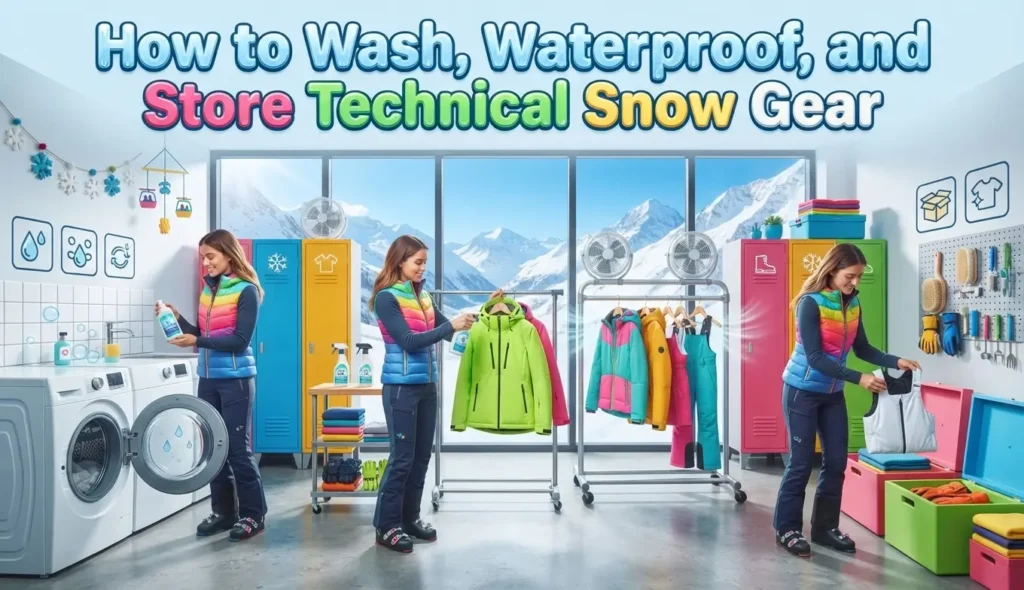
Proper maintenance protects waterproof membranes and preserves vibrant fabric colors season after season. Washing technical outerwear incorrectly can strip away factory water-repellent coatings and dull bold graphic prints.
Follow these care guidelines to keep your winter gear performing like new.
Washing Outdoor Fabrics with Specialized Tech Wash
Never wash technical ski gear using standard household laundry detergents or liquid fabric softeners. Regular detergents leave chemical residues that clog breathable membrane pores and break down water-repellent coatings.
Use a dedicated technical fabric cleaner like Nikwax Tech Wash or Granger’s Performance Wash in a gentle front-loading washing machine. Wash your trousers in cold water on a delicate cycle to protect zipper seals and taped seams.
Restoring Durable Water Repellent (DWR) Coatings
Outer ski fabrics are treated with a factory coating called Durable Water Repellent (DWR) that causes liquid water to bead up and roll off the fabric surface. Over time, friction, dirt, and body oils wear away this protective treatment.
If your trousers start absorbing water and turning dark on wet days, reapply a wash-in or spray-on DWR treatment. After applying the pro treatment, tumble dry the garment on low heat for twenty minutes to activate the waterproof seal.
Off-Season Storage Guidelines
Before storing your ski clothes for the summer, ensure they are completely clean and dry to prevent mold growth. Store your trousers flat or hung on wide padded hangers inside a cool, dry closet.
Avoid storing technical outerwear inside tight compression sacks or damp basements. Compressing synthetic insulation for months crushes the lofty fiber structure, reducing its thermal warmth for future seasons.
Practice Exercise
Test your understanding of technical outerwear specs, insulation features, and fabric care with these 5 multiple-choice questions.
- Which millimeter rating represents standard waterproof protection suitable for typical resort skiing?
A. 1,000mm
B. 10,000mm
C. 50,000mm
D. 100,000mm - Why should standard household laundry detergents be avoided when washing technical ski gear?
A. They permanently change neon colors to dark green.
B. They shrink synthetic polyester fibers by fifty percent instantly.
C. They leave chemical residues that clog breathable pores and strip DWR coatings.
D. They cause internal thigh zippers to melt inside the washing machine. - What is the primary functional advantage of wearing high-chest snow bibs compared to waistband pants?
A. They eliminate the need to wear thermal base layers underneath.
B. They prevent snow from entering at the waist during deep powder falls.
C. They automatically increase your downhill skiing speed.
D. They weigh significantly less than standard shell trousers. - What heavy-duty feature protects the inner ankles of ski pants from being sliced by sharp ski edges?
A. Plastic ankle gaiters
B. Mesh thigh vents
C. Reinforced scuff guards
D. Elastic shoulder straps - How does a Durable Water Repellent (DWR) coating protect outer ski fabrics?
A. It causes liquid water to bead up and roll off the fabric surface.
B. It generates internal heat when exposed to freezing air.
C. It permanently glues outer seams together without stitching.
D. It increases the overall weight of synthetic insulation.
Answer Key:
- B
- C
- B
- C
- A
FAQs
Can I wear fun ski pants for snowboarding too?
Yes, you can wear the same trousers for both sports, but snowboarders often prefer slightly looser fits for extra freedom of movement during tricks and turns. Look for reinforced seats and knees if you snowboard, as riders spend more time sitting on snowy terrain.
How do I choose the correct thermal base layer to wear underneath?
Choose synthetic polyester or natural merino wool base layers that wick sweat away from your skin effectively. Never wear cotton leggings or jeans beneath your snow pants, as cotton absorbs moisture and freezes, leaving you cold.
Are bright neon ski pants harder to keep clean on the mountain?
Bright colors show dirt and grease from chairlift cables slightly more easily than plain black trousers. However, washing your pants with technical fabric wash after every few trips removes surface dirt quickly without fading bright neon dyes.
Should I buy insulated ski pants or uninsulated shell pants?
If you ski mostly in cold mid-winter weather or freeze easily, buy insulated trousers. If you prefer skiing in spring sun or hike into the backcountry, choose uninsulated shells so you can control your temperature using base layers.
How should fun ski pants fit around the waist and boots?
Your trousers should fit comfortably around your waist without pinching when you bend your knees or sit on chairlifts. The bottom ankle openings should fit easily over your ski boots without dragging on muddy parking lot pavement.
What should I do if I get a small tear in my ski pants from a ski edge?
Repair small outer tears using waterproof gear repair tape like Tenacious Tape applied directly over the clean, dry tear. For larger rips along seam lines, take your trousers to a professional outdoor gear repair tailor.
Conclusion
Upgrading your winter wardrobe with a pair of fun ski pants brings exciting style, vibrant color, and serious performance to your mountain adventures. Combining high-tech waterproof fabrics, breathable membranes, and smart functional features ensures you stay warm and dry all day long.
Whether you prefer retro neon color blocks, wild animal prints, or protective powder bibs, the right pair lets you express your personality while carving down snowy slopes. Taking care of your gear with technical wash keeps colors bright and waterproof coatings strong for years.
Pick your favorite colorful pattern, gear up with proper thermal layers, and hit the slopes in style today!

Jack Olive is the creative mind behind buzzgiggles.com, a fun-focused website built to bring smiles, laughter, and lighthearted entertainment to everyday life. With a passion for humor and enjoyable content, Jack Olive creates and shares playful ideas, amusing stories, entertaining discoveries, and cheerful moments designed for readers of all kinds.
Through buzzgiggles.com, Jack Olive combines creativity, curiosity, and a positive sense of humor to explore the lighter side of life. Whether visitors are looking for a quick laugh, something interesting to share, or a cheerful break from their routine, the website offers content created with fun in mind. Jack Olive believes great entertainment should be easy to enjoy, memorable, and capable of brightening someone’s day.