
Fun support socks are specialized compression garments designed with colorful patterns, playful illustrations, and bright aesthetics. They combine gentle, graduated pressure to improve lower leg blood circulation, reduce muscle swelling, and prevent fatigue with stylish visual designs that express personal style in medical, corporate, or athletic settings.
Have you ever finished a long workday only to feel like your legs are carrying heavy bags of wet cement? Slipping on colorful fun support socks gives your tired veins an immediate boost while adding a cheerful pop of personality to your daily outfit.
Wearing high-quality fun support socks transforms boring medical compression into a playful fashion statement that brightens your morning routine.
Whether you spend twelve hours standing as a nurse or sit at a desk computer all afternoon, you are in the right place. Stylish fun support socks deliver genuine physical relief to your calves while making health care feel delightful and personal.
Let’s explore how graduated pressure works, top pattern styles, fabric blends, sizing methods, and easy washing steps. Get ready to give your legs the comfortable, colorful care they truly deserve!
The Fascinating Science of Compression and Circulation

Our circulatory system works continuously to pump blood from the heart down to our toes and all the way back up against gravity. When you sit or stand still for long periods, liquid naturally pools in your lower calves and ankles, leading to heavy feelings and soreness.
Compression wear acts like an external muscular helper, nudging blood gently upward through your leg veins.
How Graduated Pressure Helps Your Veins
Graduated pressure means the elastic weave squeezes tightest at your ankle and gradually loosens its grip as it moves up toward your knee. This subtle pressure gradient squeezes vein walls together, helping one-way internal valves close tightly so blood flows efficiently back toward your heart.
By preventing fluid from leaking into surrounding leg tissues, these garments keep your ankles slender and energetic throughout long shifts.
- Enhanced Venous Return: Squeezing lower leg veins accelerates blood flow velocity back toward the heart.
- Reduced Tissue Swelling: Constant outer support keeps excess fluid from settling inside ankle tissues.
- Muscle Vibration Control: Firm elastic dampens muscle oscillation during walking, reducing overall physical fatigue.
- Faster Recovery Times: Improved oxygen exchange helps clear metabolic waste from calf muscles after long workouts.
The Surprising Evolution from Beige Bandages to Trendy Fashion
For decades, therapeutic legwear was associated exclusively with clinical hospital rooms and bland beige rubber stockings. Patients often avoided wearing them because they looked severe, medicinal, and difficult to match with modern clothing.
Textile breakthroughs allowed manufacturers to print intricate graphic patterns onto high-grade elastic yarns, turning medical utility into an exciting everyday fashion category.
Who Benefits Most from Wearing Support Socks?
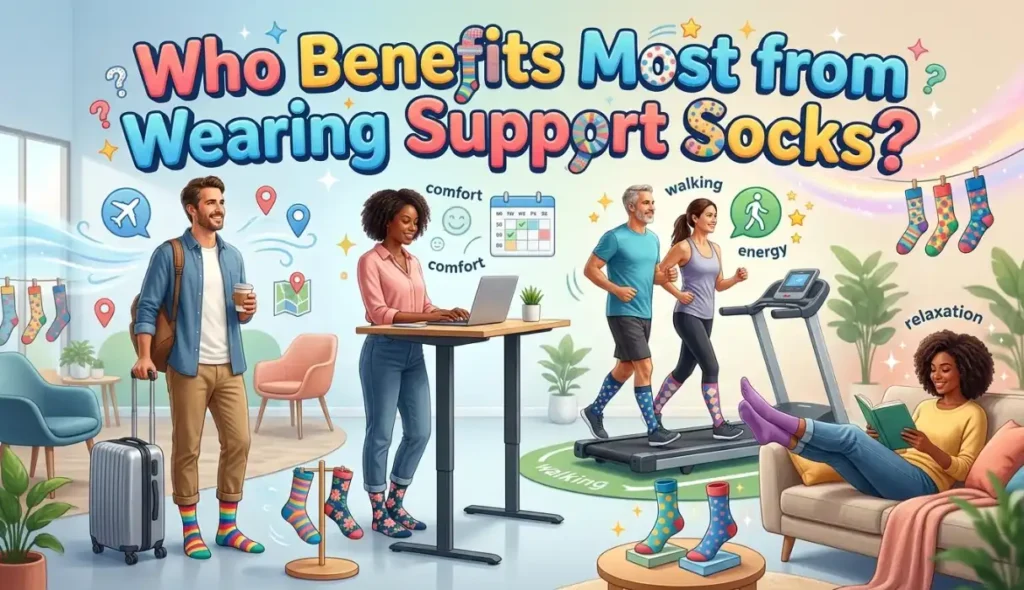
You do not need a medical prescription to enjoy the soothing benefits of light compression garments during daily activities. People from all walks of life use supportive socks to stay comfortable, active, and energized throughout demanding routines.
Let’s look at who receives the biggest daily lift from wearing elastic legwear.
On-Your-Feet Professionals and Office Desk Workers
Nurses, teachers, retail workers, and restaurant servers walk miles across hard concrete floors every single shift. Elastic support garments prevent that throbbing evening ache that usually follows a busy twelve-hour standing schedule.
Desk workers benefit just as much because sitting motionless for hours slows blood circulation, making feet feel cold and swollen by late afternoon.
Frequent Travelers and Expectant Mothers
Long airplane flights and highway road trips force your legs into cramped spaces with zero movement for extended hours. Wearing supportive socks during travel lowers the risk of swollen feet and keeps your legs feeling light when you step off the plane.
Pregnant people also love elastic support because natural hormone shifts and extra fluid volume put additional strain on lower leg veins.
Choosing the Right Compression Level for Your Needs
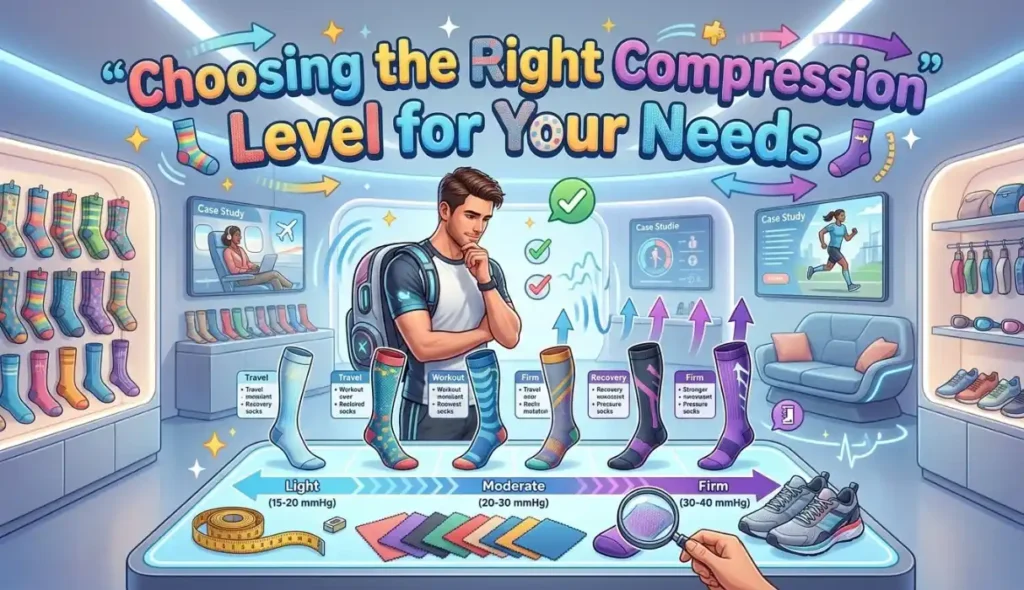
Compression level is measured in millimeters of mercury, abbreviated as mmHg, which indicates how firmly the fabric squeezes your leg. Understanding these pressure numbers ensures you select a pair that feels comfortably supportive rather than uncomfortably tight.
Here is a simple breakdown of common compression strengths available on the market today.
Mild Compression (8 to 15 mmHg)
This gentle pressure level feels like a soft, supportive hug around your calves. It is ideal for complete beginners, casual daily wear, light walking, or people who simply want extra comfort during long desk sessions.
You can wear mild compression garments all day without any adjustment period or special fitting assistance.
Moderate Compression (15 to 20 mmHg)
Moderate pressure represents the ideal sweet spot for most active adults, frequent flyers, and standing workers. It provides strong therapeutic support that actively prevents leg fatigue and mild swelling while remaining easy to pull on and off.
- Daily Workwear: Perfect for nurses, teachers, and retail managers who need reliable shift-long support.
- Athletic Recovery: Helps runners and gym enthusiasts clear calf soreness faster after strenuous training sessions.
- Long-Distance Travel: Keeps fluid from pooling during extended cross-country flights and train rides.
- Mild Varicose Relief: Soothes surface vein discomfort caused by prolonged standing or family genetics.
Firm Compression (20 to 30 mmHg)
Firm compression provides serious medical-grade pressure designed to manage pronounced swelling, severe varicose veins, or post-surgery recovery. Medical professionals often recommend this level for specific vein health conditions.
If you are new to compression wear, consult a doctor or physical therapist before starting with firm pressure garments.
Popular Pattern Styles and Visual Design Trends

The best part about modern elastic legwear is that you no longer have to hide your socks under long pants. Bright colors, quirky patterns, and witty designs let you showcase your personality while treating your legs to therapeutic care.
Expressing yourself through colorful footwear brings a touch of humor and joy to quiet office spaces and busy hospital corridors.
Animals, Food Prints, and Holiday Themes
Animal lovers can wear options covered in cheerful dachshunds, sleeping cats, floating otters, or majestic flamingos. Food prints featuring coffee cups, avocado slices, sushi rolls, and donuts are wildly popular among healthcare workers looking to share a laugh with patients.
Seasonal holiday patterns featuring autumn pumpkins, winter snowflakes, or summer pineapples turn every month into a fun celebration.
Geometric Stripes, Polka Dots, and Abstract Art
If you prefer a sleek, professional aesthetic that pairs well with business casual clothing, geometric patterns are a fantastic choice. Polka dots, classic argyle, subtle stripes, and colorful abstract swirls add flair without looking overly casual.
Mixing navy blues, deep purples, and warm corals creates a sophisticated look that fits right into corporate boardroom meetings.
Material Blends: What Makes a Great Pair?

The fabric composition of your socks determines how soft, breathable, and durable they feel against your skin over months of washing. High-quality support legwear combines stretchable synthetic elastics with soft, moisture-wicking natural fibers.
Checking fabric tags helps you choose pairs that stay cool during summer and warm during winter.
Synthetic Power: Nylon and Spandex
Spandex, also known as elastane, provides the crucial stretch and recovery power that makes graduated compression possible. High-grade nylon forms a durable outer structure that resists friction against shoe leather, preventing thin spots in the heel and toe.
This synthetic foundation ensures your socks hold their snug shape after dozens of stretch cycles without sagging down your calves.
Breathable Comfort: Combed Cotton and Bamboo
Adding natural fibers like combed cotton or bamboo viscose to the inner weave creates a plush, cloud-like texture against your skin. Bamboo fibers are naturally moisture-wicking and antibacterial, making them exceptional for hot days or sweaty gym workouts.
Merino wool blends offer premium temperature regulation, keeping your feet cozy during cold winter outdoor walks without trapping damp sweat.
How to Measure and Fit Your Support Socks Correctly
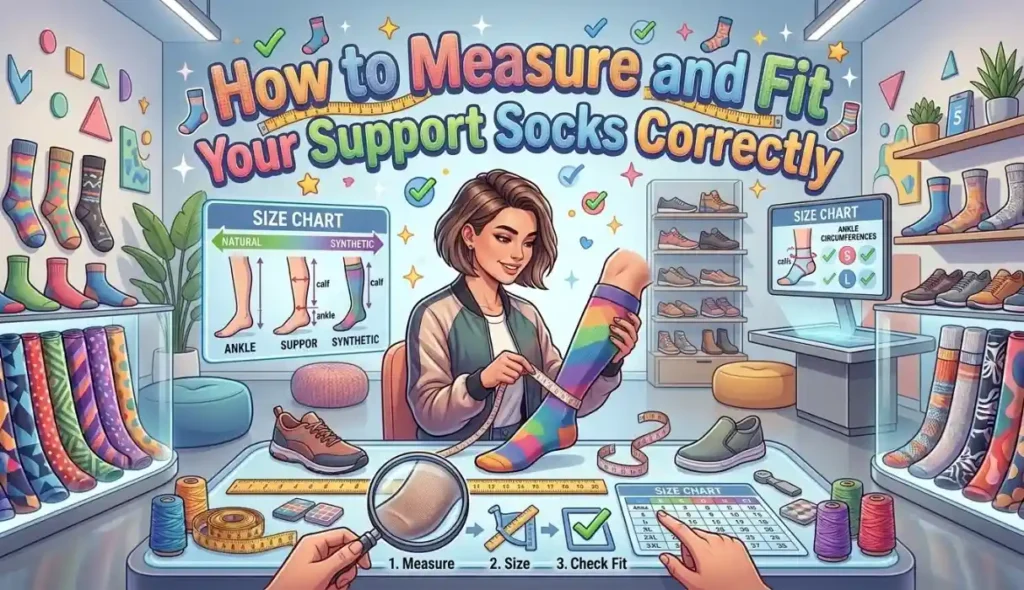
Getting the right size is essential when buying supportive legwear. If a pair is too small, it will pinch at the top band; if it is too large, you lose the crucial graduated pressure benefits.
Measuring your legs with a soft tape measure takes less than two minutes and guarantees a perfect, comfortable fit.
Key Measurement Points for Knee-High Styles
Always measure your legs first thing in the morning before any natural daily swelling occurs. Sit comfortably on a chair with your feet flat on the floor to take accurate circumference readings.
- Ankle Circumference: Measure the narrowest point of your lower leg, located right above your ankle bone.
- Calf Circumference: Wrap the tape around the widest part of your calf muscle to find your maximum width.
- Calf Length: Measure the distance from the floor along your outer leg up to the bend of your knee joint.
Step-by-Step Putting On Technique
Doffing and donning elastic legwear requires a slightly different technique than pulling on regular cotton socks. Trying to bundle them up like standard socks creates tight bunches that resist pulling over your heel.
- Turn inside out: Reach inside the sock, grab the heel pocket, and pull the leg portion inside out down to the heel.
- Anchor your heel: Slip your foot into the footbed and align your heel neatly inside the knitted heel pocket.
- Unroll upward: Gently pull the rolled leg portion up over your ankle and smooth it flat across your calf toward your knee.
- Smooth out wrinkles: Pat down any fabric folds to ensure smooth, even pressure without any bunched rings.
Essential Washing and Garment Care Guidelines
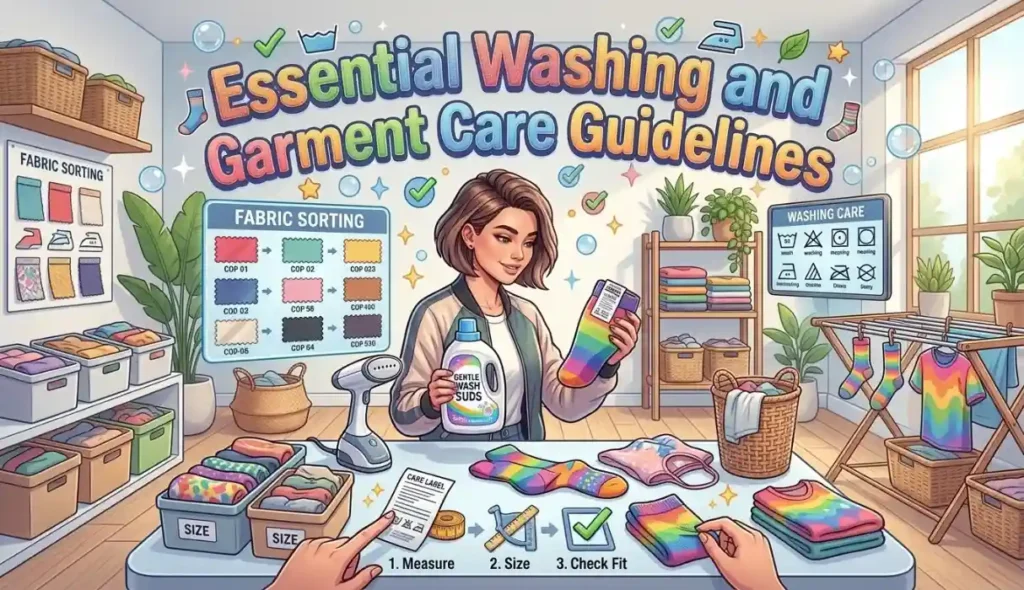
Therapeutic elastic fibers require gentle washing habits to maintain their elasticity, bright colors, and structural integrity over time. Harsh chemical detergents, hot water, and high dryer heat destroy spandex fibers quickly, causing socks to lose their squeezing power.
Taking proper care of your colorful socks keeps them looking vibrant and performing like new for years.
Safe Laundering Practices
Wash your compression garments after every full day of wear to remove natural skin oils, dead skin cells, and sweat that weaken elastic yarns. Washing actually restores the tight shape of the elastic weave, refreshing its therapeutic squeeze.
- Cold Water Wash: Always wash in cold or warm water using a mild liquid laundry soap free from bleach.
- Mesh Laundry Bag: Place your decorative socks inside a mesh wash bag to protect delicate printed designs from abrasive zippers.
- Avoid Fabric Softeners: Never use liquid fabric softeners or dryer sheets, as they coat elastic fibers with greasy residue that ruins breathability.
- Gentle Cycle: Use a delicate or hand-wash machine cycle to prevent excessive twisting and stretching during spin cycles.
Air Drying vs. Machine Drying
High dryer heat is the ultimate enemy of spandex and rubber elastic threads. Always hang your socks to air dry over a drying rack, or lay them flat on a dry towel away from direct heaters and scorching afternoon sunlight.
Air drying preserves vibrant pattern colors and ensures the graduated pressure remains accurate and effective.
Practice Exercise
Test your understanding of compression benefits, sizing methods, and garment care with these 5 multiple-choice questions.
- How does graduated pressure in support socks assist leg circulation?
A. It blocks blood flow completely so legs rest.
B. It squeezes tightest at the ankle and gradually loosens upward, helping blood travel back toward the heart.
C. It heats up calf muscles until they sweat heavily.
D. It forces blood downward into the toes for warmer feet. - Which compression level is recommended for most active adults, nurses, and long-distance travelers seeking daily fatigue prevention?
A. 0 to 2 mmHg
B. 15 to 20 mmHg
C. 50 to 60 mmHg
D. 100 to 120 mmHg - Why is it best to measure your calf and ankle size early in the morning?
A. Tape measures stretch better in morning air.
B. Legs are at their natural size before daily standing swelling occurs.
C. Socks only fit properly if measured before breakfast.
D. Sunlight makes measuring tapes easier to read. - Which fabric care choice can ruin the elastic compression power of spandex fibers?
A. Washing in cold water with mild liquid soap.
B. Using liquid fabric softeners and high-heat dryer cycles.
C. Air drying socks flat on a clean towel.
D. Using a mesh laundry bag during delicate machine cycles. - What is the correct way to put on a tight pair of support socks without stretching them out?
A. Soak the socks in hot boiling water before pulling them up.
B. Turn the leg inside out down to the heel pocket, place your foot in, and unroll the fabric smoothly up your calf.
C. Use metal pliers to pull the top band as hard as possible.
D. Cut small slits in the ankle fabric to make them stretch faster.
Answer Key:
- B
- B
- B
- B
- B
FAQs
Can you safely wear fun support socks while sleeping at night?
No, you should not wear compression socks while sleeping lying down unless explicitly instructed by a physician. When lying flat, your heart does not fight gravity, so external compression is unnecessary and can potentially restrict healthy resting blood flow.
How many hours a day should I wear my support socks?
You can safely wear mild to moderate support socks throughout your normal waking hours, typically eight to sixteen hours daily. Put them on in the morning when getting dressed and remove them before climbing into bed at night for optimal leg comfort.
How often should I replace my favorite compression socks?
With proper cold-water care and regular air drying, a pair of quality compression socks maintains its therapeutic squeeze for six to nine months. Once you notice the top band slipping down or the ankle weave feeling loose, it is time to replace them.
Do support socks help prevent shin splints and calf cramps?
Yes, supportive compression dampens muscle vibration during walking or running, which reduces micro-tears in calf tissues. Improved blood oxygenation also clears metabolic waste products, lowering the frequency of painful nighttime calf cramps after busy physical days.
Can men wear patterned support socks with business suits?
Yes, stylish patterned support socks look fantastic underneath men’s dress pants, adding a subtle pop of personality when sitting down. Geometric designs, dark stripes, and rich navy or burgundy colors bridge the gap between professional corporate wear and fun personal expression.
Conclusion
Incorporating fun support socks into your daily wardrobe is a delightful, effective way to take care of your leg health without sacrificing personal style. From energizing on-the-go workers to making long flights comfortable, graduated pressure keeps your veins happy and your feet feeling light.
By picking the right compression strength, measuring your legs accurately, and following gentle washing habits, you enjoy endless comfort and vibrant style.
Treat your legs to a colorful new pair today, step out with confidence, and feel the energizing difference with every single step!

Jack Olive is the creative mind behind buzzgiggles.com, a fun-focused website built to bring smiles, laughter, and lighthearted entertainment to everyday life. With a passion for humor and enjoyable content, Jack Olive creates and shares playful ideas, amusing stories, entertaining discoveries, and cheerful moments designed for readers of all kinds.
Through buzzgiggles.com, Jack Olive combines creativity, curiosity, and a positive sense of humor to explore the lighter side of life. Whether visitors are looking for a quick laugh, something interesting to share, or a cheerful break from their routine, the website offers content created with fun in mind. Jack Olive believes great entertainment should be easy to enjoy, memorable, and capable of brightening someone’s day.