
The fun theory is a behavioral concept proving that changing human behavior for the better is easiest when you make mundane activities enjoyable. By transforming boring habits, chores, or public duties into engaging games, people naturally choose healthier, safer, and more positive actions without feeling forced.
Have you ever noticed how quickly people ignore nagging signs, yet sprint toward an interactive game? The fun theory proves that curiosity and joy influence human actions far better than strict rules or dull lectures.
When you transform daily chores into lighthearted activities, applying the fun theory makes positive choices feel completely natural and effortless.
You do not need massive budgets or complex technology to harness this powerful psychology in your everyday life. Understanding how the fun theory turns boring routines into rewarding games helps you motivate yourself, your family, or your team.
Let’s explore real-world experiments, psychological secrets, workplace applications, and practical tips to bring more playfulness into your daily routine.
The Origins and Core Philosophy of the Fun Theory
The concept originated as a famous initiative sponsored by Volkswagen in Stockholm, Sweden, designed to see if play could solve real societal problems. Researchers tested whether simple, playful interventions could encourage citizens to make better choices in public spaces.
The results amazed behavioral scientists worldwide because small, creative tweaks inspired massive spikes in positive habits overnight.
The Famous Piano Stairs Experiment
In a busy subway station, researchers turned an ordinary staircase into fully functional, giant piano keys that played musical notes with every step. Directly adjacent to these musical stairs was a standard, effortless escalator that most commuters typically relied on.
Over sixty-six percent more people chose to climb the stairs instead of riding the escalator simply because stepping on musical keys was entertaining.
- Real-Time Feedback: Hearing an immediate musical note created an instant reward loop for taking physical steps.
- Curiosity-Driven Action: Commuters wanted to experiment with playing melodies while walking up to the street.
- Social Interaction: Strangers began stepping on keys together to compose spontaneous musical duets during rush hour.
- Zero Coercion: Nobody was ordered to exercise; they freely chose the healthier option because it felt delightful.
The World’s Deepest Bin Project
Another iconic trial involved fitting an ordinary park trash container with a custom sound effect machine and light sensor. Whenever someone dropped a piece of litter inside, the bin emitted a realistic sound effect mimicking an object falling down an endless abyss.
People began hunting for loose trash scattered across the park just to hear the satisfying, echoing crash sound again.
The Science of Motivation: Why Play Beats Pressure
Psychologists divide human motivation into two distinct categories: extrinsic motivation and intrinsic motivation. Extrinsic motivation relies on external rewards or fear of punishment, like traffic fines, work deadlines, or stern warnings.
Intrinsic motivation happens when you act simply because the activity itself feels satisfying, interesting, or amusing.
Dopamine Loops and Behavioral Loops
When you experience something surprising or fun, your brain releases dopamine, a chemical neurotransmitter linked to pleasure and learning. This dopamine surge reinforces the neural pathway, making you want to repeat the same action.
Traditional rules rely on fear or guilt, which creates mental resistance and causes people to give up quickly.
- Instant Feedback: Gamified tasks provide clear visual or auditory cues the second an action occurs.
- Sense of Mastery: Achieving small goals inside a playful setting boosts personal confidence and self-efficacy.
- Micro-Novelty: Adding unexpected twists keeps routine tasks fresh and mentally stimulating over long periods.
- Social Connection: Shared laughter breaks down social anxiety and encourages cooperative community action.
Overcoming Friction with Gamification
Behavioral friction refers to any mental or physical effort that stops you from starting a desirable habit. Introducing gamification lowers this mental barrier by redirecting your attention away from effort and toward immediate enjoyment.
When the process itself is entertaining, your brain stops worrying about the difficulty or time required.
Applying Playful Psychology to Personal Productivity
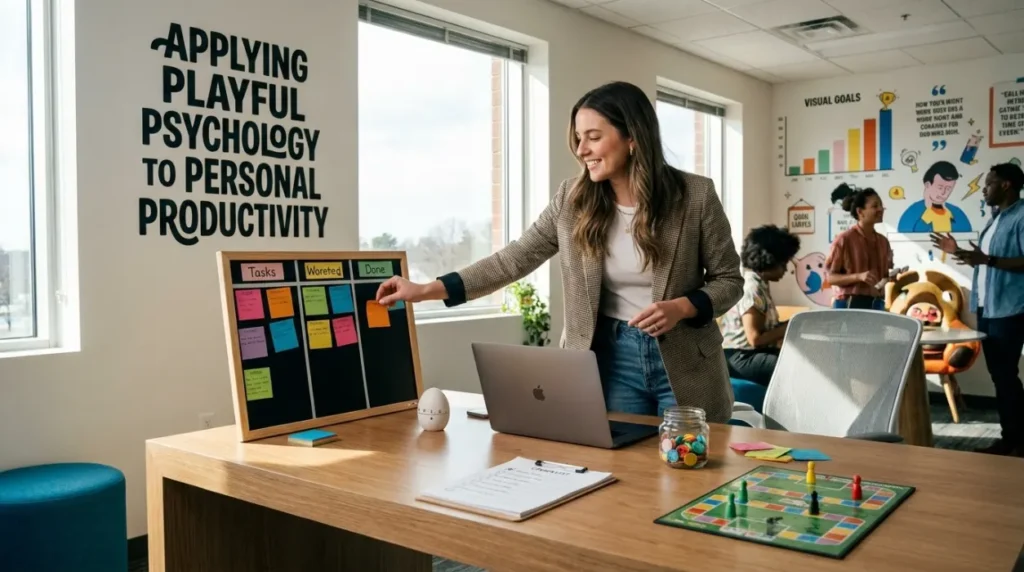
You do not need to construct elaborate public installations to use these behavioral insights inside your own household. Redesigning your personal work environment and daily routines makes conquering procrastination surprisingly easy.
Small adjustments turn exhausting chores into satisfying personal victories that keep your momentum high.
Turning House Chores into Engaging Mini-Games
Cleaning a cluttered kitchen or folding piles of laundry often feels overwhelming after a long, exhausting workday. By setting a visible countdown timer and trying to beat your personal speed record, you flip your brain into play mode.
Listening to immersive audiobooks or energetic music playlists while tidying creates a positive association with chore time.
Gamifying Fitness and Health Habits
Sticking to a workout regimen often fails when exercise feels like a grueling punishment rather than an enjoyable activity. Gamified fitness apps turn running routes into interactive storylines, complete with virtual rewards, level progressions, and friendly leaderboards.
Finding physical activities you genuinely look forward to, like dance video games or rock climbing, removes the need for brute willpower.
The Speed Camera Lottery Lesson
In Sweden, a brilliant safety campaign transformed speed enforcement by rewarding law-abiding citizens instead of only punishing speeders. Speed cameras captured safe drivers, and a portion of fines collected from speeders was pooled into a cash lottery for slow drivers.
This positive reinforcement lowered average traffic speeds through city streets significantly more than traditional speed traps alone.
- Positive Reinforcement: Celebrating good choices builds long-term habits far better than relying solely on penalties.
- Community Engagement: Drivers felt like valued partners in community safety rather than targeted victims.
- Curiosity Factor: Drivers enjoyed checking if their safe driving earned them a winning lottery entry.
- Financial Balance: Penalty funds directly financed driver rewards, creating a self-sustaining safety loop.
Redesigning Workplaces and Classrooms with Play
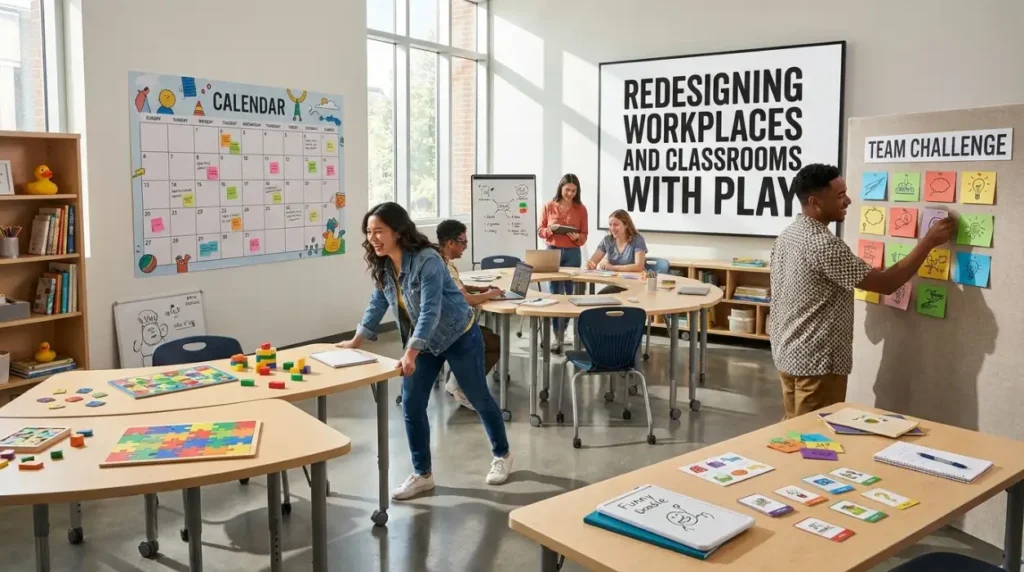
Corporate offices and educational institutions frequently suffer from disengagement, burnout, and low creative energy. Injecting playful design elements into work environments transforms passive participants into active, enthusiastic collaborators.
When employees and students feel curious, learning speed increases and innovative problem-solving flourishes naturally.
Boosting Employee Engagement Through Friendly Competition
Workplace wellness programs often struggle with low participation rates when they feel administrative or mandatory. Organizing friendly department step challenges with live digital scoreboards encourages healthy movement throughout the workday.
Recognizing achievements with lighthearted trophies or playful titles builds team camaraderie while reducing workplace stress.
Enhancing Classroom Learning with Interactive Challenges
Students retain complex concepts much faster when educational material is wrapped inside interactive quizzes and collaborative games. Turning historical timelines or math equations into puzzle-solving quests encourages active critical thinking rather than rote memorization.
Children who learn through play develop a genuine love for discovery that extends far beyond standardized test preparation.
- Interactive Leaderboards: Displaying team progress visually inspires healthy, cooperative group effort.
- Quest-Based Learning: Framing assignments as missions with clear milestones keeps learners focused and motivated.
- Mystery Rewards: Surprising teams with unexpected perks for reaching goals keeps energy levels high.
- Creative Freedom: Allowing individuals to choose how they complete tasks fosters ownership and pride.
The Future of Behavioral Architecture and Urban Design
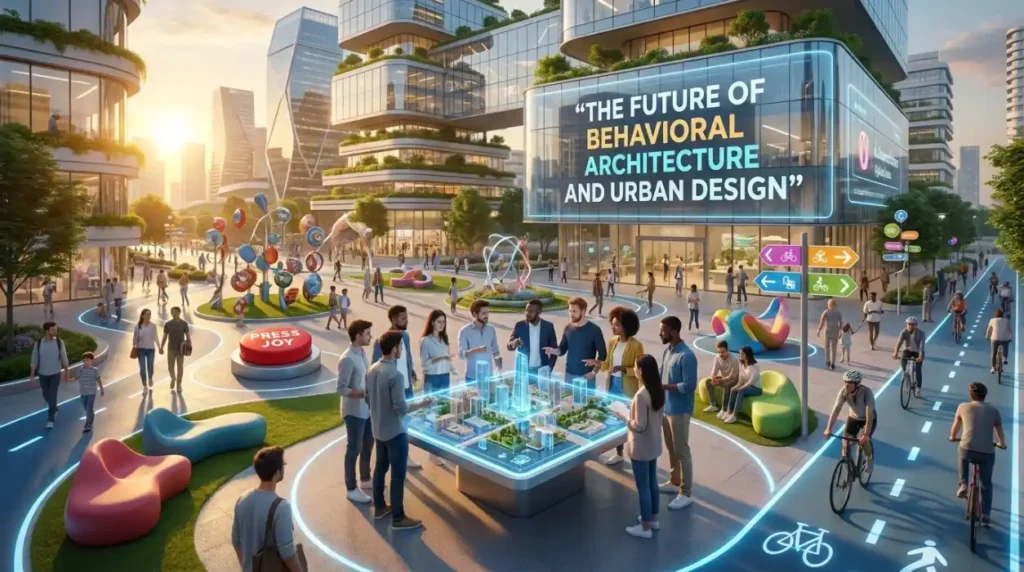
City planners and architects increasingly rely on playful design principles to build cleaner, safer, and more walkable communities. Designing public spaces that encourage natural human interaction builds stronger neighborhood connections and improves public health.
Future smart cities will integrate subtle, interactive elements directly into sidewalks, bus stops, and public parks.
Interactive Public Spaces and Smart Cities
Imagine bus stops equipped with interactive balance boards that power phone chargers, or streetlights that display playful shadow patterns as pedestrians walk underneath. These subtle additions turn boring wait times into delightful micro-adventures for commuters.
Urban spaces that foster joy encourage citizens to spend more time outdoors, supporting local businesses and building vibrant communities.
Ethical Considerations in Gamification Design
While gamifying behavior is extraordinarily effective, designers must use these psychological principles responsibly and transparently. Using manipulative tactics or addiction loops to force unwanted behaviors crosses ethical boundaries into psychological exploitation.
True behavioral design empowers individuals by helping them take actions they already agree are beneficial for their lives.
Practice Exercise
Test your knowledge of behavioral psychology, gamification strategies, and real-world applications with these 5 multiple-choice questions.
- What is the core principle behind the fun theory?
A. People only learn when subjected to strict physical punishment.
B. Making an activity enjoyable is the easiest way to encourage positive behavioral change.
C. Electric cars are the only solution to modern environmental pollution.
D. Traditional rules should be completely abolished in public spaces. - What happened during the famous Stockholm Piano Stairs experiment?
A. Subway ticket prices were reduced by fifty percent for musicians.
B. Over sixty-six percent more people chose the stairs over the escalator because the steps played musical notes.
C. The subway station was permanently closed down for renovations.
D. Escalators were outlawed throughout the entire city of Stockholm. - Why is intrinsic motivation generally more effective for long-term habit building than extrinsic pressure?
A. Intrinsic motivation relies on fear, which keeps people alert at all times.
B. Intrinsic motivation occurs when an activity itself feels satisfying and enjoyable to perform.
C. Intrinsic motivation requires expensive financial rewards to keep going.
D. Intrinsic motivation only works on young children in classroom settings. - How did the Speed Camera Lottery reduce average driving speeds in Sweden?
A. It quadrupled traffic fines for every vehicle on the road.
B. It entered safe drivers into a cash lottery funded by fines collected from speeders.
C. It replaced all speed limits with voluntary suggestions.
D. It forced all drivers to take a written driving test every single month. - What role does dopamine play in gamified task completion?
A. It acts as a mental roadblock that prevents learning.
B. It is a brain chemical released during rewarding experiences that reinforces positive behavior loops.
C. It turns all physical movement into instant fatigue.
D. It completely erases human memory after a task is finished.
Answer Key:
- B
- B
- B
- B
- B
FAQs
What is the origin of the fun theory concept?
The initiative was created as an experimental marketing project sponsored by Volkswagen in Stockholm, Sweden. It aimed to prove that playfulness could motivate people to improve public health, environmental safety, and community cleanliness naturally.
How can I apply this concept to stop procrastinating on hard tasks?
Break your difficult task into a timed mini-game or pair it with an immediate, enjoyable reward loop. Tracking your progress on a visual checklist or competing against a timer shifts your brain away from dread and toward play.
Can gamification help children build better daily habits?
Yes, turning daily tasks like brushing teeth or tidying toys into interactive games works exceptionally well for kids. Using chore charts with colorful stickers or musical timers turns routine duties into fun, rewarding achievements children look forward to.
Is gamification effective for long-term behavioral change?
Gamification is highly effective for building long-term habits when it fosters genuine intrinsic motivation over time. As the initial novelty wears off, the positive feeling associated with the healthy habit remains firmly established.
What are common mistakes when trying to make tasks fun?
Making rules overly complicated or focusing too heavily on artificial competitive rewards can ruin the natural enjoyment. Keep the intervention simple, immediate, and genuinely pleasant so that the activity never feels like forced labor.
Conclusion
Understanding the fun theory proves that transformation does not require heavy pressure, strict rules, or exhausting willpower. By transforming daily responsibilities, health habits, and public duties into engaging activities, we naturally choose better paths.
Whether you are designing public spaces, improving workplace productivity, or simply trying to tidy your home, playfulness remains your greatest asset.
Embrace curiosity, experiment with small gamified tweaks in your daily routine, and harness the power of the fun theory to change your world today!

Jack Olive is the creative mind behind buzzgiggles.com, a fun-focused website built to bring smiles, laughter, and lighthearted entertainment to everyday life. With a passion for humor and enjoyable content, Jack Olive creates and shares playful ideas, amusing stories, entertaining discoveries, and cheerful moments designed for readers of all kinds.
Through buzzgiggles.com, Jack Olive combines creativity, curiosity, and a positive sense of humor to explore the lighter side of life. Whether visitors are looking for a quick laugh, something interesting to share, or a cheerful break from their routine, the website offers content created with fun in mind. Jack Olive believes great entertainment should be easy to enjoy, memorable, and capable of brightening someone’s day.