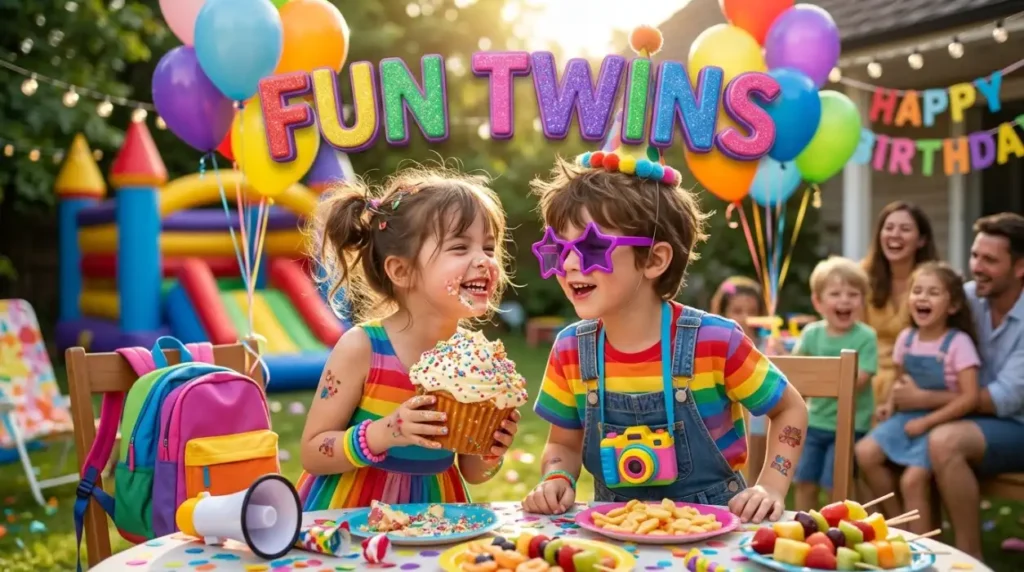
Fun twins are twin siblings whose unique bond, shared milestones, and playful dynamics bring double the joy to family life. From secret languages to identical genetics, understanding their biological and behavioral traits helps parents and curious readers appreciate the incredible science and daily humor behind raising or being a twin.
Have you ever wondered what makes the bond between twin siblings so fascinating? Discovering the colorful world of fun twins reveals interesting connections involving shared genetics, unique communication, and lifelong companionship.
Whether you are a parent raising twins or simply curious about human biology, learning about fun twins can provide fascinating insights into childhood development. Every pair has its own personality, experiences, and special ways of connecting.
From shared laughter to playful adventures, twin siblings can bring extra energy and memorable moments to family life. Their relationship may develop through cooperation, friendly competition, and countless everyday experiences that strengthen their bond.
In this guide, explore the science, psychology, and practical ideas surrounding twin siblings. Learn how genetics, environment, communication, and family experiences can shape their journey while discovering what makes fun twins so fascinating.
The Fascinating Science Behind Twin Biology
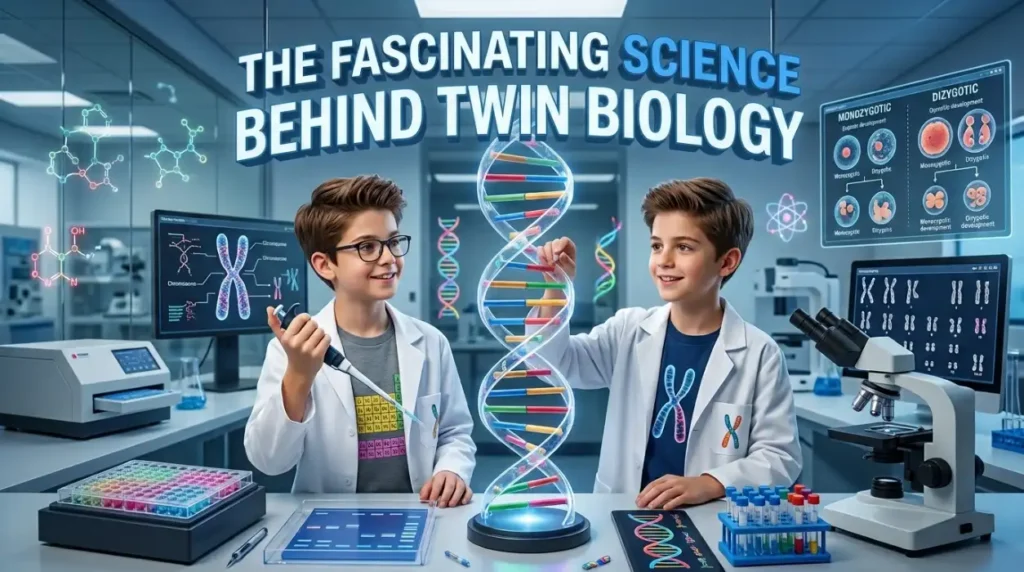
To understand the unique connection between siblings born together, it helps to look at how twins form before birth. Nature has two distinct paths for creating twins, resulting in either identical or fraternal siblings.
Identical Twins: A Single Divided Egg
Identical twins, known scientifically as monozygotic twins, begin when a single fertilized egg splits into two separate embryos shortly after conception.
Because both embryos originate from the same genetic blueprint, identical twins share nearly 100% of their DNA. This shared DNA is why they look so strikingly similar and almost always share the same biological sex.
Fraternal Twins: Two Eggs and Two Sperm
Fraternal twins, or dizygotic twins, happen when a mother releases two separate eggs during ovulation, and two different sperm fertilize them.
Genetically speaking, fraternal twins are just like any regular brothers or sisters born at the same time. They share roughly 50% of their DNA, can be different sexes, and often look completely different from one another.
Semi-Identical and Polar Body Twins
In rare scientific cases, a phenomenon known as semi-identical twin formation occurs when one egg is fertilized by two sperm before splitting.
This unusual biological process results in siblings who share between 50% and 100% of their maternal DNA, showing just how complex human reproduction can be.
Secret Languages and Cryptophasia
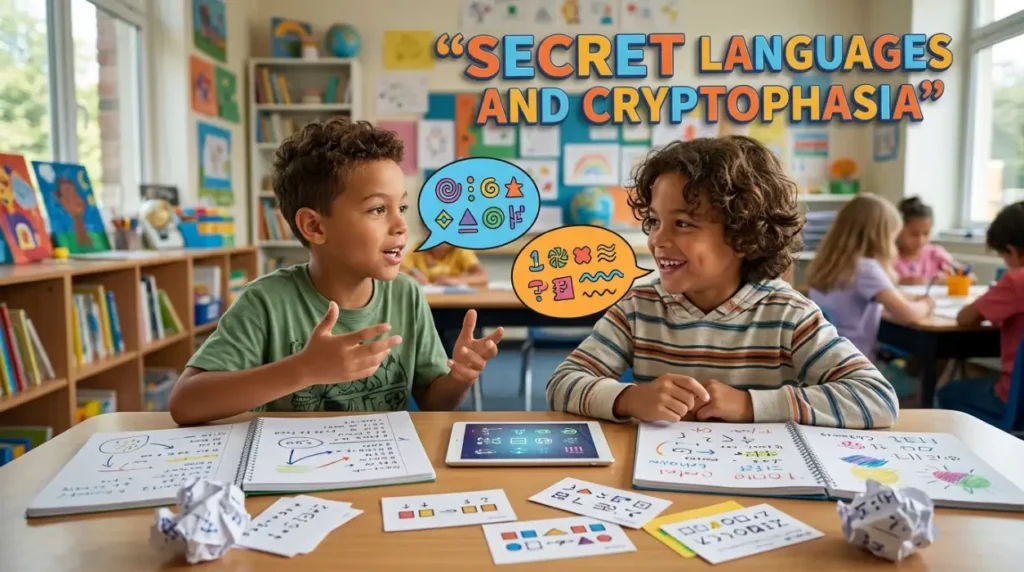
One of the most mind-boggling aspects of twin childhood is their ability to invent private communication systems that no one else understands.
Understanding Cryptophasia
Child development experts call this unique linguistic phenomenon cryptophasia, which translates to “secret speech.” It happens most frequently during early toddler years when toddlers spend almost all their waking hours together.
Instead of copying adult words correctly, siblings create their own vocal sounds, gestures, and gibberish phrases that make perfect sense to them.
How Secret Speech Develops
When two toddlers learn to speak at the same pace, they reinforce each other’s invented sounds rather than relying entirely on adult models.
- Unique naming words for favorite toys or comfort items.
- Specific vocal tones that communicate mood shifts instantly.
- Shared physical gestures that replace spoken sentences entirely.
Transitioning to Standard Language
Parents sometimes worry that secret speech will delay normal language skills, but most children outgrow cryptophasia naturally around age three or four.
As children interact more with parents, playmates, and teachers, they adapt quickly to standard vocabulary without losing their close bond.
Identical vs. Fraternal: A Side-by-Side Comparison
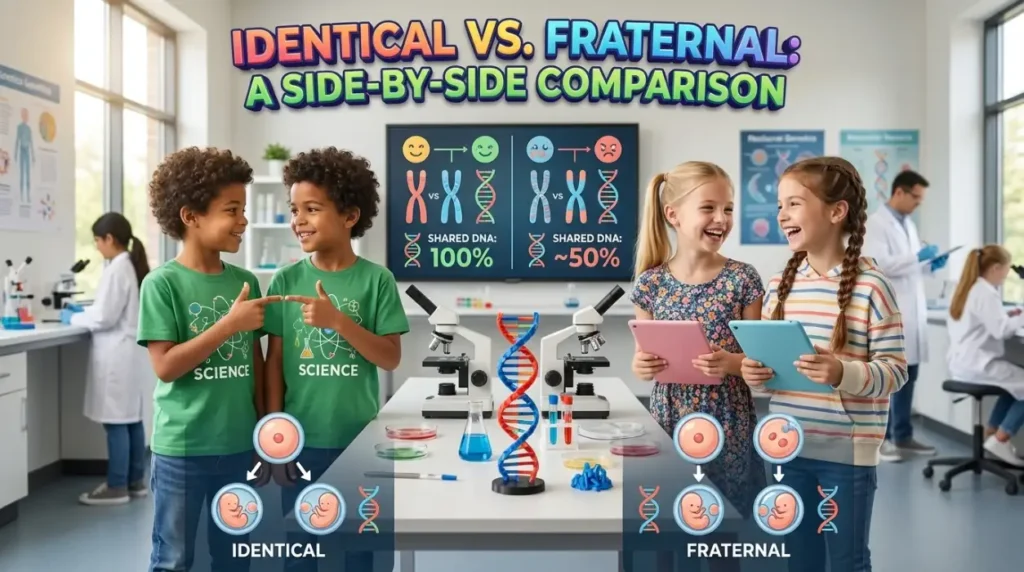
While all twin pairs share special bonds, their biological structures create distinct developmental pathways and physical traits.
Surprising Facts You Probably Did Not Know
The biological and psychological quirks of twin relationships offer endless surprises that baffle scientists and delight parents alike.
Unique Fingerprints Despite Identical DNA
Even though identical siblings share the same genetic code, they do not possess identical fingerprints.
While genetics determine the overall whorl patterns, fingerprint ridges form as the fetus touches the inner walls of the amniotic sac. Slight physical movements create unique ridge patterns for every individual finger.
Mirror-Image Twins
Roughly 25% of identical twins develop as mirror images of each other inside the womb.
This means one sibling might be right-handed while the other is left-handed, or their hair whorls might swirl in opposite directions. In rare cases, even internal organs or birthmarks appear on opposite sides of their bodies.
Vanishing Twin Syndrome
Modern ultrasound technology reveals that twin conceptions happen far more frequently than actual twin births.
In a process called vanishing twin syndrome, one early gestational sac is reabsorbed by the mother’s body during early pregnancy, leaving a single surviving fetus to continue developing normally.
Parenting Strategies for Raising Happy, Independent Siblings
Raising two children of the same age simultaneously presents incredible rewards along with unique organizational challenges.
Fostering Individual Identities
It is easy for well-meaning friends and family members to treat twins as a single unit rather than two distinct individuals.
Encouraging separate hobbies, distinct clothing choices, and one-on-one time with each parent helps each child develop strong self-esteem and independent thinking skills.
Managing Sibling Rivalry and Comparison
Because twins share identical milestones like starting school or joining sports teams, unhealthy competition can develop quickly.
- Avoid comparing grades, athletic abilities, or physical milestones between siblings.
- Celebrate individual achievements based on personal effort rather than relative performance.
- Create separate physical spaces or individual toy storage to respect personal boundaries.
Simplifying Daily Logistics
Managing feeding schedules, school assignments, and bedtime routines for two toddlers requires clear routines and smart organization.
Using color-coded items like water bottles, backpacks, and toothbrush holders reduces daily arguments and keeps morning routines running smoothly.
Psychological Bonds and Telepathy Myths
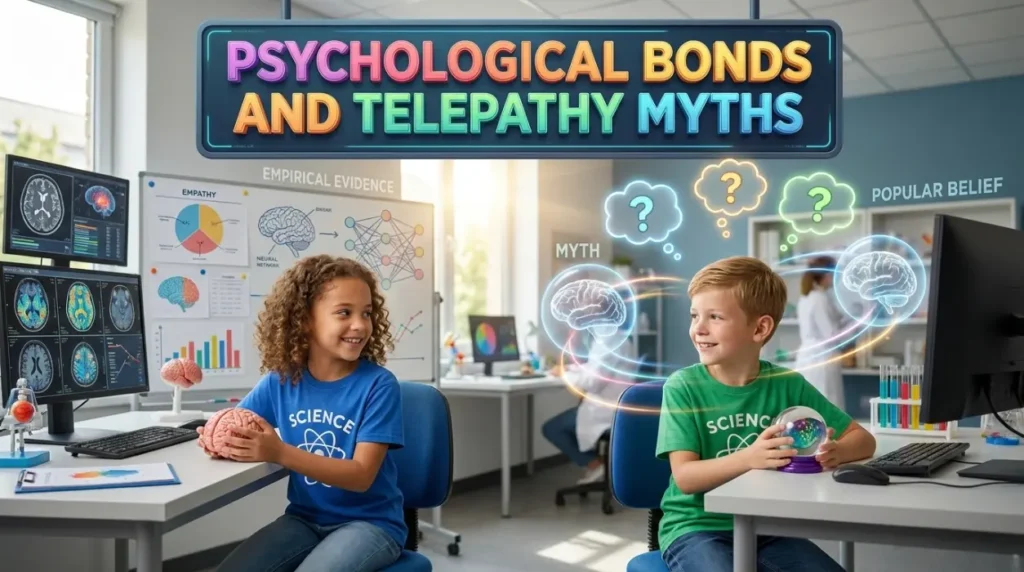
The idea that twins possess psychic telepathy or feel each other’s physical pain across long distances is a popular culture favorite.
The Science Behind “Twin Telepathy”
While dramatic stories about psychic connections grab headlines, scientific research attributes these moments to deep emotional familiarity rather than supernatural powers.
Because twins spend thousands of hours together observing each other’s facial expressions and body language, they anticipate each other’s thoughts and reactions with incredible accuracy.
Emotional Synchronization
Twins often experience high levels of emotional empathy, meaning one child feels stressed or excited simply by sensing their sibling’s emotional state.
This deep psychological closeness provides a lifelong foundation of mutual support, emotional security, and unconditional companionship.
Practice Exercise
Test your understanding of twin biology, developmental psychology, and parenting strategies with these 5 multiple-choice questions.
- What causes identical twins to form in the womb?
A. Two separate eggs fertilized by two separate sperm.
B. A single fertilized egg splitting into two separate embryos.
C. Two eggs fertilized by a single sperm cell simultaneously.
D. A single egg reabsorbing an adjacent embryonic sac. - What is the scientific term for the secret language invented by young twin siblings?
A. Monochorionicity
B. Dizygotic speech
C. Cryptophasia
D. Epigenetic vocalization - Why do identical twins have different fingerprints?
A. They possess completely different genetic blueprints from birth.
B. Amniotic fluid exposure alters their DNA sequence in the womb.
C. Physical contact with the amniotic sac creates unique ridge patterns.
D. Fingerprints change randomly based on childhood dietary habits. - Approximately what percentage of shared DNA do fraternal twins have?
A. Nearly 100%
B. Approximately 75%
C. Approximately 50%
D. Less than 10% - Which parenting strategy helps foster individual identity in twin children?
A. Dressing them in identical matching outfits every day.
B. Enrolling them in the same extracurricular activities always.
C. Encouraging separate hobbies and spending one-on-one time with each child.
D. Comparing their academic grades to motivate faster learning.
Answer Key:
- B
- C
- C
- C
- C
FAQs
Are identical twins always the same biological sex?
Yes, identical twins are almost always the same biological sex because they develop from a single fertilized egg that carries one set of sex chromosomes. Extremely rare genetic mutations can occasionally cause exceptions, but they are extraordinary.
How common are fraternal twins compared to identical twins?
Fraternal twins are significantly more common than identical twins, accounting for about 70% of all twin births worldwide. Fraternal twin rates vary by maternal age, genetics, and fertility treatments, whereas identical twin rates remain stable globally.
Do identical twins have the same DNA throughout life?
Identical twins start with identical DNA, but subtle genetic differences develop as they grow. Environmental factors, lifestyle choices, and random gene mutations cause their DNA to diverge slightly over time through a process called epigenetics.
Can fraternal twins have two different biological fathers?
Yes, this extremely rare phenomenon is called superfecundation. It occurs when a mother releases two eggs during one ovulation cycle, and those eggs are fertilized by sperm from two different men during separate intimate encounters.
Should twins be placed in separate classrooms at school?
Deciding whether to separate twins in school depends entirely on their individual personalities, social independence, and academic needs. Many educators recommend separate classrooms to encourage independent friendship circles, but parents should evaluate what suits their children best.
Why do some identical twins look slightly different as they age?
Differences in physical appearance happen due to environmental influences like sun exposure, diet, physical activity, and stress levels. These lifestyle differences alter gene expression over time, making identical siblings look subtly distinct as adults.
Conclusion
Understanding the unique world of fun twins reveals a remarkable blend of biological wonders, psychological closeness, and lifelong companionship. From the intricate science of egg splitting to the hilarious moments of early childhood secret speech, twin dynamics highlight the truly amazing diversity of human growth.
Whether you are navigating the daily adventures of raising twins or simply fascinated by sibling genetics, appreciating each child’s individuality remains the key to thriving.
Embrace the shared milestones, encourage separate passions, and enjoy the double dose of joy that twin siblings bring into the world!

Jack Olive is the creative mind behind buzzgiggles.com, a fun-focused website built to bring smiles, laughter, and lighthearted entertainment to everyday life. With a passion for humor and enjoyable content, Jack Olive creates and shares playful ideas, amusing stories, entertaining discoveries, and cheerful moments designed for readers of all kinds.
Through buzzgiggles.com, Jack Olive combines creativity, curiosity, and a positive sense of humor to explore the lighter side of life. Whether visitors are looking for a quick laugh, something interesting to share, or a cheerful break from their routine, the website offers content created with fun in mind. Jack Olive believes great entertainment should be easy to enjoy, memorable, and capable of brightening someone’s day.