
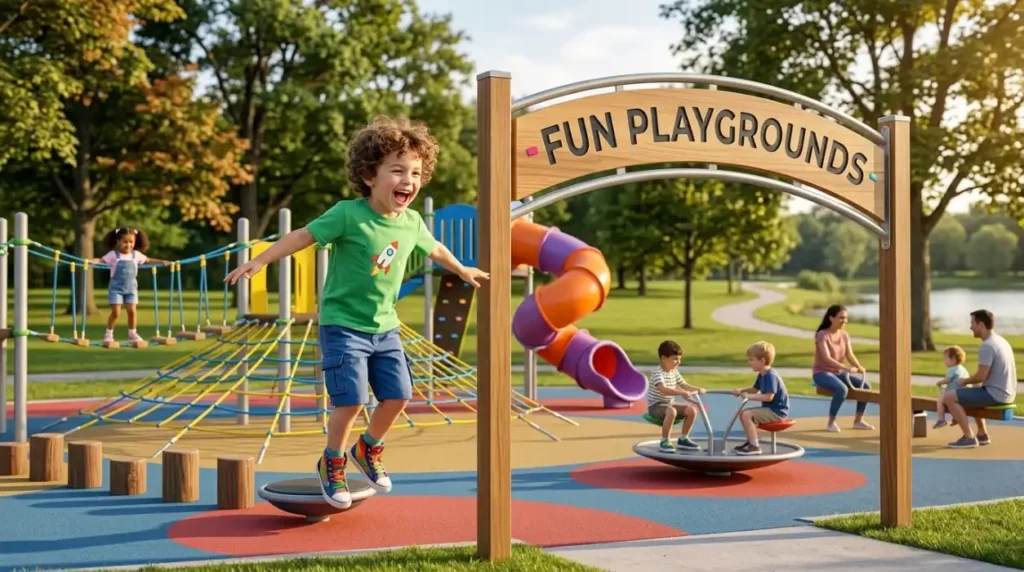
Finding fun playgrounds involves looking for play spaces that balance physical challenge, safety, sensory variety, and inclusive design. The best sites feature diverse equipment—like climbing towers, sensory panels, and zip lines—that caters to different age groups while encouraging active, creative, and social outdoor play.
Have you ever seen children rush toward a playground with excitement on their faces? Visiting fun playgrounds can turn an ordinary afternoon into an exciting adventure filled with laughter, movement, and outdoor discovery.
Choosing quality fun playgrounds gives children a safe space to stay active, build confidence, and explore their creativity. Playgrounds can also encourage kids to interact, cooperate, and develop important social skills.
Today’s play areas offer much more than traditional swings and slides. Creative climbing structures, imaginative play zones, interactive features, and inclusive designs can provide engaging experiences for children of different ages and abilities.
Let’s explore what makes fun playgrounds so enjoyable, how thoughtful designs support childhood development, and how families can plan exciting, safe, and memorable park adventures together.
Why Quality Play Spaces Matter for Growing Kids
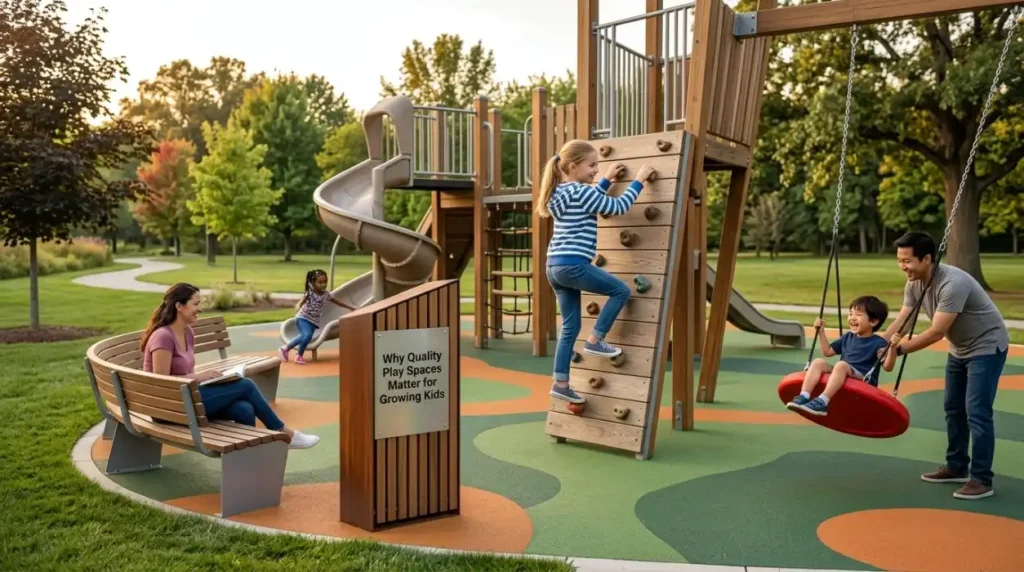
Stepping onto a well-designed play space opens up a world of physical, mental, and social benefits for young minds.
Boosting Physical Health and Motor Skills
Unstructured outdoor play provides a complete physical workout without ever feeling like forced exercise.
Climbing up rope towers builds upper body strength, while balancing along narrow beams improves core stability and coordination.
Running freely across open play zones boosts cardiovascular endurance and builds strong bones during crucial developmental years.
Fostering Social Skills and Teamwork
Playgrounds act as mini-communities where kids naturally learn how to navigate social interactions with peers.
Waiting for a turn on the popular tire swing teaches patience and self-regulation in a relaxed setting.
Organizing spontaneous games of tag requires clear communication, fair rule-making, and conflict resolution among playmates.
Inspiring Creative Thinking and Imagination
A simple wooden play structure can instantly transform into a pirate ship, a medieval castle, or a futuristic space station.
Unstructured play spaces allow children to invent their own scenarios without rigid adult-directed rules.
This imaginative freedom builds problem-solving skills and boosts creative confidence that helps kids throughout their school years.
Modern Features That Make Play Spaces Truly Exciting
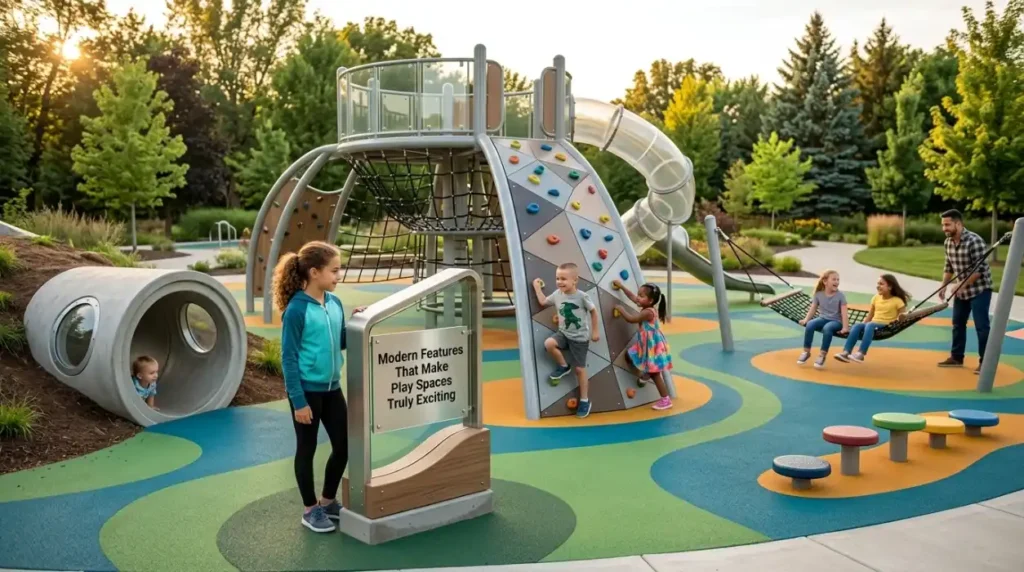
Today’s landscape architects and safety engineers design play spaces that engage all five senses and welcome kids of all abilities.
Inclusive and Accessible Equipment
Great play areas ensure that every child, regardless of physical mobility or cognitive needs, can join the excitement.
- Wheelchair-Accessible Ramps: Wide elevated pathways allow kids using mobility devices to reach top play platforms smoothly.
- Adaptive Swings: High-backed, molded swing seats with secure harness straps support children who need extra torso stability.
- Sensory Touch Panels: Tactile maze walls, musical chime pipes, and textured spinning wheels stimulate sensory processing.
Dynamic Adventure Structures
Modern play designs incorporate high-energy equipment that appeals to older children seeking bigger physical challenges.
Tall rope climbing pyramids encourage kids to calculate physical risks and plan safe hand-holds as they climb higher.
Ziplines give children the exhilarating feeling of gliding through the air while strengthening their grip and arm strength.
Natural Play Elements
Incorporating natural materials into playground landscapes creates a calm, organic environment that connects city kids with nature.
Log balance beams, smooth boulder scrambles, and sand-and-water play tables encourage open-ended sensory exploration.
Shaded trees, wooden bridges, and native plant gardens surround play zones with natural beauty and cool breezes.
Comparing Playground Types by Age and Safety
Selecting the right play space requires matching equipment styles to your child’s specific developmental stage and energy levels.
The Surprising History of Outdoor Play Structures
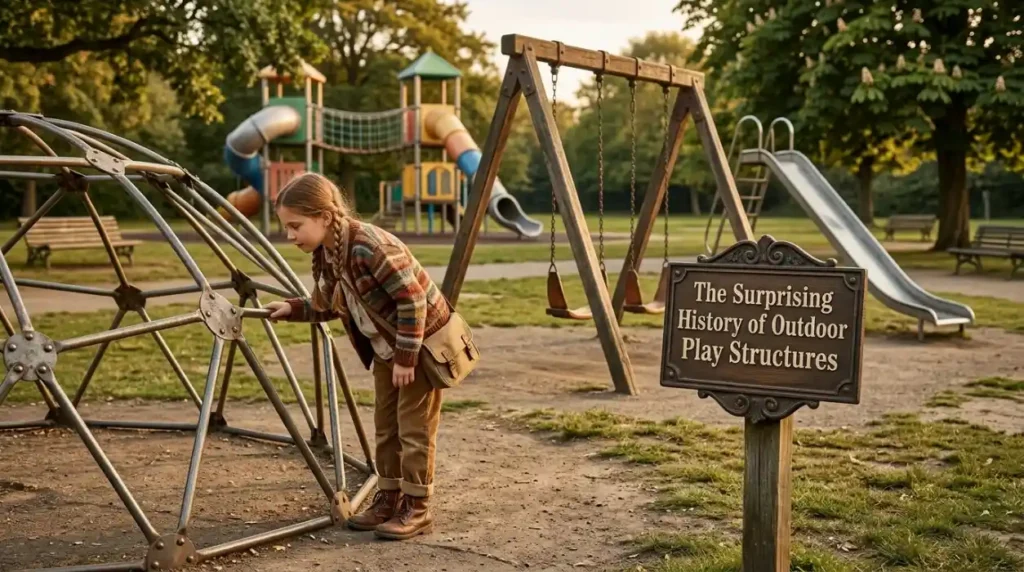
Understanding how play spaces evolved reveals how much society’s view of childhood development has improved over time.
The World’s First Sand Gardens
The concept of dedicated public play spaces originated in Germany during the mid-1800s before spreading to North America.
Boston created the first “sand gardens” in 1885, providing large piles of clean sand in city yards to give urban children a safe place to dig.
These simple sand pits proved immensely popular and demonstrated the public health benefits of designated recreation spaces.
The Junk Playground Movement
During World War II, a Danish landscape architect named Carl Theodor Sorensen noticed children preferred playing in bomb-damaged construction sites over neat parks.
This led to the creation of “junk playgrounds” in the 1940s, where kids used real tools, wood, scrap metal, and tires to build their own structures.
Today, this concept survives as “adventure playgrounds,” where trained staff supervise loose-parts building and creative construction play.
The Evolution of Modern Safety Surfaces
In early neighborhood parks, play structures sat directly over hard concrete, asphalt, or packed dirt surfaces.
It was not until the late 1970s that safety standards began requiring impact-absorbing materials like wood chips and rubberized surfacing.
Modern poured-in-place rubber surfaces absorb fall impacts dramatically better, preventing serious head injuries while remaining smooth for strollers and wheelchairs.
How to Plan a Safe and Enjoyable Park Outing
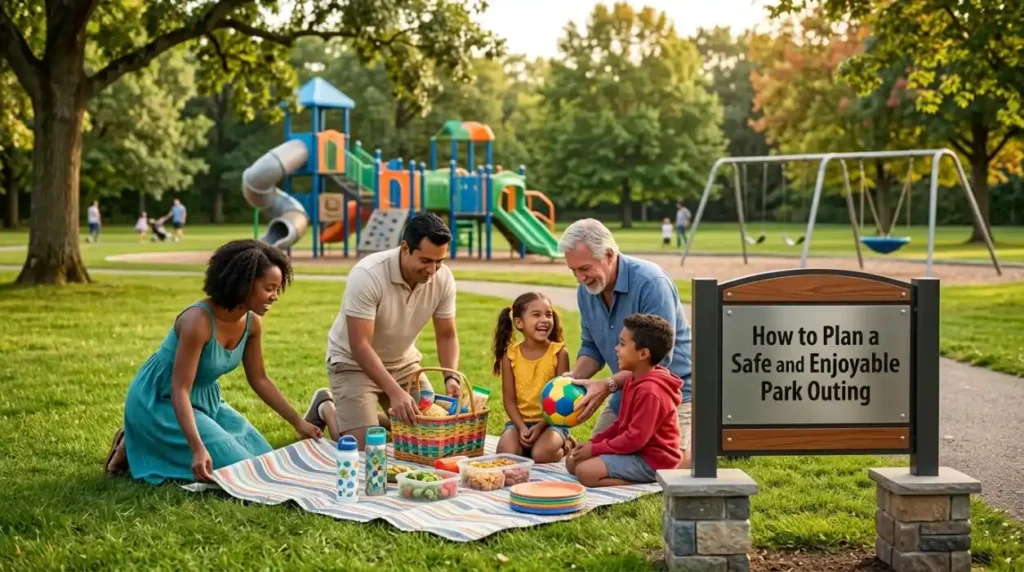
A little simple preparation guarantees that your outdoor play trip stays fun, safe, and free from unexpected tantrums or injuries.
Packing a Smart Park Survival Kit
Keeping basic supplies in your car or backpack ensures you are prepared for minor bumps, hungry bellies, and sudden weather shifts.
- First Aid Essentials: Pack adhesive bandages, antiseptic wipes, and soothing ointment for small scrapes and splinters.
- Sun and Bug Protection: Apply broad-spectrum sunscreen and kid-friendly insect repellent before entering open play fields.
- Hydration and Snacks: Carry insulated water bottles alongside easy snacks like apple slices, trail mix, and cheese sticks.
Inspecting Equipment for Safety First
Taking two minutes to scan the play equipment before letting your kids run free prevents unnecessary hazards.
Check that metal slides are not burning hot from direct sunlight, especially on bright summer afternoons.
Look for loose bolts, frayed climbing ropes, or trash items lying near landing pads beneath high platforms.
Teaching Kids Smart Playground Rules
Setting ground rules before stepping out of the car helps children play respectfully alongside other park visitors.
Remind kids to walk around swing paths rather than cutting directly in front of moving swing seats.
Encourage them to take turns going down slides feet-first rather than climbing up slide surfaces while others descend.
Practice Exercise
Test your knowledge of play space safety, equipment features, and history with these 5 multiple-choice questions.
- Which play surface material provides superior impact absorption while allowing smooth access for wheelchairs and strollers?
A. Packed concrete
B. Poured-in-place rubber
C. Loose pea gravel
D. Bare asphalt - Where did the very first public “sand gardens” open in North America in 1885?
A. New York City
B. Chicago
C. Boston
D. Los Angeles - What key safety step should caregivers take before letting children use metal slides on sunny days?
A. Touch the slide surface to check if it is too hot.
B. Coat the slide surface with cooking oil.
C. Spray cold water continuously down the slide.
D. Tell kids to slide down head-first. - What is the primary purpose of inclusive playground equipment?
A. To keep adults from sitting down.
B. To ensure children of all physical abilities can play together.
C. To prevent rain from hitting the ground.
D. To restrict access to older children only. - What type of play structure originated from Danish “junk playgrounds” in the 1940s?
A. Indoor video game arcades
B. Loose-parts adventure playgrounds
C. Mechanical carousel rides
D. Paved roller-skating rinks
Answer Key:
- B
- C
- A
- B
- B
FAQs
What makes a play area safe for toddlers under three years old?
Low-to-the-ground structures, soft foam padding, closed bucket swings, and smooth rubber surfacing keep toddlers safe. Separate toddler zones prevent small children from getting bumped by older, faster-moving kids during peak park hours.
How do I find inclusive play spaces near my neighborhood?
Check local city park department websites, community directories, and non-profit accessibility maps online. Look specifically for venues listing poured-rubber surfacing, wheelchair ramps, adaptive swings, and quiet sensory spaces for neurodivergent visitors.
Why are wood chips used beneath play equipment?
Engineered wood fiber acts as a cost-effective, impact-absorbing cushion that compresses under pressure during accidental falls. Wood chips trap air pockets between layers, significantly reducing the severity of fall injuries compared to dirt or asphalt.
How can I keep my kids safe on hot summer days at the park?
Visit play spaces early in the morning or late in the afternoon to avoid peak ultraviolet heat hours. Test slide temperatures with your hand, apply sunscreen, and ensure everyone drinks water every twenty minutes.
What are the main benefits of nature-based play zones?
Nature-based play zones encourage open-ended creativity, sensory touch exploration, and environmental curiosity using natural materials. Balancing on logs and climbing boulders builds core strength while fostering a deep appreciation for the outdoors.
How do play areas help children build social skills?
Play spaces offer unstructured social environments where kids must negotiate rules, share equipment, and resolve minor disagreements. These spontaneous interactions teach patience, empathy, and active teamwork outside of structured school settings.
Conclusion
Visiting fun playgrounds is a great way to support children’s physical activity, social skills, and creativity. From exciting climbing structures to nature-inspired play areas, modern playgrounds provide enjoyable experiences for kids of different ages and abilities.
Choosing safe equipment, bringing essential supplies, and encouraging children to share can make every visit more enjoyable. Whether you prefer community parks, adventure areas, or inclusive spaces, each outing can create opportunities for new games, friendships, and happy memories.
Gather the family, head outdoors, and explore exciting, nearby places. With so many creative play spaces available, your next favorite family adventure may be just around the corner!

Jack Olive is the creative mind behind buzzgiggles.com, a fun-focused website built to bring smiles, laughter, and lighthearted entertainment to everyday life. With a passion for humor and enjoyable content, Jack Olive creates and shares playful ideas, amusing stories, entertaining discoveries, and cheerful moments designed for readers of all kinds.
Through buzzgiggles.com, Jack Olive combines creativity, curiosity, and a positive sense of humor to explore the lighter side of life. Whether visitors are looking for a quick laugh, something interesting to share, or a cheerful break from their routine, the website offers content created with fun in mind. Jack Olive believes great entertainment should be easy to enjoy, memorable, and capable of brightening someone’s day.