
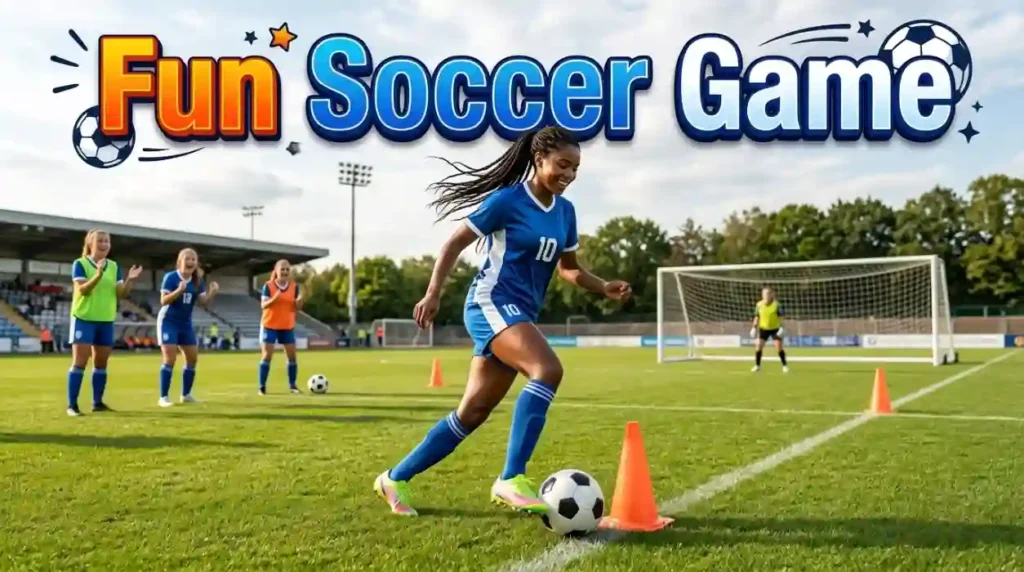
A fun soccer game refers to a modified, small-sided match or skill-building mini-game such as World Cup Knockout, Soccer Tennis, or Crab Soccer, designed to boost ball control and physical fitness. These entertaining variations eliminate rigid match pressures, making soccer engaging, inclusive, and enjoyable for players of all ages and skill levels.
Have you ever gathered a group of friends at a grassy park, inflated a soccer ball, and wondered how to turn a standard workout into an unforgettable afternoon? Setting up an engaging, fun soccer game is the absolute best way to bring people together, improve agility, and enjoy healthy outdoor competition.
Traditional competitive matches often feel overly intense or rigid for casual players seeking lighthearted leisure.
In contrast, choosing a creative fun soccer game removes championship pressure while keeping everyone laughing, moving, and actively touching the ball.
Ready to see how choosing the right fun soccer game can transform your next weekend hangout, team practice, or backyard party? Let’s explore small-sided variations, skill-building mini-games, equipment setups, and coaching tips together!
Why Mini-Games and Small-Sided Soccer Outperform Standard Matches
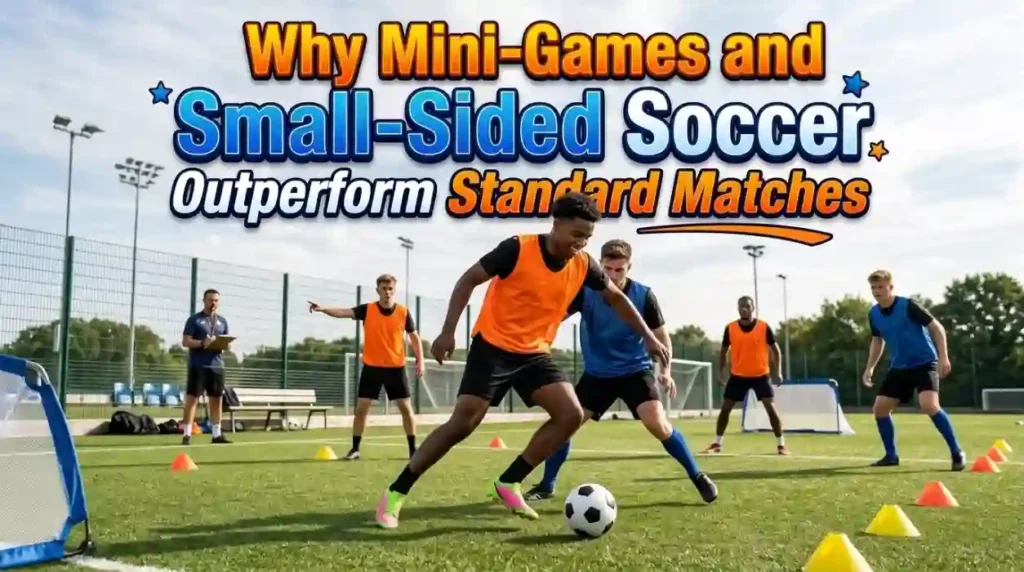
Standard eleven-on-eleven soccer matches cover a massive pitch, which often leaves casual players running back and forth without touching the ball for long stretches. When beginner players rarely get to kick, dribble, or pass, their enthusiasm wanes quickly.
Small-sided mini-games solve this problem by shrinking the pitch dimensions and reducing total team sizes.
This layout adjustment ensures that every participant stays actively involved in the action throughout the session.
Increasing Touches and Decision-Making Speed
When you play on a condensed field with fewer teammates, the soccer ball comes to your feet every few seconds. Experiencing frequent ball contacts accelerates motor skill development and improves foot-eye coordination naturally.
Players learn to make lightning-fast decisions under light defensive pressure without worrying about making costly mistakes.
This constant involvement builds genuine confidence far faster than standing isolated on a massive professional pitch.
Maximizing Inclusivity for Mixed Skill Levels
In traditional matches, athletic veterans often dominate play while beginners feel intimidated along the sidelines. Modified mini-games introduce clever rules, physical handicaps, or scoring twists that balance the playing field for everyone.
For example, requiring three mandatory team passes before shooting encourages experienced players to involve beginners in every attacking build-up.
Creating an inclusive environment keeps morale high and ensures everyone leaves the field feeling accomplished.
The Best Casual Soccer Mini-Games for All Ages
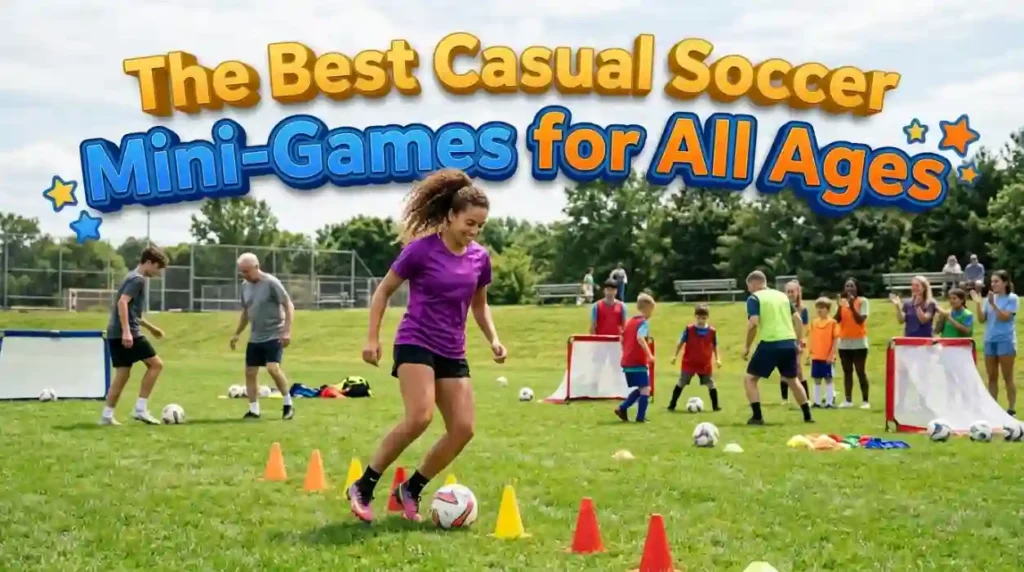
Whether you are hosting a birthday party, organizing a school gym class, or leading a youth team training session, having a bank of creative mini-games is essential. These variations blend core football mechanics with classic playground rules to create high-energy fun.
You do not need expensive training equipment to set up these games; simple cones, pinnies, and a standard soccer ball are all it takes.
Here is a helpful overview summarizing popular mini-games, ideal participant counts, and key skill benefits.
1. World Cup Knockout (The Ultimate Shooting Challenge)
World Cup Knockout is an absolute staple on soccer fields worldwide because it delivers instant excitement and high stakes. Players pair up into two-person national teams, while a single goalkeeper defends a full-sized net.
All teams share a single ball, taking turns shooting from outside the penalty box to score and advance to the next round.
If another team scores before your pair finds the net, your team is eliminated for that round.
The fast-paced elimination format keeps players cheering intensely from the sidelines as the final two teams battle for the trophy.
2. Soccer Tennis (Mastering Aerial First Touches)
Soccer Tennis combines the tactical court positioning of tennis with the graceful ball control of footvolley. Set up a low net, or place a bench across a small court, separating two opposing teams of two players each.
Teams use their feet, thighs, chest, and head to pass the ball over the net within three allowed touches.
The ball is allowed to bounce exactly once on each side of the net before a team must return it.
This game refines delicate first touches and aerial ball control without requiring intense sprinting, making it perfect for active recovery days.
3. Sharks and Minnows (High-Energy Dribbling Defense)
Sharks and Minnows is a timeless playground classic that teaches young players to keep their heads up while dribbling through crowded spaces. Define a square boundary with corner cones, assigning two players to act as hungry “sharks” without soccer balls.
All other players act as “minnows,” each dribbling their own ball from one side of the grid to the other.
The sharks attempt to kick minnows’ balls out of bounds, turning captured minnows into helper sharks for the next round.
The last remaining minnow with a ball wins the game and becomes the chief shark for the following round.
Creative Field Modifications and Novelty Variations
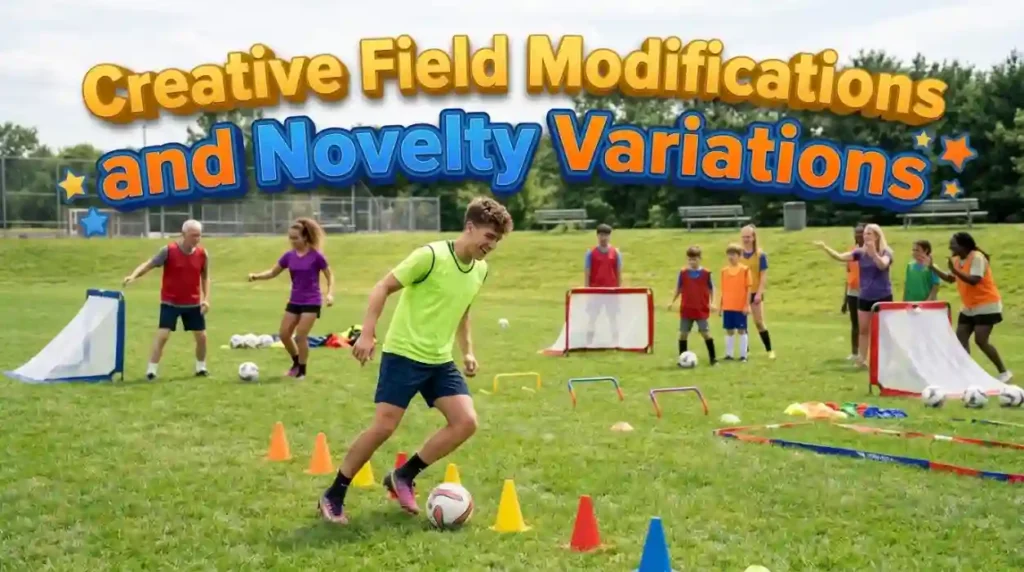
Beyond classic drills, altering the physical playing environment or adding funny physical constraints introduces a whole new level of comedy to soccer. Novelty variations are fantastic icebreakers for adult social leagues, family reunions, and end-of-season team celebrations.
These quirky formats focus entirely on laughter, teamwork, and unpredictable bounces.
Let’s look at three highly entertaining novelty formats that put a unique spin on the traditional sport.
Bubble Soccer: Inflatable Bumper Fun
Bubble Soccer equips every field player with a giant, inflatable plastic zorb suit that covers their torso and head, leaving only their legs free to run. When players attempt to tackle or steal the ball, they bounce off each other, rolling harmlessly across the grass.
Because physical contact results in hilarious, safe tumbles, traditional athletic superiority vanishes completely.
It stands as one of the most popular corporate team-building activities and party games available today.
Futsal and Street Soccer: Fast-Paced Hardcourt Action
Originating in South America, Futsal is played on hard basketball courts using a smaller, weighted ball that features minimal bounce. The hard surface and heavy ball force players to develop precise short passing, quick footwork, and tight ball manipulation.
Without grassy turf to cushion long passes, players must rely on clever wall passes, body feints, and rapid spatial awareness.
Many of history’s greatest international superstars credit childhood street futsal for building their technical genius.
Master Rules for Organizing a Backyard Match
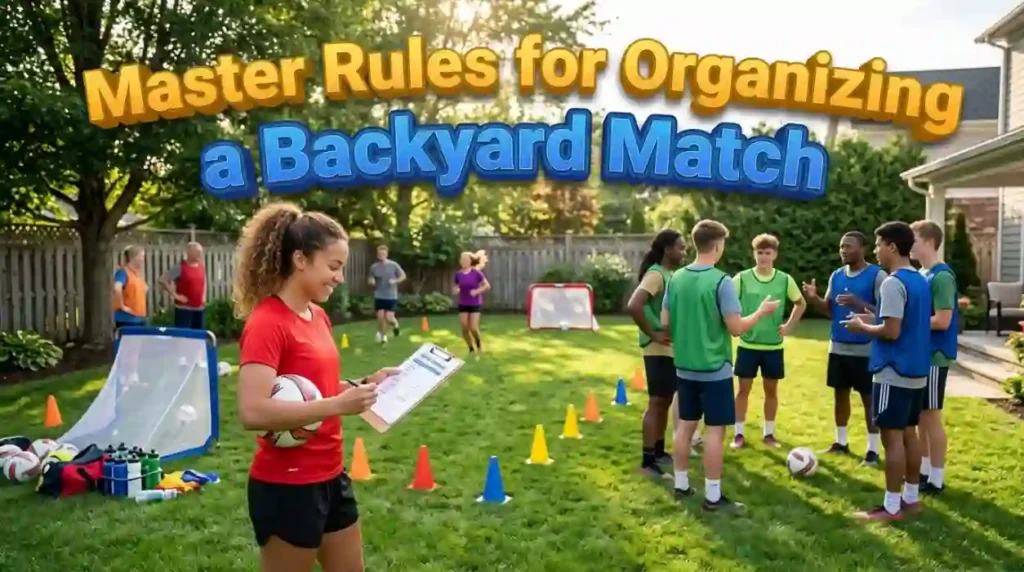
Hosting a casual match in your local park or backyard requires minimal logistics, but following basic organizational steps keeps the game running smoothly. Anticipating field boundaries, team selection, and safety measures prevents arguments and injuries before play starts.
Here is a straightforward step-by-step guide to setting up a successful pickup match in under fifteen minutes.
- Inspect and Clear the Pitch Area: Walk the grass field carefully to remove sharp sticks, loose rocks, pinecones, and hidden holes that could cause ankle sprains.
- Set Up Clear Boundaries: Use bright plastic cones, water bottles, or extra sweatshirts to mark the four field corners and two goal posts cleanly.
- Balance the Teams Equitably: Pick two captains to select balanced teams, or use color-coded pinnies to distinguish team rosters instantly.
- Establish Simplified House Rules: Agree on basic ground rules before kickoff, such as eliminating offside calls, banning sliding tackles, and using throw-ins.
- Set a Rotating Goalkeeper Schedule: Rotate players into the goalkeeper position every ten minutes so everyone enjoys time as an outfield runner.
Coaching and Facilitation Tips for Maximum Engagement
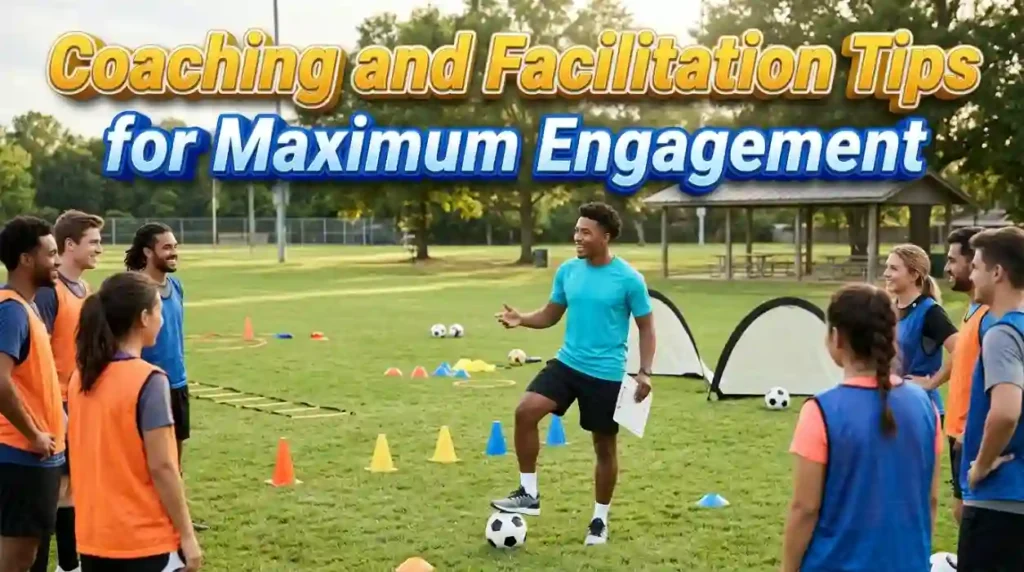
If you are a youth coach, PE teacher, or parent organizer, your sideline energy and leadership style set the tone for the entire match. Shifting your primary focus from winning scoreboard points to celebrating effort, sportsmanship, and creative skill keeps players motivated.
Positive reinforcement creates a supportive atmosphere where players feel comfortable trying daring tricks and new techniques.
Here are four essential coaching strategies to keep your soccer sessions engaging and positive.
Praise Effort and Creative Decision-Making Over Results
When a player attempts a clever heel pass or a daring long shot that misses the target, praise their creative vision anyway. If you criticize players for making mistakes during casual games, they will stop taking creative risks and default to boring, safe plays.
Encouraging bravery with the ball builds confident, expressive players who genuinely enjoy playing the game.
Celebrate great defensive hustle, unselfish passing, and fair play just as loudly as goals scored.
Rotate Positions and Keep Bench Time Minimal
Sitting on a sub bench for long stretches destroys a player’s enthusiasm and physical warm-up state rapidly. Keep your sidelines moving by substituting players every three to five minutes, or run multiple small fields simultaneously.
If you have twelve players, setting up two simultaneous three-on-three matches is far better than running a single match with six substitutes sitting down.
Rotating outfield players into different positions expands their tactical understanding of the game as a whole.
Practice Exercise
Test your knowledge of small-sided games, soccer rules, training variations, and coaching principles with this quick five-question multiple-choice quiz.
- What is the primary tactical advantage of playing small-sided soccer games over eleven-on-eleven matches?
A. It eliminates the need for a soccer ball completely
B. It increases individual ball touches and speeds up decision-making for every player
C. It guarantees that no player will ever run or sweat
D. It shortens the length of standard soccer cleats - Which mini-game features a single goal, one goalkeeper, and two-player teams shooting from outside the box?
A. Crab Soccer
B. World Cup Knockout
C. Soccer Tennis
D. Sharks and Minnows - Why is adding a mandatory three-pass rule before shooting useful in casual mixed-skill matches?
A. It makes the ball heavier during play
B. It encourages experienced players to involve beginner teammates in attacking plays
C. It allows goalkeepers to leave the field and take a nap
D. It doubles the physical size of the soccer net - Which novelty soccer variation equips players with inflatable plastic suits that let them bounce off each other safely?
A. Futsal
B. Bubble Soccer
C. Street Football
D. Beach Soccer - What simple safety step should hosts take before starting a backyard pickup match?
A. Paint the grass field neon pink
B. Inspect the grass area to remove rocks, sticks, and hidden ground holes
C. Require all players to wear heavy winter coats
D. Remove all goals from the field area
Answer Key:
- B
- B
- B
- B
- B
FAQs
What size soccer ball is best for different age groups?
Children under age 8 should use a Size 3 ball, while players aged 8 to 12 perform best with a Size 4 ball. Players aged 13 and older, including adults, use a standard Size 5 official match ball.
How big should a backyard soccer pitch be for a 4-on-4 match?
For a 4-on-4 casual match, a field measuring roughly 25 yards long by 15 yards wide is ideal. This compact area provides plenty of space to pass and run while keeping players close to the action.
Do players need official soccer cleats to play casual mini-games?
No, standard athletic running shoes or cross-trainers work perfectly fine on dry grass and outdoor park fields. However, wearing proper soccer cleats provides superior traction on wet grass and prevents slipping during rapid turns.
How can I make a soccer game fun for someone who has never played before?
Use lightweight balls, lower physical contact levels, and introduce cooperative rules like counting team pass streaks. Focus entirely on fun, laughter, and encouragement rather than tracking competitive scores or enforcing strict technical rules.
What is the ideal length of time for a casual pickup match?
A total session lasting 45 to 60 minutes, split into four 10-minute quarters with short water breaks, keeps energy levels high without causing extreme physical exhaustion. Adjust match length based on outdoor weather conditions and player fitness levels.
Conclusion
Organizing a creative, fun soccer game transforms standard fitness routines into an extraordinary experience filled with laughter, teamwork, and healthy competition. From classic shooting games like World Cup Knockout to bouncy novelty formats like Bubble Soccer, small-sided games bring out the best in every player.
Remember that the ultimate goal of playing sports is enjoying the game and building lasting friendships with those on the pitch.
Grab your soccer ball, set up your boundary cones, and head to the nearest park field today.
Gather your friends, pick your favorite mini-game format, and enjoy the pure excitement of playing soccer together!

Jack Olive is the creative mind behind buzzgiggles.com, a fun-focused website built to bring smiles, laughter, and lighthearted entertainment to everyday life. With a passion for humor and enjoyable content, Jack Olive creates and shares playful ideas, amusing stories, entertaining discoveries, and cheerful moments designed for readers of all kinds.
Through buzzgiggles.com, Jack Olive combines creativity, curiosity, and a positive sense of humor to explore the lighter side of life. Whether visitors are looking for a quick laugh, something interesting to share, or a cheerful break from their routine, the website offers content created with fun in mind. Jack Olive believes great entertainment should be easy to enjoy, memorable, and capable of brightening someone’s day.